6 Most Alligator Filled Places in Alabama
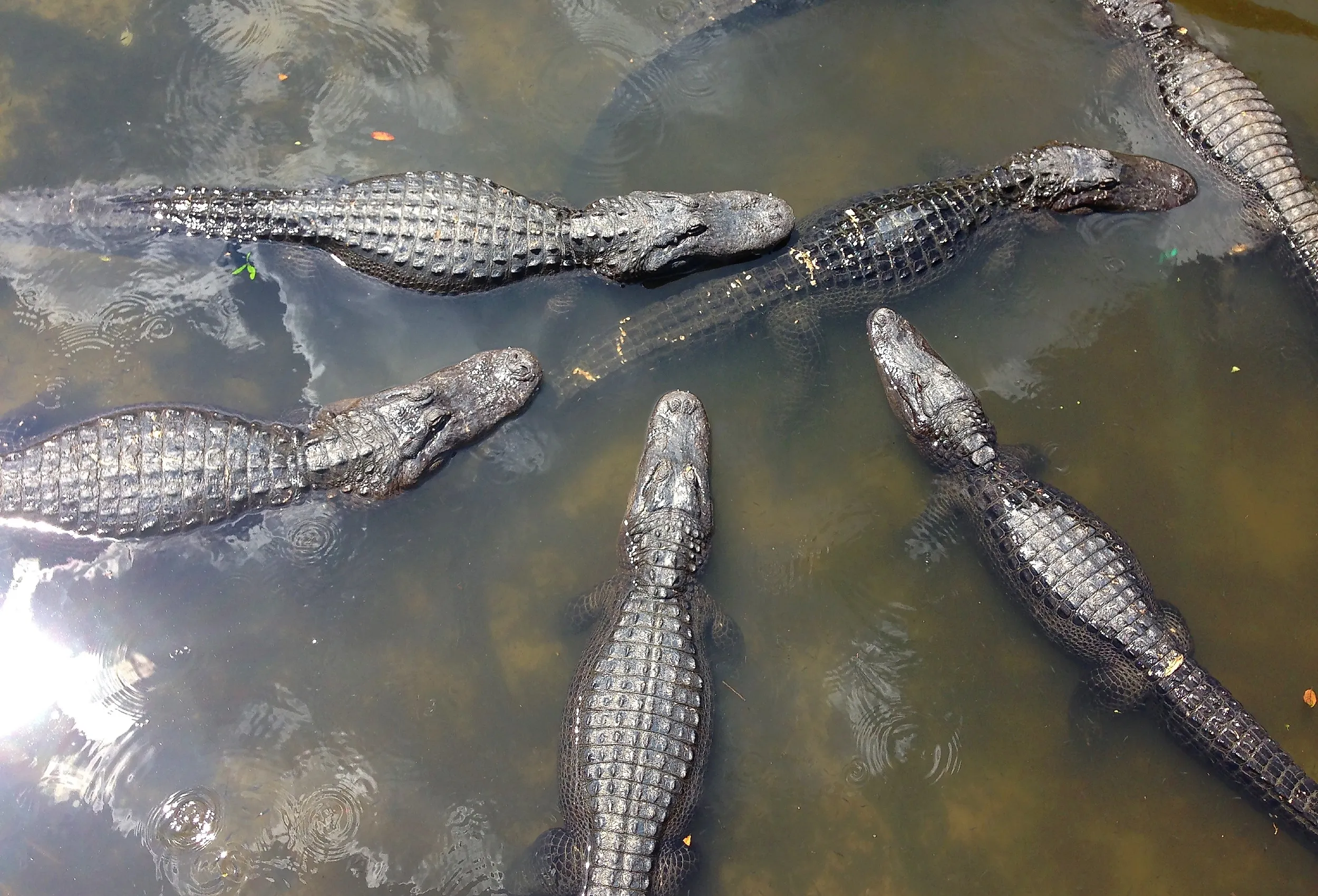
Alligators have increased significantly in number in Alabama over the decades. Previously limited to the southern half of the state, they also wander through Northern Alabama due to conservation efforts in the 1960s. There are now more than 70,000 alligators in Alabama. The American alligator is the apex predator of its environment, as none can challenge its size at nearly 11.2 to 14.8 feet in length and 1,100 to 2,200 pounds, or its bite, which can generate more than 13,100 newtons of force.
Alligators primarily live in fresh water, but they can tolerate saltwater as well. Unlike other predators, they are not picky and will eat anything they can grab hold of, either within a body of water or by a shoreline. Alligators tend not to attack humans unless one is close enough to them in the water to trigger their hunting instinct, or if a human deliberately attacks or harasses one. Before you wade through Alabama's waters, make sure to have your wits about you, particularly in these six most alligator-filled places in Alabama.
Gulf State Park

Alabama has a small, lesser-known coastline along the Gulf of Mexico on its southwestern "tail," which borders Florida. One of the primary parks on the Gulf is the Gulf State Park, located in Gulf Shores, Alabama. The park consists of beaches, three freshwater lakes, a pine forest, and other maritime environments. Alligators can swim in the Gulf, but they prefer the fresh spring waters of the Gulf State Park's lakes. As a result, the lakes surrounding the park are known as alligator hotspots.
Park authorities have pointed to Lake Shelby as having a particularly large alligator population. At the Lake Shelby Overlook, guests have reported seeing alligators emerge from the water and climb onto the canal to bask in the sun. Visitors have even given the alligators affectionate nicknames!
Tennessee River

The Tennessee River twists through the state of Tennessee, then turns south through the northern third of Alabama, then north to drain into the Ohio River in Kentucky. It is a 652-mile river with vast numbers of tributaries throughout Alabama. In 1979, wildlife authorities imported 56 alligators from Louisiana to the Wheeler National Wildlife Refuge on the Alabama side of the Tennessee River as part of an effort to extend their range and prevent them from going extinct.
These alligators proved able to withstand the colder winters in Northern Alabama and have extended well beyond that refuge into many other places along the Tennessee River in Alabama. Hikers have reported seeing alligators both within the Tennessee River and out on the trails. In one incident, an alligator walked out onto the Point Mallard Walking Trail in Decatur, Alabama, right on the shores of the Tennessee River.
Alabama River

The Alabama River runs for 319 miles through the formation of the Tallapoosa and Coosa Rivers near Montgomery. From there, it meanders down south before running into the Tombigbee River. Due to its location in the southern part of Alabama, it is full of alligators. In fact, there are so many alligators in the river that they are wandering out onto the roads of western Alabama, especially in Dallas, Wilcox, and Clarke County, which have a shoreline next to the river and several tributaries and creeks near it.
In 2014, the Alabama River broke records when the seventh-largest alligator was documented. This alligator measured 15.748 feet long and 1,011 pounds. In one recent study of the river, wildlife authorities found 25 alligators in a 15-mile stretch. Alligators are especially prevalent on the slower-moving tributaries and creeks of the river.
Mobile-Tensaw River Delta

This river delta is formed by a confluence of the Tombigbee and Alabama Rivers and flows into Mobile Bay. At 260,000 acres, it's the largest river delta in Alabama and the second-largest in the United States. The delta supports many swamps, marshes, bottomland forests, and shallow waters. These slow-moving wetland waters are ideal environments for alligators.
Environmentalists pay special attention to the alligators here, as they are at the top of the food chain and are key indicators of the overall health of the environment. Like many states, Alabama maintains an alligator hunting season to help keep the population under control. Environmental groups partner with these hunters to analyze the stomach contents of slain alligators to assess the health of the delta, including the levels of toxic blue-green algae in the water.
Mobile Bay

South of the Mobile-Tensaw River Delta is Mobile Bay, which lies just next to the city of Mobile. The bay is an inlet of the larger Gulf of Mexico. With its narrow channel, the bay was a critical location during the American Civil War, and it has also been home to large alligators. Just a few years back, a 12-foot-9-inch alligator was caught in the waters of Mobile Bay. Despite the salty waters here, alligators still swim out, which can easily put them at risk of running into humans.

To prevent unfortunate incidents between alligators and humans, some have been moved to wildlife sanctuaries, such as Alligator Alley in Summerdale, Alabama, east of Mobile Bay. The owner began this sanctuary to save alligators, which are considered "nuisance animals." Alligators earn this title if they are over 4 feet long and show no fear when around humans, thus making them a risk to humans. The sanctuary here keeps an alligator that was captured in Mobile Bay, along with other places, and allows guests to hold baby alligators.
Walter F. George Lake

Walter F. George Lake (also known as Lake Eufaula) sits at the southeastern border between Alabama and Georgia. It was formed by the Walter F. George Dam on the Chattahoochee River and is operated by the United States Army Corps of Engineers. The reservoir is noted for its large population of channel catfish, black crappie, and largemouth bass. However, these fish make good meals for alligators living in the lake as well.
Alligators will come out onto logs or the shore to bask in the sunlight, and they will enter the lake through muddier areas that conceal them. Right at the edge of the lake, alligators will construct nests that they make out of leaves or other vegetation. It is important to keep a close eye on pets, as alligators are opportunistic predators and may eat a dog that gets too close to the shore. In addition, experts recommend never feeding alligators, as this can train them to come closer to shore.
An alligator can certainly be a threat to humans, but much of this threatening behavior comes as a result of human actions. Environmental destruction or feeding alligators encourages these creatures to get closer to humans, increasing the risk of deadly attacks. This is why states work to keep alligator populations under control while also balancing environmental conservation. As with all wildlife, visitors or residents in these alligator hotspots should keep their distance from these apex predators as much as possible.