12 Amazing Day Trips In The Maritimes
The Maritimes is a region in eastern Canada that comprises the provinces of New Brunswick, Nova Scotia, and Prince Edward Island. Newfoundland and Labrador are generally not counted as part of the Maritimes because they joined Confederation later than the other provinces; include them, and the wider region is called Atlantic Canada. Halifax, the capital of Nova Scotia and the largest city in the Maritimes, is the starting line for twelve day trips worth the drive, most of them in Nova Scotia unless noted otherwise.

Peggy's Cove

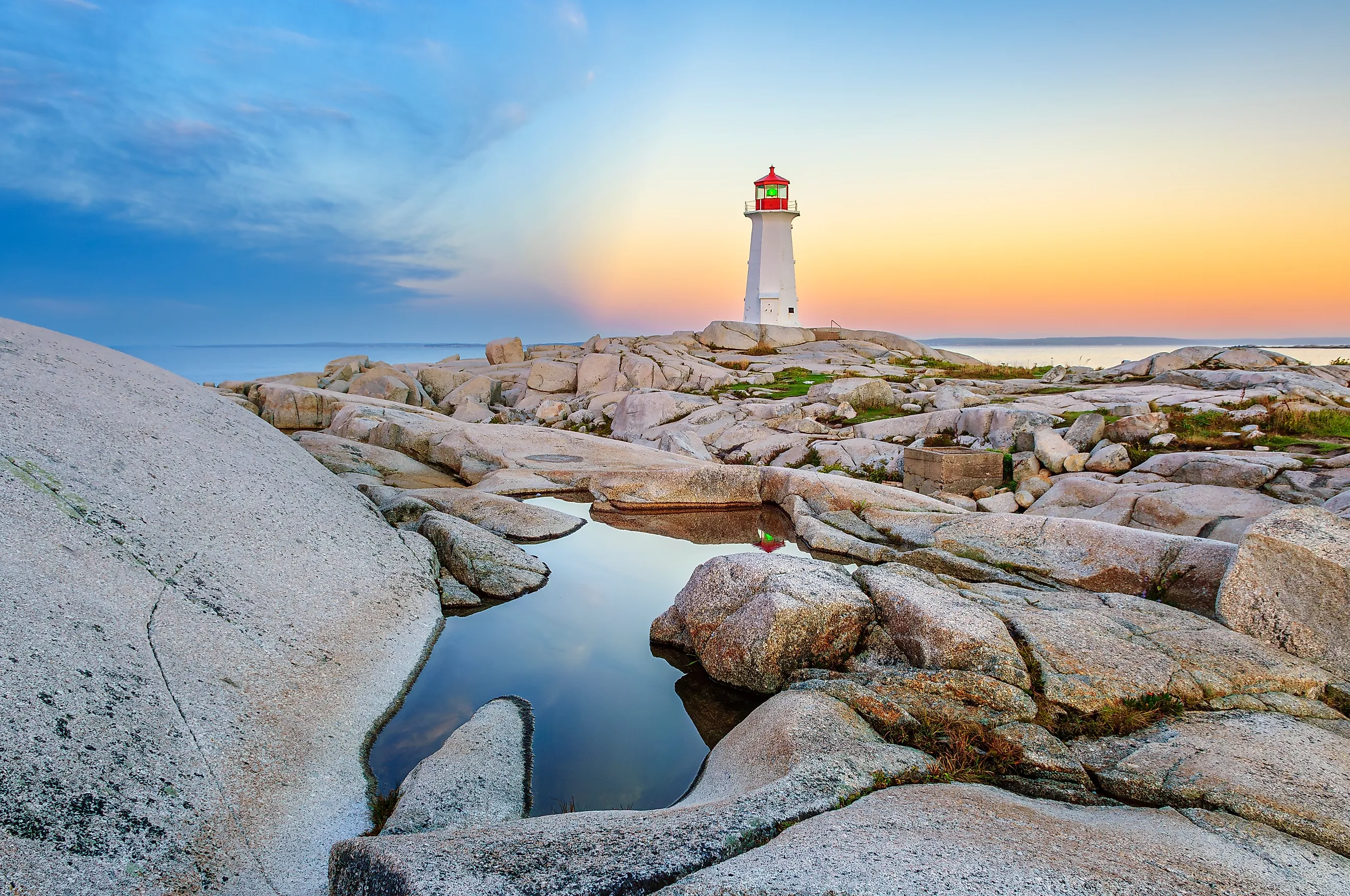
Start with the postcard. Peggy's Cove is the most photographed fishing village in the Maritimes, home to the 1915 Peggy's Point Lighthouse, one of more than 160 historic lighthouses in Nova Scotia. Go early to beat the crowds, then wander a village full of colorful boats, stacked lobster traps, and eclectic galleries and shops like Holy Mackerel, Amos Pewter, the deGarthe Gallery, and Hags on the Hill. Lunch is a lobster roll at the Sou'Wester, a gift shop and restaurant overlooking the Atlantic surf. Explore the flat granite afterward, but keep one eye on the water: rogue waves crash over these rocks without warning, and they have swept people off. Peggy's Cove Boat Tours runs everything from puffin-colony birdwatching to deep-sea fishing to sunset cruises. The whole thing sits under an hour from Halifax.
Lawrencetown

Yes, Nova Scotia has a surf scene, and this is its heart. Twenty-five miles from downtown Halifax, Lawrencetown Beach faces south across nearly a kilometer and a half of cobblestone and sand, with rip currents strong enough to demand respect. Surf shops like Kannon Beach Wind and Surf, Surf Donkey, and East Coast Surf School rent boards and wetsuits and teach first-timers, and Better Vibe Coffee Co. handles the warm-up. If surfing is not your thing, the beach parking lot opens onto the Atlantic View Trail, a ten-kilometer coastal greenway threading woodland, salt marsh, and ocean bluff. It is one small stretch of the 28,000-kilometer Trans Canada Trail, the longest multi-use trail network on the planet, which runs from the Atlantic clear across to the Pacific and up to the Arctic.
Tatamagouche

Where else can you sleep in a caboose? Tatamagouche is a quirky village on the Northumberland Strait, about 90 minutes from Halifax, and its signature stay is the Train Station Inn, where guests bed down in restored Canadian-built cabooses and boxcars, then catch live music and local craft beer in the Baggage Room Bar. The village began as a Mi'kmaw settlement, the Mi'kmaq being the Indigenous people of the northeast, whose territory spans present-day Nova Scotia, Prince Edward Island, New Brunswick, Newfoundland, the Gaspe Peninsula of Quebec, and parts of Maine. A scenic ride on the Tatamagouche Road Train shows off the rest.
The village keeps giving. Sample Acadian hospitality at the waterfront Creamery Square, the Tatamagouche Farmers' Market, the Tatamagouche Brewery, Appleton Chocolates Company, and the Country Bread Basket. Wine lovers can finish with a short drive northwest to Jost Vineyards.
Martinique Beach

The longest sandy beach in Nova Scotia runs five kilometers in a lazy crescent, just under an hour from Halifax in the community of East Petpeswick. Martinique Beach is a protected refuge for the piping plover, a small sand-colored shorebird endangered in Canada, and for migratory birds passing through, so bring binoculars and patience. When you are not scanning the dunes for that elusive plover, there is beachcombing to do or a one-hour lesson to book with the Halifax Surf School. On the way in, the Martinique Desserterie & Delicatessen stocks coffee and imported European goods, and the SaltSpray Design & Art Cafe carries maritime-themed folk art.
Hopewell Rocks Provincial Park, New Brunswick

Here you can walk on the ocean floor and, six hours later, kayak over the exact spot where you stood. Hopewell Rocks sits in the Bay of Fundy near Hopewell Cape, New Brunswick, home to the highest tides in the world. Also called the "Flowerpot Rocks," the roughly twenty free-standing sea stacks line two kilometers of shore and carry names like Mother-in-Law, Dinosaur, Bear, and Elephant. The provincial park is the launch point: stroll the seabed at low tide, or wait out the tide and paddle among the stacks with Baymount Outdoor Adventures. It is about three hours from Halifax, so consider stretching it into a night at the Fundy Rocks Motel or the Hopewell Rocks Motel & Country Inn.
Annapolis Royal

Founded in 1605, this town predates the Pilgrims by fifteen years. Annapolis Royal sits where the Annapolis River meets the Annapolis Basin, a sub-basin of the Bay of Fundy, and it began as the French settlement of "Port-Royal," making it one of the oldest and most fought-over European footholds in Canada. Today it is a National Historic District with the country's highest concentration of heritage buildings: pick up an Acadian Walking Tour map and work through more than 40 sites, including the O'Dell House Museum and the 1710 Sinclair Inn Museum.
The centerpiece is the Fort Anne National Historic Site. Start in the Officers' Quarters Museum with the Fort Anne Heritage Tapestry, 400 years of history rendered in embroidery, then walk the earthen ramparts past cannons and a 1708 powder magazine to the Garrison Graveyard. Annapolis Royal is just over two hours from Halifax by car.
Mahone Bay

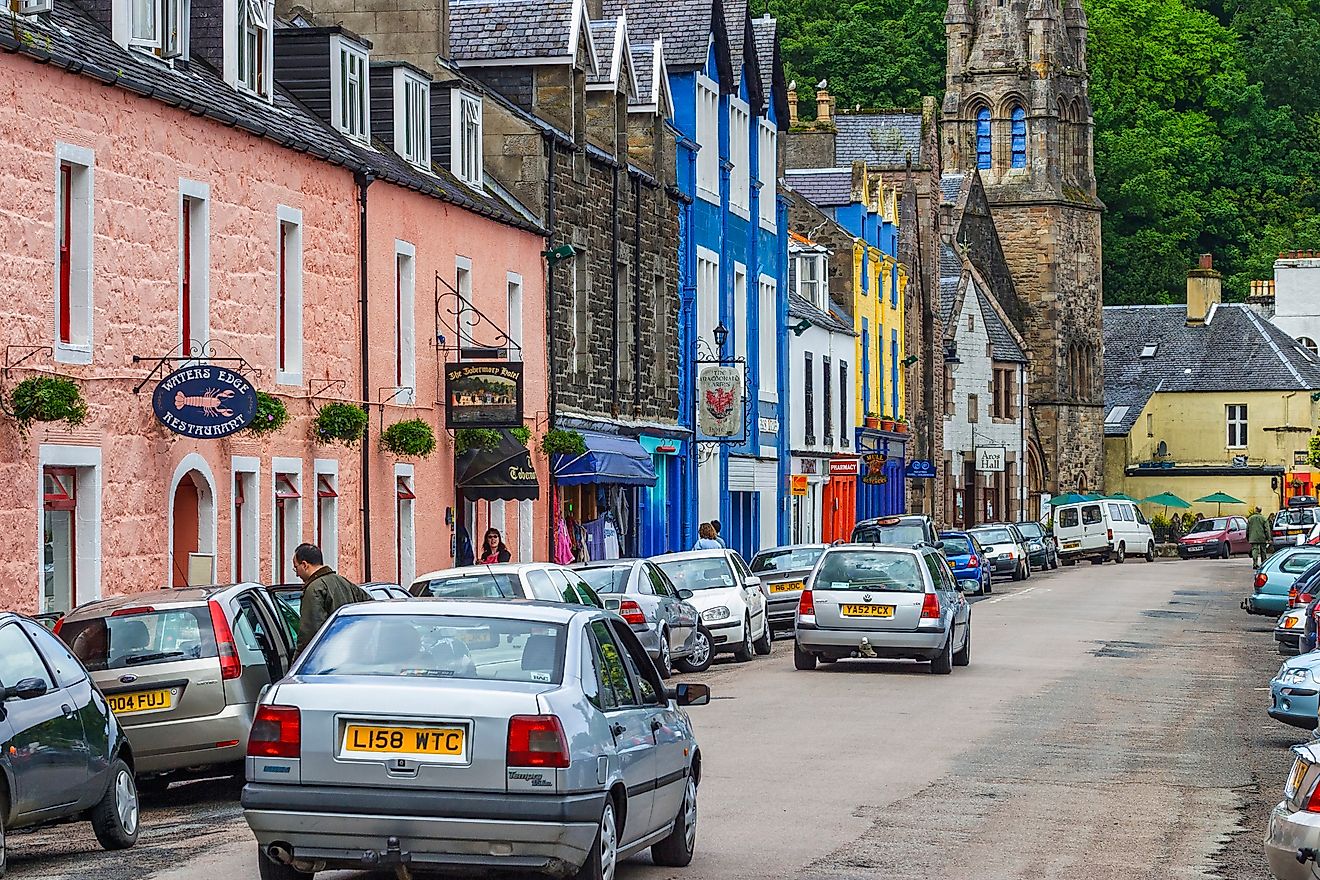
Three churches stand shoulder to shoulder along the waterfront, and every photographer in Nova Scotia knows the shot. That trio is Mahone Bay's calling card, but the seaside town backs it up with a main street of one-of-a-kind shops, craft breweries, and eateries, all an hour from Halifax. Hunt for nautical finds at the Lighthouse Market, athleisure at Cosmic Hippie Boutique, and hand-crafted jewelry and home decor at the flagship Amos Pewter store. Nova Scotian pewter work is a point of provincial pride, and this is the place to see it. End the afternoon over a craft cider at the Saltbox on the waterfront.
Kejimkujik

Kejimkujik is the only national park in Canada that is also a National Historic Site, honored for its deep Mi'kmaw heritage. Nature lovers can trace centuries-old petroglyphs, encampments, and canoe routes used by the Mi'kmaq, while the trails, front-country and backcountry alike, open onto picnic spots, campsites, and some of the best stargazing in the province. That last part is official: "Keji," as locals call it, is Nova Scotia's only Dark Sky Preserve, where artificial light is restricted to keep the night sky clear. A separate coastal section, Kejimkujik Seaside, threads the Atlantic shore through forest, sandy beach, and rocky island. The park is a two-hour drive from Halifax.
Lunenburg

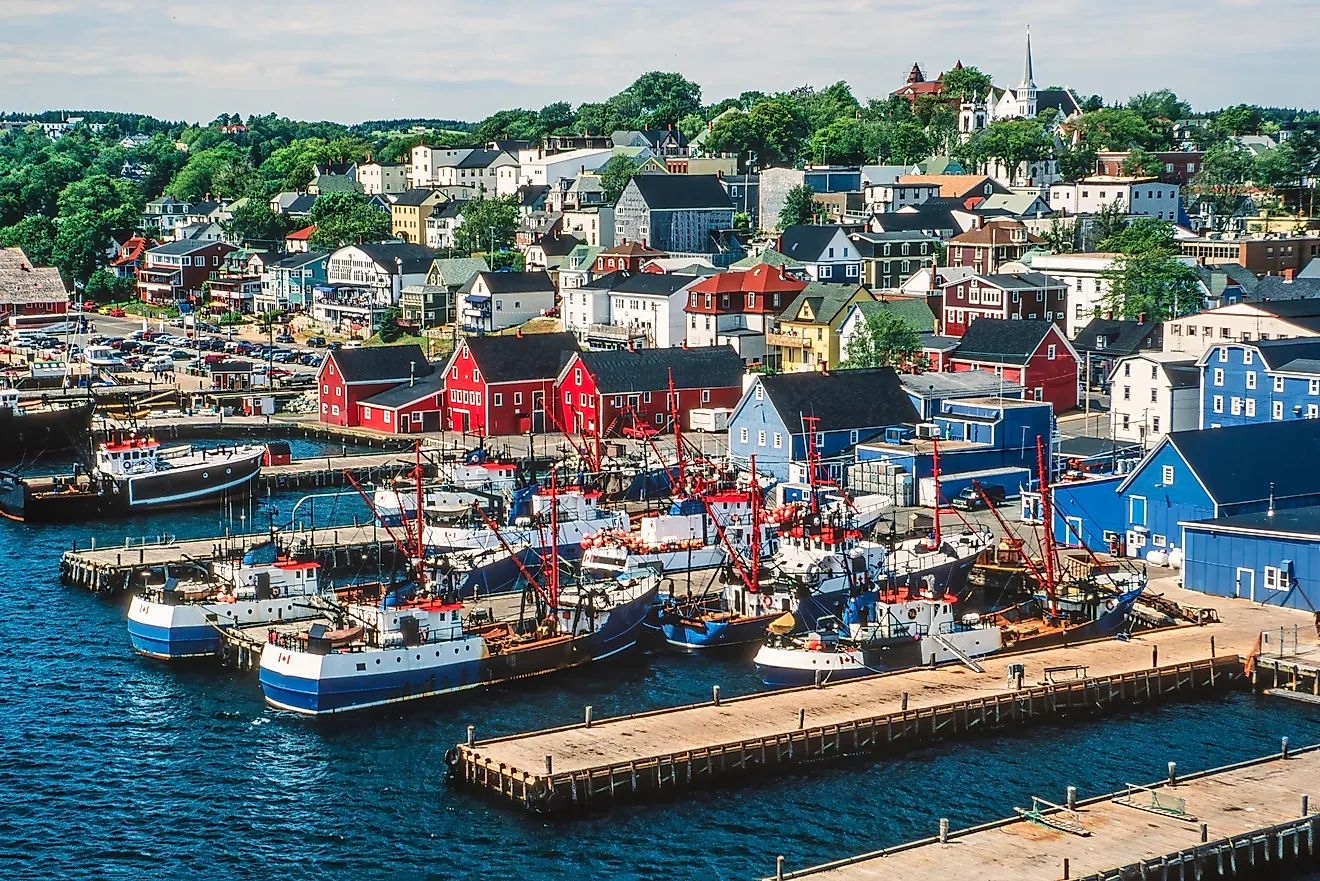
More than seventy percent of Old Town Lunenburg's original British colonial buildings still stand, which is why it is one of only two urban UNESCO World Heritage Sites in Canada, the other being Old Quebec City. Follow a historic walking tour through the streets, then head to the waterfront, where the Bluenose II, a faithful replica of the famed schooner launched in 1921, often sits in port. Book a two-hour harbor cruise for the best views of the town, or dig into the region's fishing history at the Fisheries Museum of the Atlantic, three floors housed in a former fish-processing plant.
Wolfville and the Annapolis Valley

An hour from Halifax, Wolfville is where you watch the highest tides in the world roll in and out from the town harbor, on the shores of the Minas Basin. Downtown is compact and walkable, kept lively by the students of Acadia University, one of Canada's oldest liberal arts schools, and lined with boutiques, galleries, and pubs; work down Main Street through the Annapolis Cider Company, the Church Brewing Company, and the Library Pub.
The real reason to come is the wine. The surrounding Annapolis Valley is one of Canada's top wine regions, with names like Lightfoot & Wolfville, Luckett Vineyards, and Benjamin Bridge, the sparkling-wine house behind the cult favorite Nova 7. Leave the car in town and ride the Magic Winery Bus, a British double-decker, on a tasting tour of four wineries.
Cape Split Provincial Park

The payoff here is earned on foot. Cape Split is a 450-hectare park on a peninsula with the wider Bay of Fundy to the southwest and the Minas Basin to the northeast, and it is one of the best hikes in the province: a 13.2-kilometer loop through old-growth and coastal forest, four to six hours round trip, ending at a headland with a commanding view of the bay. Watch for rare plants and wildlife along the way. When you get back, the Long Table Social Club has the coffee, takeout, or well-earned beer. The trailhead is one hour and forty minutes from Halifax.
Cavendish, Prince Edward Island

This is where Anne of Green Gables comes from. Cavendish, an unincorporated community on Prince Edward Island, inspired the fictional Avonlea of Lucy Maud Montgomery's 1908 novel, and many of the book's settings are real places you can visit: Green Gables Heritage Place, the Haunted Woods Trail, and the Balsam Hollow Trail and Lover's Lane. Beyond Anne, it is a classic summer family town, with Cavendish Beach, a recreated 19th-century Avonlea village, the Cavendish Boardwalk, and Shining Waters Family Fun Park.
Cavendish is three hours from Halifax and stretches easily into an overnight. Half the fun is the approach: you reach PEI over the Confederation Bridge, which locals call the "Fixed Link." At 12.9 kilometers, it is the longest bridge over ice-covered water in the world, and a genuine bucket-list drive for anyone who loves a feat of engineering.
Twelve Drives, One Home Base
What makes the Maritimes such a rewarding place to explore is how much variety fits inside a single tank of gas. In one long weekend out of Halifax you can walk the seabed under the world's highest tides, surf a cold-water break, sleep in a train car, hike to a headland over the Bay of Fundy, and toast the trip with a glass of Nova Scotian sparkling wine. Twelve very different days, all of them starting from the same front door.