How Old The Oldest Tree In America Really Is
At around 4,858 years old, Methuselah has survived thousands of winters in California's White Mountains. It was already growing when people raised the stone circle at Stonehenge and had lived for nearly 3,000 years by the time Jesus of Nazareth was born. The Great Basin bristlecone pine grows in the Ancient Bristlecone Pine Forest, part of Inyo National Forest, and is widely recognized as America's oldest known living individual tree. Its age comes from the growth rings preserved in its wood. Its mountain home exposes it to high winds, extreme cold, and scarce water, yet some of those harsh conditions help explain its longevity.
Methuselah And Its Mountain Home

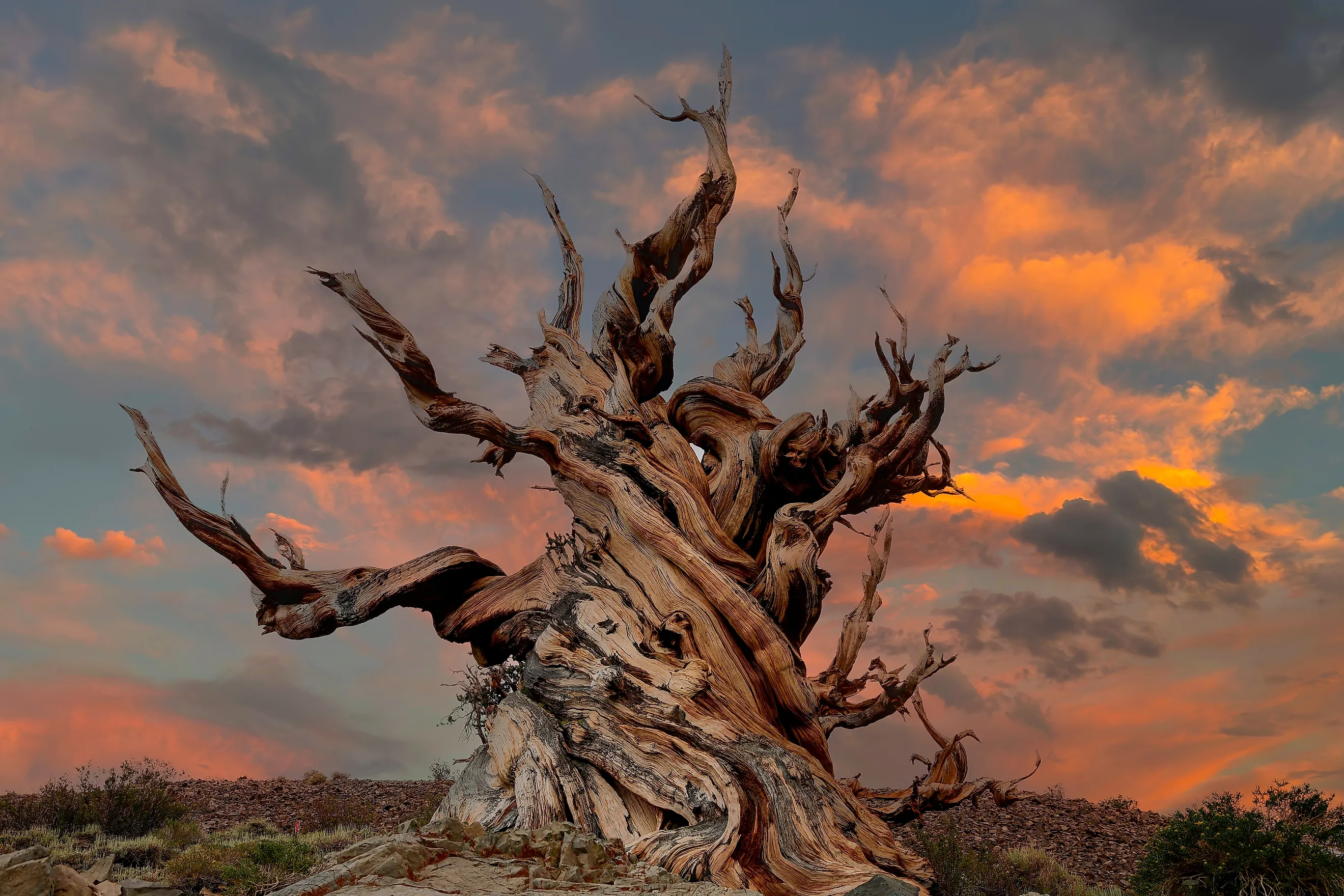
Great Basin bristlecone pines (Pinus longaeva) grow in open groves among gravel and bare rock in California's White Mountains, with sparse vegetation between trees. Methuselah has lived for thousands of years within the Ancient Bristlecone Pine Forest. Tree-ring researcher Edmund Schulman examined core samples from Methuselah's trunk in 1957. Its growth rings showed that the tree had already lived for more than 4,700 years at the time. Rocky Mountain Tree-Ring Research's OldList now puts Methuselah at about 4,850 years, and Guinness World Records listed it at 4,856 in 2024. Allowing for the uncertainty in dating a tree this old, that makes it around 4,858 years old in 2026. The tree takes its name from Methuselah, the figure in Genesis who is said to have lived for 969 years. Although the pine has become famous for its age, the Forest Service does not reveal its precise location to protect it from vandalism. People can walk the grove where it grows without knowing exactly which tree is Methuselah.
The rings preserve a record of the conditions the tree grew in as well. Differences in ring width help researchers reconstruct past growing seasons. A bristlecone pine's wood can hold thousands of years of that evidence, making these ancient trees valuable records of environmental history as well as long survivors.
Why Bristlecone Pines Live So Long

The harsh conditions of the White Mountains are part of the reason why bristlecone pines survive for so long. The trees grow slowly, producing dense, resinous wood that resists insects, fungi, and decay. Depending on elevation and the year, the growing season can last as little as six weeks, leaving a brief period for the trees to grow. Their rocky surroundings offer some protection. Without much other vegetation between trees, there is less competition for water and less fuel for fires to spread.
Dolomite soil explains why so few plants grow between the trees. White Mountains bristlecone groves grow in soils formed from dolomite, a rock rich in calcium and magnesium. These soils are alkaline and low in phosphorus, conditions many other plant species cannot handle, but bristlecone pines can grow with little moisture and few nutrients. The pale ground has advantages of its own. It reflects sunlight, keeping the soil cooler, and it can store more water than surrounding soils, a source of moisture in an otherwise dry environment.
How A Partially Dead Tree Keeps Living

A bristlecone pine can keep living even when most of its trunk is dead. A narrow strip of living tissue in the oldest trees may connect the roots to a few surviving branches. The tree's roots support separate sections of its trunk and branches. If soil erosion exposes a root and that root dies, the section above it may die as well, and other sections continue living. The National Park Service calls this "sectored architecture." At high elevations, a bristlecone pine may have one or two living sections remaining, each marked by a strip of bark.
With less living tissue to maintain, the tree loses less water, and uses less energy through respiration, helping it survive with limited resources. Because of this, the exposed, seemingly dead wood does not necessarily signal that the tree has died. Bristlecone pines have ways to make the most of limited water as well. Their shallow, branching roots help absorb moisture, and a waxy coating on their needles helps retain it. Some needles remain on the tree for 35 years or more, continuing to photosynthesize and regulate water loss.
What Counts As The Oldest Tree

Identifying the oldest tree comes down to three questions. Is the tree still alive, can scientists verify its age, and is it one tree or a colony? Prometheus, another Great Basin bristlecone pine, lived for about 4,900 years beneath Wheeler Peak in Nevada before researchers cut it down in 1964. Since it is no longer living, its age does not qualify it for a living-tree record.
An unnamed White Mountains bristlecone reportedly reached 5,062 years in 2010. However, Rocky Mountain Tree-Ring Research removed it from OldList, its database of ancient trees, because the original wood sample collected from the tree could not be found. This left researchers unable to verify what could have been the oldest known living individual tree. Because of this, Methuselah remains the oldest living tree listed in the database.
Clonal colonies belong to a different category. Pando, a quaking aspen colony in Utah's Fishlake National Forest, survives through a shared root system that produces new stems as older ones die. Pando's age is the age of the colony root system, rather than the lifespan of any one trunk.
Nearly Five Millennia of Life

Methuselah's around 4,858 years of life reflect how well bristlecone pines can survive with limited resources. Slow growth, resistant wood, and the ability to keep living after parts of the trunk die help explain that longevity. The pine that grew before people raised Stonehenge's stone circle still has living branches in California's White Mountains. Its history gives a different sense of time to a walk through the forest, where a single tree's lifetime can span thousands of years of human history. After nearly five millennia, Methuselah makes a good case for being old, weathered, and tough.