Why There Are No Sharks In The Deepest Ocean
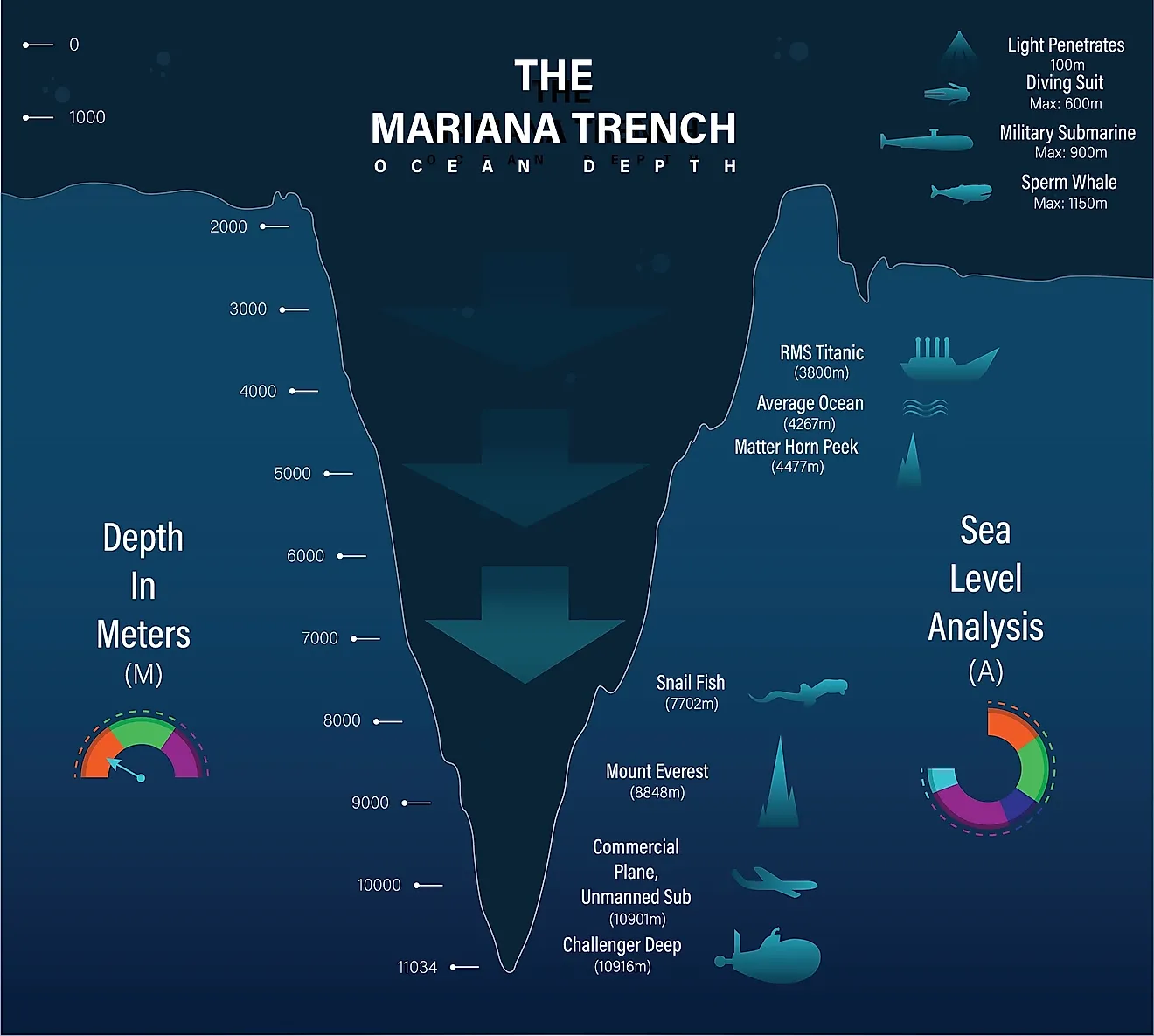
The Mariana Trench plunges about 35,876 feet into the Earth's crust at Challenger Deep, a dark, crushing abyss where the pressure exceeds eight tons per square inch and no sharks can survive. This point, the lowest on the planet's surface, lies just beyond the southwest boundary of the Marianas Trench Marine National Monument, whose own deepest reach, the Sirena Deep, still drops more than 35,000 feet. Even thousands of feet above this lowest point sharks still do not exist. The absence of sharks in the deepest zones of the ocean is not a mystery of missing data. It reflects a real biological boundary, though scientists still debate exactly which combination of scarce energy, physiology, and the shark's own body plan keeps them out.
Evidence from the Deep

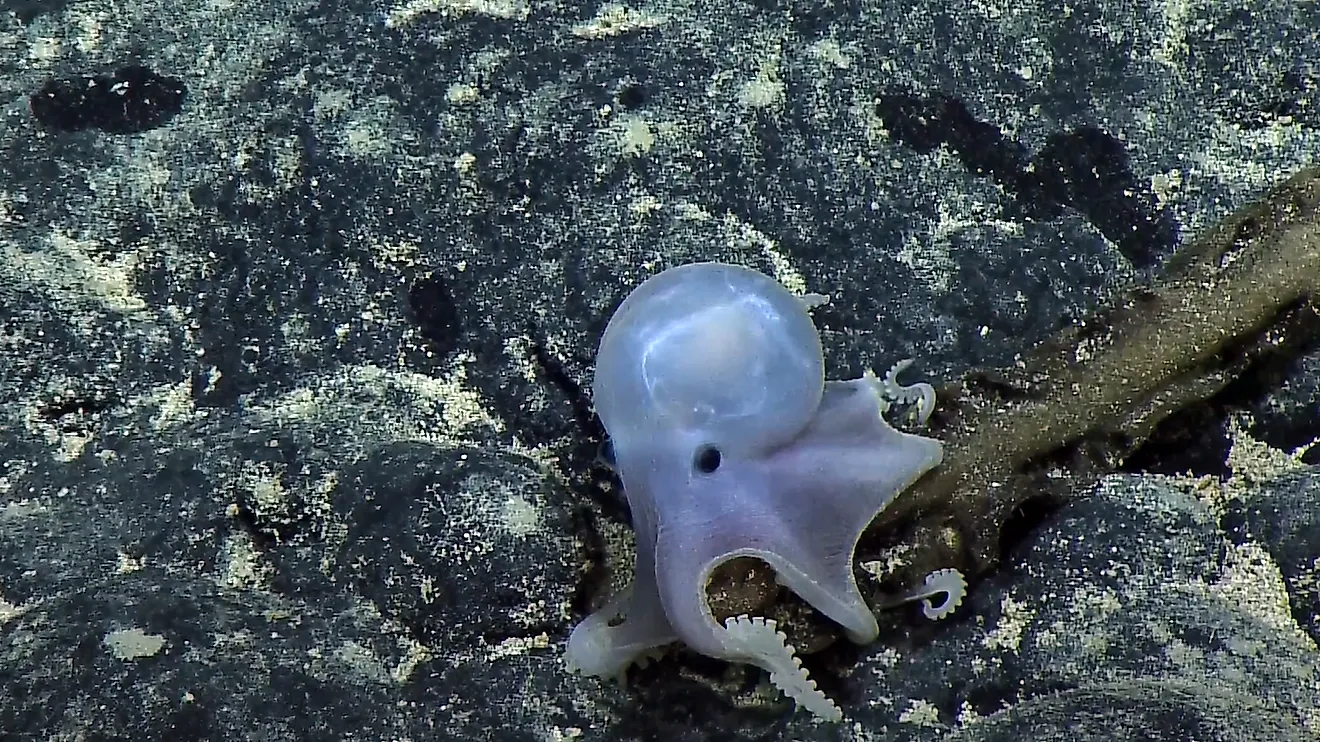
Exploration of the Mariana Trench and similar environments confirms a sharkless environment. Since the first manned descent by Jacques Piccard and Don Walsh in 1960, and subsequent expeditions by James Cameron in 2012, and the Five Deeps expedition in 2019, thousands of hours of high-definition video footage have been captured from the trench floor. These cameras have revealed ghostly snailfish, translucent amphipods, and strange, gelatinous cucumbers. But, not once has a shark appeared in the frame. The deepest shark sightings remain firmly in the bathypelagic zone, far above the trench floor.
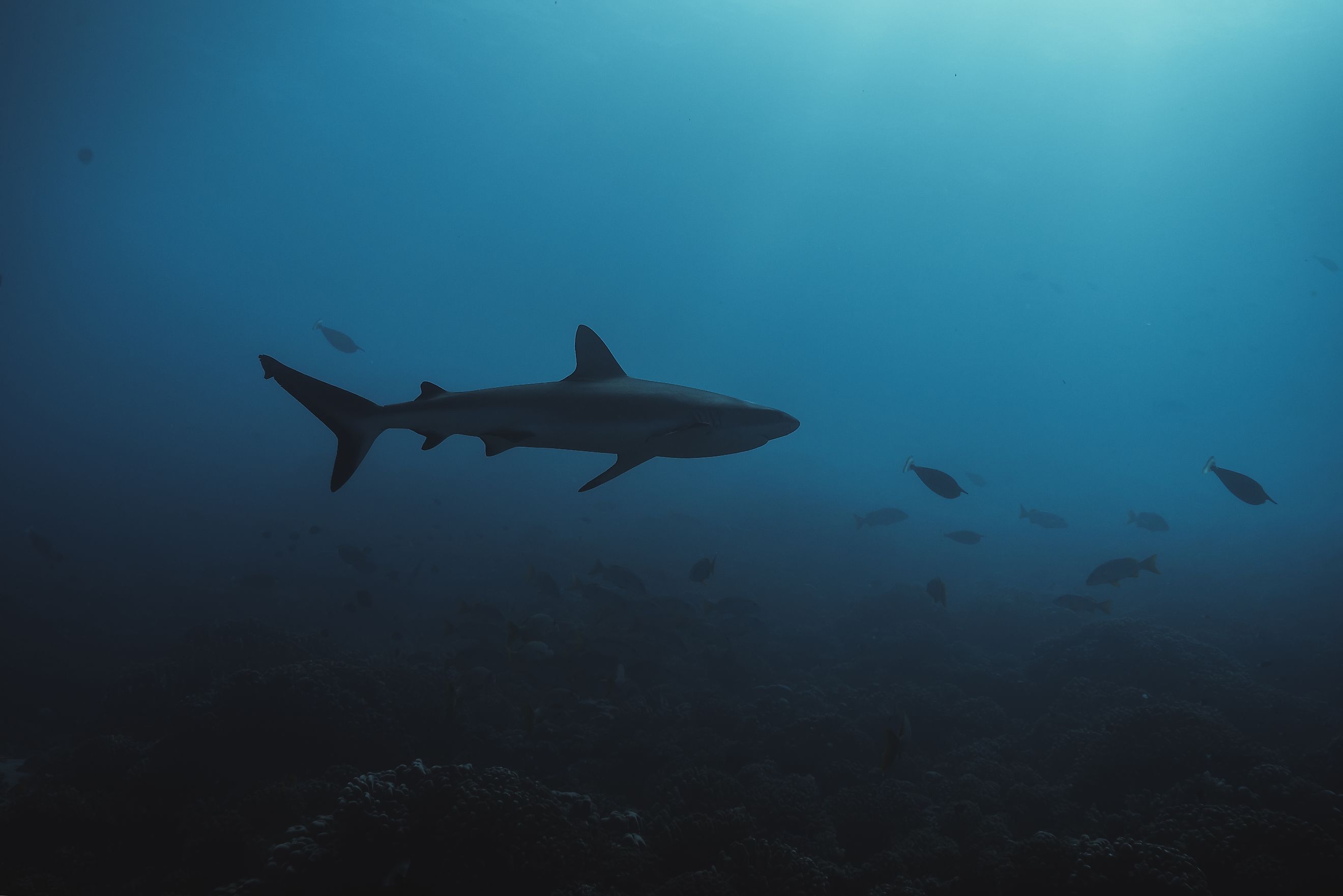
The deepest shark ever recorded, the Portuguese dogfish, patrols depths of only about 12,000 feet, a mere third of the way down the Mariana's sheer walls. Even the sixgill shark, known for diving deep, rarely exceeds 8,000 feet. The gap between these depths and the deepest part of the ocean is a physiological chasm that no shark has or can bridge.
The TMAO Hypothesis

Sharks, like all vertebrates, rely on proteins that function within specific pressure ranges. At extreme depths, mounting pressure can distort the molecular structure of proteins, a challenge facing any animal that ventures far below the surface. Deep-sea organisms like the snailfish, the deepest living fish known at about 27,000 feet, have evolved unique molecular adaptations to counter this issue. These include high concentrations of a compound called trimethylamine N-oxide (TMAO). TMAO acts as a chemical chaperone, stabilizing proteins against the distorting effects of extreme pressure.
However, there is a limit to how much TMAO an animal can accumulate. Sharks already have a high level of TMAO to counteract their naturally high level of urea they store in their bodies. As concentration increases past a certain point, TMAO becomes toxic to the animal's own cells, because too much TMAO disrupts the cell's water balance by drawing in too much external water through osmosis and causing cells to swell or burst. One hypothesis holds that the maximum depth a fish can reach is capped by this osmotic balance. Because sharks already start with a high TMAO baseline used to counter urea, some researchers propose that their physiology may not tolerate the extra TMAO that surviving in the deepest water would demand. This remains a proposed explanation rather than a settled one, and the leading study on the subject found that pressure alone is unlikely to be a fundamental barrier even at 6,000 meters.
Thermal Constraints

The near-freezing temperatures of the abyssal and hadal zones create a metabolic barrier that sharks cannot cross. Most sharks are entirely ectothermic, meaning their body temperature matches their surroundings. While this strategy conserves energy in temperate depths, it would render them sluggish and ineffective hunters in the extreme cold of the trenches.
A few species have regional endothermy, such as the shortfin mako and the great white, allowing them to keep specific muscles and organs warmer than the water temperature. However, maintaining this temperature differential in the crushing, freezing environment of the deep ocean would demand an unsustainable amount of energy. The caloric cost of staying warm would far exceed the energy available at these depths.
Not Enough Food
Even if a shark could tolerate the cold, its metabolism is not built for the trench's scarcity. Sharks generally maintain a baseline metabolic rate that requires regular hunting and feeding. In the abyssal and hadal zones, this rate would need to slow to a near halt to survive, a physiological shift sharks cannot make without compromising essential biological functions. They would become too slow to catch prey and too energy-depleted to process a meal.
The abyssal and hadal seafloors receive only a tiny fraction of the caloric energy available near the surface, with some estimates calculating that less than one percent of surface energy reaches depths beyond about 12,000 feet. Animals below this depth tend to have remarkably slow metabolisms, minimal muscle mass, and a body plan built for drifting, passively filter feeding, or ambushing rather than active pursuit.
The amphipods and snailfish of the Mariana Trench have evolved much slower metabolic rates than sharks to conserve energy and deal with both the cold temperatures and the scarcity of meals. These creatures do not actively hunt in the traditional sense. Instead, they wait for organic matter to drift from the surface or for rare, massive food falls, such as a whale carcass. A single whale fall can sustain a local community of deep sea scavengers for months without requiring active hunting or swimming for long distances searching for food.
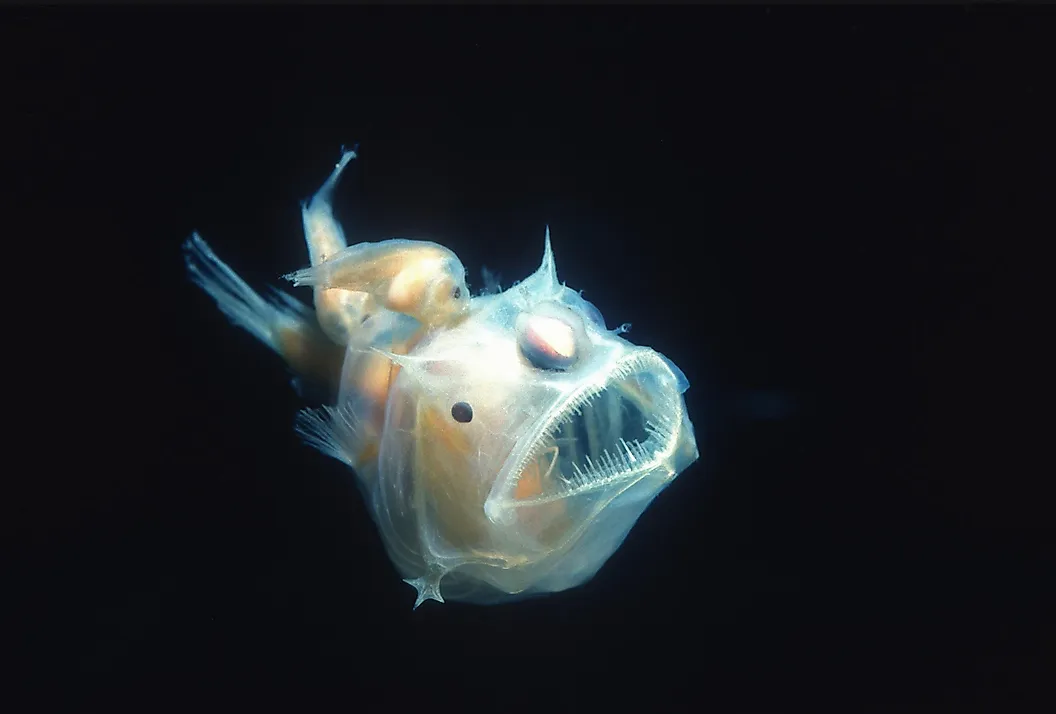
In the absence of large carcass falls, most deep-sea animals depend on feeding upon small bits of organic material that have fallen from the upper zones. The top predators, such as deep-sea anglerfish, remain mostly motionless until it's time to strike. They use bioluminescent lures to trick prey in search of organic material into coming within snatching distance. Sharks are not adapted for either of these feeding strategies.
The Evolutionary Mismatch
The fundamental reason sharks cannot inhabit the hadal zone lies in an evolutionary mismatch between their ancient body plan and the extreme demands of the ocean's deepest zones. Sharks are part of a lineage that evolved over 420 million years ago, perfecting a design for active predation in the sunlit and twilight zones of the ocean. Their success relies on a specific formula: a cartilaginous skeleton for lightness and agility, an oil-filled liver for buoyancy, and an active metabolism geared for bursts of speed.
Their formula works flawlessly in the twilight and sunlit zones of the ocean, but it becomes a fatal design in the crushing dark below. Unlike the snailfish or amphipods, which evolved specifically within high-pressure environments to exploit niche and scarce resources, sharks never faced the selective pressure to adapt to these conditions.
Their evolutionary path kept them in the nutrient-rich upper layers where their speed and size provided a competitive advantage. To enter the hadal zone, a shark would not merely need to adjust its behavior. They would need to fundamentally rewrite their biochemistry and alter their metabolic requirements. Such a transformation is beyond the scope of gradual evolution for an animal so deeply specialized for life above the abyss.
The shark is, by its very nature, a creature of the upper ocean, biologically locked out of the deepest zones by the same traits that make it an apex predator in the ocean's upper reaches.