The Deepest-Living Fish Ever Found
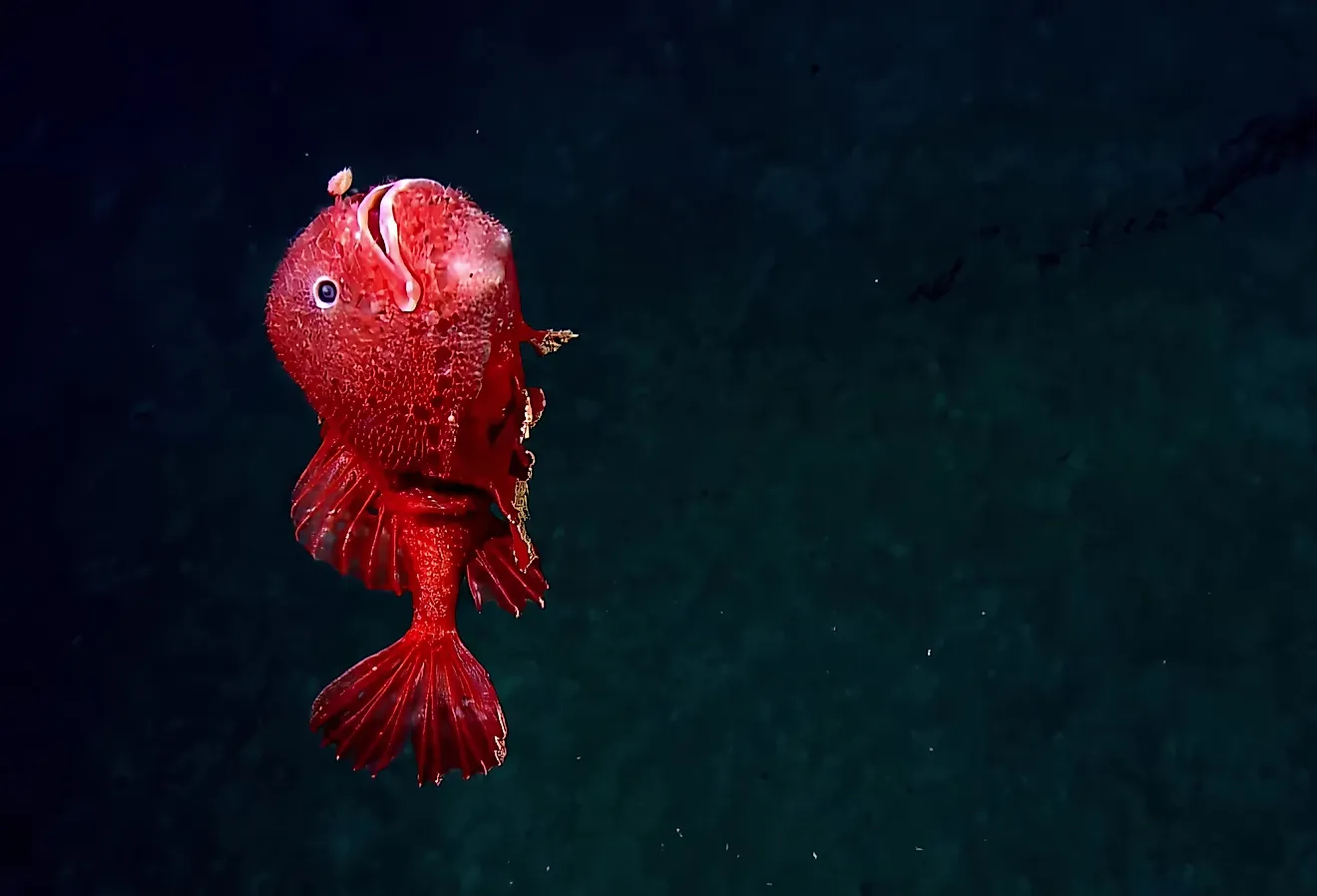
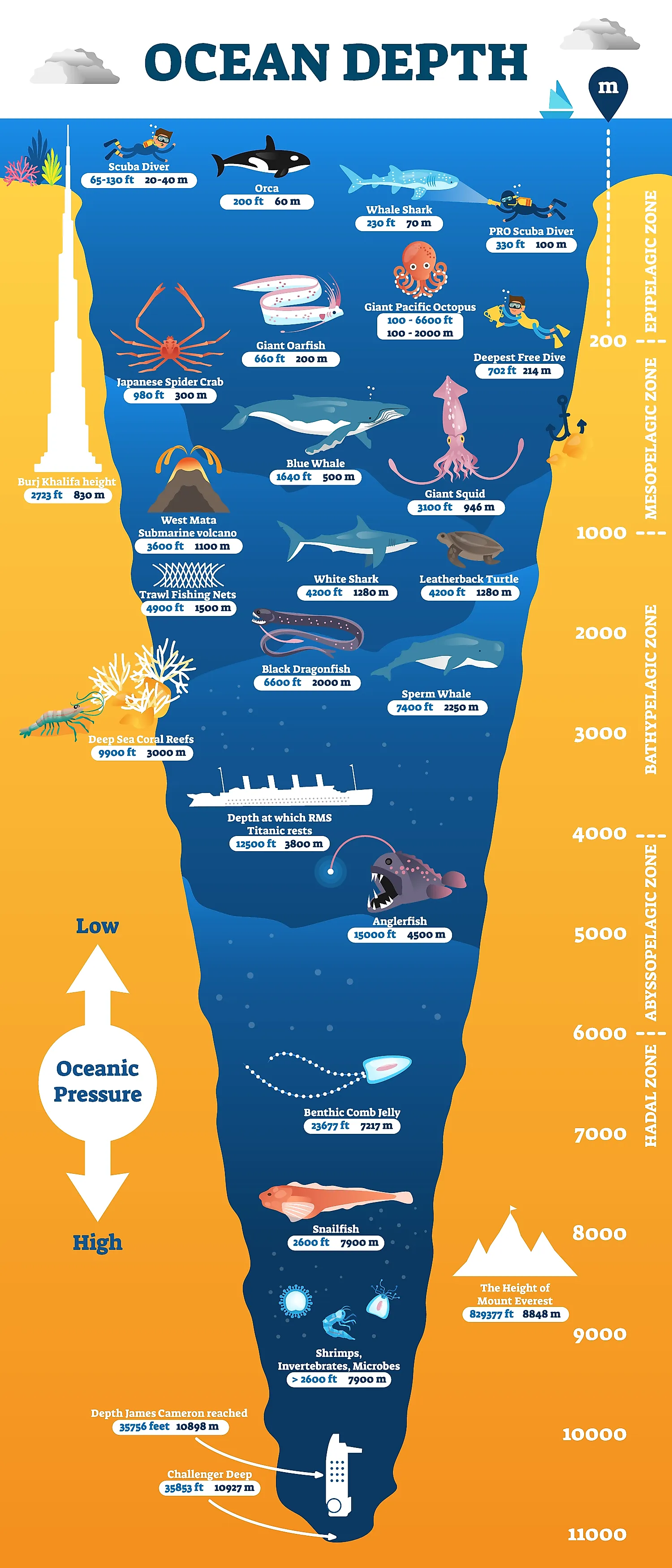
More than five miles beneath the Pacific, far beyond sunlight and nearly as deep as Mount Everest is tall, a small pale fish appears in front of an underwater camera. The camera is part of a 2022 expedition searching the deepest trenches around Japan for the point where fish finally disappear. The juvenile snailfish is swimming 8,336 meters (27,349 feet) down in Japan's Izu-Ogasawara Trench, setting the record for the deepest confirmed fish sighting. The discovery placed it remarkably close to a boundary that may be impossible for any fish to cross. Pressure continues increasing toward the bottom of the world's deepest trenches, but fish disappear while many smaller animals carry on. Understanding why requires looking inside the snailfish's unusually soft body, comparing it with previous record holders, and exploring the biological barrier that keeps vertebrates from reaching the deepest seafloor.
The Fish at 8,336 Meters
In August 2022, researchers from the University of Western Australia and the Tokyo University of Marine Science and Technology explored trenches around Japan with baited cameras and traps. They filmed the solitary juvenile at 8,336 meters but didn't capture it. The footage allowed them to place it in the genus Pseudoliparis, but without a specimen, they couldn't determine whether it was Pseudoliparis belyaevi or a species unique to the Izu-Ogasawara Trench.
Snailfish are a scaleless fish with large heads, tapering bodies, and small eyes. Members of the family occupy an unusually wide range of habitats, from relatively shallow coastal waters to the hadal zone inside ocean trenches.
Although the juvenile holds the record for the deepest fish observed, it isn't the deepest fish ever physically collected. That distinction belongs to two P. belyaevi caught at 8,022 meters (26,319 feet) in the nearby Japan Trench during the same expedition.
How Scientists Search for Fish at Extreme Depths
Researchers can't follow a fish more than eight kilometers down with ordinary diving equipment. Instead, they lower an autonomous device called a lander, which carries cameras, bait, and instruments that measure conditions on the seafloor.
During the 2022 expedition, landers surveyed depths ranging from 4,534 to 9,773 meters. Snailfish appeared between 6,824 and 8,336 meters.
Once a lander reaches the bottom, it remains in place while the bait draws animals within view of its camera. After the observation period, it releases its weights and floats back to the surface with its footage and measurements. Researchers can then compare recordings from different depths to see where fish become less common and where they disappear entirely.
How Snailfish Survive Crushing Pressure
The deepest fish ever filmed doesn't look built for one of Earth's harshest environments. It has a soft body without the heavy armor, large teeth, or bulky frame often associated with deep-sea creatures. Since researchers didn't capture the juvenile, its internal anatomy can only be inferred from snailfish collected at similar depths.
Studies of the Mariana snailfish reveal thin muscles, partly hardened bones, and a skull that never fully closes. Hadal snailfish also lack a gas-filled swim bladder, which would be compressed as they descended. These features give them the flexible, almost gelatinous appearance seen in deep-sea footage.
At 8,336 meters, pressure affects more than the overall shape of an animal. It can change the structure of proteins, making it harder for them to perform the chemical reactions that keep cells alive. It can also stiffen cell membranes and interfere with the movement of materials into and out of cells.
Snailfish counter these effects with changes that help their membranes remain flexible and their proteins retain their shape. They also carry high concentrations of trimethylamine N-oxide, or TMAO, which stabilizes proteins as pressure rises. Transparent skin, limited pigmentation, and small eyes reflect the permanent darkness of a habitat where sunlight never reaches.
Why Fish Disappear Below 8,400 Meters

The expedition's cameras traveled as deep as 9,773 meters in the Izu-Ogasawara Trench, yet no fish appeared below the juvenile at 8,336 meters. That sudden absence matches a limit that researchers had predicted years before the record was set.
The prediction centers on TMAO, the compound fish use to keep their proteins working under pressure. TMAO becomes more concentrated in fish at greater depths, with each increase offering protection against stronger pressure. By approximately 8,200 to 8,400 meters, however, the required concentration would make the fluids inside a fish as concentrated as seawater. Increasing it further could disrupt the balance of water and salts that its body needs to function.
This boundary can shift slightly because temperature also influences how pressure affects proteins. The Izu-Ogasawara Trench is a little warmer than the Mariana Trench, allowing fish to reach greater depths there. Scientists may eventually find one slightly below the current record, but the chemistry of fish cells makes a much deeper discovery unlikely.
The Previous Record in the Mariana Trench
Before the expedition near Japan, the deepest confirmed fish sighting came from the Mariana Trench. In May 2017, a lander operated by the Japan Agency for Marine-Earth Science and Technology and Japanese broadcaster NHK filmed a snailfish at 8,178 meters (26,831 feet).
The camera had been sitting on the seafloor for more than 17 hours when the fish appeared near bait placed in front of it. Researchers had seen numerous snailfish at a shallower site during the same expedition, but only one appeared at the record depth. Its shape suggested it was a Mariana snailfish, Pseudoliparis swirei, although it also wasn't captured for confirmation.
The expedition required a special-use permit from the U.S. Fish and Wildlife Service to work within the Mariana Trench Marine National Monument. The monument covers approximately 95,216 square miles near Guam and the Northern Mariana Islands. The fish remained the record holder for nearly five years, until the juvenile in the Izu-Ogasawara Trench was filmed 158 meters deeper.
Animals That Live Deeper Than Fish
Fish disappear near 8,400 meters, but animal life continues almost to the deepest seafloor. Amphipods, small crustaceans related to shrimp, have been found more than 10,000 meters down in the Mariana Trench. Some consume animal and plant material falling from above, while predatory species hunt other amphipods.
These crustaceans use TMAO to protect their proteins, much like deep-living fish. They also carry other protective compounds, including glycerophosphorylcholine and scyllo-inositol, that may help their cells continue working under pressures no fish can tolerate. Researchers are still studying exactly how these substances contribute to their survival.
Even after fish vanish from the deepest parts of the ocean, life doesn't stop there. Soft-bodied sea cucumbers, various worms, and other small invertebrates live on the trench floor, feeding on whatever organic debris settles into the sediment.
Near the Limit for Fish
At 8,336 meters, the juvenile snailfish lives only 64 meters shallower than the deepest boundary researchers predicted fish could tolerate. The close agreement between that calculation and the observed record suggests that scientists have located the lower edge of the fish world.
Future lander expeditions may extend the record by a small distance, especially in trenches with slightly warmer water. Researchers still need a physical specimen to determine exactly which species holds the record. For now, that title belongs to a solitary juvenile seen briefly on footage recovered from the bottom of the Izu-Ogasawara Trench.