The US Beaches Losing The Most Sand To The Ocean
America's beaches may look permanent, but they're constantly changing. Every wave carries sand away while tides, currents, and storms deposit it somewhere else. Under natural conditions, beaches often recover over time. Today, however, some of the country's best-known shorelines are losing sand faster than it can be replaced.
The causes vary by region. Hurricanes and nor'easters can strip away entire dunes in a matter of hours, while rising seas allow waves to reach farther inland. Dams and navigation projects have altered rivers that once delivered fresh sediment to beaches, and seawalls, jetties, and other coastal structures can interrupt the natural movement of sand. In many places, the only way to preserve wide beaches is through repeated nourishment projects that pump millions of cubic yards of sand back onto the shore.
Georgia's barrier islands and Hawaii's famous beaches are just two of the seven communities spending millions of dollars to slow erosion and protect homes, businesses, wildlife habitat, and tourism. These beaches highlight how dramatically America's coastlines can change, and why keeping sand on the shore has become one of the country's biggest coastal challenges.
Tybee Island, Georgia

Tybee Island has welcomed visitors to Georgia's coast for generations, but the broad sandy beach that draws crowds each summer requires constant attention. Roughly every six to seven years, Tybee's beaches are replenished with new sand to counteract natural erosion caused by waves, tides, wind and human activity. Located where the Savannah River meets the Atlantic Ocean, Tybee sits on a stretch of coastline shaped by strong tides, shifting currents, and tropical storms.
Sand naturally moves along Georgia's barrier islands, but hurricanes and coastal development have accelerated the need for intervention. Major storms including Hurricanes Matthew and Irma removed significant amounts of sand from Tybee's shoreline, damaging dunes that serve as the island's first line of defense against storm surge. Local, state, and federal agencies have repeatedly responded with beach nourishment projects, dredging sand from offshore sources and pumping it back onto the beach to rebuild areas lost to erosion.
Tybee also illustrates how erosion affects more than tourism. Healthy beaches protect homes, roads, sea turtle nesting habitat, and the island's economy. Without periodic renourishment, waves would continue to eat away at the shoreline, leaving less room for wildlife and visitors alike. The island's experience reflects a challenge shared by barrier islands throughout the southeastern United States.
Cape Hatteras National Seashore, North Carolina

The Outer Banks are famous for wild beaches, historic lighthouses, and dramatic Atlantic views, but they're also among America's most changeable landscapes. Cape Hatteras National Seashore sits on a chain of narrow barrier islands that naturally migrate over time as wind, waves, and storms reshape the coast.
Powerful hurricanes and winter nor'easters regularly carve away dunes, open temporary inlets, and wash sand across roads. One of the best-known examples of the shoreline's movement came in 1999, when the Cape Hatteras Lighthouse was relocated nearly half a mile inland to shield it from erosion. The pace of erosion has become increasingly visible in recent years. Between May 2020 and June 2026, 32 privately owned homes collapsed into the Atlantic along the Seashore, underscoring how quickly the shoreline can retreat.
Keeping Highway 12 open has become a constant engineering challenge as overwash repeatedly buries sections beneath sand and water. Beach nourishment, dune restoration, and elevated roadways have all become part of North Carolina's strategy for adapting to an ever-changing coastline. Few places illustrate the constantly shifting nature of barrier islands as clearly as Cape Hatteras.
Miami Beach, Florida

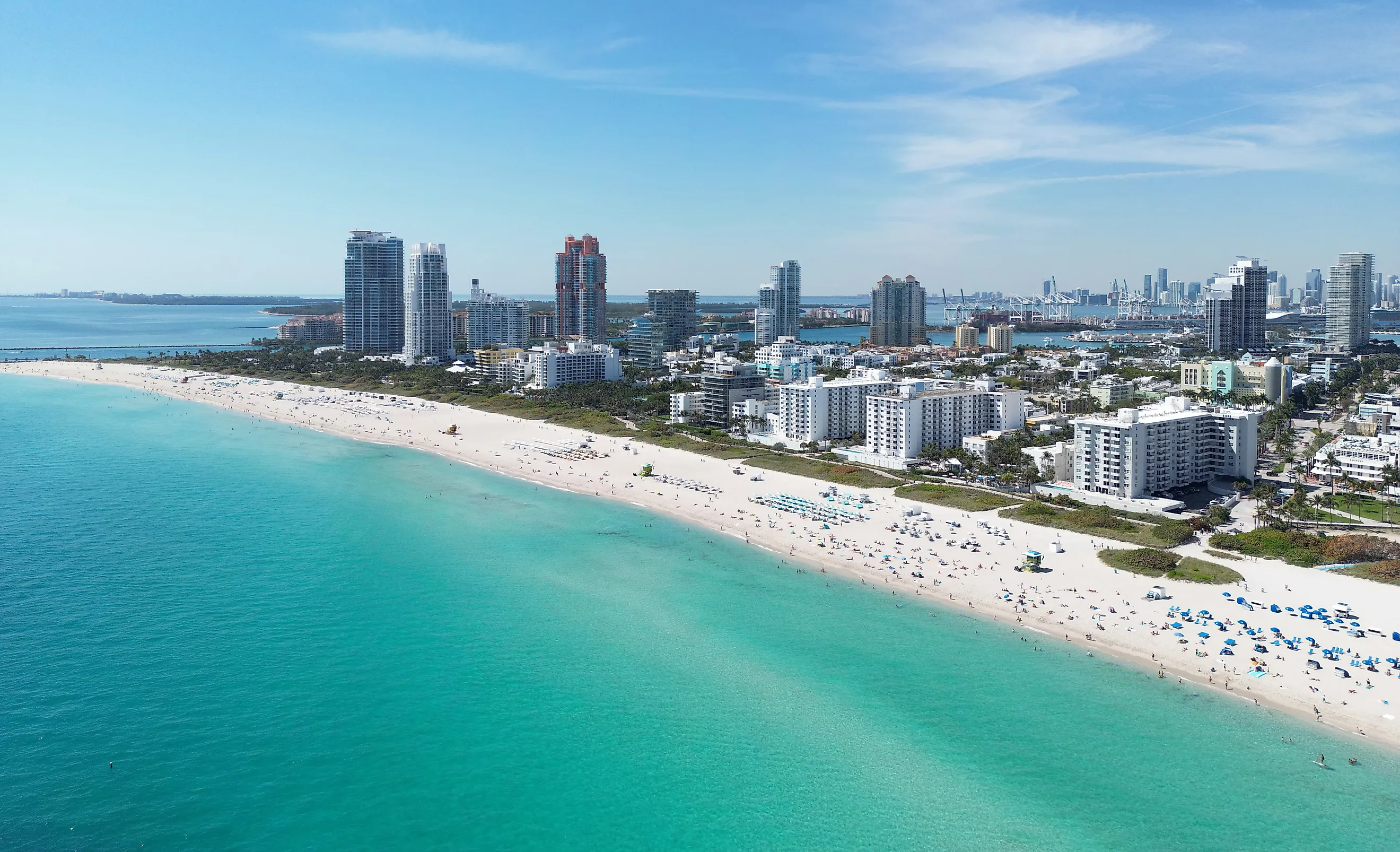
Miami Beach may appear to have a permanent stretch of white sand, but maintaining that shoreline requires a continuous effort against erosion. The city's beaches are naturally vulnerable because they sit along a low-lying barrier island exposed to waves, tides, tropical storms, and rising seas. Over time, these forces gradually move sand offshore, narrowing the beach and reducing the natural buffer that safeguards inland neighborhoods.
To counter erosion, Miami Beach has become one of the most closely managed shorelines in the United States. The city works with federal and state agencies on periodic beach nourishment projects that replace lost sand using material dredged from offshore sources. These projects are designed not only to preserve recreational space but also to strengthen protection against storm surge.
In recent years, the city has also invested in additional coastal defenses, including dune restoration, improved drainage systems, and major resilience projects aimed at addressing flooding during high tides and storms. The city has raised roads, upgraded infrastructure, and redesigned public spaces to handle a changing coastline better.
Miami Beach demonstrates the challenge facing many popular coastal destinations. Beaches can be preserved, but they cannot be permanently fixed. Keeping the sand in place requires continual investment as natural forces continue reshaping the shore.
Pacifica State Beach, California

Pacifica State Beach, located just south of San Francisco, has become one of California's most visible examples of coastal erosion. Unlike beaches on the Atlantic and Gulf coasts that often lose sand during hurricanes, Pacifica faces a different set of challenges, including powerful winter storms, rising seas, and a limited supply of new sediment reaching the shoreline.
The city's coastline has experienced significant retreat over the years, with waves gradually wearing away beaches and coastal bluffs. Decades of coastal development have made the issue more urgent, as erosion threatens infrastructure, walking trails, and areas once considered safely inland. The collapse of sections of the Esplanade and damage to coastal properties have highlighted how quickly the edge of land can change.
Pacifica has responded with a combination of immediate repairs and long-term planning. The city has stabilized vulnerable bluffs, repaired damaged infrastructure, and strengthened erosion-prone areas where feasible. Officials are also weighing long-term solutions, including managed retreat in locations where repeated repairs may no longer be sustainable.
Pacifica highlights the difficult choices facing many California communities. Protecting every inch of shoreline is often impossible, forcing coastal towns to balance safety, development, and the reality that the ocean will continue reshaping the land.
Grand Isle, Louisiana

Grand Isle offers one of the clearest examples of how beach erosion has become part of a much larger coastal crisis. Louisiana has experienced greater coastal wetland loss than any other state in the contiguous United States, leaving barrier islands like Grand Isle increasingly vulnerable to storms. These islands serve as the state's first line of defense, absorbing wave energy and storm surge before they reach inland communities.
Unlike many coastlines that are naturally replenished by rivers, much of Louisiana's shoreline no longer receives the steady flow of sediment that once built and maintained its beaches. Levees and flood-control projects along the Mississippi River have greatly reduced the amount of sand and mud reaching the coast, while hurricanes and strong wave action continue to wear away beaches and dunes.
To slow the loss, state and federal agencies have launched ambitious restoration efforts, including beach nourishment, barrier island rebuilding, marsh creation, and sediment diversion projects that reconnect portions of the Mississippi River with surrounding wetlands. Louisiana's Coastal Master Plan guides these long-term efforts, aiming to restore some of the land-building processes that once sustained the region.
Grand Isle illustrates both the scale of Louisiana's coastal challenges and the long-term commitment required to preserve one of America's most rapidly changing shorelines.
Waikiki Beach, Hawaii

Waikiki Beach is one of the world's most recognizable stretches of sand, yet maintaining its famous shoreline has required decades of careful management. Natural erosion, seawalls, and extensive coastal development have all reduced the amount of sand available along portions of the beach, while powerful waves continue to reshape the shoreline. Because Hawaii has a limited supply of suitable beach sand, replacing what is lost can be especially challenging.
Rather than allowing Waikiki's beaches to continue shrinking, Hawaii has adopted an active management approach. The Hawaii Department of Land and Natural Resources periodically monitors beach conditions and oversees nourishment projects that replenish eroded sections using sand from approved offshore sources. Officials have also restored groins and other coastal structures where appropriate to help retain sand while balancing shoreline stability with environmental concerns. These efforts are part of the long-term Waikiki Beach Improvement and Maintenance Program, which aims to preserve the beach without dramatically altering its natural character.
Waikiki demonstrates that even the world's most famous beaches require constant attention. While restoration projects can temporarily widen the shoreline, waves and currents continue moving sand along the coast, making beach management a continual effort rather than a permanent solution.
Long Beach Island, New Jersey

Long Beach Island has spent decades adapting to the powerful forces that reshape New Jersey's coastline. While Atlantic storms and nor'easters have always moved sand along the barrier island, major events like Hurricane Sandy dramatically accelerated erosion, stripping away beaches, flattening dunes, and exposing coastal communities to flooding. Even after major storms pass, waves and seasonal weather continue to shift sand offshore, making erosion an ongoing challenge rather than a one-time event.
To strengthen the shoreline, Long Beach Island has become the focus of regular beach nourishment and dune restoration projects led by the U.S. Army Corps of Engineers and the New Jersey Department of Environmental Protection. Millions of cubic yards of sand have been placed along the island's beaches to widen the shoreline and rebuild dunes, creating a buffer that helps absorb wave energy during future storms. Coastal managers also monitor erosion patterns to determine when additional nourishment is needed, recognizing that replenished beaches gradually lose sand over time.
Long Beach Island illustrates how living on a barrier island requires constant adaptation. Instead of trying to stop natural coastal processes, communities continue investing in projects that reduce storm damage while preserving one of New Jersey's most popular beach destinations.
America's Beaches Will Always Be a Work in Progress
Beach erosion has always been part of nature, but many of America's best-known shorelines are now changing faster than communities can ignore. Storms, rising seas, altered sediment supplies, and decades of coastal development have combined to make sand one of the country's most valuable coastal resources.
Although these beaches span thousands of miles and face different challenges, they share one reality. Preserving a shoreline requires continual effort. By pumping millions of cubic yards of sand onto popular beaches, restoring dunes, and protecting fragile barrier islands, coastal managers are investing heavily to keep beaches both beautiful and resilient.
Even so, no engineering project can permanently stop the ocean. Beaches will continue shifting with every tide, storm, and season, reminding visitors that coastlines are among Earth's most dynamic landscapes. Understanding why these beaches lose sand and how communities respond offers a glimpse into the ongoing struggle to balance recreation, conservation, and the powerful natural forces that shape America's shores.