Why Giant Sequoias Grow In Only One Place On Earth
The giant sequoia is a coniferous evergreen endemic to California. Widely considered the world's largest tree by volume, these massive trees currently only occur naturally on the Sierra Nevada's western slopes. About 70 giant sequoia groves exist today. The reason they grow nowhere else comes down to a rare overlap of conditions found only in this one mountain region: deep winter snowpack that keeps the soil damp through rainless summers, a narrow band of elevation that captures it, and a history of recurring fire the trees need to reproduce. No other place on earth combines all three, which is why most surviving groves are now protected within state or national parks and forests.
Characteristics Of The Giant Sequoia
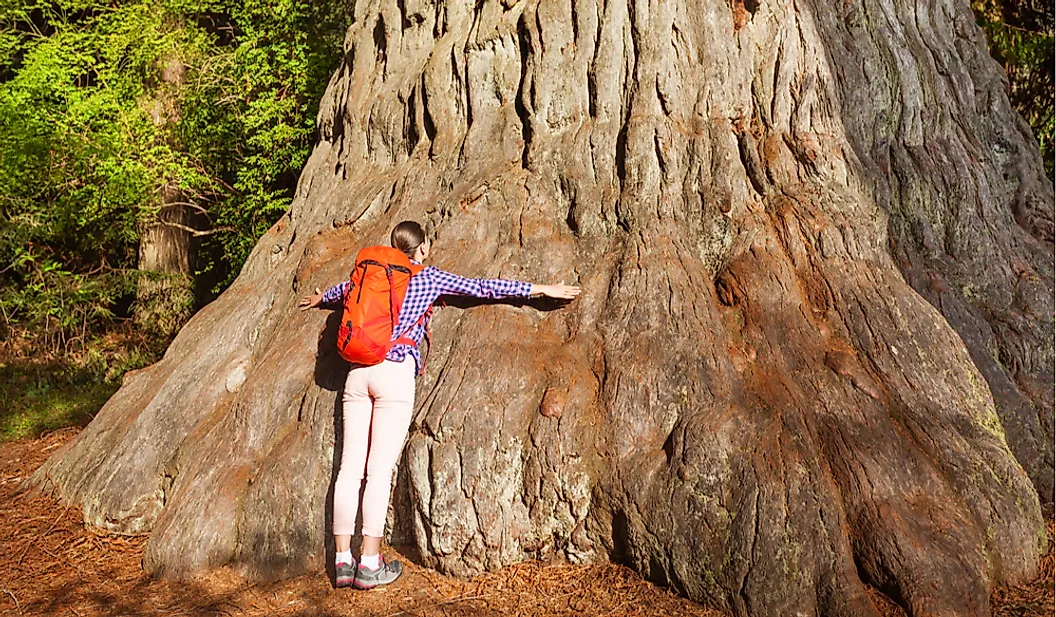
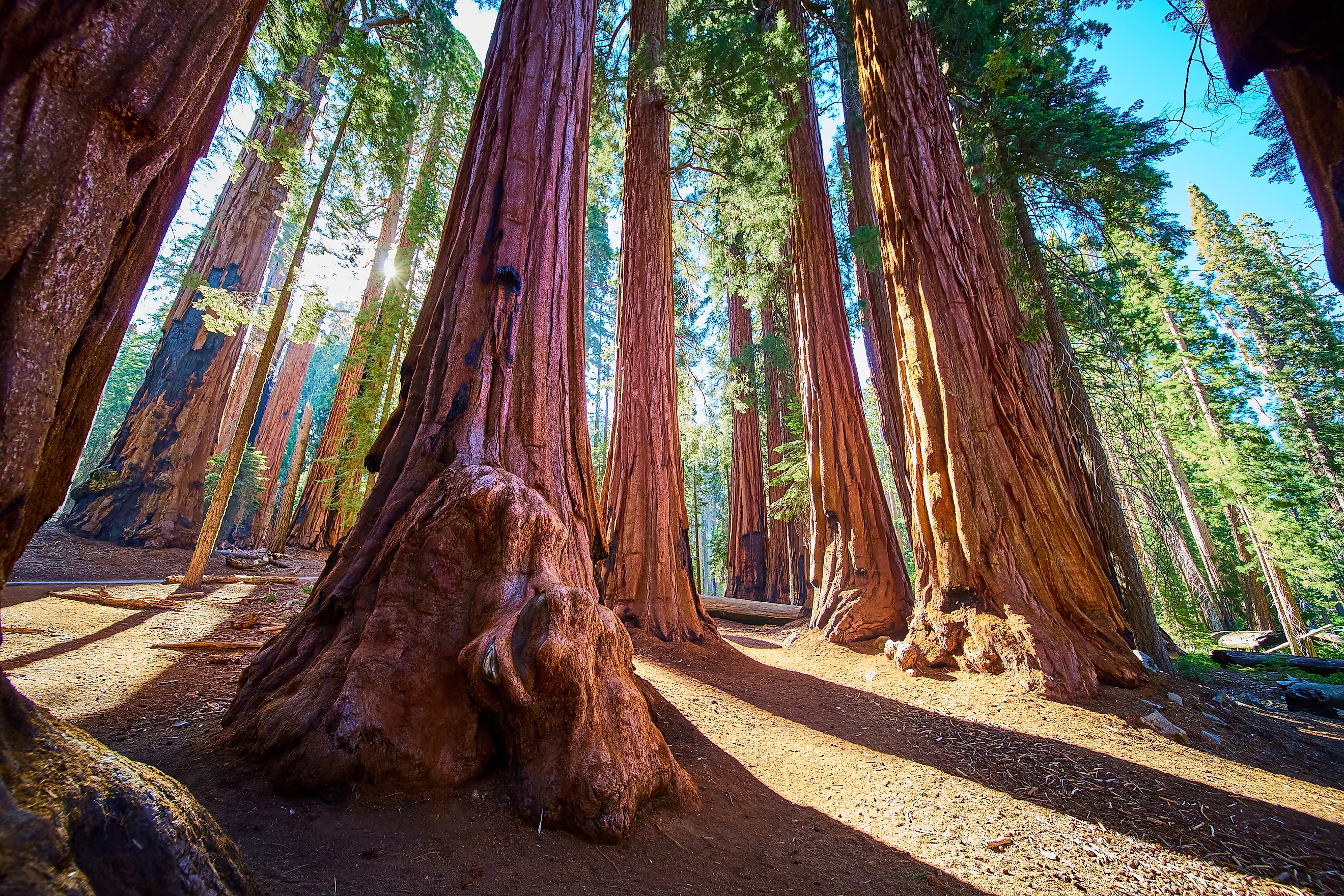
Also known as sequoias or Sierra redwoods, the giant sequoia (Sequoiadendron giganteum) is one of the largest organisms in the world. These single-stem trees have thick, reddish-brown bark that is fibrous. Its needles are blue-green and about 1/4 to 1/2" long, while its cones are woody, egg-shaped, and generally 2 to 3" long.
The oldest giant sequoias are thought to be over 3,000 years old. True to their name, these ancient trees are also massive. The General Sherman Tree is the largest known giant sequoia by volume, standing 275 feet tall and more than 100 feet around. Some giant sequoias are even taller, surpassing 316 feet in height. On average, giant sequoias are between 250 and 280 feet tall and about 10 to 15 feet around.
The Moisture They Cannot Live Without

The first condition that pins giant sequoias to this region is water. Much like its closely related coastal redwood, the giant sequoia depends on moisture. At minimum, these trees require a year-round soil moisture of 15 to 20% to meet their massive water demands. The region's Mediterranean climate results in hot and dry summers, so rainfall alone cannot supply that. Snowpack from the Sierra Nevada range is essential instead, melting slowly through the dry season to keep the ground damp.
A giant sequoia's roots are shallow, rarely exceeding 6 to 12 feet deep. However, its root system is expansive, frequently surpassing more than 100 feet in length. These wide-reaching roots allow the trees to maximize water intake. With Sierra Nevada snowmelt stored underground, steady moisture is available even when no rain falls. This is why the trees hold to a narrow band of elevation on the western slope: high enough to catch the winter snow, low enough to escape the harshest cold.
Why The Range Shrank To One Strip

Giant sequoias were not always confined to California. Ancient ancestors of the tree covered much of the Northern Hemisphere during the late Mesozoic period. Over time, this range reduced dramatically due to glacial activity and altered climate conditions such as aridification. Unable to survive in these drier, colder conditions, giant sequoias disappeared everywhere except the southwestern United States.
Today, the only naturally occurring giant sequoias are limited to a narrow strip in the Sierra Nevada Mountains. The area stretches 260 miles long and less than 15 miles wide, with trees generally growing at elevations between 3,000 and 8,500 feet. This is the one place that still delivers the exact mix the species needs: snowpack-fed summer moisture, the right elevation to hold it, and the fire regime described below. Humans have planted and grown giant sequoias elsewhere, on private properties, in parks, and in arboretums, but those trees depend on irrigation and tending. Left to nature, this California mountain region remains the only known place on earth equipped with the precise conditions needed for giant sequoias to survive and reproduce.
The Fire They Depend On To Reproduce

The third condition is the one most people find surprising: giant sequoias rely on fire to reproduce. Rising heat from wildfires allows the tree's woody cones to dry and open, releasing their seeds to the forest floor. At ground level, the fire also produces an ideal seed bed. By burning away debris and other organic matter, the seeds have an increased chance of rooting and receiving sunlight. The tree itself has thick bark, making it largely fire-resistant. Without a recurring fire cycle, a grove slowly stops renewing itself, which is part of why the species never re-established the broad range it once held.
Historically, the western Sierra Nevada region produced favorable wildfire conditions for giant sequoia reproduction. However, tree ring studies show that this natural process was abruptly interrupted in certain groves from the late 1800s to the late 1900s. By examining fire scars on a sample of tree cores, scientists deduced that regional wildfire activity decreased with European settlement. In the 1900s, human-driven fire suppression resulted in fewer sequoia seeds being released. It also caused a buildup of debris on the forest floor. As a result, fewer giant sequoia seeds sprouted, and fewer young trees matured.
Threats To The Only Wild Groves

Because the wild population sits in this single strip, a threat to the strip is a threat to the whole species. Giant sequoia trees are registered as endangered according to the IUCN Endangered Species Red List. Unlike some tree species, harvesting giant sequoias for timber is historically uncommon due to their brittle and fibrous wood. Rather, the species' greatest threats are severe fire caused by fire suppression and climate change. According to National Park Service estimates, the 2020 Castle Fire and the 2021 KNP Complex and Windy fires killed roughly 13 to 19% of all large giant sequoias in just two years. These megafires destroyed thousands of the ancient trees.
While giant sequoias are biologically adapted to fire, their thick bark is unable to withstand the intense wildfires experienced in recent decades. Fire suppression in the 19th century was detrimental, leading dense debris and plant life to accumulate in giant sequoia groves. During a blaze, these substances become an overbearing fuel source, causing fires to become extreme. Simultaneously, extreme heat and prolonged droughts have spurred more fires in the Sierra Nevada region than in the past. In sum, higher fire frequencies and buildup of organic matter have led to more intense, longer-lasting blazes that the giant sequoias struggle to survive.
Preservation

Due to their limited range, preventative maintenance is crucial to preserve the Sierra Nevada's remaining giant sequoia groves. Ironically, fire is the leading way to protect these rare trees from extinction. To safeguard the species from today's extreme wildfires, prescribed burns are a successful deterrent when managed correctly.
In 2024, researchers examined giant sequoia groves affected by the 2020 Castle Fire and 2021 KNP Complex Fire. The study revealed that trees previously treated with prescribed burns were almost 4 times more likely to survive the massive wildfires. A simulation within the study found that prescribed burns saved about 1,900 trees and may have saved an additional 3,900, had they also been treated.
Where To See Giant Sequoias
Sequoia National Park & Kings Canyon National Park
Home to roughly 40 giant sequoia groves, Sequoia National Park and Kings Canyon National Park are some of the best places to see these massive trees. The neighboring parks are managed as a single unit, so only one entrance pass is needed to access both. Together, the parks protect around one-third of all naturally occurring sequoias.
Sequoia National Park is home to the Giant Forest, the world's largest unlogged giant sequoia grove. Two trails lead to the General Sherman Tree, the largest tree in the world by volume. Nearby, the 2.7-mile Congress Trail loops past other massive sequoias, including the President Tree. Estimated at more than 3,200 years old, it is widely recognized as the oldest known giant sequoia on earth.
At Kings Canyon National Park, hikers can wander the Grant Grove. Located just 1.5 miles from the park's Visitor Center, this 90-acre area has exceptionally wide sequoias, some reaching diameters of 20 feet. The most notable sequoia here is the General Grant Tree, the world's second largest tree by trunk volume. Honored as the "Nation's Christmas Tree" by President Calvin Coolidge in 1926, this massive sequoia is 268.1 feet tall with a ground circumference of 107.5 feet. A 1/3-mile paved loop leads to the evergreen, with other sequoias along the way.
Giant Sequoia National Monument

The Giant Sequoia National Monument encompasses nearly 330,000 acres in Sequoia National Forest. Designated in April 2000, this California monument is split into a north and south section, protecting 33 giant sequoia groves. The U.S. Forest Service manages both, protecting 13 groves in the northern section and 20 in the south.
Inside the monument's southern section, the Trail of 100 Giants is the most popular way to see its giant sequoias. The 1.3-mile loop is paved and easy to navigate, passing hundreds of the ancient trees. About 125 of the sequoias here surpass 10 feet in diameter. The largest tree is 220 feet tall, with a 20-foot diameter. This sequoia, along with the grove's other large trees, is thought to be up to 1,500 years old.
Yosemite National Park

In 1864, President Lincoln signed the Yosemite Grant Act to preserve the Yosemite Valley and Mariposa Grove. This pioneering legislation marks the first time the US federal government set aside a scenic area for public use. Today, the Mariposa Grove remains the most-visited of Yosemite National Park's 3 groves. It has the vast majority of trees, with over 500 mature giant sequoias.
Located in Yosemite's southern portion, the Mariposa Grove is also the easiest to access of the three. A free shuttle service departs near the South Entrance, transporting parkgoers from a Welcome Plaza to the grove. Generally, this service is offered from mid-April to late November, although visitors should check schedules ahead of time. Driving directly to the grove is prohibited aside from private vehicles with a valid disability placard.
For a brief sightseeing hike at the Mariposa Grove, the Big Trees Loop Trail is an easy 0.3-mile stretch with wheelchair access. It passes interpretive panels and notable trees like the Fallen Monarch, an enormous sequoia with exposed roots. The 2-mile Grizzly Giant Loop Trail is longer and more moderate, but it also features more to see. Highlights include the roughly 3,000-year-old Grizzly Giant tree and the California Tunnel Tree. Carved in 1895 for horse-drawn carriages to pass through, it is the last living giant sequoia with a tunnel you can still walk through.
Protecting The Last Natural Giant Sequoias On Earth
Giant sequoias are constantly being planted and grown across the globe to combat the tree's endangerment. The Great Reserve, a UK environmental organization, hopes to plant 100,000 giant sequoias across British sanctuaries by 2030. Even so, those trees rely on human care, and the wild groves cannot be recreated. Protecting the ancient sequoias in California therefore remains a top priority of the Giant Sequoia Lands Coalition. Formed in 2021, the alliance features federal, state, tribal, and non-profit groups working to protect California's remaining ancient trees. These irreplaceable evergreens are massive carbon sinks and essential to their mountain ecosystems. Because the precise combination of snow, elevation, and fire that sustains them exists in just this one place, the last natural groves are irreplaceable in a way a planted tree can never be.