The National Parks With The Best Wildlife Viewing
The best wildlife viewing does not necessarily mean the greatest biodiversity. Some national parks stand out for the ability to see large mammals in a single trip, whereas others have a greater array of species in the ecosystem that may represent a challenge for casual visitors. What these national parks have in common is the opportunities and potential for outstanding viewing of wildlife. Animals are unpredictable, and if they want to remain hidden, they will. Many, however, are oblivious to or tolerant of human presence. As long as visitors treat wildlife with respect, encounters with wildlife in the United States' national parks can be life-changing experiences. Whether you're seeking a keystone large mammal in Yellowstone and Denali, or want to experience the more subtle reveal that comes through patience and hiking through dense forest trails, the experiences in these national parks will be rewarding.
Yellowstone National Park

Famous as the first National Park in the United States, Yellowstone was created on March 1, 1872, signed into law by President Ulysses S. Grant. The park sits mostly in the northwest corner of Wyoming, with some parkland falling into Montana and Idaho. At 3,472 square miles, the park is known for its geysers such as Old Faithful and for the wildlife, particularly large mammals such as bison, grizzly bears, wolves, elk, and moose. These are the park's Big Five, and they give Yellowstone its reputation as America's Serengeti. The park's Lamar Valley is celebrated for its wildlife watching. Covered in grasslands, the valley supports large herds of bison, as well as elk, deer, and pronghorn, even-hooved and horned herd animals sometimes called North American antelopes, although pronghorn are not related to antelopes.
With abundant herds of grazing animals present, gray wolves are also plentiful. Lamar Valley is also ideal for spotting both grizzly and black bears along Specimen Ridge or Slough Creek. Hayden Valley is renowned as an area for grizzly sightings in the valley bottoms. Other animals that can be found in Yellowstone include coyotes, foxes, and badgers, although these are not as easily spotted as the big mammals. The corridor between Tower Junction and Mammoth is known for black bear activity near the road. Yellowstone is home to almost 300 documented bird species and is a premier location for serious birdwatching. Hayden Valley is known for sightings of raptors. Pelican Creek has abundant wading birds, while the Grand Canyon of the Yellowstone (not to be confused with Arizona's Grand Canyon) is a key location for nesting osprey. Prime birding opportunities happen from May through July.
Denali National Park and Preserve

With over 6,045,153 acres of wild tundra, glaciers, and taiga forest, Alaska's Denali National Park and Preserve is centered around Denali, the tallest mountain peak in North America. Opened on February 26, 1917, as Mount McKinley National Park by President Woodrow Wilson, the park was established to protect local wildlife from overhunting, in particular Dall sheep. In 1976, the park was designated an International Biosphere Reserve, and the park was tripled in size in 1980, when it was renamed Denali National Park and Preserve.
Denali is famed for the Alaskan Big Five mammals: grizzly bears, moose, caribou, Dall sheep, and gray wolves. The park has established front-country trails near the entrance, while the remaining park is trail-less and should only be approached by experienced hikers with remote wilderness training. Views of Denali the mountain are particularly dramatic at Mile 66, at the Eielson Visitor Center. The park is also known for sightings of smaller mammals, such as foxes, beavers, marmots, pikas, and snowshoe hares. Denali has 39 mammal species, while there are 169 bird species, including golden eagles and rock ptarmigan.
Grand Teton National Park

Known for sightings of moose and pronghorn, Grand Teton National Park in Wyoming is famed for the Jackson Hole valley floor and Oxbow Bend. At 310,000 acres, the park is particularly renowned for access to animal sightings against beautiful mountain landscapes. The park itself took decades of political battles and local resistance to come into being. On February 26, 1929, President Calvin Coolidge signed the bill creating the original park, although it was limited to 96,000 acres due to local ranching interests. Philanthropist John D. Rockefeller, Jr. secretly bought up 30,000 acres of private land in the 1920s and 1930s to donate to the federal government to expand the park.
Using the Antiquities Act in 1943, President Franklin D. Roosevelt declared the valley floor as the Jackson Hole National Monument, protecting it by executive order. On September 14, 1950, President Harry S. Truman signed a bill officially merging the 1929 original park, the 1943 national monument, and Rockefeller's donated lands into the single, unified 310,000-acre Grand Teton National Park. In addition to moose and pronghorn, the park is known for sightings of other large mammals such as bison, elk, black bears, grizzly bears, gray wolves, and bighorn sheep. Small mammals such as coyotes, American pika, yellow-bellied marmots, golden-mantled ground squirrels, beavers, river otters, muskrats, Uinta ground squirrels, and American martens can be found. Over 300 distinct bird species have been officially documented across the park, with the prime viewing window between May and August during nesting and breeding season.
Katmai National Park & Preserve

Alaska's Katmai National Park & Preserve is known for its brown bears. For those seeking to experience the second-largest species of bear, from a safe distance, Katmai is a definite choice of destination, although there is no road access to the park, and reaching it requires multiple flights and specialized water or air taxis. Nevertheless, for brown bear watching, it is difficult to find a better place, especially during the annual salmon runs. Katmai National Park and Preserve was first formed as a national park in 1980. The area gained global fame after the 1912 Novarupta volcanic eruption, the largest volcanic eruption of the 20th century, blanketing the region in ash and collapsing nearby Mount Katmai's summit. Expeditions into the area started in 1916 to examine the "living laboratory" of the landscape, and by 1918, President Woodrow Wilson proclaimed Katmai a national monument.
With an understanding of the importance of the brown bear and the vital salmon habitats, the monument status was changed to a park and preserve, with expanded boundaries to over 4 million acres. The park's Brooks Falls is the site of brown bear congregations during the salmon run. Some of the most dramatic wildlife-viewing scenes are available with the bears standing in the river trying to catch salmon jumping upstream. Katmai also has 42 documented mammal species, including red foxes, lynx, wolverines, river otters, mink, martens, porcupines, and snowshoe hares. The park is also described as one of the best areas in North America for birdwatching, especially during spring migration and summer breeding. Birds include bald eagles, ospreys, golden eagles, puffins, black oystercatchers, tundra swans, loons, ptarmigans, Arctic terns, and ravens.
Everglades National Park

Florida's Everglades is a massive wetland ecosystem. The Everglades include areas changed by human activities, including agriculture, land development, and highways. The Everglades National Park was established in 1947 and covers around 2,400 square miles, roughly 20% of the original Everglades ecosystem. It was created to preserve the southern tip of the quickly shrinking region. Within the park's boundaries, hunting, commercial development, and unauthorized motorized vehicles are heavily restricted or banned outright. The park is also where visitors will find information centers, paved trails, and other official programs. The Everglades is particularly known for its variety of species, including reptiles, aquatic mammals, birds, fish, and other aquatic wildlife. There are over 350 bird species and 40 mammal species in the Everglades, including many threatened and endangered species.
The best times for viewing are between December and April, with opportunities to view American alligators, American crocodiles, manatees, including West Indian manatees, dolphins, turtles, wood storks, egrets, great blue herons, ospreys, plus numerous other birds, fish, and reptiles. Probably the main attraction in the Everglades National Park is the 200,000 alligators that are usually within the park's boundaries. Florida as a whole has around 1.3 million alligators. The best way to safely encounter them up close in the park is with an airboat. The National Park Service restricts airboating to just three officially authorized concessioners located along Tamiami Trail. For the more adventurous visitor, canoeing and kayaking are a possible way to encounter alligators in the water and near shore.
Glacier National Park

Located in northwest Montana, Glacier National Park is over 1 million protected acres of glacial-carved peaks, 700 lakes, and a pristine ecosystem. With the Great Northern Railway pushing through the Marias Pass in the late 1800s, the area opened to outsiders. The railway owners, seeing the tourism potential, lobbied the federal government for protection. On May 11, 1910, President William Howard Taft signed the bill establishing Glacier National Park, the tenth national park in the United States. Glacier is one of the few areas of the contiguous United States where almost all the native, pre-settlement species continue to exist. Mountain goats, the official symbol of the park, are famous for their agility on cliffs, and they can be spotted licking minerals off rocks around Logan Pass.
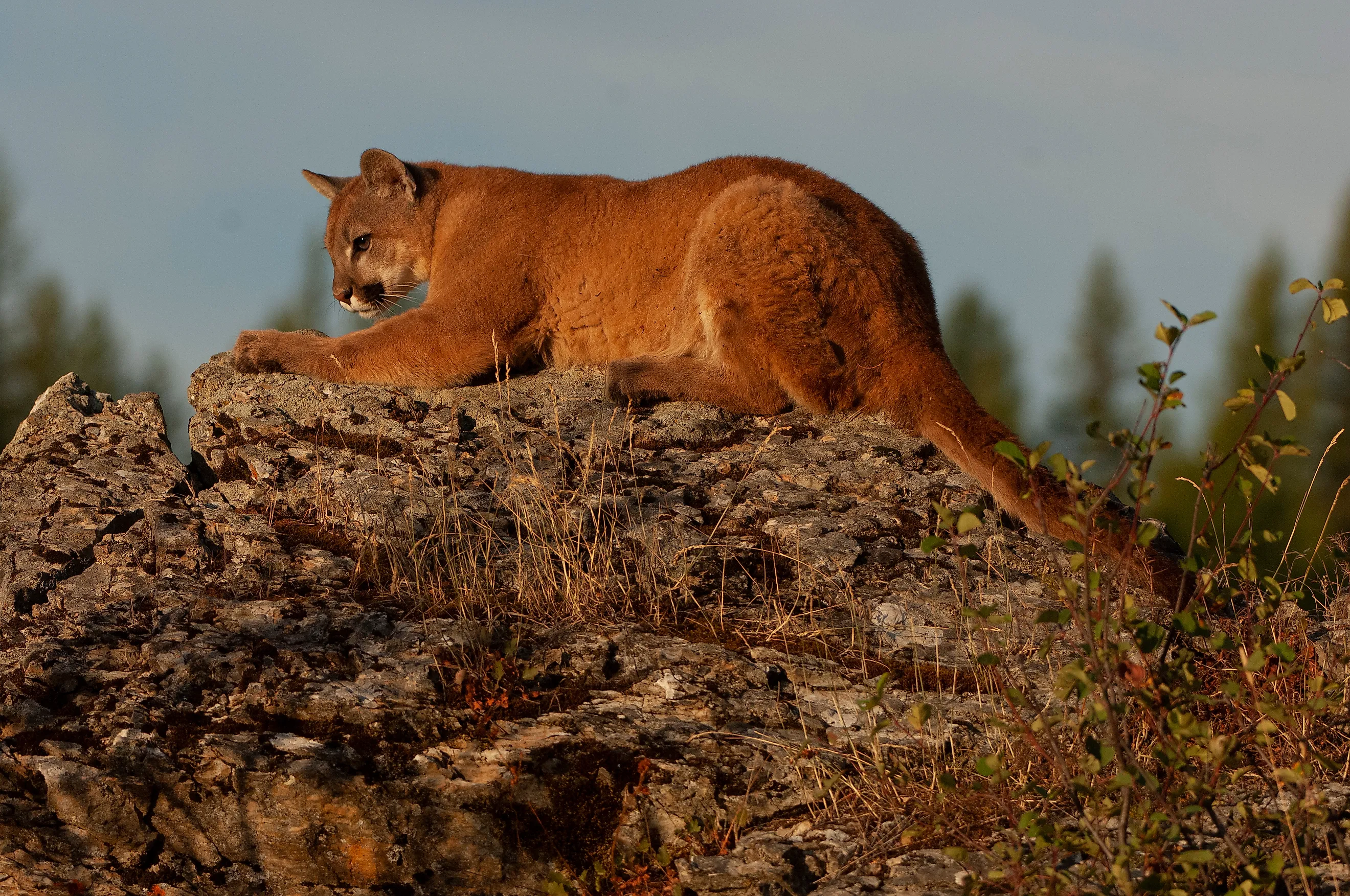
The park has the densest population of grizzly bears in the lower 48 states, as well as a significant black bear population. The grizzlies can be found in the high mountain meadows, while black bears tend to prefer the forested valleys. Massive herds of bighorn sheep are common to the alpine zones such as the Highline Trail. Moose and elk are common around the lakes and lower marshes. There are healthy populations of apex predators, such as gray wolves, mountain lions, and lynx, although casual visitors may not see these due to their secretive natures. Smaller mammals such as pikas and marmots are common, as are 279 documented bird species, including bald eagles and golden eagles. The park spans many crucial migratory pathways along the Continental Divide, and around 144 of the species of birds nest and breed in the park during the summer months.
Crucial Wildlife Refuges
The United States National Park System protects a large range of wildlife. In many cases these parks are the last places in North America where large animals can live relatively undisturbed. Large land mammals in particular benefit from this protection as land increasingly disappears to development. The sheer size of many of these national parks guarantees ample room for these animals to exist in their natural habitats. For visitors, these are opportunities to see many of these large animals up close, but the parks are also ensuring that these populations remain healthy and thriving for future generations of park visitors.