The Oldest National Park In The United States
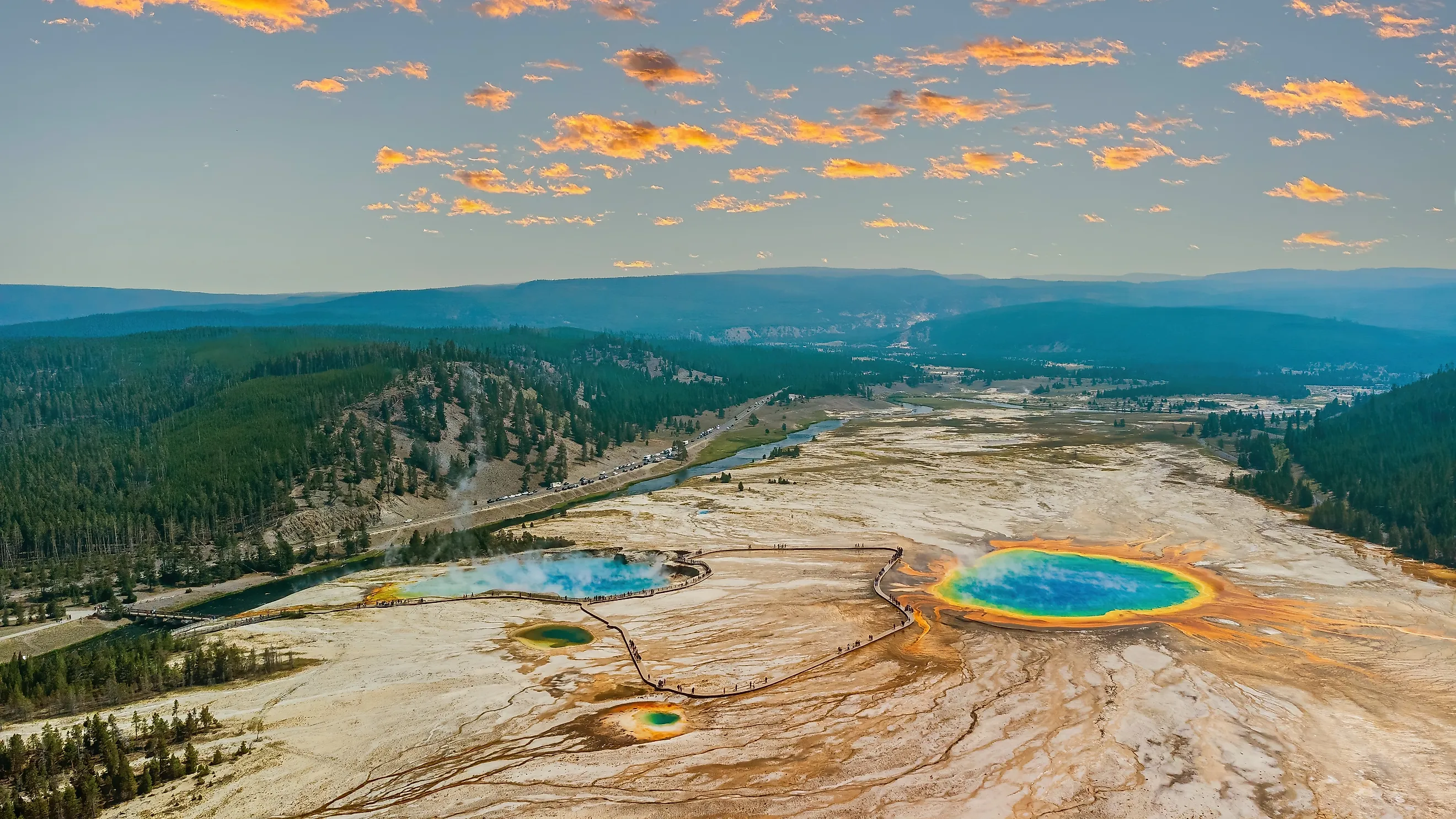
The oldest National Park in the US is Yellowstone National Park. This massive park of 2.2 million acres spans three states, Wyoming, Montana, and Idaho. Created in 1872, it was the nation's very first tract of land dedicated solely for public enjoyment in perpetuity. Home to the famous Old Faithful geyser and about half of the world's hydrothermal features, this park is the third most visited National Park. These are some of the facts and features of Yellowstone National Park, the oldest National Park in the US.
History

During the Civil War Reconstruction era, miners and railroad developers, who were set on the idea of Manifest Destiny, began to explore the West. Those who returned to the East reported "tall tales" of boiling hot springs and huge geysers. Few people believed these stories, but in 1871 Dr. Ferdinand V. Hayden, who led a U.S. geological survey of the western territories, convinced Congress to fund an expedition. Taking along a well-known painter and a photographer, he was able to convince lawmakers that all of the stories about the area were actually true.
Hayden convinced Congress that developing this land would destroy it forever and that it should be protected for public use. The following year, on March 1, President Ulysses S. Grant signed the Yellowstone National Park Protection Act, which declared that it would be preserved as a public park in perpetuity. Thus, the first ever US National Park was created, the concept of which did not even exist before this.
Not discussed at the time was the displacement of several Indigenous tribes that had used this area for over 10,000 years, belying the popular idea that this was untouched land.
Features

The spectacular features of Yellowstone National Park are headlined by the geothermal activity it contains. The most famous of these is Old Faithful, which erupts every 60 to 110 minutes and shoots boiling water up to 184 feet into the air. Less talked about is Steamboat Geyser inside of the park's Norris Geyser Basin. That one shoots up to 300 to 400 feet at times, though not as predictably as Old Faithful. It's the world's tallest geyser. Multiple other hot springs are throughout the park.
The Grand Canyon of Yellowstone is 20 miles long, created by the Yellowstone River with a 308-foot waterfall at the lower end, and pink and yellow rock walls. Yellowstone Lake, also within the park, is the largest high-altitude lake in North America, covering 132 square miles.
Wildlife and Foliage

Yellowstone contains the largest concentration of mammals in the lower 48 states with 67 unique species, with Elk leading the way in terms of numbers. Bison have lived in this area since prehistoric times. Large populations of both Grizzly and Black Bears also live in the park. Moose live in the marshy areas and along lake shores.
Notably, Gray Wolves, formerly extinct from the park after being extinguished by humans in the 1920s, were reintroduced in 1995 and have done well. The population fluctuates between 80 and 123, according to the National Park Service.
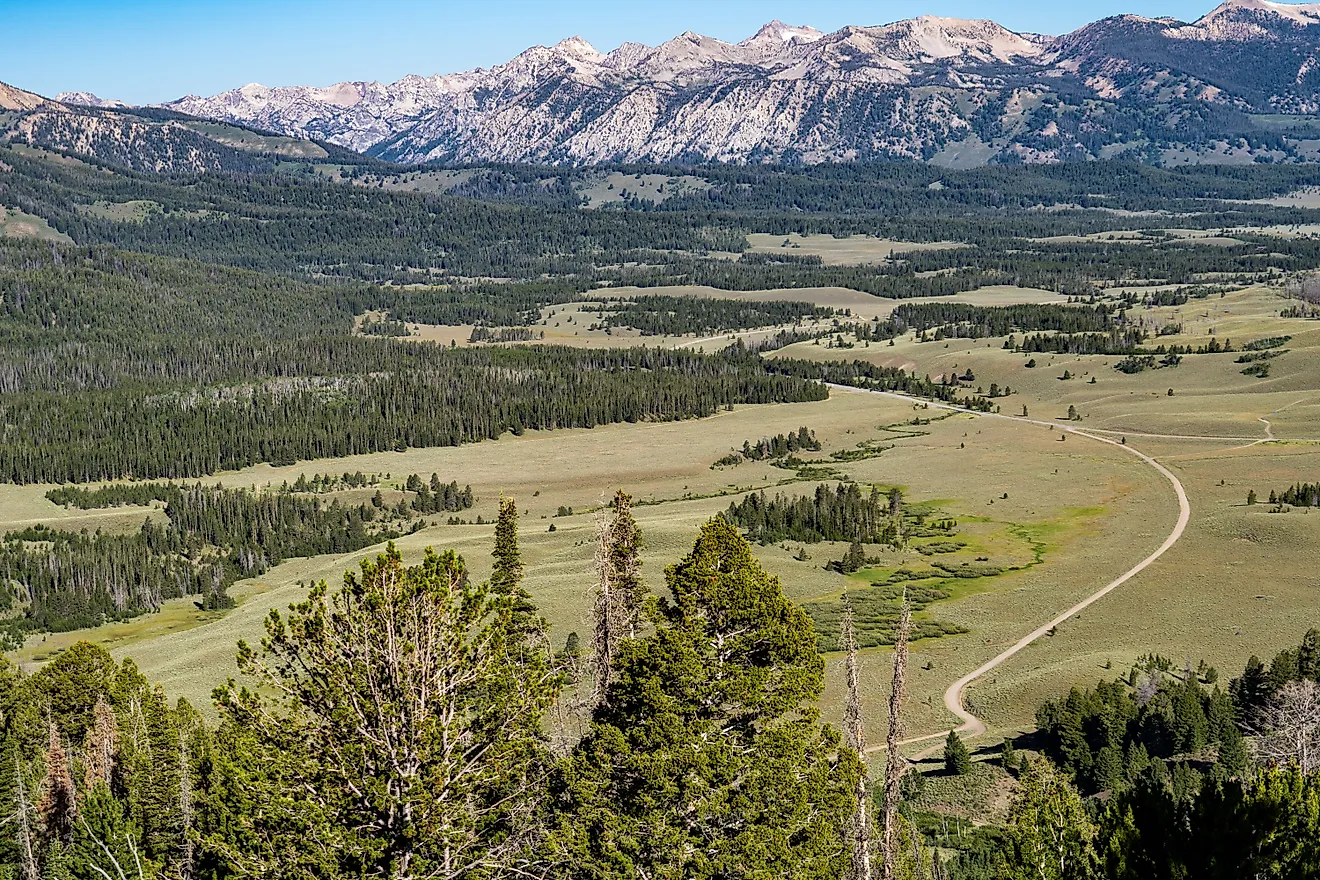
The Lodgepole Pine covers about 80% of the park. Quaking Aspen, Cottonwoods, and Riparian shrub sections make up much of the rest of the resident trees. In the Autumn, the deciduous trees display brilliant colors.
Invasive Species

Unfortunately, some species of water and plants are present in the park and pose an active threat. The Lake Trout was illegally introduced to the park in 1994. They eat native trout, which bear and raptors rely upon for food. Efforts are underway to subdue them with netting collection operations. New Zealand Mud Snails also threaten the park's waters, and a separate microscopic parasite damages young trout, creating a condition known as Whirling Disease.
Some of the fast-spreading plants that are not native to the area and are classified as invasive include the Canada Thistle, Spotted Knapweed and both Dalmatian and Yellow Toadflax. These latter plants are ornamental plants that have escaped into the wilderness, taking over grass species that elk and bison need.
Seismic Activity

The rumors are that the massive super volcano underneath the park is overdue to explode. This has been shown by scientists to be patently false. Yes, Yellowstone is one of the most active seismic regions in the US, with an average of 1,500 to 2,000 quakes per year. However, while most of these quakes are small and often go unnoticed, the park still records larger events from time to time, including some in the magnitude 3 to 4 range in recent years.
The US Geological Survey estimates that the chance of a major eruption is about 1 in 730,000, or 0.00014%, which makes it very unlikely to occur anytime soon. In order for a volcano to erupt, there needs to be a substantial amount of liquid rock within its core. At this time, the magma chamber inside the volcano is mostly solid. Scientists would detect a change and much greater seismic activity with massive ground deformation for many months before an eruption would happen. In fact, scientists postulate that rather than a massive explosion, a lava flow would occur.
Safety Within the Park

About four to five people die in Yellowstone each year, with most of these deaths happening from auto accidents or medical events, such as a heart attack. Over the years, geothermal areas have been the site of about 20 deaths from falling into or voluntarily jumping into a hot spring or caldera. The ground area around these features is quite thin and doesn't necessarily look fragile, causing a false sense of security when wanting a closer look.
Eight fatal bear maulings and two fatal bison gores have occurred since the park was first opened. Other maulings and gores have also occurred.
To avoid the dangers that exist from the park itself (not including road accidents or medical incidents), it's important to follow park rules and use common sense. Feeding wildlife or trying to get closer for a good video endangers both the person and the animal. If the wildlife becomes dependent on being fed, or gets too used to human contact, and people are injured or killed, that animal may have to be euthanized. Staying away from geysers and hot springs and not getting too close to canyon edges are crucial to a safe visit.
Visiting Yellowstone
Yellowstone National Park had 1,676,678 visitors through the end of June of 2026 and 4,762,988 in 2025, the second busiest year in its history, according to the National Park Service. This makes it the third most visited park behind Great Smoky Mountains National Park and Zion National Park. The park is open year-round but most of the interior roads are inaccessible and closed during the winter.
The park has nine lodges, including the historic Old Faithful Inn. This was built in 1903 and is one of the many rustic lodges throughout the park system. Its massive 76-foot-tall stone fireplace is one of its most notable features.
There are also five larger campgrounds and many smaller, more rustic campgrounds, which you must book ahead of time. Backcountry camping requires a permit and is limited. A few walk-in permits are available.
There are several different types of entrance fees, from standard admission (good for seven days) to annual passes that allow admission to all of the National Parks in the US, and several options in between. In 2026, a standard admission was $35 for a single car and its passengers, $30 for a motorcycle, and $20 for those entering on foot, bike, or skis. For the most up to date information on fees, go to the website for the National Park Service.