The National Parks With Glaciers You Can Still See
Glaciers can be viewed by land, sea, and air with relative ease in national parks in the Western United States and Alaska. Glacier Bay National Park has no road connection to the rest of the state, so visitors fly or sail into Gustavus and drive the last ten miles to Bartlett Cove, and several tour operators run voyages up the bay from there. Glacier National Park's Going-to-the-Sun Road makes viewing glaciers easily achievable from pullouts on the side of the road. The following national parks are ranked by the number of glaciers within them, plus the easiest glaciers to access and how to see them.
Wrangell-St. Elias National Park and Preserve, Alaska

Outside of the polar regions, Alaska is one of the most heavily glaciated regions on Earth. Around 21,835 square miles of Alaska are covered in glaciers, an area not far short of the size of West Virginia. Wrangell-St. Elias National Park contains 3,121 glaciers, the most of any national park. The most accessible glacier in the park is Root Glacier, which can be hiked to along the 1.5-mile Root Glacier Trail from Kennecott. The park contains Hubbard Glacier, the largest tidewater glacier in North America. The only way to view the glacier is from Yakutat, where several companies offer tours by boat or by air. McCarthy Road runs about 60 miles from Chitina to the McCarthy and Kennecott area, which is the usual way in by vehicle, though it reaches only the western edge of a park the size of Switzerland.
Glacier Bay National Park, Alaska

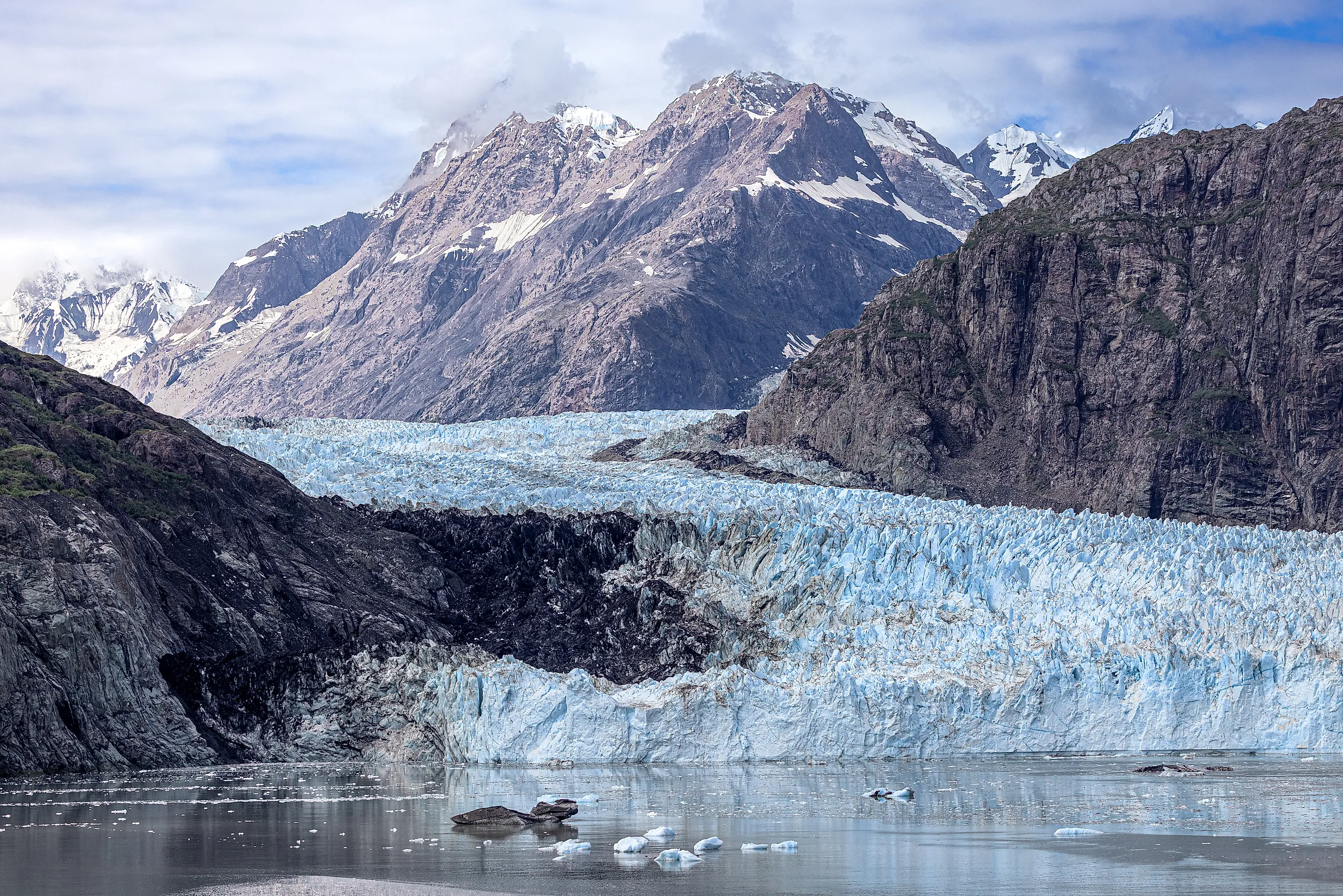
Glacier Bay National Park contains over 1,000 glaciers, most of which are high in the mountains, although 11 of them reach the sea. The West Arm of Glacier Bay is prime for glacier viewing. Glacier Bay Lodge operates a daily nine-hour boat tour to view Margerie Glacier and others. Margerie Glacier is a primary glacier that many people visit on sailboats, kayaks, tour boats, and cruises. Johns Hopkins Glacier is also in the West Arm and is considered one of the park's most scenic tidewater glaciers. In the East Arm, the McBride Glacier is a good destination for kayakers as it receives fewer visits from motorized vessels, making the water calmer for smaller watercrafts.
North Cascades National Park, Washington

North Cascades National Park is one of the most glaciated places in the United States outside of Alaska, accounting for around one-third of all glaciers in the contiguous United States. Glaciers are primarily found in the cold and rocky high-elevation areas of the park. Although the park has over 300 glaciers, many of them have significantly shrunk during the last century. The park is composed of extensive backcountry trails, some of which, like the Cascade Pass Trail, pass several peaks and glaciers. That trail ends at the pass itself after 3.7 miles and 1,700 feet of climbing. Reaching the toe of the Sahale Glacier and its campsite means continuing on the strenuous Sahale Arm Trail, which adds another 2.2 miles and more than doubles the total elevation gain. Additionally, pullouts along US-20 past Diablo Lake and Ross Lake allow you to view glaciers at the top of the surrounding mountain peaks.
Kenai Fjords National Park, Alaska

Harding Icefield, the centerpiece of Kenai Fjords National Park, is responsible for spawning close to 40 glaciers. While all of the land in the park was once buried under ice, today, just 51 percent is covered. Exit Glacier is one of the most accessible in the park, with several trails leading to different views of it. One of these includes Glacier Overlook Trail, which leads to a panoramic vista of Exit Glacier stemming down from the Harding Icefield. Day cruises and kayaking trips can be chartered from Seward that take visitors to explore the park's coastline, mountains, fjords, and tidewater glaciers.
Glacier National Park, Montana

Despite its name, there are only around 26 named glaciers in Glacier National Park. However, between 1966 and 2015, every named glacier experienced shrinkage, some by over 80 percent. There are over 1,000 miles of hiking trails with views of glaciers. Jackson Glacier is the easiest glacier to see in the park and is the seventh largest. It is visible from an overlook on the Going-to-the-Sun Road, a highway that bisects the park from east to west. Other glaciers can be reached by foot on hikes of varying difficulty. The Hidden Lake Overlook Trail is a moderate 1.3-mile walk with 600 feet of elevation gain, though the view there is of Hidden Lake and the surrounding peaks rather than a glacier. Sexton Glacier from the Siyeh Pass Trail is a very challenging 10-mile hike with 2,300 feet of elevation gain, and Sperry Glacier is a far longer undertaking from Lake McDonald.
Viewing Glaciers Before They Are Gone
Glaciers exist in some of the most remote national parks in the country. As climates change and warming temperatures reshape these national parks' frozen landscapes, the time to visit them before they are gone is fleeting. For those willing to wander off the beaten path, there is access to ice that is still actively carving valleys and mountainsides. Not all of it is ancient. Glacier Bay was largely open water when George Vancouver passed in 1794, and much of the ice there dates to the Little Ice Age rather than the Pleistocene.