The National Parks With No Venomous Snakes At All
Some national parks have no venomous snakes at all. In these parks, there is no rattle to listen for in the brush and no copperhead to step around, because no venomous species lives inside the boundary. That is rare in a park system where rattlesnakes are common in the Sequoia foothills and Yosemite has its own species. A few of these parks have no snakes of any kind, and in others the nearest rattlesnake lives just past the park line.
Alaska's National Parks Have No Snakes at All

Alaska has no wild snakes, and the Alaska Department of Fish and Game says no other land reptiles live wild in the state either. That holds for all eight of its national parks, including Gates of the Arctic in the Brooks Range and Glacier Bay in the Southeast panhandle. The state's only reptiles are sea turtles, occasionally seen in coastal waters. Garter snakes were reported near hot springs in Southeast Alaska in the 1970s, but later surveys found no trace of them.
In Denali National Park, the only amphibian or reptile of any kind is a frog. The Park Service puts Denali's total for the two groups at that one species, the wood frog, against more than 80 in Great Smoky Mountains National Park. Wood frogs breed in shallow ponds with plants growing up through the water, like those near Wonder Lake, and change from tadpole to frog before the water freezes in fall. Then the frogs freeze too, solid, for up to eight months a year, and thaw out in spring.
Voyageurs National Park Has No Venomous Reptiles

Long, cold winters and short summers make Voyageurs, a park of lakes and islands on Minnesota's border with Canada, a hard place for reptiles. Four reptile species are confirmed in the park and two more are suspected, and the Park Service says Voyageurs has no venomous reptiles. The snakes on the confirmed list are the common garter snake and the northern red-bellied snake, and garter snakes can be found sunning in open patches of ground and on rocks. The massasauga has not been recorded anywhere in Minnesota since 1936, and the state's other rattlesnake, the threatened timber rattlesnake, lives only in the blufflands of the far southeast.
Isle Royale Has Just Two Snakes, Both Harmless

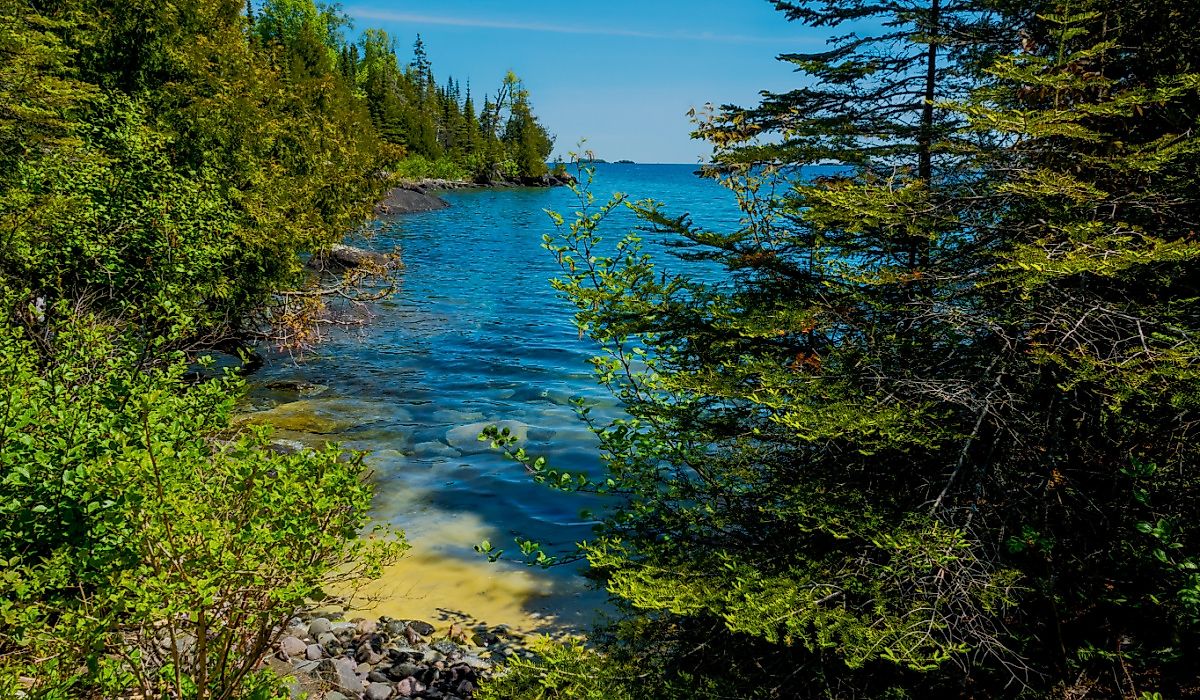
Isle Royale, out in Lake Superior, has only two kinds of snakes, and its garter snakes come in an unusual range of colors. Up to 40 percent of them show extreme color variation, and the proportion has stayed about the same since at least 1928. A dark snake reported in the 1980s as a black rat snake is now listed by the Park Service as a false report, most likely a dark-skinned garter snake.
The island lies 14 miles off the Canadian shore, 22 miles from Grand Portage, Minnesota, and 56 miles across open water from Michigan's Keweenaw Peninsula, and the Park Service notes that this distance from the mainland has limited the variety of species living there. The garter snake is common and regularly seen there, and the island's other snake, the northern red-bellied snake, is small and copper-brown and easy to overlook.
None of Acadia's Five Snakes Is Venomous

On Mount Desert Island, where most of Acadia lies, the garter snake is the one seen most often. Historical park records, from surveys in 1939 and 1971, place garter snakes on the west shore of Jordan Pond, near the Jordan Pond House, and on the summits of Cadillac, Sargent, and South Bubble mountains. Surveys also found the eastern milksnake widely distributed across the island, near sea level and on the mountaintops.
Those two are among the park's five snakes, along with the smooth green snake, redbelly snake, and ringneck snake, and none of the five is venomous. Maine's one rattlesnake lived far from this coast. The timber rattlesnake was found only in the southern part of the state, and Maine's wildlife department lists it as extirpated, with no credible evidence of one since the mid-1800s.
No Venomous Snake Has Turned Up in Cuyahoga Valley

In northeast Ohio's Cuyahoga Valley, the Beaver Marsh sits a quarter mile north of the Ira Trailhead on the Towpath Trail, and on sunny days northern water snakes bask on logs along its shorelines. They are one of 11 snake species in the park, and no venomous snake has been found within its boundary. Two have been identified nearby: the eastern massasauga, a small rattlesnake that is endangered in Ohio, and the northern copperhead.
Grand Teton's Three Snakes Are All Harmless

At about 6,400 feet, the sagebrush valley floor is the lowest ground in Grand Teton National Park. The wandering garter snake is the most common reptile in the park, while the valley garter snake and the rubber boa are less common, and all three snakes usually live near water. With one lizard, they make up the park's four reptiles, and none of the snakes is venomous, a point the Park Service makes on its wildlife page.
The nearest venomous snakes are in Yellowstone, Grand Teton's neighbor to the north, where prairie rattlesnakes are the only dangerously venomous snakes. They are most common along the lower portions of the Yellowstone River near Gardiner, Montana, at Yellowstone's northern edge.
Rocky Mountain National Park Begins at the Edge of Rattlesnake Country

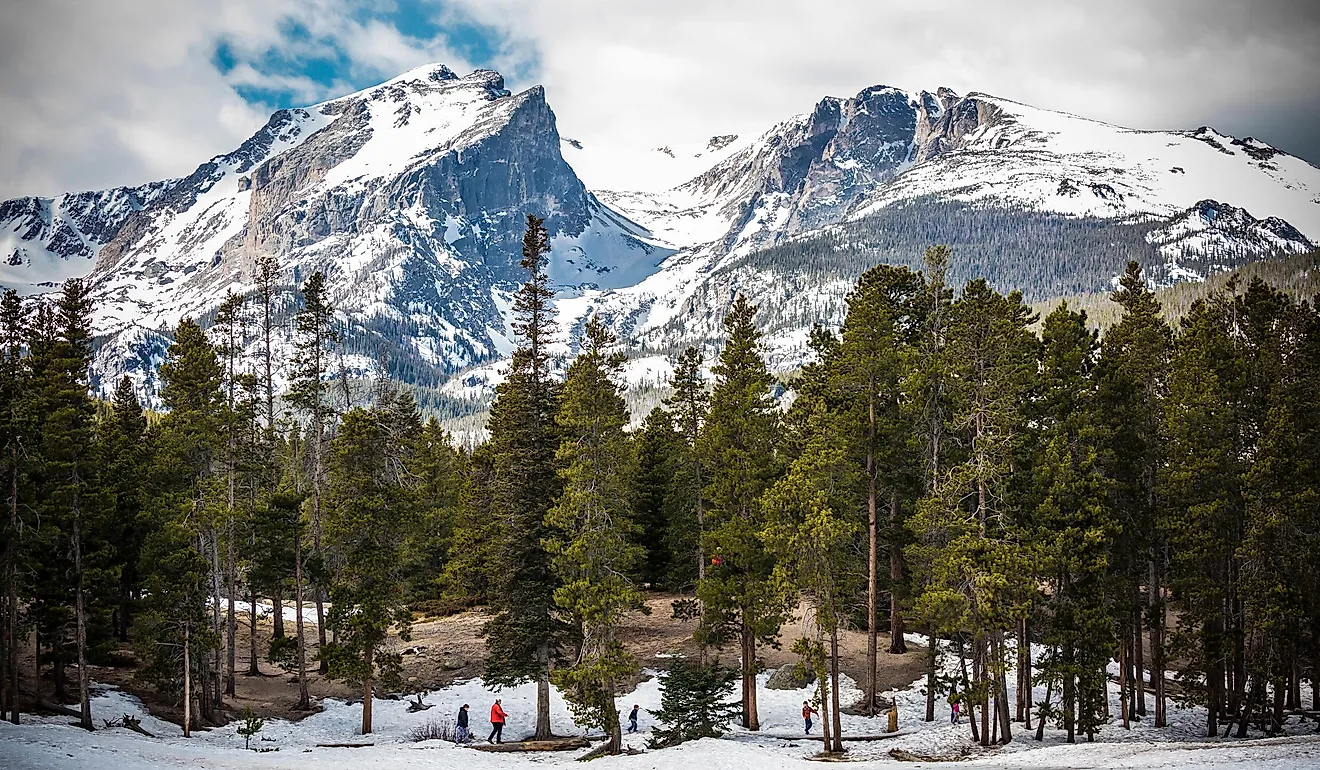
An older Park Service handbook named the ponds in Cub Lake Valley and Hallowell Park as favorite haunts of Rocky Mountain National Park's garter snakes, which turn up near most of the park's marshy ponds and slow-moving streams. The western terrestrial garter snake is the park's only snake, and the Park Service places it in the park's lower elevations. The other reptile on the list is the eastern fence lizard, one of the newest species documented in the park.
Above those ponds, the park climbs to 14,259 feet on Longs Peak, and the Park Service lists only these two reptiles for a park of high elevations and cold temperatures. The same handbook said no rattlesnakes or other venomous reptiles had ever been found in the park.
Across the Rocky Mountain region, the Park Service says, the western rattlesnake lives mainly below 8,000 feet, and Rocky Mountain National Park's lowest ground sits just under that mark.
Great Sand Dunes Has Never Recorded a Venomous Snake

No snakes live in the dunes themselves at Great Sand Dunes, in Colorado's San Luis Valley. Garter snakes keep mostly to the park's creeks, where they hunt amphibians, small mice, and insects, and only occasionally wander into the grasslands or onto the dunefield. The bullsnake, the largest reptile in the park, sometimes grows more than 5 feet long.
The Park Service says no venomous snake has ever been found in the park or preserve. Rattlesnakes have been seen in some rocky canyons and foothills of the San Luis Valley, though, and infrequently along the foothills south of the park.
Black Canyon of the Gunnison Is Too Cold at Night for Many Snakes

By day, Black Canyon's snakes are usually spotted sunning on a rock or sheltering in a crevice, and a 2026 Park Service survey of reptiles on the North Rim found smooth greensnakes and terrestrial gartersnakes and no rattlesnakes. The park's full list holds five snakes, adding the milksnake, striped whipsnake, and gopher snake, and none of them is venomous, though park staff still tell visitors to watch their feet. A 2006 Park Service note added that nighttime temperatures at Black Canyon are too cold for many species of snakes and amphibians. Farther west, at Colorado National Monument near Grand Junction, the midget faded rattlesnake is the only venomous snake.
Olympic National Park Is on a Peninsula Without Venomous Snakes

Three snakes live in Olympic National Park: the rubber boa, the common garter snake, and the northwestern garter snake. An older park handbook told visitors the garter snake was probably the only snake they would see, and the Park Service says there are no venomous snakes anywhere on the Olympic Peninsula.
Washington's rattlesnakes need warm, dry country, such as desert shrub, grasslands, and open pine forest. The Burke Museum in Seattle notes that they live only on the eastern side of the Cascade Mountains and in the eastern Columbia River Gorge, well away from the peninsula. The park's own climate, cool and maritime, is not ideal for reptiles, according to the Park Service.
Channel Islands National Park Has Two Snakes, Neither Venomous

Rattlesnakes did reach the Channel Islands once. Fossil evidence suggests they lived on San Miguel and Santa Rosa islands in the late Pleistocene. Today the park's five islands, the nearest of them 13 miles from the park's visitor center in Ventura, have just two known snakes, and the Park Service lists both as non-venomous.
The Santa Cruz Island gopher snake is a dwarf found only on Santa Cruz and Santa Rosa, rarely longer than 3 feet, where mainland gopher snakes can reach 7. It lives in grasslands, dry streambeds, and oak and chaparral woodland, and its threatening behavior mimics a rattlesnake's, a habit that sometimes gets it killed. Within the park, the western yellow-bellied racer lives only on Santa Cruz, where it hunts small vertebrates and large insects in grassland and coastal sage scrub.
Hawaii's Two National Parks Have No Venomous Land Snakes

Snakes are illegal in Hawaii, where owning, transporting, or possessing one can bring a class C felony charge and a fine of up to $200,000. The islands these two parks sit on lie 2,400 miles from the nearest continent and have never been connected to any other land mass, according to the Park Service at Haleakalā. Many groups of animals common on the continents never made that journey, the Park Service notes at Hawaiʻi Volcanoes, where the only native land mammal is a bat.
No land reptile is believed to be native to Hawaii. The state's one land snake, the Brahminy blind snake, is a harmless, earthworm-like burrower introduced from Asia that spends most of its life underground, and neither park has a venomous land snake, on the coast at Hawaiʻi Volcanoes or on Haleakalā's 10,023-foot summit. The only venomous snake that turns up in Hawaii comes from the sea. The yellow-bellied sea snake, a highly venomous open-Pacific species, reaches land only rarely, the state agriculture department says, when strong winds or currents wash one ashore, as happened at Honoliʻi Beach in Hilo in early 2025.
Glen Haven, a small community northeast of Estes Park at about 7,200 feet, is where an older Park Service handbook placed the highest known rattlesnake reports in the region around Rocky Mountain National Park. That puts those reports outside the park and a few hundred feet below its lowest ground. Inside the boundary, the western terrestrial garter snake is the only snake, living near marshy ponds like the ones in Cub Lake Valley and Hallowell Park. Grand Teton has a similar edge to its north, where Yellowstone's prairie rattlesnakes are most common along the lower Yellowstone River near Gardiner. In Alaska there is no edge to find, because no wild snake lives anywhere in the state.