The National Parks Where Bighorn Sheep Are Easiest To Spot
Seeing a bighorn sheep in the wild usually starts with a glimpse of movement on a mountainside. Soon, an animal comes into view, making its way across a rocky slope that looks impossible to cross. Watching one pick its way along a narrow ledge is reason enough to stop and look closer, and a band of sheep gathered against a mountain backdrop is even better. In certain national parks, sheep return to the same mineral licks, alpine passes, and rocky overlooks year after year. Those habits point to specific places to watch for them, many of them close to a road or trail.
Rocky Mountain National Park, Colorado

At Sheep Lakes, in Rocky Mountain National Park, bighorns come down from the mountainsides to lick nutrient-rich mud. The lakes are in Horseshoe Park, a broad valley a few miles beyond the Fall River Entrance, and a designated viewing area looks out over the slopes and meadow. Few settings show as clearly how knowing an animal's habits leads to knowing where to look for it.
The sheep come down out of the mountains here for the nutrients the lick supplies. Parts of the surrounding area close seasonally to protect them on their way to the lick, and watching happens from the designated viewing area. Bighorns are seen near Sheep Lakes and Horseshoe Park most reliably between May and mid-August.
The park's alpine terrain is the other place to look. The National Park Service identifies Trail Ridge Road as a reliable place to watch for bighorns at higher elevations and notes sightings between Forest Canyon Overlook and the Alpine Visitor Center.
Badlands National Park, South Dakota

The eroded ridges of Badlands National Park give bighorns places to graze as well as steep slopes for retreat. Along the park's roads, sheep turn up on the rocky faces around Pinnacles Overlook. The National Park Service names Big Badlands Overlook and the Castle Trail area near Cedar Pass as two more reliable spots.
Pinnacles Overlook has a seasonal draw of its own as a lambing area in late April and early May, when ewes and young lambs can be seen working across the terrain. After bighorns disappeared from the Badlands, wildlife managers brought 22 animals from Colorado to the park in 1964 and added another group in 2004.
Glacier National Park, Montana

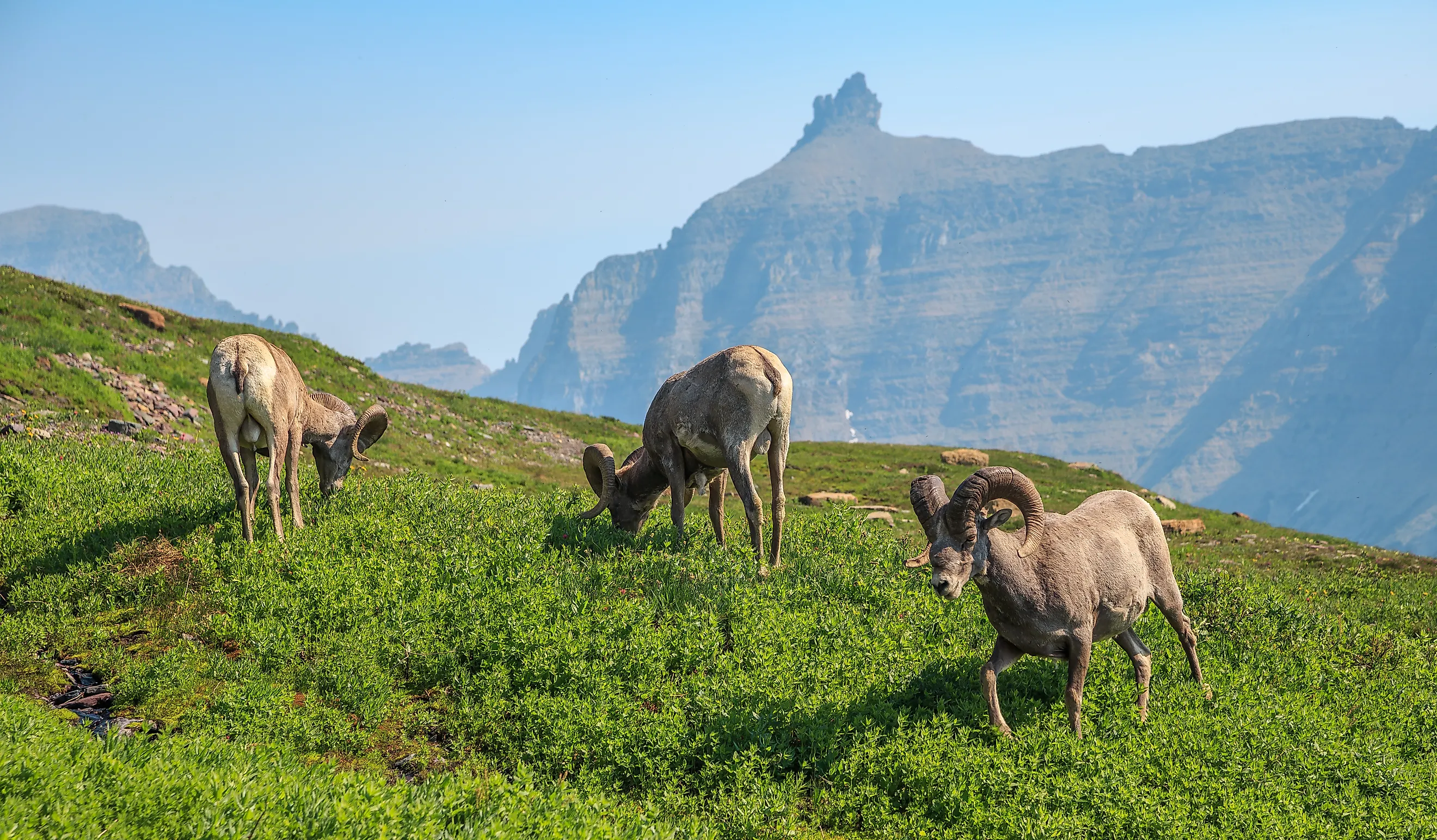
Going-to-the-Sun Road climbs through Glacier National Park's mountains to Logan Pass, where it crosses the Continental Divide at 6,646 feet. According to the National Park Service, sheep show up near Logan Pass regulary, and the surrounding slopes are a promising place to scan.
Glacier became a national park in 1910, but the final section of Going-to-the-Sun Road over the pass was not completed until 1932. The road puts high-elevation wildlife viewing within reach of people who would never attempt an alpine hike. Access is seasonal, however, and snow decides when the road over Logan Pass opens and closes each year. The park's current road status is worth checking before setting out, and any animal deserves plenty of room, even near a developed area.
Yellowstone National Park, Montana, Wyoming, and Idaho

Yellowstone's geysers and bison draw most of the attention, but bighorn sheep inhabit the park too, mainly in the steep terrain to the north. The National Park Service identifies Gardner Canyon, between Mammoth Hot Springs and the North Entrance, as a place to look for them year-round. In summer, sheep graze the slopes of Mount Washburn along Dunraven Pass. Between the two areas, bighorns are in view at lower and higher elevations through the year.
Yellowstone's sheep belong to groups that range beyond the park's northern boundary. Many move between lower winter habitat along the area's rivers and higher terrain in the warmer months. As on other high-altitude roads, a road-status check before heading out saves a wasted drive.
Zion National Park, Utah
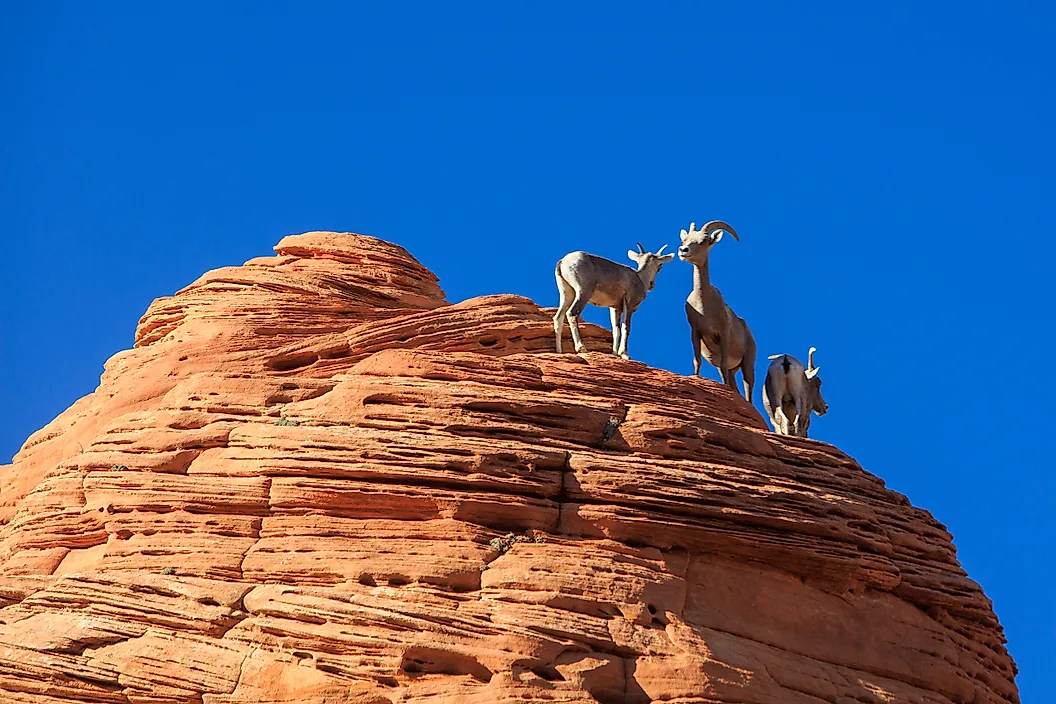
The bighorns in Zion are desert bighorn sheep, smaller than the Rocky Mountain bighorns in the parks above and adapted to the Southwest's dry, rocky landscape. Zion is famous for its canyons, but the park's east side is where the sheep are. The best viewing is along the Zion-Mount Carmel Highway between the tunnel and the East Entrance, where sandstone cliffs, slickrock, and gullies give the sheep the terrain they prefer.
Desert bighorn sheep have inhabited the Southwest for at least 12,000 years, according to the National Park Service. In Zion, however, they disappeared by the mid-20th century. As in the Badlands, conservation work brought them back, this time through the National Park Service and the Utah Division of Wildlife Resources, who reintroduced sheep to the park in the 1970s. Today lambs appear between mid-January and April, and the breeding season runs July through October.
Along that stretch of highway, sheep graze the slopes and sometimes cross the road. Careful driving matters here, and the designated pullouts are the place to stop and watch.
Capitol Reef National Park, Utah

Desert bighorns live among Capitol Reef National Park's sandstone cliffs and narrow canyons. Much of the park follows the Waterpocket Fold, a nearly 100-mile-long bend in the Earth's crust. Near Fruita, the steep walls of Grand Wash and Capitol Gorge give sheep the rocky terrain they prefer, and they are frequently seen there, traversing the rock faces. The canyon ledges and upper slopes are the places to scan. According to the park, early morning and late evening are the sheep's most active times of day.
Bighorn sheep appear in petroglyphs left by the Fremont people, a reminder of the animals' long history in the region. After sheep disappeared from the Capitol Reef area, wildlife managers reintroduced 40 animals from Canyonlands National Park in the mid-1990s. Road conditions deserve a check before any trip into Grand Wash or Capitol Gorge, since flooding and other weather sometimes close the roads.
Watching Bighorn Sheep In The Wild
Bighorn sheep are never guaranteed, but some national parks give wildlife watchers a better chance by concentrating the animals near mineral licks, canyon walls, mountain passes, and roadside slopes. Knowing where the sheep tend to gather makes the search more focused. The best sightings still come from giving them plenty of space and watching quietly as they move through the terrain on their own terms.