Why Mountain Goats Aren't Native To Some Parks That Have Them
Mountain goats now live in several national parks outside their native range, but they did not all arrive there in the same way. A species is considered nonnative when it occurs in a place because of direct or indirect human action, even if later generations crossed a park boundary without assistance.
From 1925 to 1929, before Olympic National Park was established, a sportsmen’s group released approximately 12 mountain goats near Lake Crescent on the Olympic Peninsula. During the 1940s and 1950s, wildlife managers released mountain goats into the Absaroka and Madison ranges for hunting. Their descendants later migrated into Yellowstone National Park.
From 1969 to 1971, Idaho wildlife officials released mountain goats in the Snake River Range for hunting. Goats appeared in the Teton Range in 1977 and inside Grand Teton National Park in 1979. Colorado released approximately 55 to 60 mountain goats at several locations from 1947 to 1972, beginning with 14 goats in the Collegiate Range. They were first recorded in Rocky Mountain National Park in 1979.
Olympic’s goats descended from direct releases made before the park existed. The populations in Yellowstone, Grand Teton, and Rocky Mountain national parks developed after goats introduced for hunting spread beyond their original release areas. Learn why mountain goats live in parks outside their native range and how hunting releases, escapes, and migration put them there.
A Word About These Mountain Goats
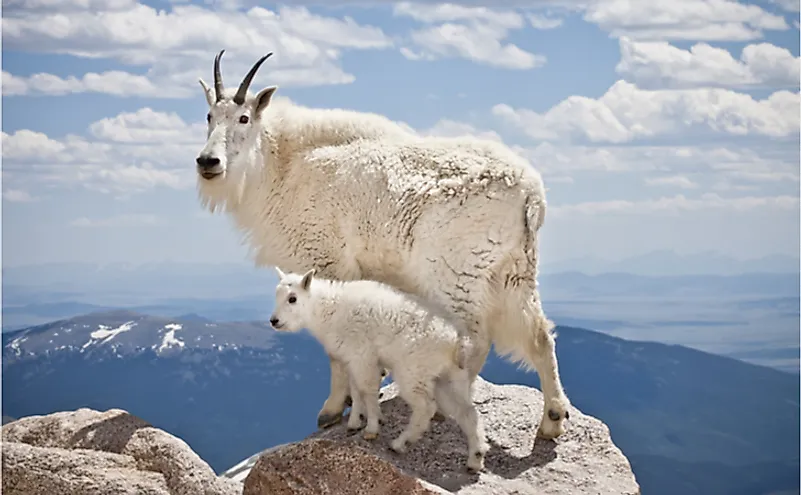
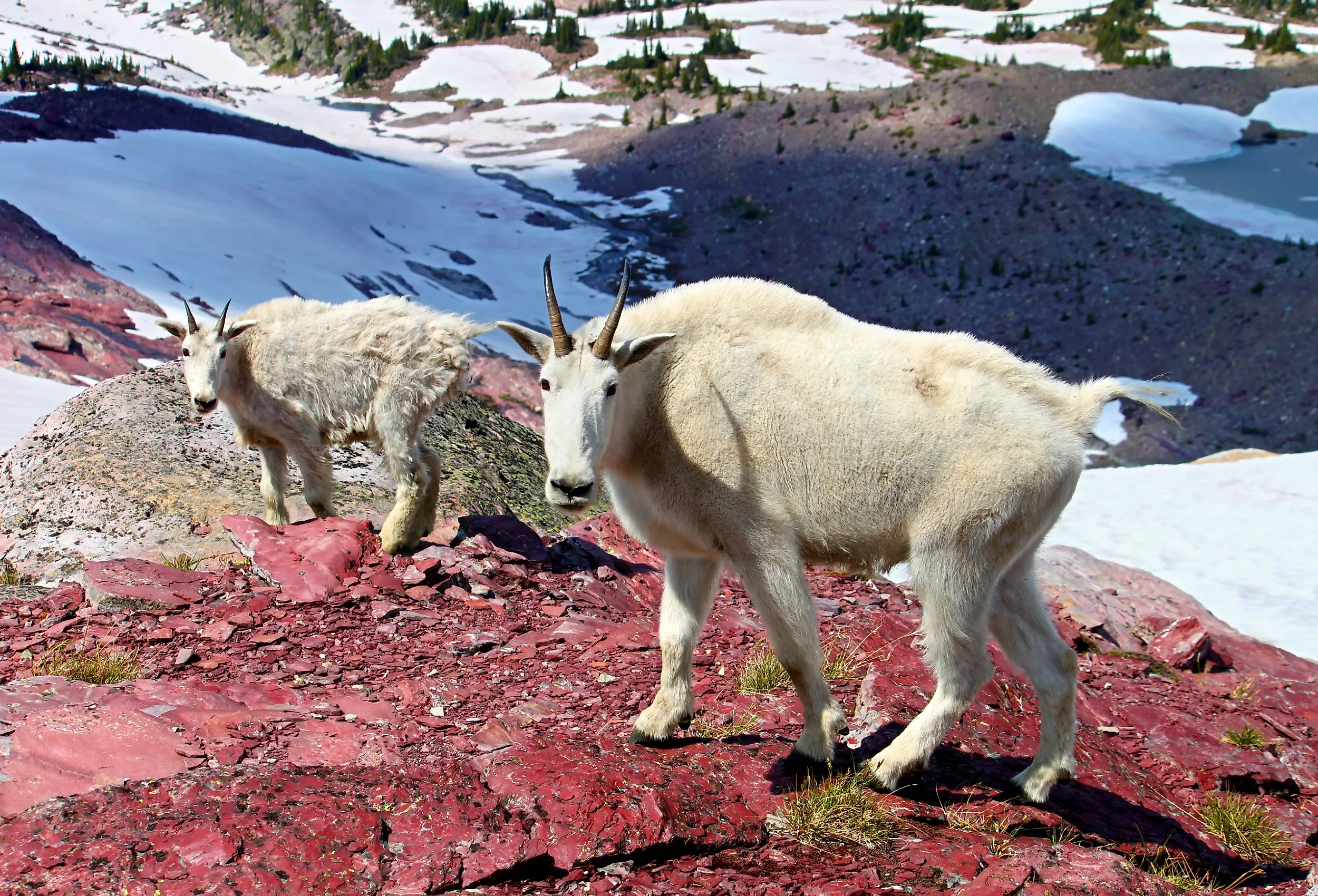
The mountain goats introduced to parks all belong to a single species, Oreamnos americanus. Despite their common name, "mountain goat," they are not truly goats like those you would see in a farmyard or even a backyard. They belong to the goat-antelope subfamily Caprinae, and their closest relatives are the chamois, gorals, and serows rather than the true goats of the genus Capra. These mountain goats have thick, shaggy coats that protect them from the cold. Both the males (billies) and the females (nannies) have sharp, black horns that curve backward, and their hooves have thick, rubbery pads at the center that help them climb. Oreamnos americanus is the only living species in its genus; a second, Harrington's mountain goat, died out at the end of the Pleistocene.

Mountain goats are native to Alaska, western Canada, and parts of the northwestern United States, but their population status varies, and some native herds have experienced serious declines. The historical nonnative releases described here were not conservation projects, although modern translocations can be used to support depleted native populations. By and large, they are simply beautiful animals, even impressive animals to see, and people since the 1920s thought it would be fun for more people to be able to watch them and hunt them in high, rocky country.
Mountain Goats for Hunters (1940s-1970s)
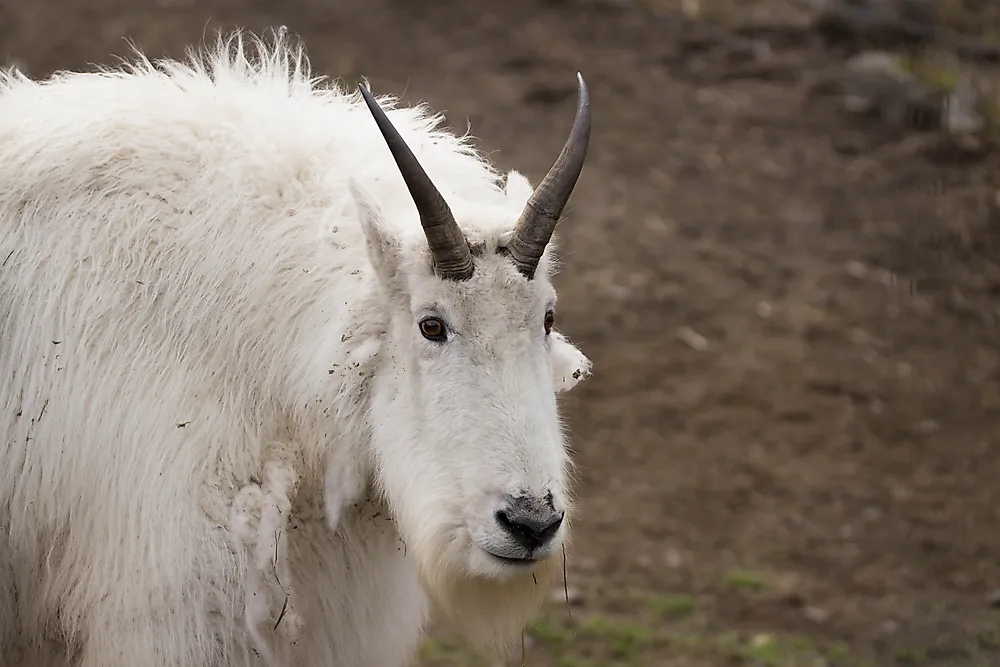
During the 20th century, wildlife agencies introduced mountain goats beyond their native range in numerous western states, primarily to create hunting and viewing opportunities, and some of those populations later spread into national parks. During this era, wildlife management focused heavily on "game ranching," and state agencies actively moved wild animals to new areas to create exciting new targets for sportsmen (and to generate more money through hunting license sales).
Wildlife biologists would travel to areas known to have large native goat populations, such as Alaska, western Canada, or parts of Washington and Montana. Then, state agency specialists would use nets, traps, or tranquilizer darts to capture some of those goats. The captured goats would be crated and shipped by truck, train, or even flown in small airplanes and helicopters directly to their intended homes.
Hunting had been illegal inside Yellowstone since 1894 and was prohibited in the national parks that followed, so state wildlife agencies intentionally released the goats on US Forest Service lands or state lands right next to park borders. Agencies released goats on lands where hunting was legal, and descendants from some of those herds later dispersed into nearby national parks where recreational hunting was prohibited. Mountain goats released in the Absaroka and Madison ranges during the 1940s and 1950s founded populations whose descendants established themselves in Yellowstone National Park in the 1990s, while goats outside the park remained available to hunters.
Mountain Goats for Tourists (1920s-1930s)

Some early mountain goat introductions served wildlife-viewing goals, but motives varied by location. The clearest viewing-related example is Custer State Park. Mountain goats, with their shaggy white coats, look dramatic against a rugged gray cliff, and park managers of the 1920s understood the appeal.
In 1924, a small group of mountain goats was shipped from Alberta, Canada, to Custer State Park in South Dakota. Park officials there wanted the six animals entirely for public viewing, so the goats were placed in an exhibit, as one might see at a zoo. The goats did not stay in their enclosure for long. Two were out on the first night, and by 1929, the whole group had escaped into the wild, rugged rocks around Black Elk Peak, the Needles Highway, and Mount Rushmore. But in a happy twist for the park managers, their visitors loved to see the (now wild) mountain goats scaling the steep granite peaks, and so the goats did indeed succeed at becoming a legitimate tourist attraction.

The railroads had already worked out what the animal was worth as advertising. In 1921, Great Northern Railway vice president William Kenney suggested the Rocky Mountain goat as a company emblem, and the goat went onto boxcars, timetables, and the railway's promotions for Glacier National Park, which ran under the older slogan "See America First." The emblem did not get the name Rocky until 1955, when the railway's public relations department named him for a television campaign.
Mistakes Were Made (By The Humans, Not The Goats)

When it comes to introducing mountain goats to new areas, there have been notable mistakes, and humans are still feeling the repercussions. Yellowstone personnel killed at least 136 wolves between 1914 and 1926 as part of a broader campaign intended to protect livestock and preferred game animals, decades before descendants of regional mountain goat introductions established themselves in the park. (Yellowstone famously reintroduced gray wolves in 1995 to fix this exact historic mistake.) The Olympic herd grew from approximately 12 introduced goats to more than 1,000 by the 1980s, damaging sensitive alpine ecosystems, although the National Park Service does not attribute that growth to the loss of the goats' predators. The goats damaged soils, threatened rare plant species, and altered sensitive alpine plant communities. And in searching for salt, the goats lost all fear of humans, whom they came to view as walking salt licks and would greedily approach.
In 2010, a goat gored and killed a 63-year-old hiker near Hurricane Ridge, and the park committed to clearing the herd. Crews captured 325 goats and moved them to the Cascades, where the species is native, and herds had thinned. By the end of 2020, 412 goats had been removed from the Olympic Peninsula, and aerial operations followed to reach the animals still on the mountain.
Two Different Legacies
Olympic, Grand Teton, and Rocky Mountain manage nonnative goats as threats to native resources, while Yellowstone continues to monitor possible effects, and some states retain introduced herds for regulated hunting and wildlife viewing. The goats may or may not agree. The introductions created hunting and viewing opportunities, but the goats' subsequent spread into protected alpine ecosystems also led to ecological conflicts that the original programs did not anticipate.