Why Great Lakes Waves Are More Dangerous Than Ocean Waves
The answer comes down to a single number, and it is not wave height. On the ocean, the gap between one wave and the next is typically 10 to 12 seconds. On the Great Lakes it is three to five, and near a pier it can drop to two. That difference decides whether a swimmer who gets knocked over has time to surface, cough, orient and take a breath, or whether the next wave arrives while they are still underwater from the last one. Most Great Lakes fatalities happen in waves of three to five feet, which is to say in conditions that do not look frightening from the beach.
Here is the physics behind it, the currents it produces, and the wave height at which the statistics turn.
Wave Period Is The Whole Story

Ocean waves are mostly swell, generated by distant storms and organized over hundreds or thousands of miles into long, rolling, widely spaced sets. Great Lakes waves are almost entirely local wind sea, generated by the wind blowing across the lake in front of you, which produces something steeper, shorter and far closer together.
Guy Meadows, a senior research scientist at Michigan Tech, described the consequence directly. Waves hit every three to five seconds on the Great Lakes against 10 to 12 in the ocean, and if you get knocked off your feet and take in water, you surface coughing and are immediately hit by the next one. Survivors, he noted, describe the relentless pounding of these short steep waves.

The National Weather Service puts the average Great Lakes wave period at three to four seconds, with most dangerous-current incidents occurring at four to five. In the ocean, rip currents are typically associated with periods above nine seconds.
Three Feet Is Enough

The height at which this becomes lethal is lower than most people expect, and it is the single most useful fact here. Most Great Lakes fatalities and rescues occur when waves are three to five feet, and a number have happened in waves of only two to three. A wave of three to five feet is enough to knock an adult off their feet, and white water starts showing up at around three feet.

Nobody looks at a three-foot wave and decides not to swim, and that is precisely the problem. The danger is not the size of any individual wave but how quickly the next one arrives behind it.
The Currents Do The Killing
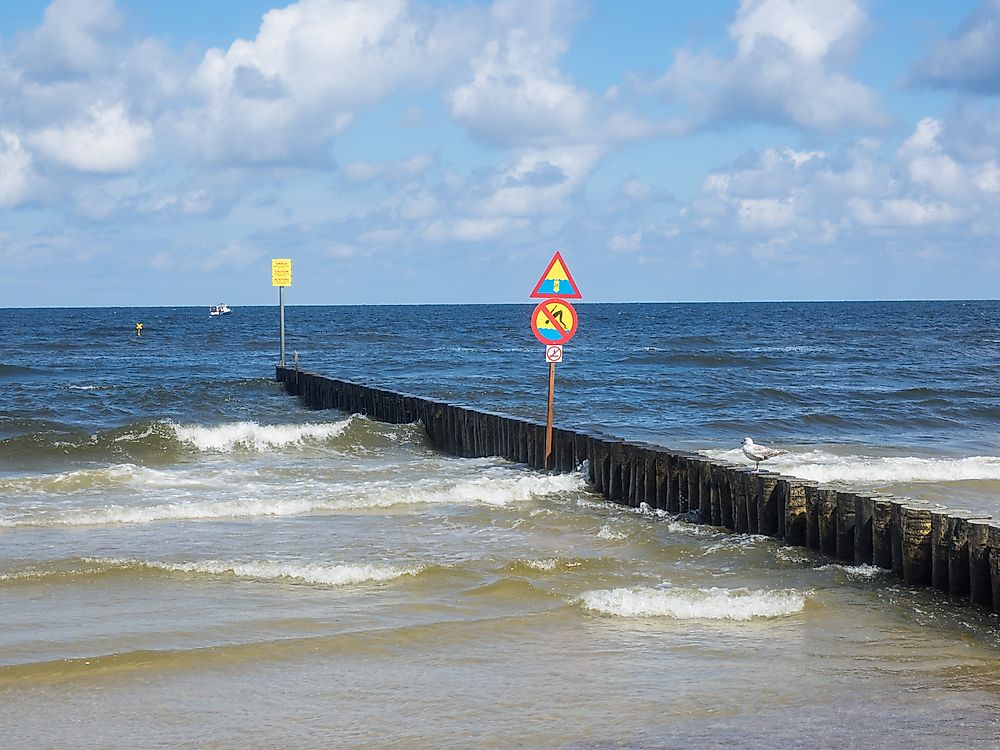
Waves are the visible hazard, and currents are the thing that actually removes people from the beach. According to the National Weather Service, the currents that have most often claimed lives on the Great Lakes since 2002 are structural currents, rip currents, outlet currents, longshore currents and channel currents. The agency's incident database puts the average at around 12 drowning fatalities a year attributable to dangerous currents, alongside roughly 23 rescues.
Those are current-specific figures rather than total drownings. Counting all causes, the Great Lakes Surf Rescue Project recorded at least 99 drownings across the five lakes in 2016, which puts the annual toll well above what the current statistics alone suggest.
Why Piers Are The Worst Place

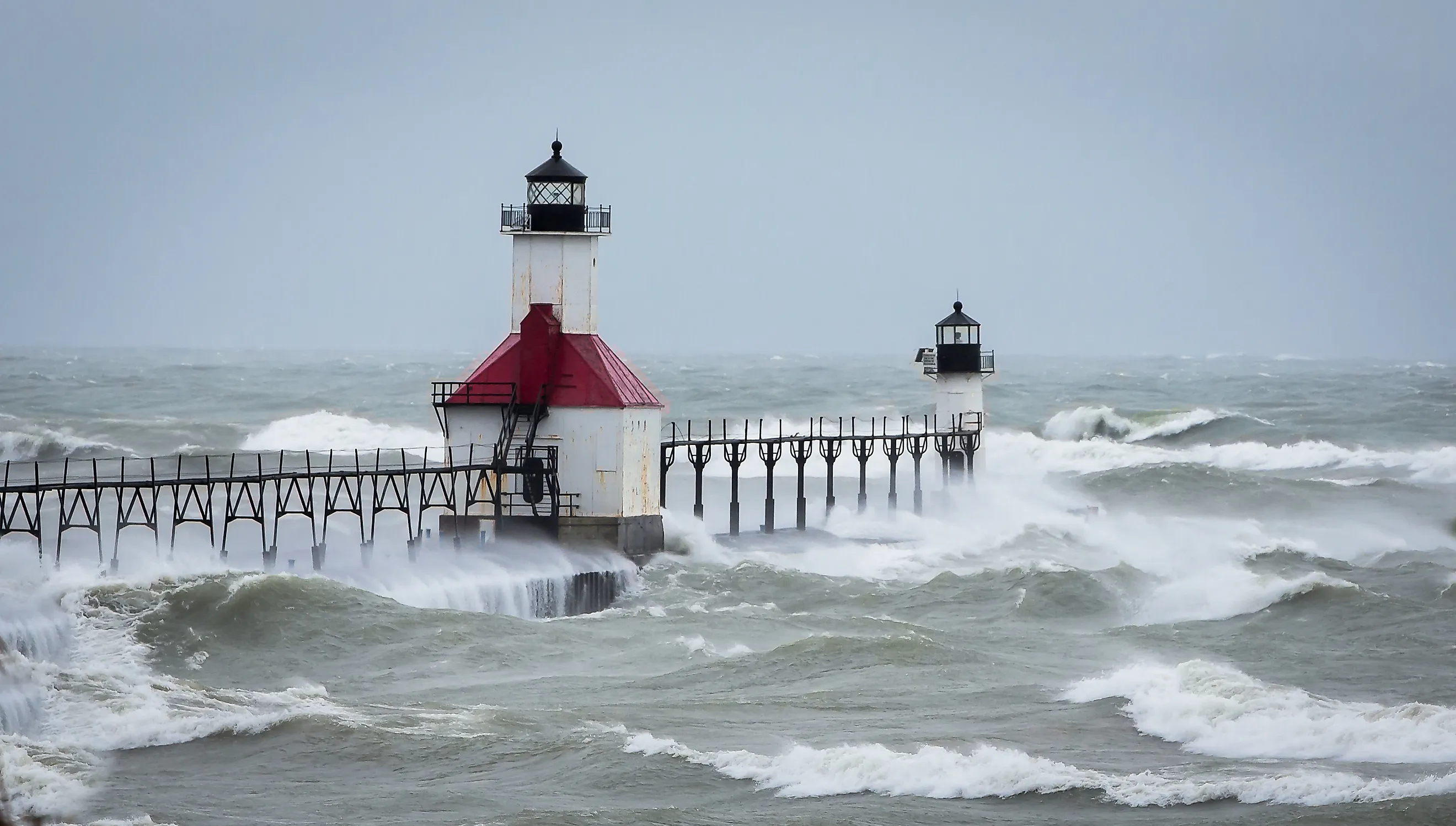
Every hazard on this page gets worse next to a pier, and the mechanism is worth understanding because a pier looks like the safest place to be. Waves reflect off a solid concrete or steel pier and combine with the incoming waves, producing something steeper and larger than either. The effective period near a pier can fall to two or three seconds, meaning a swimmer is being struck more than twice as often as they would be fifty yards down the beach.
Then there is the structural current. Wind pushes water into the corner between the beach and the pier, and the water escapes by running straight out along the structure, often too fast to swim back against. Grand Haven's pier runs about 1,400 feet and South Haven's about 800, which is a long way to be carried.
The Weather Service is unusually blunt about the trap this creates. Swimming sideways out of a structural current sends you directly into the oncoming waves, which is why the standard ocean advice does not transfer cleanly.
Lake Michigan Is The Deadliest

The incidents are not spread evenly across the five lakes, and most happen on one of them for two reasons that compound. The first is orientation. Lake Michigan runs 307 miles north to south and 118 miles across at its widest, and the prevailing westerly winds blow the length of that fetch straight into the eastern shore. The National Weather Service notes that the eastern shores are positioned favorably for current development, which is a very neutral way of saying the wind piles water against the Michigan beaches.

The second is people. Those same beaches are the most popular in the region, so the hazard and the crowd are in the same place. In one recent year Lake Michigan recorded more drownings than all the other Great Lakes combined.
Fresh Water Floats You Less
This is a smaller factor and a real one. Salt water is denser than fresh water, so a swimmer is measurably more buoyant in the ocean than in Lake Michigan.
The difference is not dramatic and it will not sink anyone on its own, but it adds drag and it means slightly more effort to keep your head above the surface. Lake surfers notice it as increased resistance when paddling.
Stack it on top of a three-second wave period and cold water, and the margin available to a tiring swimmer narrows from several directions at once.
The Water Is Colder Than It Looks
The Great Lakes are deep, northern and slow to warm, and even in midsummer the water beyond the immediate shallows can be far colder than the air above it. Cold water triggers an involuntary gasp reflex on sudden immersion, which is dangerous in any conditions and considerably more so when a wave arrives every three seconds. It also drains strength quickly, so a swimmer who would manage fine in warm water tires faster than they expect.
Lake Superior is the extreme case and rarely gets genuinely warm at all, but the same effect operates on all five lakes to some degree.
What Actually Creates The Danger

The Weather Service has identified the specific conditions involved, which makes this one of the more predictable hazards in American outdoor recreation. Dangerous currents develop when waves approach the beach at an angle of roughly 30 to 90 degrees to the shoreline and wave heights reach three feet or more. Those waves pile water up against the beach, or against a breakwall or river mouth, and the water has to return to the lake somewhere, which it does as a concentrated outward flow.
Both of those conditions are forecast in advance, which is why beach hazard statements exist and why the flag systems at Great Lakes beaches are worth reading rather than walking past.
What To Do About It

The practical guidance is short, and the agencies are consistent about it. Check the forecast and the flags before going in, and stay out of the water on a red flag day. Stay away from piers and breakwalls, which concentrate every hazard on this page into one place. In a longshore current, swim straight back to the beach rather than fighting along it. And treat three-foot waves as the threshold they demonstrably are rather than as a calm day.
A Chicago water safety advocate described the sequence that kills people, and it is worth repeating because it is about panic rather than strength: you get knocked down, you orient yourself, you surface, you cannot see the shore, and another wave knocks you down again.
The Short Version
Great Lakes waves are more dangerous than ocean waves of the same height because they arrive two to four times more often, which leaves a swimmer in trouble a fraction of the recovery time.
Add currents focused by piers, fresh water that floats you less well, cold that saps strength, and the fact that the lethal threshold sits at a wave height nobody finds intimidating, and you have a hazard that consistently catches out strong swimmers who would be entirely comfortable in the surf on a coast.