Why Lake Mead Has A White Bathtub Ring
If you have seen a photo of Lake Mead anytime in the last decade, you have seen it: a stark, pale band of rock ringing the reservoir like the grimy line left in a drained bathtub, except this one stands well over a hundred feet tall. That "bathtub ring" has become the single most recognizable image of the American West's water troubles, splashed across news reports and clearly visible even from space. But what actually is it? What makes it that ghostly white color, and why does it keep creeping higher year after year? Here is the full story behind Lake Mead's most famous, and most ominous, feature.
What Is the Bathtub Ring?

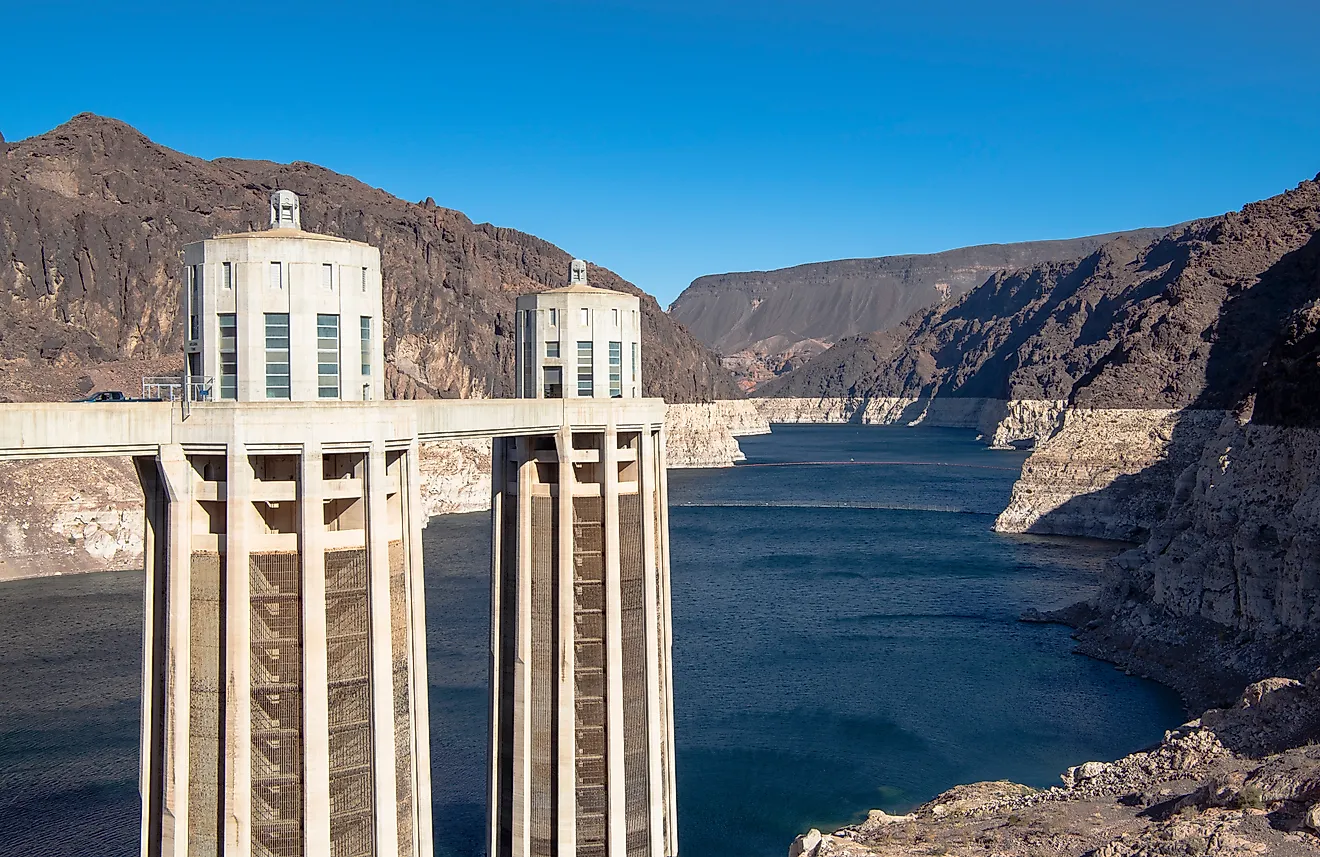
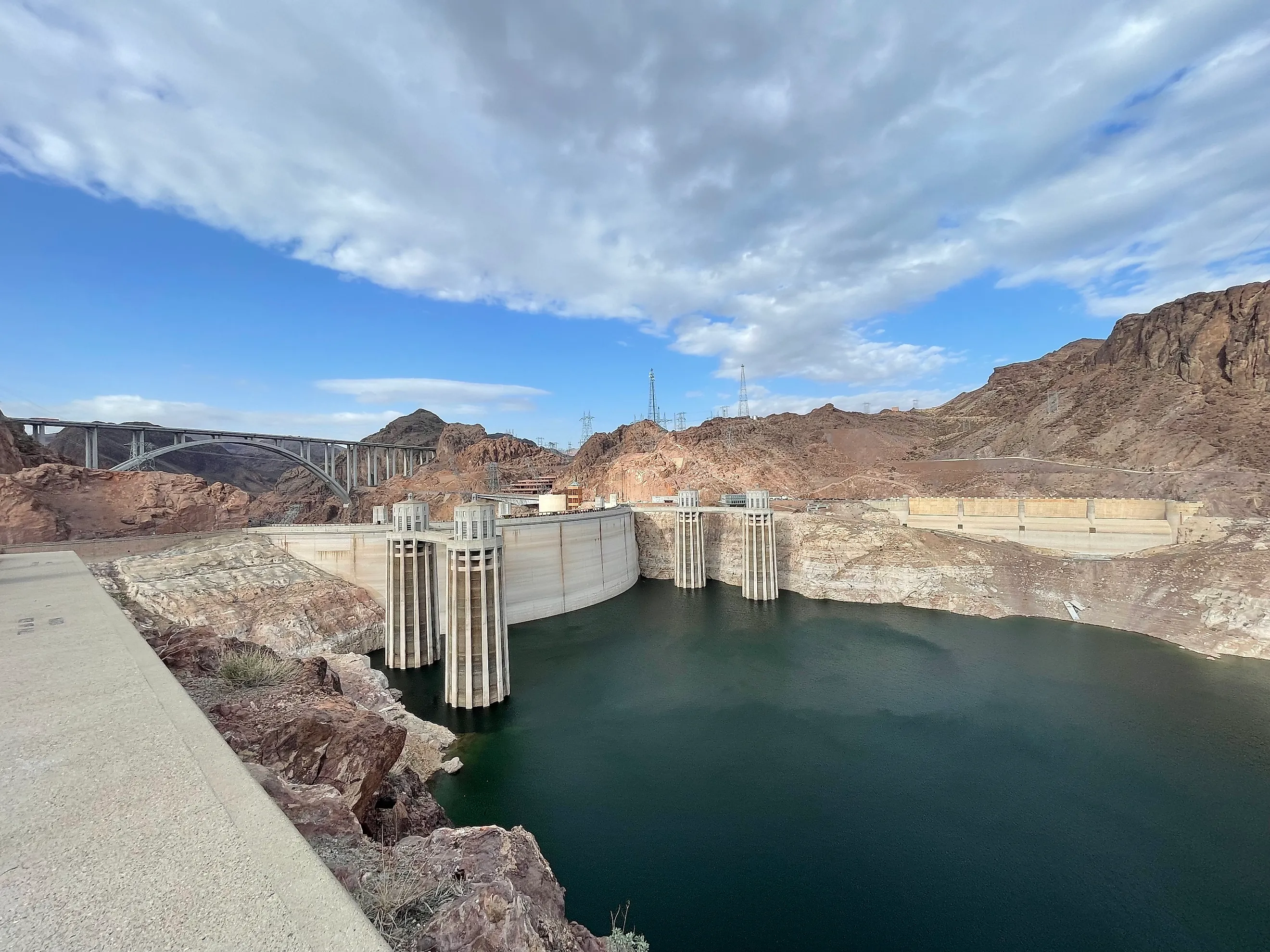
The bathtub ring is a broad, pale band that runs along the rock walls surrounding Lake Mead, and the top of that band marks where the water surface used to sit when the reservoir was full. It works in exactly the same way as the ring left around your bathtub after the water drains, or the crusty scale that builds up inside a kettle. When the reservoir is brimming, the ring is submerged and invisible. As the water level falls, it exposes the stained rock above the new shoreline. The US Geological Survey sums it up neatly: the only time the ring is not visible at all is when the lake is completely full, something that has not happened at Lake Mead since 1983.
What Makes It White

The color is pure chemistry. The Colorado River water that fills Lake Mead is "hard," meaning it carries a heavy load of dissolved minerals, chief among them calcium carbonate, the very same compound found in limestone, chalk, and the scale inside your kettle, along with various salts and a bit of gypsum. As that mineral-rich water sits against the rock year after year, those minerals slowly precipitate out and cement themselves onto the stone, bleaching it a chalky white. When the water level then drops, that mineral-crusted rock is left high and dry, forming the pale ring. There is even a biological ingredient in the mix, as the remains of algae and other tiny organisms that once lived in the sunlit shallows get baked into the band too. In essence, it is limescale, just on a colossal, canyon-sized scale.
Why the Ring Keeps Growing

The height of the ring is really just a record of how far the lake has fallen. Lake Mead is considered "full" at an elevation of 1,229 feet above sea level. But thanks to a roughly 25-year megadrought, the driest stretch the Southwest has endured in some 1,200 years, combined with decades of the Colorado River being promised to more users than it can actually supply, the reservoir has plunged. By 2026, it was hovering around 1,050 to 1,065 feet, only about a quarter to a third full and sitting near its all-time low. Since the year 2000, the last time the lake was anywhere close to full, its surface has dropped more than 160 feet, and the white band has grown taller right along with it. Every single foot the water recedes exposes another foot of bleached rock.
How Tall Is It Really?

The scale of the thing is genuinely hard to grasp until you put a number on it. The ring now stands somewhere around 160 to 170 feet tall, measured from the current waterline up to the old high-water mark. That is roughly the height of a 15-story building, and taller than the Statue of Liberty measured from her heel to the tip of her torch. And it does not just sit in one spot. It encircles the entire shoreline of the largest reservoir in the country, a continuous chalky stripe running for miles along the canyon walls. It is so enormous that NASA's Landsat satellites have documented it expanding from orbit, and at the Hoover Dam, the ring looms over the intake towers that once stood near the waterline. To stand on a boat dock and crane your neck up to that distant high-water line is a genuinely sobering experience, because you are looking up at where the surface of the lake sat, calmly, just a generation ago.
A Giant Measuring Stick

In a way, the ring is the most honest gauge in the entire West. Much like the growth rings inside a tree trunk, it records history plainly for anyone to read. The very top of the band marks the last time the lake was brim-full, and every layer below traces the long, steady retreat since. You can read the Colorado River's decline right off the rock face, with no charts or spreadsheets needed. That is precisely why the bathtub ring has become such a potent symbol at the Hoover Dam and beyond: a single photograph conveys the scale of the crisis far more viscerally than any statistic ever could. It is a warning sign written in stone, hundreds of feet high, that absolutely no one can miss, and it grows a little more legible with every dry year that passes.
Why It Won't Just Wash Off

You might assume that a good rainstorm or a rising lake would simply scrub the ring away, but it is not dirt or grime. It is a mineral crust that is chemically bonded to the rock, far closer to concrete than to a smudge on a wall. It weathers and fades only very slowly, over the course of many years. The one thing that genuinely erases it is the lake refilling to near full pool and submerging the band once more, and at 1,229 feet, that simply has not happened since 1983. The unusually wet winter of 2023 did nudge the lake upward and drown the lowest sliver of the ring, but with well over a hundred feet still to climb before the band vanishes, that pale stripe is not going anywhere anytime soon.
Lake Mead Isn't Alone

Lake Mead may boast the most famous ring of all, thanks to the Hoover Dam and its nearness to Las Vegas, but it is far from the only reservoir wearing one. Its upstream sibling, Lake Powell, is filled by the very same mineral-heavy Colorado River and sports an identical white band wrapped around its red sandstone canyons. In truth, just about any reservoir that regularly rises and falls will develop some version of a bathtub ring over time. Mead's is simply the biggest, boldest, and most photographed of them all, the undisputed poster child for a drying West. Ultimately, that looming pale stripe is far more than a geology curiosity. It is the visible face of a slow-motion reckoning over water in the West, marking the widening gap between how much the Colorado was promised to deliver and how much it truly holds. The ring will only shrink if the region strings together wet years and dials back its thirst. Until then, it will keep standing guard over Lake Mead, a chalky high-water mark of a wetter past and a very public reminder of a drier future.