The Heaviest Fish Ever Recorded In American Fresh Water
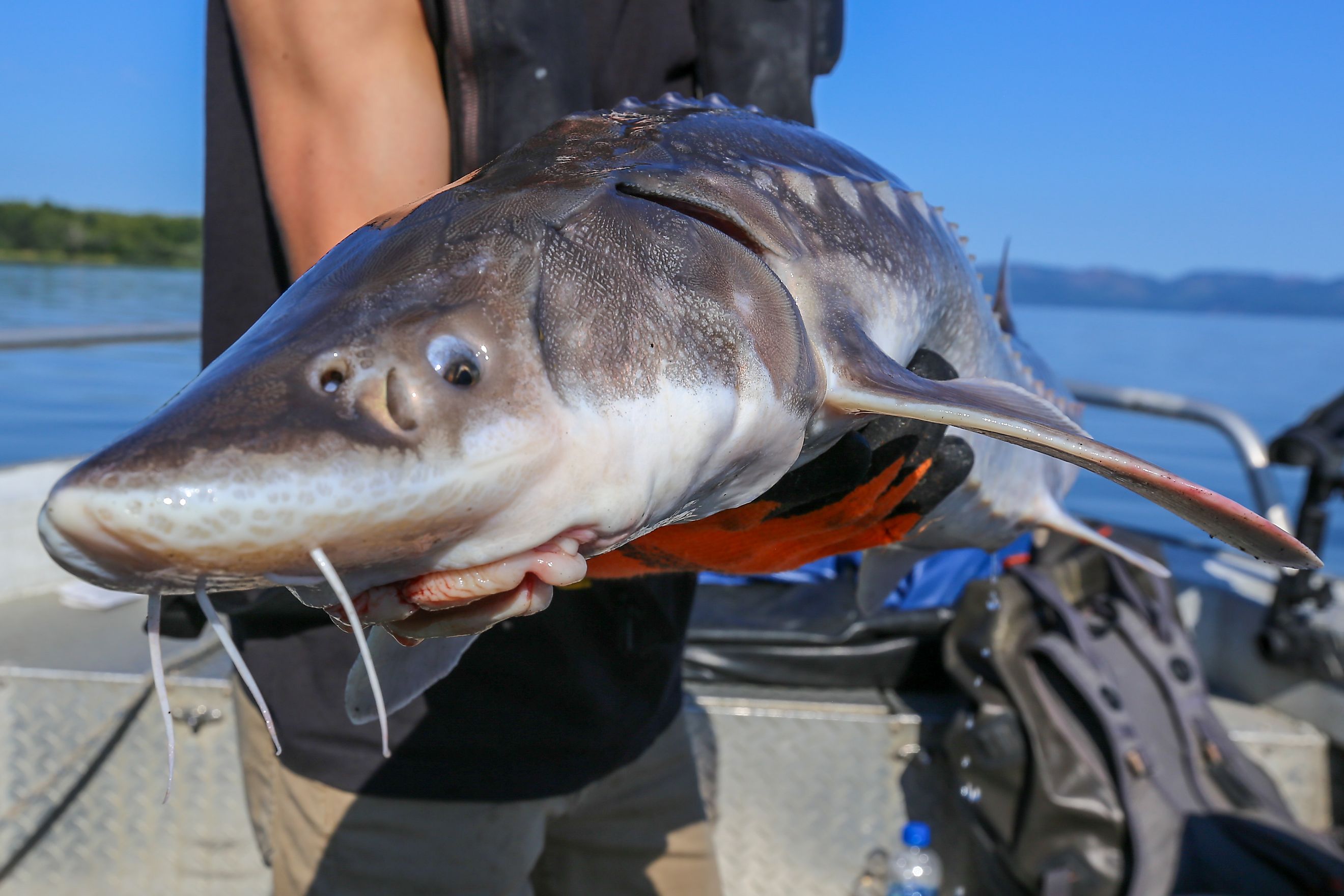
The heaviest fish recorded in American fresh water was a white sturgeon big enough to crush a man, reported at approximately 1,500 pounds (680 kilograms), taken from the Snake River near Weiser, Idaho, in 1898. White sturgeon remain North America's largest freshwater fish, but the rivers that once produced giants of this scale have changed dramatically. Intensive commercial harvest removed huge numbers of sturgeon in the late 1800s, while twentieth-century dams divided their habitat and reduced access to important food sources. The Weiser record is a glimpse of what the species could achieve in the Snake River before many of those changes took hold.
Proof Of Capture

Big claims require proof. In this case, numerous sources corroborate the existence of a hulking sturgeon. The Upper Columbia White Sturgeon Recovery Plan gives the clearest figure: approximately 1,500 pounds (682 kilograms) for a fish taken from the Snake River near Weiser, Idaho, in 1898. The plan describes it as the largest white sturgeon on record. Idaho Fish and Game also states that white sturgeon weighing as much as 1,500 pounds (680 kilograms) were historically caught in the Snake River system. Oregon Sea Grant places the species' historical upper size at more than 1,500 pounds and 20 feet (6 meters).
White Sturgeon Are Built For Exceptional Size

A 1,500-pound (680-kilogram) sturgeon is extraordinary, yet it falls within the historical size reported for the species. White sturgeon are considered North America's largest freshwater fish, with historical individuals reaching as much as 20 feet (6 meters).
They also have decades in which to accumulate that mass. Idaho Fish and Game reports that white sturgeon can live beyond 100 years, and natural mortality among large juveniles and adults is relatively low. An individual that survives fishing pressure, predators, disease, and changing river conditions can continue growing long after most freshwater fish have reached their maximum size.
The species is slow to reproduce as well. Idaho Fish and Game reports that males commonly mature around 10 to 12 years old, while females may not mature until roughly 12 to 16. Maturity can come even later in parts of the Snake River where growth is slow, making sturgeon populations somewhat vulnerable. Losing a large adult can mean removing a fish that required decades to reach its full reproductive importance.
The Old Snake River Held Far More Food

The nineteenth-century Snake River held food resources for giant sturgeon that no longer exist in the same abundance. Idaho Fish and Game links their historical size partly to large runs of salmon and steelhead. Pacific lamprey provided another rich food source, while freshwater mussels also formed part of the sturgeon's diet.
Dams later reduced or eliminated access to some of those resources in sections of the river. Idaho Fish and Game has found that young lamprey were particularly important in parts of Hells Canyon, while returning salmon and lamprey once supplied considerably more food and nutrients than they do today. The 1898 record therefore came from a much more connected river system. A long-lived sturgeon could spend decades taking advantage of migratory fish and other prey moving through the basin.
A Commercial Fishing Boom Was Already Removing Giants

Commercial fishing was already removing enormous numbers of sturgeon when the Weiser fish was reported. Historical fisheries records show that the Columbia River commercial catch peaked at about 5.5 million pounds (2.5 million kilograms) in 1892. Sturgeon meat and caviar were in high demand. As stocks declined in the lower Columbia, fishing expanded farther into the basin, including the upper Columbia and Snake rivers.
The collapse was remarkably fast. By 1899, reported landings had fallen below 100,000 pounds (45,000 kilograms), less than two percent of the 1892 peak. The 1898 giant therefore appeared near the end of an extraordinary period of exploitation. White sturgeon mature slowly and can live for many decades, so removing old adults faster than younger fish could replace them had consequences that lasted long after the commercial boom ended.
Dams Changed The River Behind The Record

The stretch of the Snake River where the 1,500-pound sturgeon was caught is now divided by dams into isolated or partly isolated populations. Idaho Fish and Game recognizes about nine population segments along the river. Only two currently have the habitat and flows needed to maintain strong natural reproduction: the stretch between Bliss Dam and C.J. Strike Reservoir and the population below Hells Canyon Dam. Other sections depend to varying degrees on stocking, movement between reaches, or conservation measures.
Fisheries managers have identified habitat fragmentation and altered river flows as important pressures on sturgeon reproduction. Some dams also reduced access to salmon, steelhead, and lamprey that once contributed heavily to the food available within the Snake River ecosystem. Modern management is consequently very different from the fishery that existed when the record sturgeon was caught. Idaho has required catch-and-release fishing for sturgeon since 1971. Fisheries workers also use PIT tags, tiny electronic identification devices, to follow individual fish and measure survival, growth, and movement over many years.
Three Other American Freshwater Giants Hold Remarkable Records
Alligator Gar: 327 Pounds

The closest well-documented heavyweight belonging to another native species is an alligator gar caught in Lake Chotard, Mississippi, in 2011. The Mississippi Department of Wildlife, Fisheries, and Parks records the fish at 327 pounds (148 kilograms) and 8 feet 5½ inches (2.58 meters) long. Commercial fisherman Kenny Williams encountered it in a gill net rather than catching it with rod and reel, meaning it did not qualify for an International Game Fish Association angling record. Its measured weight nevertheless makes it the largest alligator gar documented by Mississippi fisheries authorities and one of the most impressive freshwater fish ever recorded in the country.
Alligator gar are the largest members of the gar family and can exceed 300 pounds (136 kilograms), although fish of that scale are exceptional. Williams donated the specimen for display at the Mississippi Museum of Natural Science, providing a physical record that the nineteenth-century Snake River sturgeon cannot offer.
Lake Sturgeon: 310 Pounds

A lake sturgeon taken from the Illinois waters of Lake Michigan in 1943 weighed 310 pounds (141 kilograms) and measured 7 feet 11 inches (2.41 meters). Illinois fisheries records describe it as the largest fish ever taken from the state's waters, while the U.S. Fish and Wildlife Service lists 310 pounds as the largest verified weight for the species. An equally heavy fish was authenticated in Lake Superior in 1922, so the 1943 specimen shares the upper verified mark rather than necessarily holding it alone.
Historical reports describe still larger lake sturgeon. Minnesota records include a roughly 400-pound (181-kilogram) fish reported in 1903, although such early claims do not carry the same level of verification. Lake sturgeon are true freshwater fish associated with the Great Lakes and other large North American drainage systems. Females can live for more than a century, giving rare survivors decades to reach exceptional proportions.
Paddlefish: 164 Pounds, 13 Ounces

A far more recent record surfaced at Missouri's Lake of the Ozarks on March 17, 2024. Chad Williams snagged a paddlefish weighing 164 pounds, 13 ounces (74.8 kilograms), according to the Missouri Department of Conservation. The agency recognized it as both a Missouri record and a world record for the species, surpassing a 164-pound (74.4-kilogram) paddlefish caught at Oklahoma's Keystone Lake in 2021. As of 2026, Missouri still lists the Williams fish as its current state and world record.
All Hail The Mighty Sturgeon
At less than one-ninth the reported weight of the 1898 white sturgeon, even a world-record paddlefish pales in comparison to the Snake River giant. More than 120 years later, America's modern freshwater records still fall hundreds of pounds short of the fish reported near Weiser. Given the changes to its habitat, it has become increasingly unlikely that anyone will catch a bigger fish.