The Fish Species Found In Only One Lake On Earth
There are over 2,000 species of fish that are endemic, meaning they evolved in isolation and can be found only one place on earth. Endemic fish turn up across nearly every continent, often evolving in ancient, isolated lakes, and in places like Africa's East Rift Valley there are even "species flocks." Lake Malawi alone contains over 1,000 different species of cichlid found nowhere else, while just four fish live only in Bear Lake on the Utah-Idaho border, including the Bear Lake Whitefish. Some are evolutionarily strange, like the Golomyanka of Lake Baikal in Russia, a translucent fish with no scales or swim bladder that can live at extreme depths. Others, like the Ohrid Trout of Lake Ohrid on the Macedonia-Albania border, have been isolated for millions of years and hunt in ways no other trout does. And one of the rarest fish in the world lives only in Nevada, where the Devils Hole Pupfish survives in a single, tiny, water-filled limestone cavern in Death Valley National Park.
Cichlid (Lake Malawi, Africa)

Lake Malawi is one of the African Great Lakes. It's the ninth largest lake in the world by surface area (covering 29,600 sq. km.), and the world's sixth deepest lake (with a maximum depth of 706 m.). This is a relatively ancient body of water. The lake is at least two million years old, with the basin being formed perhaps as long ago as 8.6 million years ago. The level of water has changed over time with scientists speculating that around one million years ago, the lake may even have completely dried out. But in terms of biodiversity, it's undisputed that Lake Malawi contains the greatest number of fish species of any lake in the world, the majority of which are 1,000 unique species of Cichlids, hundreds of which cannot be found anywhere else on earth.
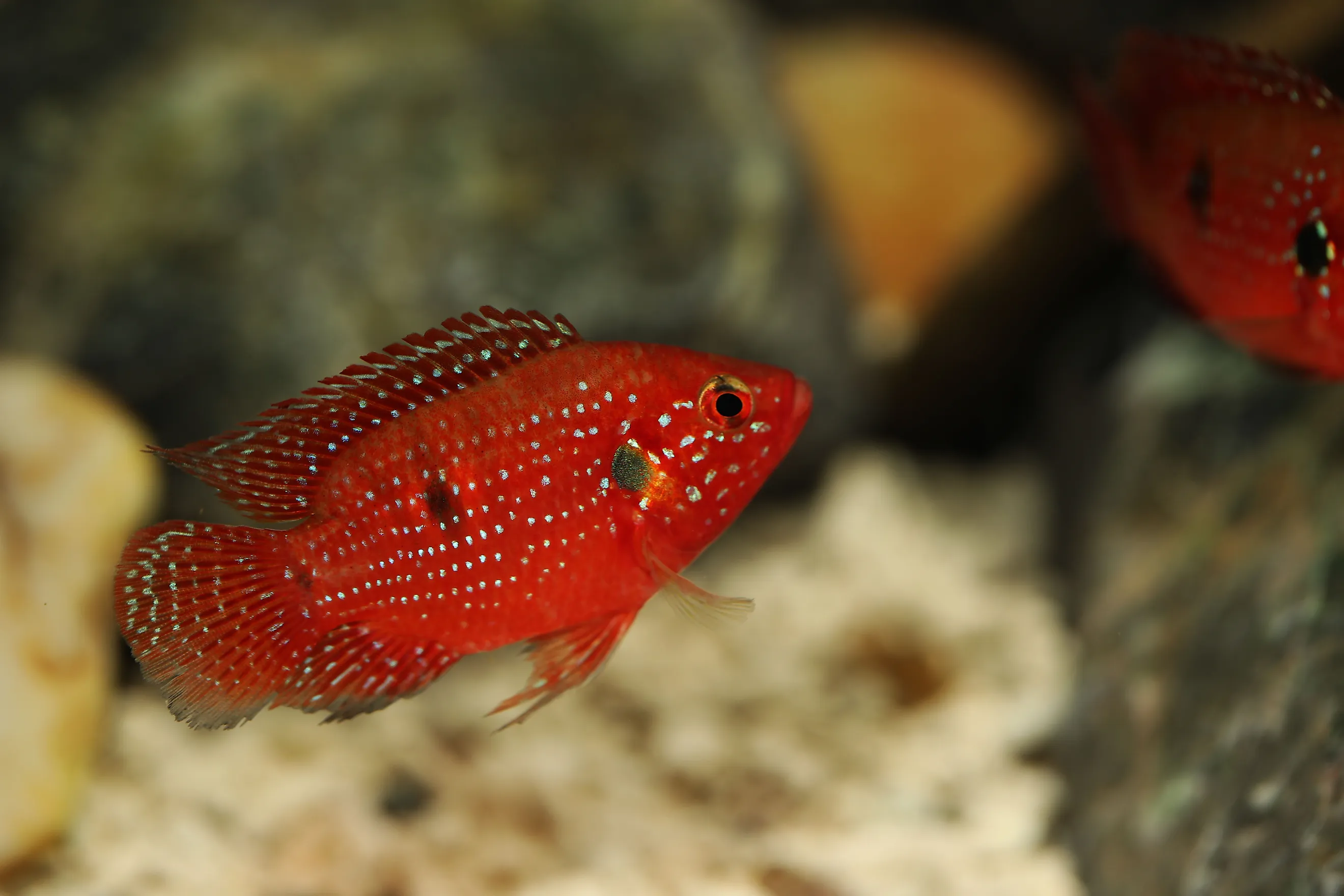
Cichlids are so colorful they rival reef fish, and largely because of that fact, the chances are that you've seen some of these cheerfully colored fish swimming in a pet store aquarium. (Catching and collecting these small fish for aquariums is a strong cottage industry for people living near Lake Malawi.) Different species of cichlids can have dramatically different looks and behaviors. As a general rule, they are categorized into three different groups. Mbuna are species that dwell in rocks, often displaying intense colors and aggression. Peacocks are species found in sand and often appear almost iridescent or metallic to the eye, and are observed as having more peaceful natures, sifting through sand for insects to eat or grazing on algae. Haps are larger species (sometimes the size of pikes) that live in the open water and have more streamlined bodies adapted to a predatory lifestyle. While there are evolutionary traits that are unique to some species of cichlids and not others, what seems to be a common factor that contributes to such wild biodiversity is what's known as "rapid selection." In other words, even subtle changes in mating preferences (for instance, for a certain color or behavior) can create a new species of cichlid rapidly. Scientists and laypeople agree that while cichlids can be very beautiful in their aquarium homes, nothing rivals the sight of these fish in their natural habitat, so if you find yourself near Lake Malawi, be sure to go on safari under the surface.
Bear Lake Whitefish (Bear Lake, United States)

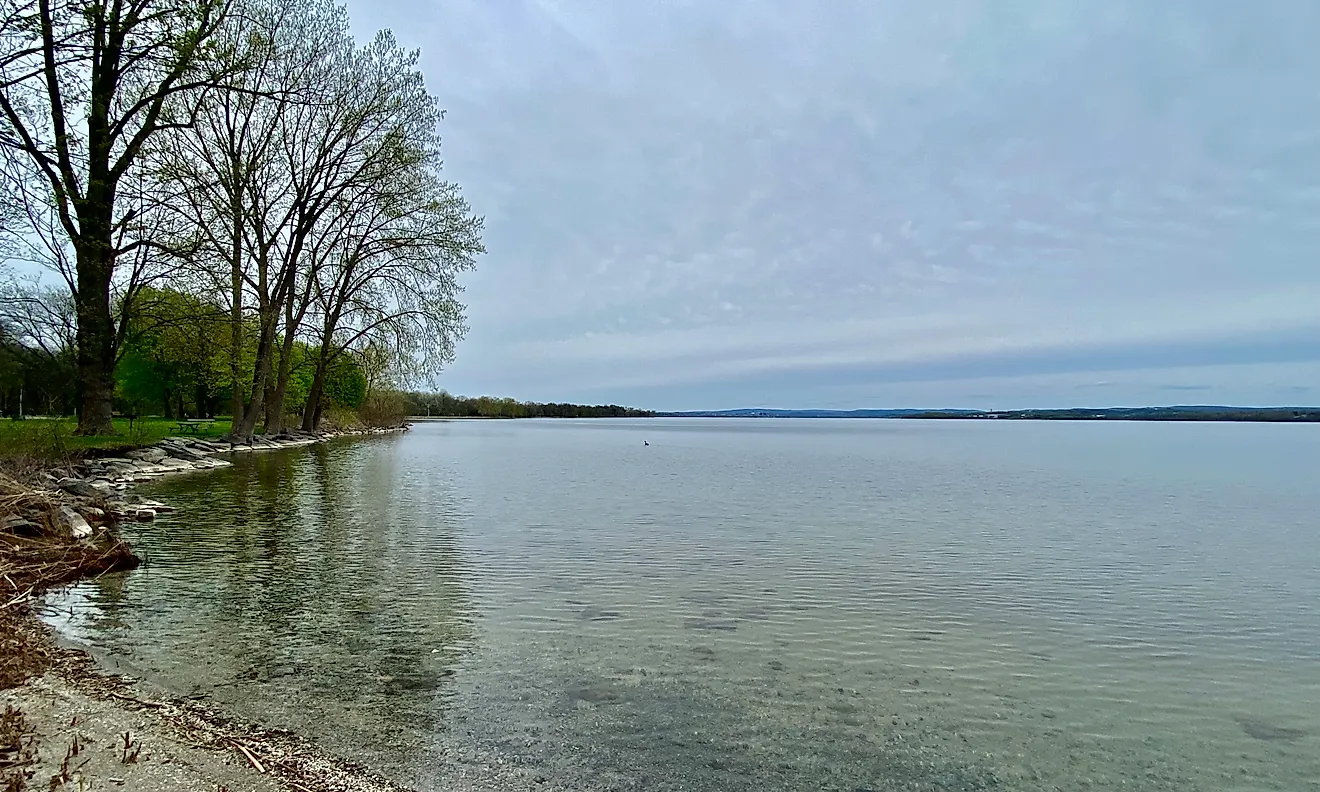
Bear Lake rests on the border of Utah and Idaho in the United States. Because of its brilliant turquoise waters (attributed to calcium-carbonate deposits), it's been nicknamed "the Caribbean of the Rockies." This large freshwater lake covers a surface area of 280 sq. km., has a maximum depth of 63 m., and is believed to be at least 250,000 years old. Bear Lake was created through a process known as "fault subsidence," where the ground itself is shifting downward. This process is continuing today making the lake ever deeper on its Eastern side.
The unique characteristics of this body of water have given rise to several endemic species of fish. Underneath the surface, the endemic fish include the Bonneville cisco, Bonneville whitefish, Bear Lake sculpin, and the Bear Lake whitefish. Attempts to transplant most of these species have been without success, so Bear Lake remains the sole (or primary) home for these fish, and also a focus for conservationists. The Bear Lake whitefish has been named a species of concern by the Utah Division of Wildlife Resources. Luckily, the habits of this whitefish are such that they are rarely caught by a fishing line or net. They primarily reside in the deeper parts of Bear Lake, where they feed on small invertebrates like ostracods, copepods, and insects. When they spawn, between December and February, they also prefer doing so at a depth of 50 to 100 feet. In other words, while people swim and play above, this small fish (never more than 11 inches long) is relatively safe deep in the lake, and yet it cannot be transplanted into any other body of water that we yet know.
The Golomyanka (Lake Baikal, Russia)

Lake Baikal is the largest freshwater lake in the world by volume. All the waters from all the North American Great Lakes could not fill Lake Baikal. Its surface area covers about 31,722 sq. km., its maximum depth is 1,642 m, and below the lake's bottom, sediments reach 7 km deeper; this is the earth's deepest continental rift. This lake is surrounded by mountain and contains 45 islands, one of which, Olkhon, is the third largest lake island in the world. Lake Baikal also has some of the clearest waters in the world which can be seen through down to 40 meters in the winter. And it's one of the oldest lakes in the world, having existed for at least 25 million years. With so many geological novelties, it should not be surprising that Lake Baikal is home to equally novel species. In fact, so many endemic species of fauna and flora can be found here that Lake Baikal is sometimes referred to as the "Galapagos of Russia."
There are 65 endemic species of fish here alone including the Golomyanka, (aka Baikal Oilfish). This is a bizarre, translucent fish that's about 8 inches long and made up of about 30% fat. It has no scales and no swim bladder. Past their peculiar appearance, they're unusual because they live at such deep waters in the lake, they are the most "abyssal" freshwater fish in the world. This is one reason why the fish got its name: Golomyanka comes from the old Russian word "golomon," which means "far from shore." Most often, they can be found about 1.6 km below the surface, though occasionally they have been seen at the lake's bottom, and in winter, sometimes they can be seen just below the icy surface. These fish give birth to live young (fry) and like other cannibalistic fish, they are known to eat their young along with other small creatures. The Golomyanka are also food in turn, making up about 90% of the diet of the Baikal Seal, another endemic species to the lake.
Ohrid Trout (Lake Ohrid, North Macedonia/Albania)

Crossing the border between Albania and Macedonia, Lake Ohrid is one of Europe's largest and oldest lakes. Its surface area is 358 sq. km., its maximum depth is 288 m. (the deepest lake in the Balkan Peninsula), and it's thought to be 4-10 million years old. The ancient nature of this lake can be found even in its manmade surroundings that include Byzantine churches and even prehistoric ruins. And the waters of Lake Ohrid are known for an exceptional number of endemic species, one of the highest concentrations of any lake for its size.
Among the many endemic snails and sponges that can be found only in Lake Ohrid there is also the Ohrid Trout, an ancient salmonid species that has been geographically isolated for millions of years. To judge by appearance alone, this species of trout looks similar to other species of brown trout. However, to judge by their behavior they are quite unique. For instance, most brown trout prefer to find an "ambush point" to hide and wait to strike at passing prey in swift moving waters. A rainbow trout, on the other hand, is considered an "opportunistic" drift feeder, catching insects as they drift by on the water's surface. An Ohrid trout, notably, moves like a deep water lake predator, cruising in open waters (not hugging banks or hiding under rocks), but actively tracking and slashing through shoals of smaller, pelagic baitfish. The Ohrid trout relies on keen vision and is extremely sensitive to pressure changes, just as a hunter does to actively catch its prey.
(BONUS) Devils Hole Pupfish (Nevada, United States)

Between the Funeral Mountains and Death Valley is the Amargosa Desert (Amargosa meaning "bitter" for the bitter taste of water there). In the Amargosa Desert is a limestone cavern called "Devils Hole," and the bottom has never been seen or mapped. Inside Devils Hole is a geothermic pool, meaning the waters are naturally heated to a high temperature of about 93 degrees Fahrenheit (34 degrees Celsius). There is little sunlight, and poor oxygen in the hot water, and yet, a single, shallowly submerged rock shelf in this pool is arguably the smallest habitat in the world for containing the entire population of a vertebrate species. That species is known as the Devils Hole Pupfish.
The pupfish are very small, not more than 1.2 inches long. The males are somewhat smaller and tend to be a dark brown and steely blue color. The females are somewhat larger and tend to be more yellowish brown in color. They are considered to be critically endangered by the IUCN, and have been described as the world's rarest fish, with a population that fluctuates sharply and has numbered only in the low hundreds in recent years. Genetic studies have suggested the pupfish as a species are as old as the Hole itself, which is thought to have opened to the surface about 60,000 years ago. The pupfish have adapted in unique ways to their environment. For one remarkable example, to cope with the low oxygen levels, the pupfish show a trait researchers call "paradoxical anaerobism," appearing to endure long stretches of very low oxygen by slowing into a torpor-like state, though the mechanism is still under active study. Also unusual, these fish lack pelvic fins. The pupfish has also adapted to eat nearly any small creature or plantlife that enters its surroundings, including beetles and algae. A specific kind of beetle, however, is becoming a chief threat to the survival of the pupfish: the Neoclypeodytes cinctellus beetle is fond of eating the pupfish eggs and there are not many eggs to be had. Other threats include seismic shifts, global warming, and an uncommon degree of human interest in annihilating the pupfish, with some people going so far as selling "Kill the Pupfish" bumper stickers, and even breaking into Devils Hole to attempt to crush the fish and contaminate their water. Measures have been taken by the Death Valley National Park service to protect this endangered fish and its wholly unique home.
How to Visit and Help Protect Endemic Fish
When an entire species of fish is contained in a single body of water, they have already adapted along unique evolutionary lines, and face equally unique evolutionary threats. Some fish, like the cichlids of Lake Malawi, are not in any immediate danger, and visitors are welcome to swim and snorkel alongside them. You can visit these beautiful fish in their natural habitat in Lake Malawi National Park and learn more about swimming with the cichlids at the Malawi tourism website. The Bear Lake whitefish, however, are "critically imperiled" according to NatureServe, and a "species of concern" according to Utah's Division of Wildlife Resources. To help protect this particular endemic species, check out the Bear Lake Watch to find ways to support their conservation efforts. The Golomyanka will be very difficult to spot without a glass bottom boat and a great deal of patience. That said, it is much easier to find ways of helping the unique oil fish and the many other endemic species in and around the enormous Lake Baikal. More than 20% of the earth's fresh water lake reserves can be found there, and it's under increasing threat by pollution. Just recently, the Lake Baikal Foundation joined forces with IUCN (International Union for Conservation of Nature) to protect this ecosystem. Here's how you can get involved. For the Ohrid Trout, the greatest threats are poaching and pollution, both of which are being combatted by Albania and North Macedonia (and also complicated by the cross-border nature of Lake Ohrid). UNESCO is playing a key role in helping both nations protect this unique habitat. Visit UNESCO's page on the Ohrid region to learn more about the efforts already in progress and how you can support, because when species are endemic, and their habitats are endangered, so are the entire species.