Electricity Consumption By Country
Global electricity consumption reached approximately 29,665 TWh in 2023 and rose to roughly 30,750 TWh in 2024, according to data from Ember Climate and the International Energy Agency. The 2024 increase of 1,080 TWh was the largest annual increase since 2007 (excluding the post-pandemic 2021 rebound) and was nearly twice the 2012-2022 average. Three drivers explain most of the acceleration: continued industrial electrification in China and India, severe summer cooling demand across multiple regions, and the rapid expansion of data centres, which together with AI workloads are now reshaping electricity demand in advanced economies for the first time in over a decade. This article covers the top ten national consumers in detail, the data centre story that has become inseparable from any current account of electricity demand, and the broader shifts in how the world's electricity is sourced.
China

China consumed approximately 9,443 TWh of electricity in 2023, rising to roughly 10,000 TWh in 2024 according to Ember and IEA data. The country accounts for about 32 percent of global electricity consumption, more than the United States, India, Russia, and Japan combined. China has held the top consumer position since around 2010, when it overtook the United States.
Industrial demand drives the majority of consumption, with manufacturing of solar PV modules, batteries, and electric vehicles alone accounting for over 300 TWh per year as of 2024 (roughly equivalent to Italy's total annual consumption). The industrial sector still accounts for close to half of demand growth, but the share of consumption coming from commercial and residential users has been rising steadily as urban living standards converge with advanced-economy norms. Per capita consumption in 2024 reached 7.1 MWh per person, above the world average of 3.8 MWh and ahead of both France and Germany on the same metric. Coal still supplies the majority of Chinese electricity, although solar, wind, and nuclear are all expanding rapidly; China commissioned more new solar and wind capacity in 2024 alone than the rest of the world combined.
United States
The United States consumed approximately 4,273 TWh in 2023 and roughly 4,200 TWh in 2024 according to the US Energy Information Administration. Total US electricity consumption had been essentially flat since 2007 because of efficiency gains, but 2024 reversed that pattern with a 3 percent increase driven primarily by data centre growth and severe summer heat. The EIA's Annual Energy Outlook 2025 projects continued growth through the late 2020s as data centre and electrification demand outpace efficiency gains.
Per capita US consumption is 12.4 MWh, second among the top consumers behind Canada. The current US generation mix is roughly 43 percent natural gas, 19 percent nuclear, 17 percent renewables (wind plus solar), 15 percent coal, and 6 percent hydro and other sources, with coal continuing the multi-decade decline that began around 2008. Data centre electricity use specifically is concentrated in a small number of states: Virginia, North Dakota, Nebraska, Iowa, and Oregon all had data centres consuming more than 10 percent of state electricity supply by 2023, and Virginia's share rose to roughly 40 percent in 2024 according to Bloomberg analysis cited in Lawrence Berkeley National Laboratory work.
India

India consumed approximately 1,957 TWh in 2023 and approximately 2,054 TWh in 2024, placing it third globally. India has been the fastest-growing major electricity consumer for a decade: total consumption has risen by roughly 60 percent since 2014. The IEA expects Indian electricity demand to continue growing at 6 to 8 percent per year through 2027, driven by rising household ownership of air conditioners, continued industrial expansion, and rapid electrification of rural areas previously off the grid.
Per capita consumption remains low at 1.4 MWh per person, less than a fifth of China's and roughly a tenth of the United States' figure. India still relies on coal for around 70 percent of electricity generation, the highest coal share among the top ten consumers. The country has set a target of 500 GW of installed non-fossil capacity by 2030 and is expanding solar and wind generation rapidly; India added more solar capacity than any country except China in 2024.
Russia
Russia consumed approximately 1,162 TWh in 2023 and roughly 1,024 TWh in 2024 according to Russian and IEA reporting. Russia is the fourth-largest electricity consumer in the world despite a population substantially smaller than the top three consumers. Around 60 percent of Russian electricity is generated by thermal plants (mostly natural gas, with some coal), 20 percent by nuclear, and 17 percent by hydroelectric facilities concentrated in Siberia and the Far East.
Per capita consumption is roughly 8.0 MWh, comparable to Japan and well above the global average. Russian electricity exports to neighbouring countries declined sharply after February 2022 as a result of sanctions and the suspension of grid interconnections with the Baltic states and parts of Eastern Europe. Domestic demand has held up because of military-industrial production increases, though Western analysts dispute the official Russian electricity figures, which are now subject to limited international verification.
Japan
Japan consumed approximately 1,013 TWh in 2023 and 913 TWh in 2024 according to IEA reporting. Japan has been one of the few major economies with declining or flat electricity consumption since the 2011 Fukushima Daiichi accident, when the country shut down most of its nuclear fleet. Demand has fallen by roughly 15 percent since the pre-Fukushima peak, the largest sustained decline in any advanced economy over the same period.
Per capita consumption is 8.2 MWh, slightly above Russia's. Japan's electricity mix is now roughly 37 percent gas, 28 percent coal, 9 percent nuclear (rising as plants restart), 11 percent hydro, and 15 percent other renewables. The country has been restarting nuclear reactors steadily since 2015 and aims to have nuclear back to around 20 to 22 percent of generation by 2030 under the Seventh Strategic Energy Plan adopted in early 2025.
Brazil

Brazil consumed approximately 725 TWh in 2023 and 645 TWh in 2024 according to Brazilian and IEA reporting; the apparent fluctuation reflects definitional differences between gross and net consumption rather than an actual decline. Brazil is the largest electricity market in South America and consumes roughly 60 percent of the continent's electricity. Brazilian demand is projected to grow by around 3.6 percent annually through 2028, driven by industrial expansion and rising air conditioning ownership.
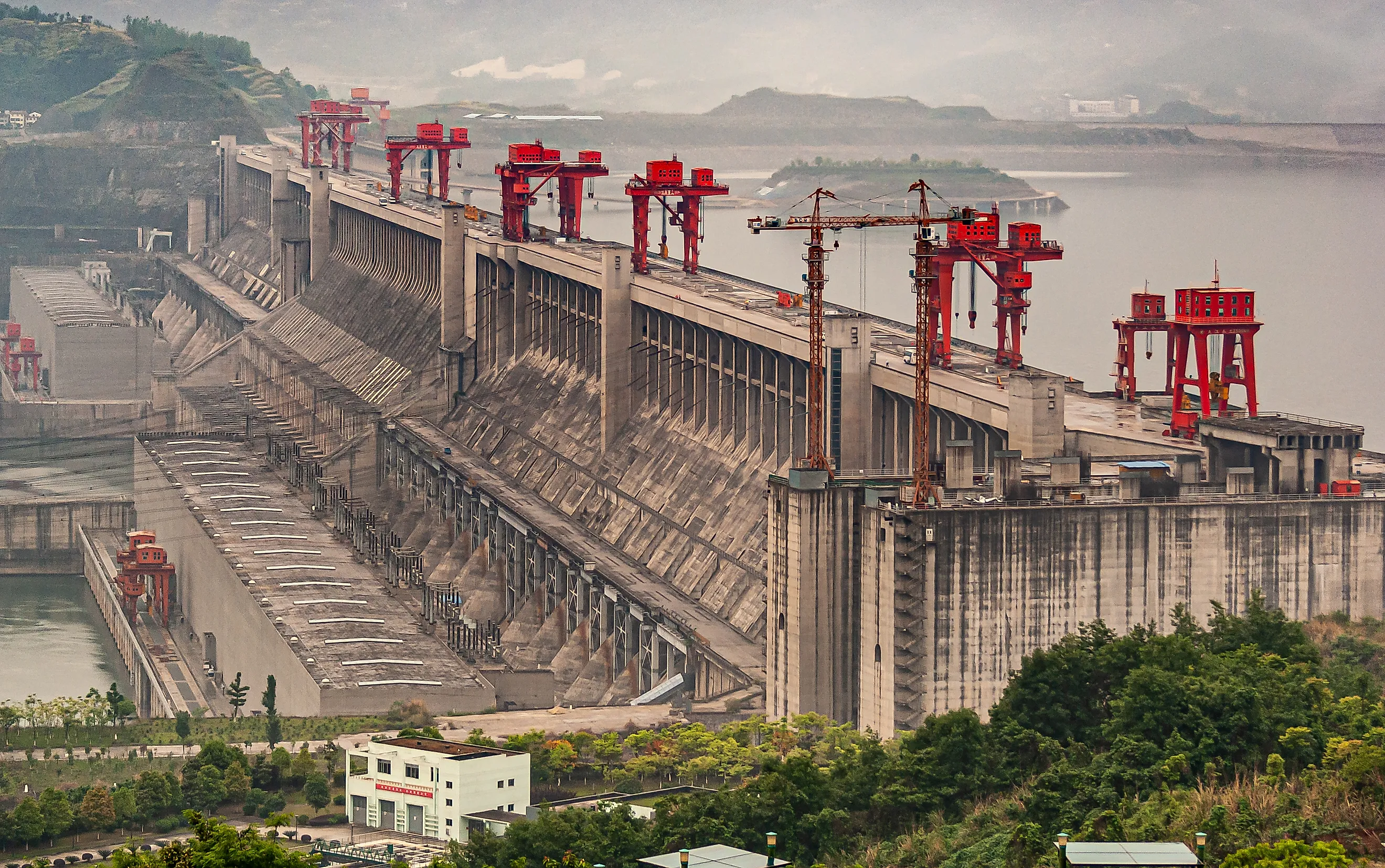
Brazil has the cleanest electricity mix of any major economy. Hydropower supplies roughly 60 percent of generation, with wind contributing 13 percent, solar 6 percent, biomass 8 percent, and fossil fuels (mostly natural gas and small amounts of coal) accounting for the remainder. The Itaipu Dam on the Brazil-Paraguay border has been the second-largest hydroelectric station in the world since the Three Gorges Dam came online; Brazilian and Paraguayan output from Itaipu remains roughly 100 TWh per year.
South Korea

South Korea consumed approximately 618 TWh in 2023 and 558 TWh in 2024. Per capita consumption of 11.9 MWh is among the highest in the world outside of Canada, the Gulf states, and a few Nordic countries with hydro-and-aluminium-driven industrial demand. Korean consumption is driven by a uniquely heavy industrial base: shipbuilding, semiconductors, automotive manufacturing, petrochemicals, and steel together account for over half of national electricity use.
The country's electricity mix is around 30 percent nuclear, 30 percent coal, 25 percent gas, and 13 percent renewables. South Korea reversed a previous nuclear phase-out under the Yoon administration (2022-2025) and has committed to building new reactors. The country is also a major exporter of nuclear technology, with the Korea Electric Power Corporation (KEPCO) currently constructing the Barakah plant in the United Arab Emirates.
Canada
Canada consumed approximately 606 TWh in 2023 and 564 TWh in 2024. Canadian per capita electricity consumption of 15.4 MWh is the highest among the top ten consumers and roughly four times the global average, reflecting a combination of cold winters, electric heating, a large industrial base (aluminium, oil sands processing, pulp and paper), and historically low electricity prices in hydro-heavy provinces.
Hydroelectricity supplies approximately 60 percent of Canadian generation, with nuclear contributing 13 percent (concentrated in Ontario), natural gas 12 percent, and wind, solar, and biomass collectively another 8 percent. Coal is being phased out in Alberta and Saskatchewan, the last provinces with significant coal generation. Cross-border electricity trade with the United States is large in both directions: Quebec, Manitoba, and British Columbia all export significant power south, while Ontario and Alberta import from neighbouring US states during peak demand periods.
Germany
Germany consumed approximately 506 TWh in 2023, with similar figures continuing through 2024. German consumption peaked in 2007 and has declined by roughly 15 percent since then because of energy efficiency gains and partial deindustrialisation in energy-intensive sectors. Germany shut down its last three nuclear reactors in April 2023, completing a phase-out that began after the 2011 Fukushima accident.
The 2024 German electricity mix was roughly 60 percent renewables (wind 31 percent, solar 14 percent, biomass 8 percent, hydro 4 percent), 27 percent coal and lignite, and 13 percent natural gas. Renewable generation in Germany has expanded faster than the country's grid has been able to accommodate, and the country has had periods of negative wholesale electricity prices on windy and sunny days. Per capita consumption is 6.0 MWh, well below other advanced economies of similar size.
France
France consumed approximately 468 TWh in 2023, slightly higher in 2024. France is the only large economy in which nuclear power supplies the majority of electricity: in a normal year, EDF's nuclear fleet of 56 reactors generates roughly 65 to 70 percent of French electricity, with hydro contributing another 11 percent, wind 9 percent, solar 5 percent, gas 6 percent, and other sources the remainder.
France's nuclear share has been challenged in recent years by an extended series of stress-corrosion cracking issues that took multiple reactors offline through 2022 and 2023; nuclear output is now recovering, with 2024 generation back close to the long-term average. The country has committed to building six new EPR2 reactors and exploring up to eight more under President Macron's nuclear renaissance announced in 2022. France is consistently a net exporter of electricity to neighbouring European countries.
Data Centres and the AI-Driven Demand Shift
Data centres consumed approximately 415 TWh globally in 2024, representing roughly 1.5 percent of total electricity consumption, according to the IEA Energy and AI special report published in 2025. The IEA projects global data centre electricity consumption to reach 945 TWh by 2030, with the Brookings Institution and Lawrence Berkeley National Laboratory citing higher estimates of up to 1,050 TWh by 2026. Data centres have grown at a compound annual rate of approximately 12 percent since 2017, more than four times the growth rate of total electricity demand.
The growth is unevenly distributed. In Ireland, data centres consumed 22 percent of total metered electricity in 2024 according to the Irish Central Statistics Office, up from just 5 percent in 2015; in the Dublin area specifically, the share reaches 79 percent according to analysis by Oeko-Institute. In the United States, data centres consumed approximately 183 TWh in 2024 (roughly 4.4 percent of national electricity), but the geographic concentration is striking: Virginia hosts nearly 600 data centre facilities and saw data centre electricity use reach approximately 40 percent of total state consumption in 2024, with North Dakota at 15 percent, Nebraska at 12 percent, Iowa at 11 percent, and Oregon at 11 percent. Singapore has imposed a moratorium on new data centre development because of grid capacity constraints; the Amsterdam region in the Netherlands faces similar constraints.
The AI sector has driven much of the recent acceleration. Hyperscaler companies (Amazon, Microsoft, Google, Meta) collectively signed 43 percent of all global corporate clean-energy power purchase agreements in 2024, and PPA prices rose by an average of 35 percent that year. Several US states have offered significant subsidies to attract data centre investment: Texas committed over USD 1 billion in 2025 and Virginia offered USD 732 million in 2024. Several retired nuclear plants in the US (Three Mile Island in Pennsylvania, Duane Arnold in Iowa) are being revived under long-term contracts with hyperscaler buyers.
The Decarbonisation Trend

Low-carbon power sources (renewables plus nuclear) reached 40.9 percent of global electricity generation in 2024, the highest share since the 1940s when hydro generation alone met over 40 percent of a much smaller global demand. Solar and wind together accounted for 15 percent of global electricity in 2024 (solar 6.9 percent, wind 8.1 percent), surpassing the hydropower share of 14.3 percent for the first time. Coal remains the largest single electricity source globally at around 35 percent, although coal's share has declined steadily since around 2014 as renewables have expanded.
The decarbonisation trajectory varies sharply across the top consumers. France and Brazil already source over 80 percent of electricity from low-carbon sources; the United Kingdom has reduced coal to under 1 percent of generation (the last coal plant closed in 2024); Germany has expanded renewables to 60 percent but still depends on coal and lignite for 27 percent of generation; the United States and China are expanding renewables rapidly but still depend on fossil fuels for over half of electricity; India remains the most coal-dependent major economy at around 70 percent.
The Top Fifty Countries by Electricity Consumption
The table below lists the top fifty countries by total electricity consumption in 2023, the most recent year with complete cross-country data available. All figures are from Ember Climate's Yearly Electricity Data, the primary public dataset on national electricity by country, supplemented by IEA and Energy Institute Statistical Review of World Energy data where available. The Ember data is the source used by the IEA, the Energy Institute, the Brookings Institution, and most major energy research organisations as the underlying global comparison series. Per capita figures are in MWh per person.
| Rank | Country | Consumption (TWh) | Per capita (MWh) |
|---|---|---|---|
| 1 | China | 9,443 | 6.6 |
| 2 | United States | 4,273 | 12.4 |
| 3 | India | 1,957 | 1.4 |
| 4 | Russia | 1,162 | 8.0 |
| 5 | Japan | 1,013 | 8.2 |
| 6 | Brazil | 725 | 3.4 |
| 7 | South Korea | 618 | 11.9 |
| 8 | Canada | 606 | 15.4 |
| 9 | Germany | 506 | 6.0 |
| 10 | France | 468 | 7.0 |
| 11 | Saudi Arabia | 423 | 12.7 |
| 12 | Iran | 380 | 4.2 |
| 13 | Mexico | 358 | 2.8 |
| 14 | Indonesia | 351 | 1.3 |
| 15 | Turkey | 324 | 3.7 |
| 16 | Italy | 313 | 5.3 |
| 17 | United Kingdom | 309 | 4.5 |
| 18 | Taiwan | 282 | 12.1 |
| 19 | Vietnam | 279 | 2.8 |
| 20 | Australia | 273 | 10.3 |
| 21 | Spain | 265 | 5.5 |
| 22 | South Africa | 232 | 3.7 |
| 23 | Thailand | 224 | 3.1 |
| 24 | Egypt | 219 | 1.9 |
| 25 | Malaysia | 187 | 5.3 |
| 26 | Pakistan | 171 | 0.7 |
| 27 | Poland | 168 | 4.3 |
| 28 | United Arab Emirates | 165 | 15.5 |
| 29 | Argentina | 158 | 3.5 |
| 30 | Iraq | 153 | 3.4 |
| 31 | Sweden | 137 | 13.0 |
| 32 | Norway | 136 | 24.6 |
| 33 | Bangladesh | 116 | 0.7 |
| 34 | Kazakhstan | 114 | 5.6 |
| 35 | Netherlands | 114 | 6.3 |
| 36 | Ukraine | 114 | 2.8 |
| 37 | Philippines | 112 | 1.0 |
| 38 | Algeria | 94 | 2.0 |
| 39 | Colombia | 90 | 1.7 |
| 40 | Chile | 88 | 4.5 |
| 41 | Kuwait | 86 | 17.7 |
| 42 | Finland | 83 | 14.7 |
| 43 | Belgium | 82 | 7.0 |
| 44 | Venezuela | 82 | 2.9 |
| 45 | Uzbekistan | 79 | 2.2 |
| 46 | Austria | 70 | 7.7 |
| 47 | Israel | 67 | 7.3 |
| 48 | Czechia | 67 | 6.2 |
| 49 | Switzerland | 63 | 7.1 |
| 50 | Peru | 60 | 1.8 |
Sources: Ember Climate Yearly Electricity Data (2023 baseline); International Energy Agency Electricity 2024 and Electricity 2025 reports; US Energy Information Administration; Energy Institute Statistical Review of World Energy; Central Statistics Office of Ireland; Lawrence Berkeley National Laboratory; Eurostat.
What Comes Next
The IEA expects global electricity demand to grow by approximately 4 percent per year through 2027, the fastest pace in nearly two decades, adding the equivalent of one Japan's annual consumption to global demand each year. About 85 percent of that additional demand is projected to come from emerging economies, principally China, India, and Southeast Asia. In advanced economies, where consumption was largely flat for the previous decade, data centre growth and the electrification of road transport and heating are now reversing that pattern; the IEA estimates that data centres alone will drive about a quarter of advanced-economy electricity demand growth through 2030. The combination of accelerating demand and the continuing shift to lower-carbon generation is now widely identified by the IEA and the Energy Institute as one of the central challenges of the late 2020s, with implications for grid investment, generation mix, and pricing that no current account of national electricity figures can ignore.