What Was The First Metal Used By Humans?
The short answer is copper, and the evidence for it goes back roughly 11,000 years. Long before anyone built a furnace, people in the Middle East were picking up lumps of naturally occurring copper and hammering them into beads, hooks, and small tools. One of the oldest known examples, a small copper pendant, was found in northern Iraq and dates to around 8700 BCE. But the full story is more interesting than a single date, because "the first metal humans used" and "the first metal humans learned to extract from rock" are two very different milestones, separated by thousands of years and one genuinely clever discovery.
Why Copper Came First

Most metals are locked inside rock as ore and have to be chemically wrenched out with heat, a process called smelting that nobody figured out until much later. Copper had a head start because it is one of the few metals that occurs in nature as "native metal," meaning it turns up in more or less pure, usable lumps you can simply find on the ground. That single quirk of chemistry is why it beat everything else. A Neolithic person did not need to understand metallurgy to use native copper; they needed only to notice that this particular reddish stone could be pounded into a new shape instead of shattering like flint.

That reddish color, by the way, is also where the name comes from. The Romans got much of their copper from the island of Cyprus and called it "aes Cyprium," the metal of Cyprus, which wore down over the centuries into the Latin "cuprum" and eventually the English "copper." Its chemical symbol, Cu, still carries the island's name.
Copper Had Company: Gold And Iron From The Sky

Copper is usually crowned the first metal, but it was not entirely alone. Gold also occurs in native form, glinting in streambeds as nuggets and flakes, and people were almost certainly collecting and shaping it around the same era, though for ornament rather than tools, since gold is far too soft to hold an edge. The other early contender came, remarkably, from space. Meteoric iron, the nickel-rich iron found inside fallen meteorites, was worked into small objects long before anyone could smelt iron from ordinary ore. A set of iron beads from Gerzeh in Egypt, hammered from meteorite fragments around 3200 BCE, predates iron smelting by well over a thousand years.

The most famous example of sky-iron belonged to a teenager. When Howard Carter opened Tutankhamun's tomb, one of the daggers placed inside the young pharaoh's wrappings had an iron blade, a rarity in an age of bronze. Modern analysis showed the blade is roughly 11 percent nickel with a trace of cobalt, a fingerprint that matches iron meteorites and effectively no iron pulled from the ground at the time. King Tut, in other words, was buried around 1330 BCE with a knife made of a fallen star.
From Hammering To Smelting: The Real Leap

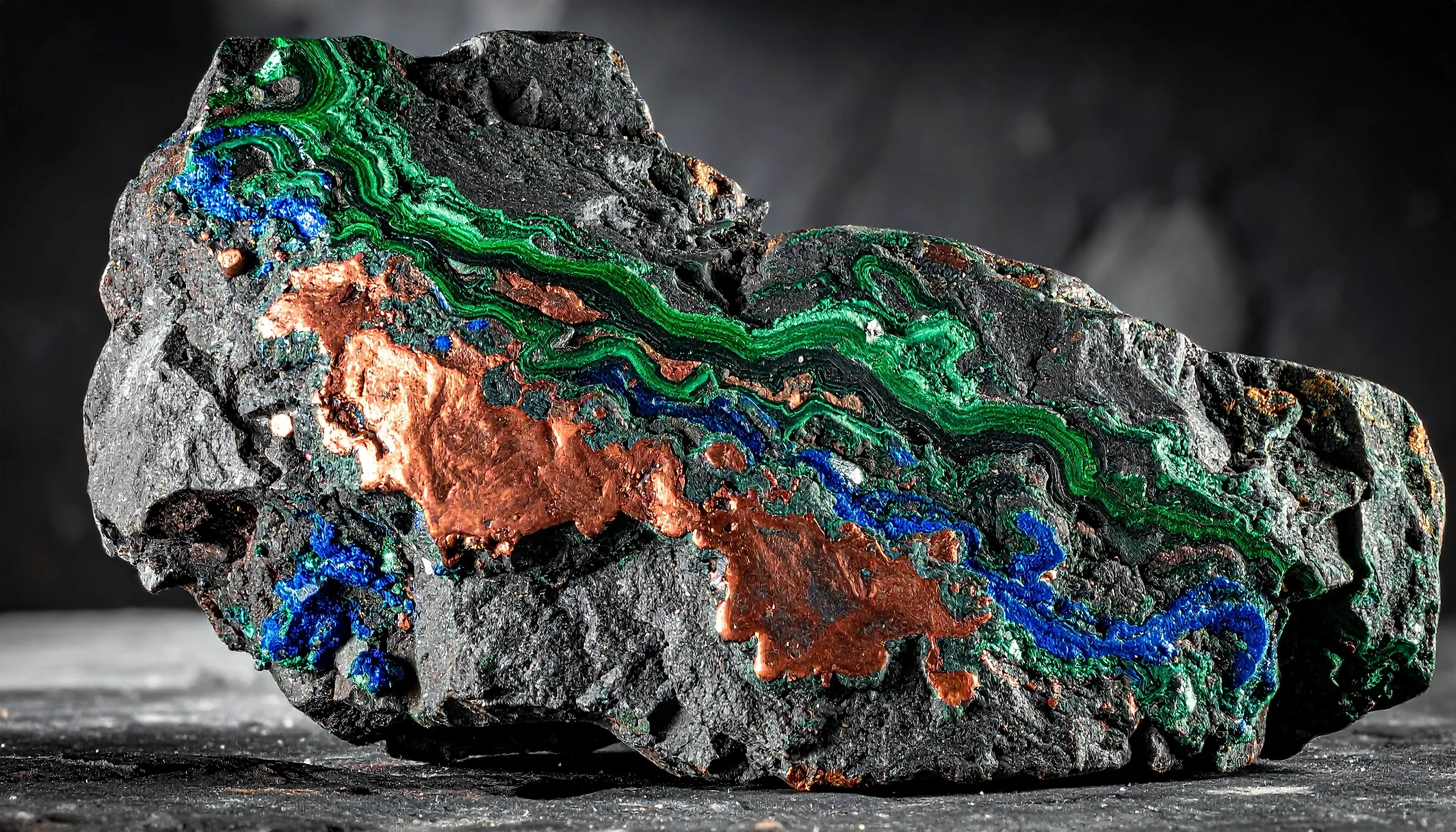
Working native copper was a start, but it had limits. Cold-hammered copper is brittle and there is only so much loose native metal lying around. The breakthroughs came in a sequence that archaeologists can trace in the ground. First was cold working, simply pounding the metal into shape. Next came annealing, the discovery that heating the copper before hammering it made the metal less brittle and far easier to work. Then came the big one: smelting, the realization that you could roast certain greenish and bluish rocks, ores like malachite, and watch pure metal run out of stone that contained no visible metal at all. Finally came casting, pouring molten copper into molds to make complex shapes in one pour.
Smelting was the true birth of metallurgy, and it changed everything, because it freed people from depending on rare native lumps and opened up the planet's vast reserves of metal ore. Some of the earliest firm evidence for copper smelting comes from the Balkans, at sites like Belovode in Serbia, where it appears around 5000 BCE. The earliest worked native copper, meanwhile, shows up far earlier still at Çayönü Tepesi in southeastern Anatolia, where archaeologists recovered roughly 200 small copper objects from the late ninth and eighth millennia BCE.
A Scholarly Asterisk

Historians of technology like to add a caveat here, and it is worth knowing. The oldest object often cited as worked copper, a pendant from the Shanidar Cave area of northern Iraq, may not be worked metal at all. On closer study, some researchers concluded it was ground and polished copper ore, malachite and chrysocolla that happens to contain native copper, rather than a piece of shaped metal. It is a small distinction that matters a great deal to specialists, and a good reminder that the deeper you go into the deep past, the blurrier the line between "earliest known" and "earliest that happened to survive and be correctly identified." The dates here are the current best reading of the evidence, not the final word.
The Iceman's Axe
If you want to actually picture early copper in human hands, there is no better illustration than Otzi the Iceman, the 5,300-year-old mummy found frozen in the Alps in 1991. Among his preserved gear was a copper axe, and it is the oldest completely intact axe of its kind ever found, blade, yew-wood handle, leather binding, and birch-tar glue all still together. The blade is an astonishing 99.7 percent pure copper, cast in a mold and then hammered, which shows real metalworking skill for around 3300 BCE.
The axe holds one more surprise. Chemical analysis of the metal traced its origin not to the nearby Alps but to ore from southern Tuscany, well over 300 miles away. That means copper, or the finished blade, was moving across long-distance trade routes more than five thousand years ago, which says something about how valuable the metal had already become. A man dying alone on a mountain was carrying a tool made from stone that started its journey in another region entirely.
What Copper Started
Copper's real legacy is everything it set in motion. Once people could smelt and cast it, the next discovery was that mixing copper with tin produced bronze, a harder and more useful alloy that gave its name to an entire age beginning around 3300 BCE. Bronze in turn gave way to iron once humans learned to reach the much higher temperatures that smelting iron ore demands, ushering in the Iron Age. Each of these eras is named for a metal, which is exactly why the question of the first one matters. The reddish lump that some anonymous person hammered into a bead eleven thousand years ago was the first link in a chain that runs straight through to the copper wiring in the device you are reading this on.