7 Must-See Historic Forts In Vermont
Vermont's historic forts once guarded the strategic waterways and frontier settlements of the region. Fort Dummer became the state's first permanent European settlement in 1724. Mount Independence became a major Revolutionary War fortification built by American forces. Many of the original structures no longer stand. Today the parks, museums, and memorials on these sites preserve their stories and let visitors explore an important part of Vermont's military past.
Chimney Point, Addison

Right on the western end of the state, and on Lake Champlain, is Chimney Point, then called Fort de Pieux, a former French fort built in the 1730s to block British expansion along Lake Champlain and protect French interests in the region. The British renamed the fort Chimney Point in 1759, and British and U.S. forces later used it during various phases of the Revolutionary War between 1775 and 1777. In 1785, a tavern was established that welcomed guests from all over the region. The site is home to the Chimney Point Historic Museum, where visitors can enjoy views of the lakefront, visit the historic tavern and rural post office, and view exhibits showcasing the area's early cultures.
Fort Dummer, Brattleboro

Just off Interstate 91 is Fort Dummer State Park, a former fort that was the state's first permanent European settlement, built in 1724. It was built using white pine logs and was maintained by English forces and Mohawk Native Americans in its early years. It was built to protect frontier settlers and later played a role during conflicts between British, French, and Native American forces. Visitors to the state park can view the former site of Fort Dummer, which was flooded in 1908 when the Vernon Dam was built. The memorial to the site was moved to prevent it from being lost to the floodwaters. People can also camp near the site, hike on trails, and hunt and fish in certain areas.
Mount Independence, Orwell

Just near the New York State border and along the shore of Lake Champlain is Mount Independence, a mountain that was once home to a Revolutionary War fort set up by American forces in 1776. The fort was situated on the eastern side of Lake Champlain. British general Guy Carleton abandoned plans for an invasion and retreated to Canada due to the impressive number of Patriot forces occupying the fort. The former fort became farmland for over a century, until 1911, when Stephen Pell purchased 113 acres to preserve it.
Visitors to the mountain can view what it was like to be a soldier during the Revolutionary War, learn how American forces built a bridge across Lake Champlain during a winter in the state, and view archaeological treasures found in the soil around the former fort. Mount Independence is open Tuesday through Sunday, 10:00 a.m. to 5:00 p.m., from Memorial Day until Columbus Day/Indigenous Peoples' Day. Visitors can also enjoy six miles of trails to hike, take in the natural scenery around the historic fort, and overlook the views of the adjacent lake.
Fort Sainte Anne, Isle La Motte

On the island of Isle La Motte is the site of the former Fort Sainte Anne, a fort built in 1666 by the French, dedicated to Saint Anne, and constructed to protect New France from the Iroquois. The fort was in use from 1666 until it was abandoned in 1671. The fort was the site of the state's first Catholic Mass, celebrated in 1666. The land where the fort sat was purchased by Bishop Louis de Goesbriand in 1892 to preserve its history.
The site has a Catholic Shrine honoring the original 1666 fort and is located near the shore of Lake Champlain. Visitors to the area can visit Isle La Motte Park and enjoy a nice sunny afternoon exploring the greenery. Visitors can also view the Isle La Motte Lighthouse on the western end of the island.
Fort Ethan Allen, Colchester, and Essex Junction

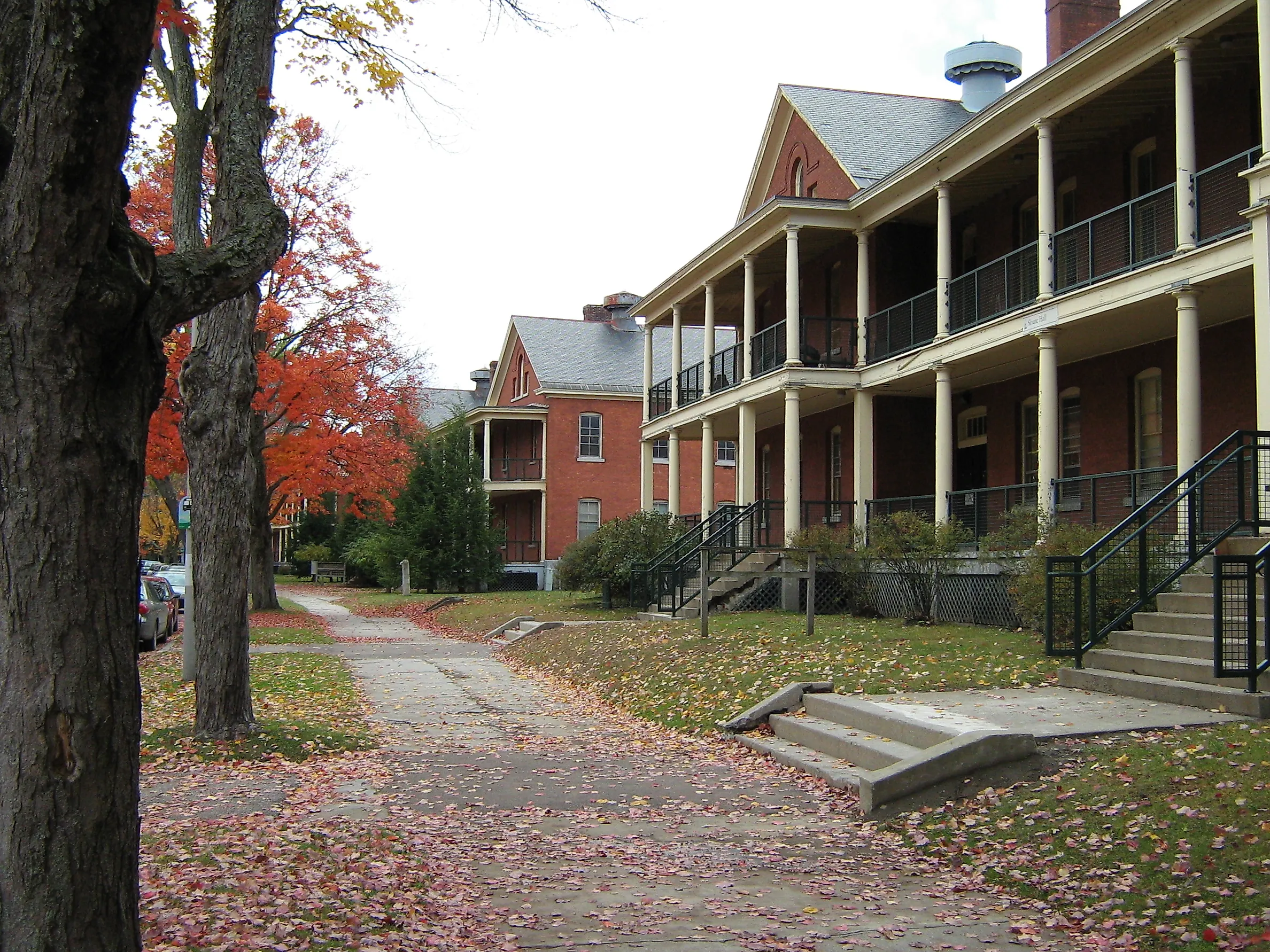
Between Colchester and Essex Junction is Fort Ethan Allen Park, where the historic Fort Ethan Allen once stood. The fort was a United States Army installation that was established in 1892 as a cavalry and field artillery training post. The post was home to two 240-man cavalry barracks, bachelor officer quarters, and a commander's quarters. During World War I, the fort was one of 15 designated training camps in the country for over 8,000 troops, as well as Reserve Officer Training Corps (ROTC) units from Harvard, Yale, and the University of Massachusetts.
The fort closed in 1944 and has since become a lively mixed community. Fort Ethan Allen Park is a 19-acre park where people can play tennis on two courts, enjoy trails, and use a public gazebo to gather with friends and family on a calm sunny day. People can also visit the Fort Ethan Allen Museum, where they can see the fort's history up close, view historical weapons like rifles and swords, old photographs, artifacts from the fort, and preserved buildings, such as the old pump house.
Fort Vengeance, Pittsford

In Pittsford is the Fort Vengeance Monument Site, which honors the historic Fort Vengeance, a former Revolutionary War fort built in 1780 and controlled by Major Ebenezer Allen and his 150 men. The fort had barracks and remained in use until 1782, when it was abandoned after the threat of British attack diminished. All that remains of Fort Vengeance is a monument off U.S. Route 7, honoring where its location was. The Pittsford Historical Society Museum has artifacts from the fort on display for visitors to see and learn about the fort itself.
Battery Park, Burlington

Battery Park, originally called the Burlington Cantonment, was a U.S. Army base established in Burlington during the War of 1812 to protect the area from British naval attacks. The site was occupied from 1812 to 1815 by the 11th U.S. Infantry, composed of soldiers from the state and New Hampshire. The site and its 14 structures served as a hospital, a supply depot, and winter quarters by 1813. The base also held court-martialed soldiers, civilians accused of being spies, and prisoners of war.
Today, the fort is known as Battery Park, where people can gather and enjoy a relaxing day in the sun, gaze at panoramic views of Lake Champlain and the Adirondack Mountains, and read monuments dedicated to the soldiers who served during the War of 1812. The park has a historic cannon on display, further honoring the soldiers who used it against the British.
Vermont's Historic Forts
Though these forts were mighty and no longer stand, they're still special and memorable for those wanting to learn more about them. Fort Dummer saw significant use during the French and Indian War, Fort Sainte Anne was a Catholic haven in the 17th century, and Fort Ethan Allen played a role in multiple U.S. wars. Some of these forts weren't built for war, but they hold a special place in the hearts of history buffs in the area who want to learn about their histories and honor the army veterans who manned and operated them.