National Capital Cities In Europe
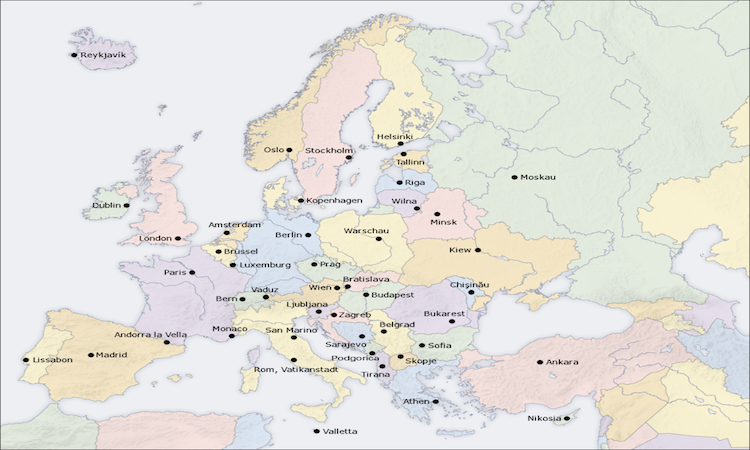
Europe fits an astonishing number of capital cities into a small space. More than forty of them crowd a continent barely larger than the United States, and no two are quite alike. Some were writing down laws and philosophy while much of the world was still pre-literate; others govern countries you could cross on foot in an afternoon. They include a metropolis of some thirteen million people and a walled enclave of about a thousand, a city built two meters below sea level and another perched a kilometer up in the Pyrenees. What follows is a tour of Europe's capitals by what makes each remarkable, with a full country-by-country list at the end.
The Ancient Capitals

Several of Europe's capitals were already old when Rome was founded. Greece's capital, Athens, has been continuously inhabited for well over three thousand years and gave the world democracy, formal philosophy, and the theater, with the Parthenon crowning its Acropolis since the fifth century BC. Rome, the capital of Italy, came later, but its 2,500-year run as a seat of power, first of the Roman Empire and then of the Catholic Church, earned it the nickname the Eternal City. It still hosts global institutions today, including the United Nations Food and Agriculture Organization and the World Food Programme.
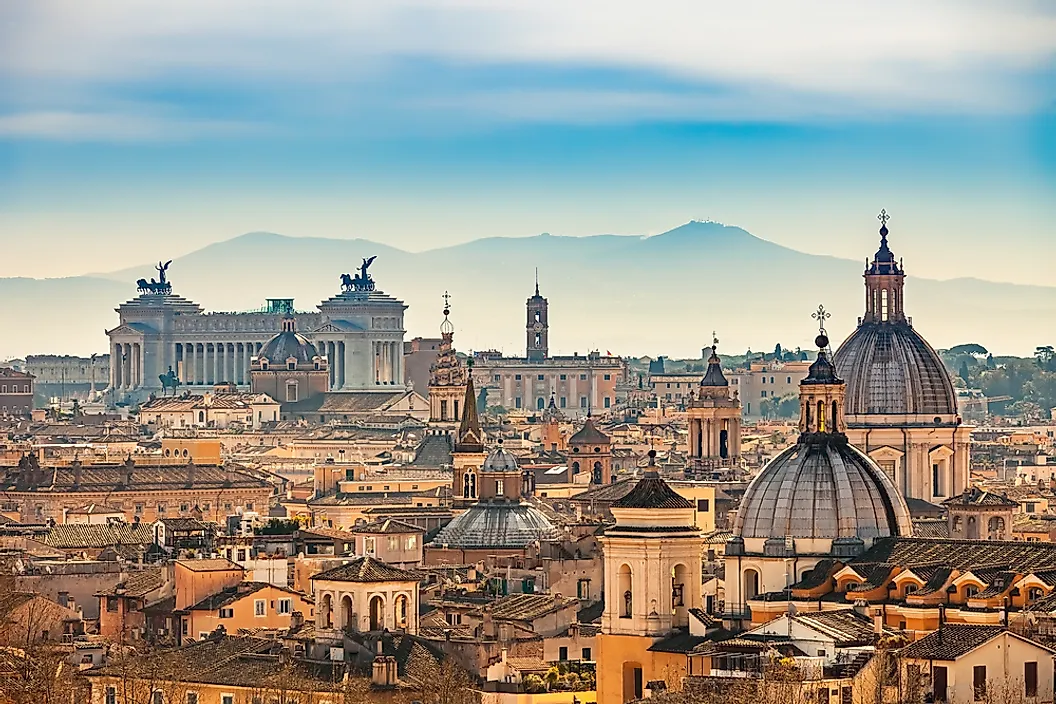
The surprise of the group is Lisbon. Portugal's capital is older than Rome, Paris, and London, founded by Phoenician traders around 1200 BC and later prized by the Romans as a western outpost on the Atlantic. Age, among Europe's capitals, is rarely where you expect it. The oldest continuously inhabited city on the continent is not a capital at all: Plovdiv, in Bulgaria, has been lived in for roughly eight thousand years, older than Athens, Rome, and the very idea of a capital city.
The Giants
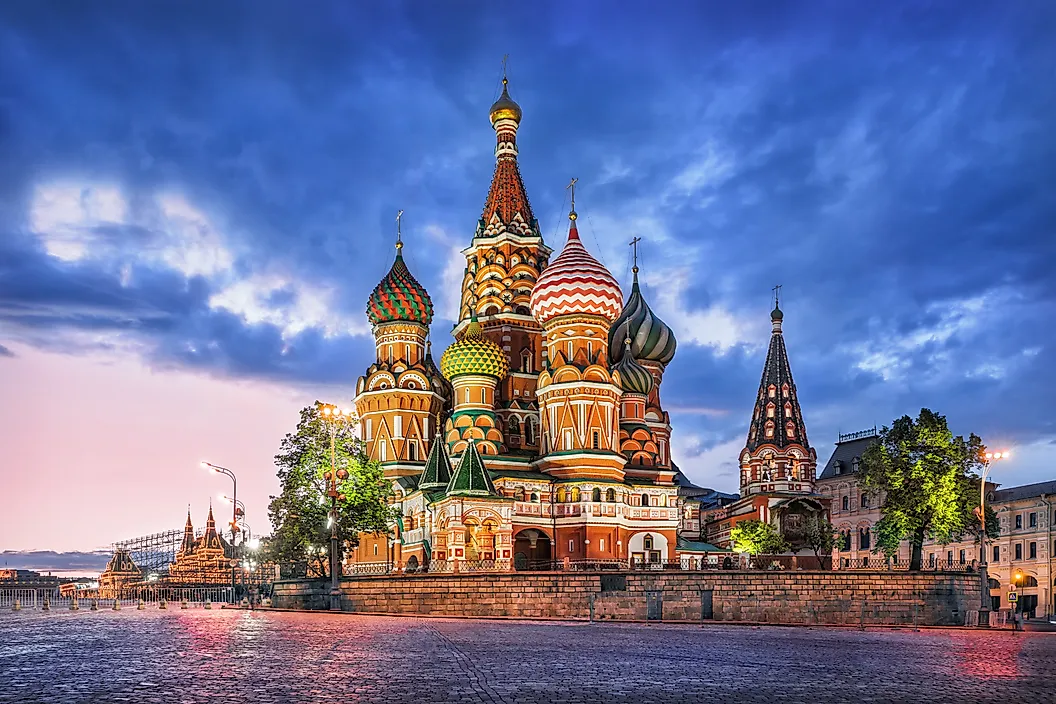
Russia's capital, Moscow, is the largest city in Europe, home to well over ten million people and set along the continent's far eastern edge, which also makes it the easternmost capital on the map.
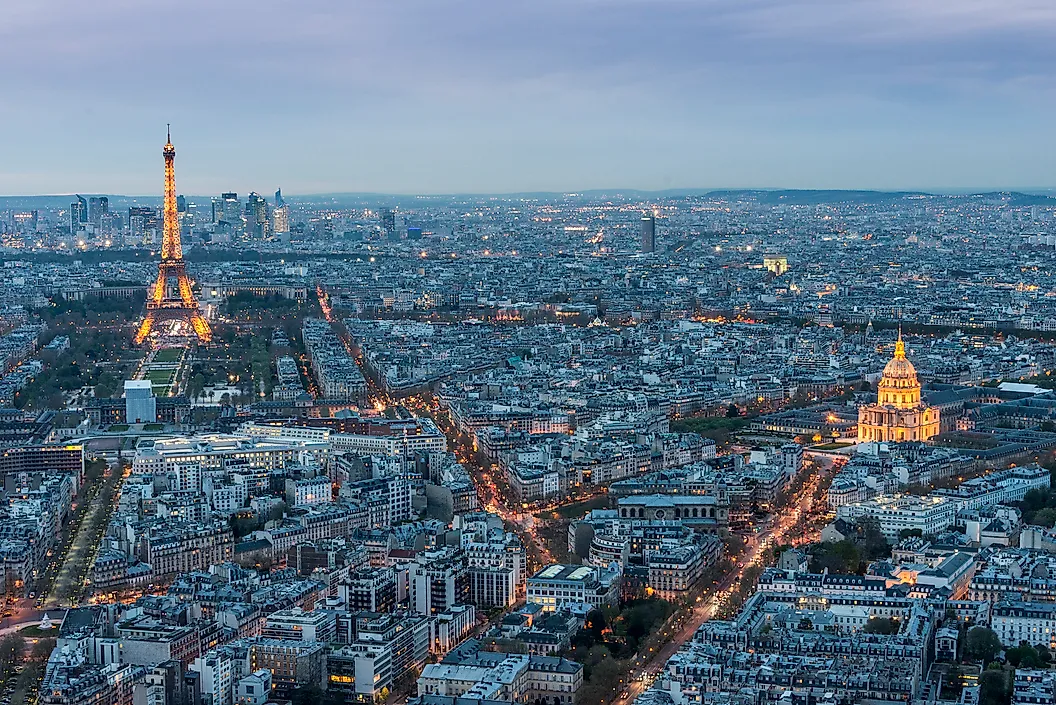
London and Paris follow close behind. London is one of the world's leading financial centers and among the most visited cities on Earth, while Paris fits some twelve million people into its wider region and draws the crowds to the Louvre, the most visited art museum in the world.

Berlin rounds out the heavyweights as the largest capital inside the European Union, now that both London and Moscow sit outside it. Together, these four cities carry much of the continent's economic and cultural weight, which is a polite way of saying they are where the money, the museums, and the traffic all pile up.
Capitals on the Danube
If Europe's capitals share a single thread, it is often a river. London has the Thames, Paris the Seine, Rome the Tiber, and Vienna, Bratislava, Budapest, and Belgrade all sit on the Danube, which passes through more capital cities than any river on Earth. The Danube runs through ten countries on its way from Germany's Black Forest to the Black Sea, and four of them put their capital directly on its banks.
Each wears the river differently. Vienna made it the backbone of an empire; Budapest was literally created by it, formed in 1873 when the hilly town of Buda on the west bank merged with flat Pest on the east. Bratislava sits barely 60 kilometers downstream from Vienna, close enough that the two are among the nearest capital cities in the world, and it is one of the only capitals anywhere to border two other countries at once. Belgrade guards the point where the Sava pours into the Danube, a strategic perch that has seen the city destroyed and rebuilt more times than almost any other capital in Europe.
The Pocket-Sized Capitals

At the other extreme sit the capitals of Europe's microstates. Vatican City is the smallest, a walled city-state of about a thousand residents that doubles as the capital of the world's smallest country and sits entirely inside Rome. It keeps good company: Monaco, San Marino, and Luxembourg are all capitals that share a name with the country they govern, a shortcut you can only pull off when the country is small enough.


San Marino's hilltop capital serves what claims to be the world's oldest surviving republic, founded by tradition in the fourth century. Vaduz runs Liechtenstein from the Rhine valley, and Andorra la Vella, which we will come back to, governs a principality so unusual that its two heads of state are the President of France and a Spanish bishop, a medieval arrangement that has somehow survived into the present day. None of these cities would fill a corner of Moscow, yet each is the seat of a sovereign state.
Capitals at the Extremes

Andorra la Vella is the highest capital in Europe, sitting 1,023 meters (3,356 feet) up in the Pyrenees, high enough to moonlight as a ski town. Madrid, at roughly 650 meters, is a distant second, the loftiest of the continent's major capitals. At the opposite end, Amsterdam is the lowest, built on reclaimed marsh that leaves parts of it roughly two meters below sea level and permanently reliant on its dikes and pumps.

The compass points have their record-holders too. Reykjavik, the capital of Iceland, is the northernmost capital in the entire world, nearer the Arctic Circle than the rest of Europe. Valletta, on Malta, is the southernmost capital in Europe, a tiny Baroque fortress-city laid out by the Knights of St. John in the sixteenth century. Lisbon, meanwhile, is the westernmost capital on the European mainland, the last stop before the open Atlantic. And Bucharest, the capital of Romania, holds a record of a different kind: its Palace of the Parliament is the heaviest building on Earth and the largest administrative building anywhere outside the Pentagon.
The Capital of Europe
One capital on this continent governs no country of its own. Brussels, the capital of Belgium, is also the de facto capital of the European Union, home to the European Commission and the European Council, and the city where most of the day-to-day work of the 27-member bloc gets done. It also hosts the headquarters of NATO, which makes a mid-sized Belgian city one of the most consequential addresses in the world.
Even the EU, though, cannot resist Europe's talent for splitting things up. Its institutions are scattered across four cities rather than one. The European Parliament's official home is Strasbourg, France, where it is legally required to hold a dozen sessions a year, even though most of its committees meet in Brussels and its administrative staff work in Luxembourg. The Court of Justice sits in Luxembourg as well, and the European Central Bank operates from Frankfurt. For a union built on compromise, a capital spread thinly across several countries is oddly fitting.
The Ones That Break the Rules
A few European capitals refuse to behave. The Netherlands has two: Amsterdam is the constitutional capital, but the government, parliament, and royal offices all sit in The Hague, which quietly does the actual work of running the country. Switzerland goes a step further and officially has no capital at all. The city of Bern is merely the "federal city" where the national government happens to meet, a very Swiss compromise built to avoid playing favorites among the cantons.
Vatican City, for its part, is a capital nested inside another country's capital, and Ukraine's Kyiv is proof that age and clout do not always travel together. Kyiv is centuries older than Moscow and was the heart of Kyivan Rus', the medieval state from which Russia, Ukraine, and Belarus all trace their roots. Europe's capitals, in short, keep nearly as many exceptions as rules.
Every European Capital
| # | Country | Capital City |
|---|---|---|
| 1 | Albania | Tirana |
| 2 | Andorra | Andorra la Vella |
| 3 | Austria | Vienna (Wien) |
| 4 | Belarus | Minsk |
| 5 | Belgium | Brussels (Bruxelles, Brussel) |
| 6 | Bosnia & Herzegovina | Sarajevo |
| 7 | Bulgaria | Sofia |
| 8 | Croatia | Zagreb |
| 9 | Cyprus | Nicosia |
| 10 | Czech Republic | Prague (Praha) |
| 11 | Denmark | Copenhagen (Kobenhavn) |
| 12 | Estonia | Tallinn |
| 13 | Finland | Helsinki (Helsingfors) |
| 14 | France | Paris |
| 15 | Germany | Berlin |
| 16 | Greece | Athens |
| 17 | Holy See | Vatican City |
| 18 | Hungary | Budapest |
| 19 | Iceland | Reykjavik |
| 20 | Ireland | Dublin |
| 21 | Italy | Rome (Roma) |
| 22 | Latvia | Riga |
| 23 | Lithuania | Vilnius |
| 24 | Liechtenstein | Vaduz |
| 25 | Luxembourg | Luxembourg |
| 26 | North Macedonia | Skopje |
| 27 | Malta | Valletta |
| 28 | Moldova | Chisinau |
| 29 | Monaco | Monaco |
| 30 | Montenegro | Podgorica |
| 31 | Netherlands | Amsterdam (The Hague is the seat of government) |
| 32 | Norway | Oslo |
| 33 | Poland | Warsaw (Warszawa) |
| 34 | Portugal | Lisbon (Lisboa) |
| 35 | Romania | Bucharest |
| 36 | Russia | Moscow (Moskva) |
| 37 | San Marino | San Marino |
| 38 | Serbia | Belgrade (Beograd) |
| 39 | Slovakia | Bratislava |
| 40 | Slovenia | Ljubljana |
| 41 | Spain | Madrid |
| 42 | Sweden | Stockholm |
| 43 | Switzerland | Bern (Berne) |
| 44 | Ukraine | Kyiv |
| 45 | United Kingdom | London |