The Oldest Capital Cities in Asia
In 782 BC, scribes working for King Argishti I of Urartu cut a founding record into stone at Erebuni, the fortress that grew into Yerevan. Armenia's capital can therefore name its own birthday, which few ancient cities can do. Most of the cities below are dated instead by pottery layers, Egyptian campaign lists, or a single line in a Bronze Age letter, and the margins run to centuries. Seven Asian capitals stand out for the depth of that record, and the table at the end extends the ranking to thirteen. One warning before the list: the year a city was founded and the year it became a capital are rarely the same, and the gap is sometimes three thousand years.
Damascus, Syria

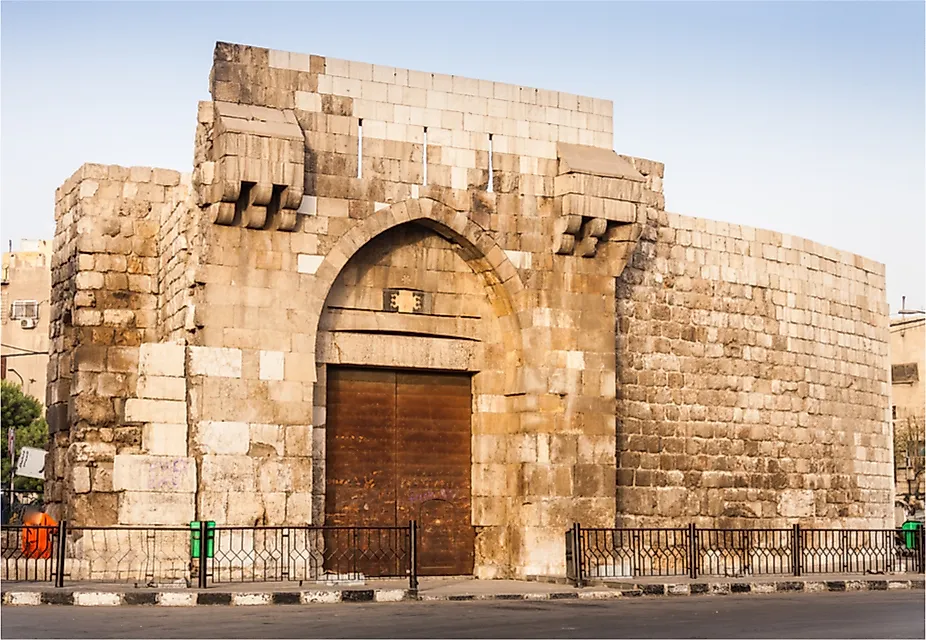
Damascus once ran an empire that reached the Atlantic. For most of the years between 661 and 750 CE it was the capital of the Umayyad Caliphate, the seat from which Mu'awiya I and his successors governed territory across North Africa and into Spain. That was the city's political peak, and it arrived roughly four thousand years after people first settled the oasis around it.
The Barada River made the site possible. Neolithic remains at Tell Ramad, on the city's outskirts, run back some ten thousand years, although substantial urban settlement in Damascus proper came much later, in the second millennium BCE. The earliest firm written record is Egyptian, in the campaign lists of Thutmose III in the fifteenth century BCE. Damascus was named Arab Capital of Culture in 2008, and its walled Old City is a UNESCO World Heritage Site.
Population figures need a caveat. Syria has held no dependable census since before the 2011 war, and the years of conflict reordered the country's cities. Damascus, long second to Aleppo, is now generally counted the most populous, at roughly 2.5 million.
Beirut, Lebanon

The name means wells. Beirut derives from the Phoenician be'erot, a reference to the freshwater springs that made the site worth occupying, and the city appears as Biruta in the Amarna letters of the fourteenth century BCE. Excavations near Martyrs' Square have turned up a Middle Bronze Age wall and gate, and the settlement record runs past five thousand years.
Beirut also holds the odd distinction of having been destroyed and then rebuilt to a better plan. In 140 BC, Diodotus Tryphon levelled the city during his contest with Antiochus VII for the Seleucid throne. What went back up was a conventional Hellenistic grid, renamed Laodicea in Phoenicia. The modern city sits directly on the ancient one, on a peninsula pushing into the Mediterranean, which is why so much Beirut archaeology happens by accident during construction work.
Counting residents is guesswork here as well. Lebanon has not run a census since 1932. Beirut Governorate proper holds something under half a million people, while Greater Beirut is usually estimated at around 2.2 million. In 2014 the city was named one of the New7Wonders Cities.
Jerusalem
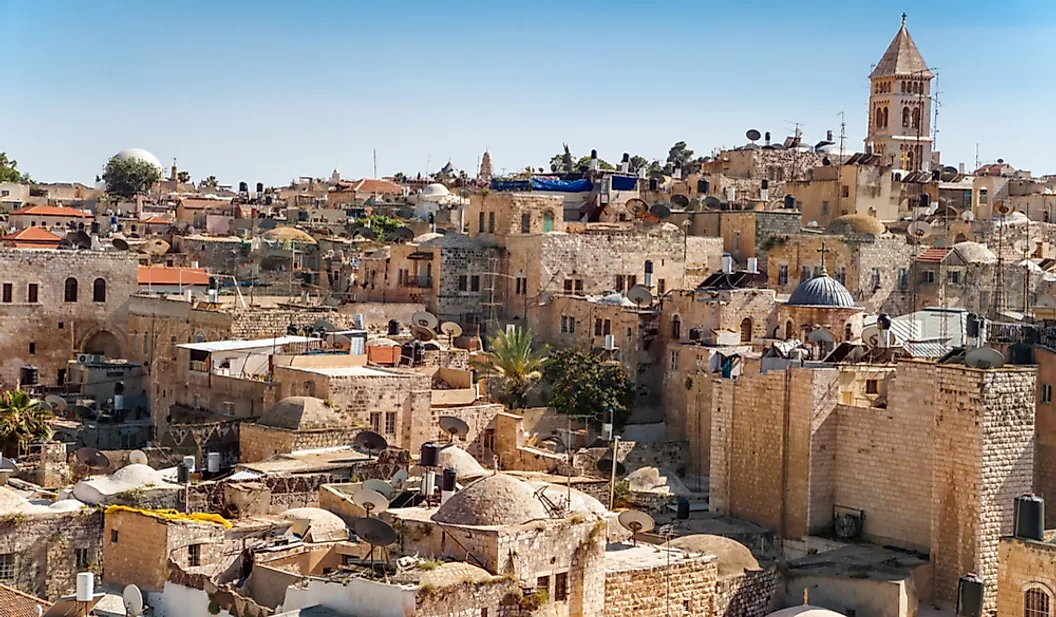
Jerusalem's status is contested, and the wording matters. Israel proclaims the city its capital and seats its government there. The Palestinian leadership claims East Jerusalem as the capital of a future Palestinian state. Most of the international community treats neither claim as settled and holds that the city's final status must come out of negotiation, which is why most embassies to Israel are located in Tel Aviv.
The archaeology is less disputed. Settlement near the Gihon Spring dates to roughly 3000 BCE, the first fortified town went up around 1800 BCE, and Egyptian Execration Texts name the place as Rushalimum a century or two earlier. In 2016 an Israel Antiquities Authority salvage excavation at Shuafat, in the north of the city, uncovered two houses about seven thousand years old, pushing evidence of habitation in the Jerusalem area back into the Chalcolithic.
The biblical account places King David's capture of the city and his establishment of it as a capital at around 1000 BCE, though the scale of the united monarchy remains argued over by archaeologists. The city has been destroyed and rebuilt repeatedly across those three millennia. It sits on a ridge in the Judaean Mountains at about 754 meters (2,474 feet), some 60 kilometers (37 miles) inland of the Mediterranean and 24 kilometers (15 miles) west of the Dead Sea.
Beijing, China

Beijing counts its history from 1045 BC. That is the municipal government's official founding year, marking the establishment of Ji, and it does not rest on legend: bronze vessels carrying dated inscriptions, excavated at the Liulihe site south of the modern city, anchor it. Ji and the neighbouring state of Yan are what the standard claim of more than three thousand years of history is built on.
Capital status came far later. The Jin dynasty made the site its central capital, Zhongdu, in 1153, and Kublai Khan rebuilt it as Dadu for the Yuan. The city has been a seat of imperial or national government for most of the eight centuries since. One correction is worth making here, because the error is common: Beijing is often described as the only survivor of the Four Great Ancient Capitals of China. All four survive. Beijing, Xi'an, Luoyang, and Nanjing are every one of them still major cities.
The 2020 census recorded 21,893,095 people in Beijing municipality, making it China's third largest city after Chongqing and Shanghai, and one of the largest urban centers in Asia.
Yerevan, Armenia
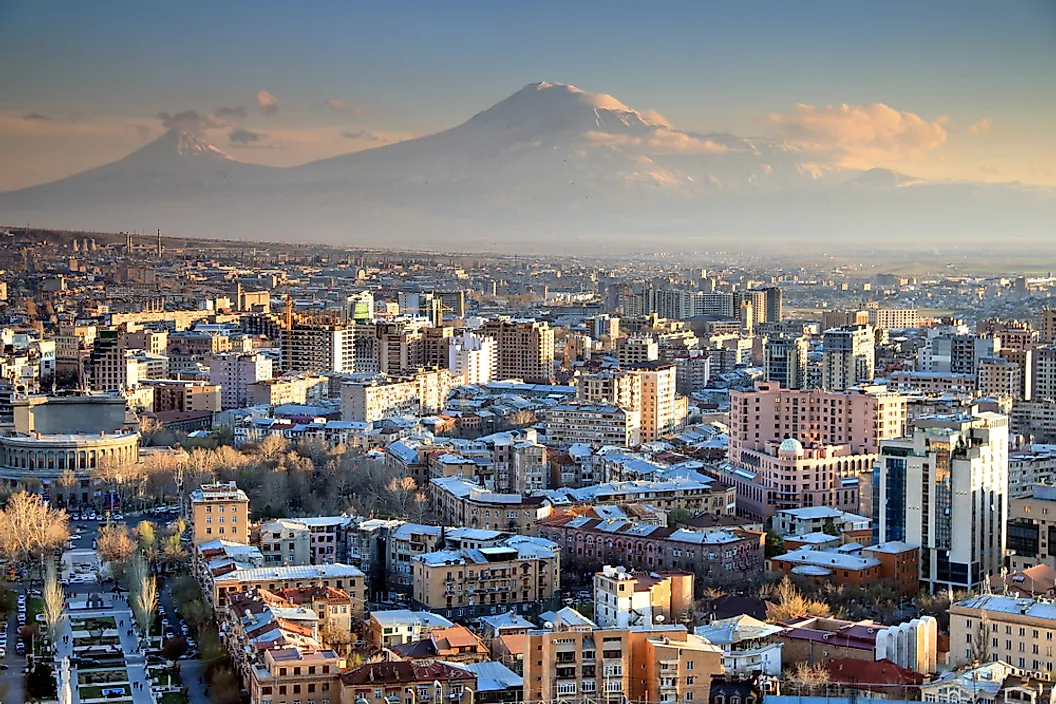
Yerevan is 29 years older than Rome, and it can prove the point on paper. Erebuni fortress was founded in 782 BC by Argishti I of Urartu, recorded in a cuneiform foundation inscription; the foundation stone surfaced in 1950 and a matching gate inscription followed in 1958. Rome's traditional founding date is 753 BC, which makes the Armenian claim to seniority arithmetic rather than rhetoric.
What Yerevan is not is the oldest continuously inhabited city in the world. That title is claimed on behalf of Jericho, Damascus, Aleppo, and Byblos among others, and the answer shifts depending on whether the measure is earliest settlement, unbroken urban life, or continuous capital status. Yerevan is genuinely ancient. It is not the oldest.
The city stands on the Hrazdan River and became the capital in 1918, under the short-lived First Republic of Armenia. Tradition counts it the thirteenth capital in the nation's long history, an enumeration repeated widely but not documented strictly. The 2022 census recorded 1,086,677 residents, roughly a third of the country's population.
Seoul, South Korea
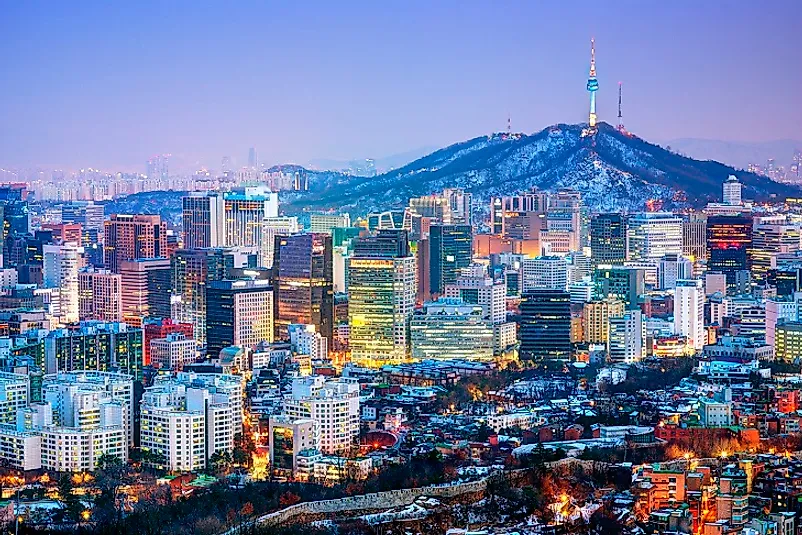
Seoul has served as a capital twice, under two different states, with fourteen centuries between the appointments. The first was Wiryeseong, founded on the Han River in 18 BCE as the capital of Baekje, one of Korea's Three Kingdoms, traditionally credited to King Onjo. The second came in 1394, when King Taejo abandoned Kaesong, moved the Joseon court to the same stretch of river, and named the new capital Hanyang, later Hanseong.
The Han River is the reason for both decisions. It gave the site a defensible position, a supply route to the Yellow Sea, and a floodplain capable of feeding a court. Seoul proper now holds about 9.6 million people and the wider capital region roughly 26 million, which puts close to half of South Korea's population in a single metropolitan area.
Hanoi, Vietnam

Hanoi's founding document is a relocation order. In 1010, Lý Thái Tổ moved his capital to the site and named it Thăng Long, and that is the date the city celebrates. Occupation of the spot is older: Chinese administrators ran a garrison town here called Tống Bình, later Đại La, and references to the settlement reach back to the middle of the first millennium CE.
Thăng Long held the court until 1802, when the Nguyễn dynasty moved the capital south to Huế. The modern sequence gets garbled often enough that it is worth setting out plainly. Hanoi became the capital of the Democratic Republic of Vietnam in September 1945, when Ho Chi Minh declared independence. The general election held on 6 January 1946, sometimes cited as the founding moment, was a legislative vote and not a designation of the capital. Hanoi then served as North Vietnam's capital through the war years. Fighting ended on 30 April 1975, and formal reunification as the Socialist Republic of Vietnam followed on 2 July 1976.
Hanoi is Vietnam's second largest city after Ho Chi Minh City, with 8,685,607 residents recorded in the April 2024 mid-term census.
The Oldest Capital Cities in Asia
The table ranks current national capitals by the earliest defensible date for settlement on the site, which is not the same as the date each became a capital. Dates in the deepest layers are approximate by nature and carry margins measured in centuries. Several Asian capitals with plausible claims to great age are absent because their founding dates rest on tradition rather than excavation, among them Delhi, Pyongyang, Kabul, and Sanaa. Yangon, which appears on older versions of lists like this one, is no longer Myanmar's capital; the government moved to Naypyidaw in November 2005.
| Rank | City | Country | Earliest settlement |
|---|---|---|---|
| 1 | Damascus | Syria | 3rd millennium BCE |
| 2 | Beirut | Lebanon | c. 3000 BCE |
| 3 | Jerusalem | Israel / Palestinian territories | c. 3000 BCE |
| 4 | Beijing | China | 1045 BCE |
| 5 | Yerevan | Armenia | 782 BCE |
| 6 | Seoul | South Korea | 18 BCE |
| 7 | Baghdad | Iraq | 762 CE |
| 8 | Bandar Seri Begawan | Brunei | Trade recorded from 977 CE |
| 9 | Hanoi | Vietnam | 1010 CE, as Thăng Long |
| 10 | Singapore | Singapore | c. 1299 CE |
| 11 | Phnom Penh | Cambodia | 1372 CE |
| 12 | Jakarta | Indonesia | 1527 CE |
| 13 | Bangkok | Thailand | 1782 CE |
Founded, Then Chosen
Ranked by age of settlement, the eastern Mediterranean takes the top of the table. Ranked by time spent as a working capital, the order scrambles. Damascus governed an empire for under a century before the Abbasids moved the center of power to Baghdad in 762. Hanoi, far younger as a settlement, has held a court for most of the past thousand years. Beijing sits mid-table by age and near the top by continuous political function. What the oldest entries share is not prestige but water and defensibility: a spring at Damascus, wells at Beirut, the Gihon at Jerusalem. Those kept people in place long enough that the political map kept coming back to them.