The State Parks Sitting On Extinct Volcanoes
Every summer, hikers climb ordinary-looking trails in five different states and end up standing atop a volcano without even realizing it. There's no lava, no steam vents, and no ranger briefing on eruption risk. The fire went out long before anyone thought to build a trail. But the geology behind each of these state parks that sit atop extinct volcanoes is documented by the same state agencies and geological surveys that manage the land, and none come with the entrance lines or the crowds of a national park like Hawaii Volcanoes or Lassen.
Beacon Rock, the basalt monolith that towers over the Columbia River Gorge in Washington, is what's left of one after erosion stripped away everything but its solid core. In southern Utah, the cinder cones inside Snow Canyon State Park are young enough, geologically speaking, that the lava rock still looks freshly poured. Robert Louis Stevenson State Park in California is built almost entirely around Mount Saint Helena, a long-dead volcanic peak that gives California's wine country its jagged northern edge. Oregon's Smith Rock, better known for climbing than geology, sits on the rim of a caldera big enough that some geologists call it a supervolcano. And in the New Mexico desert, Rockhound State Park hands visitors a rock hammer and lets them dig into the eroded remains of a volcanic field that went quiet some 24 million years ago.
Beacon Rock State Park, Washington

Lewis and Clark spotted this landmark in 1805 and used it to figure out how far upriver the ocean's tides reached, taking it as a sign that the Pacific was close. What they didn't know was that they were looking at a volcano turned inside out.
Beacon Rock is what geologists call a volcanic plug, meaning the hardened lava that once filled a cinder cone's throat was left standing after the softer rock around it eroded. It belongs to the Boring Volcanic Field, a scattering of more than 80 small volcanic features across the Portland-Vancouver area, named for the town of Boring, Oregon. A trail with 52 switchbacks, carved by hand by a private landowner in the early twentieth century rather than any government agency, climbs less than a mile up the rock's south and west faces to a view over the Gorge. The 4,458-acre park around it also has river shoreline, camping, and trails up nearby Hamilton Mountain. Washington doesn't charge separate park admission. Instead, visitors need a Discover Pass, $10 for the day or $45 for the year, good at any state park or state-managed recreation land in Washington.
Snow Canyon State Park, Utah

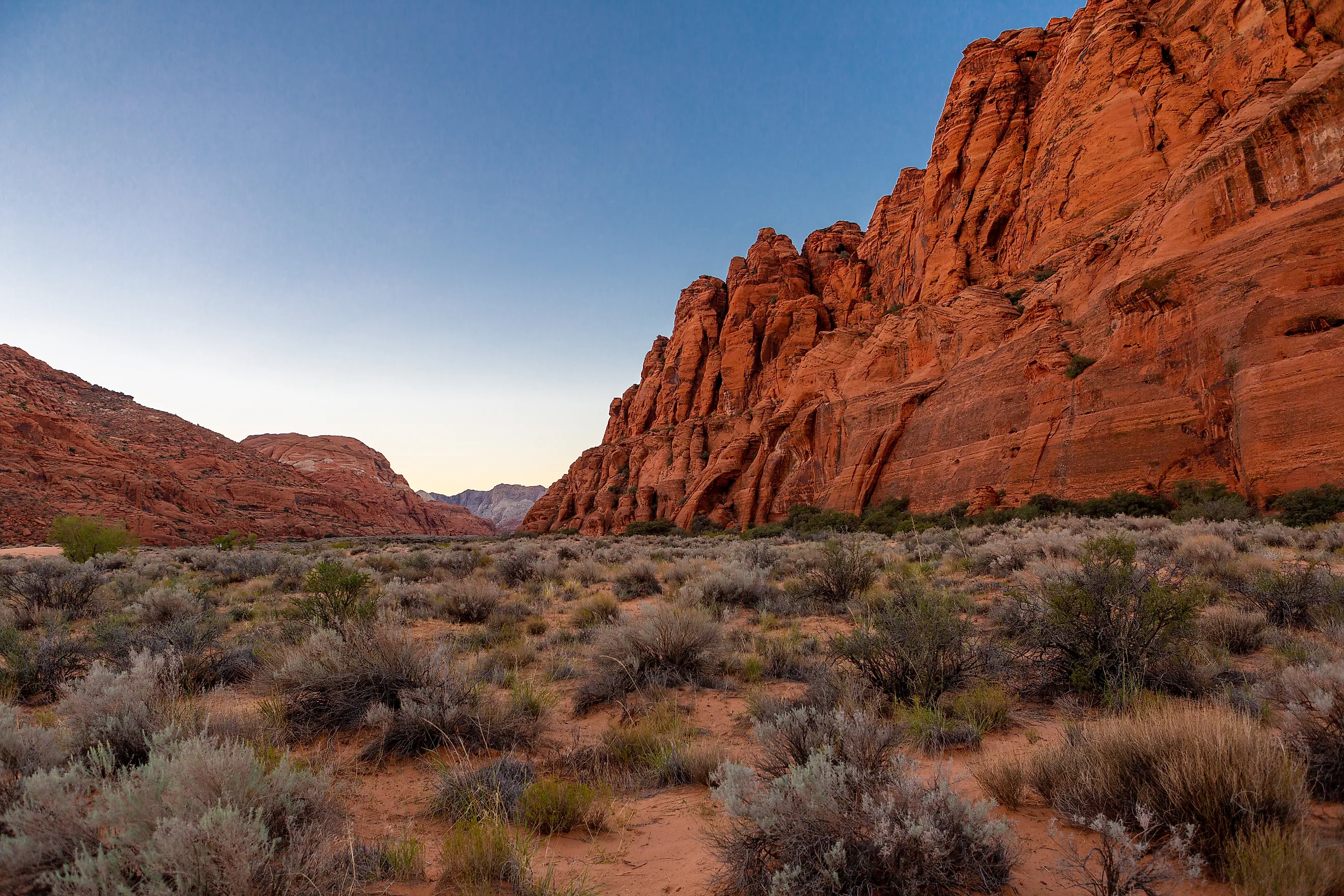
Most visitors come to Snow Canyon for the red Navajo sandstone and the petrified dunes that give the park its color, and few realize the black rock scattered across the canyon floor got there by fire. At the park's north end, two cinder cones and a series of lava flows mark the edge of the Santa Clara Volcanic Field, which was still erupting as recently as 27,000 years ago.
A short but steep trail climbs the south cinder cone, ending in a scramble up loose pumice to a rim overlooking Diamond Valley. Elsewhere in the park, lava tubes let visitors walk straight into the rock the eruptions left behind. Utah charges roughly $10 per vehicle for state residents, with a lower rate for seniors and a separate fee for anyone arriving on foot or by bike, according to the park.
Robert Louis Stevenson State Park, California

Robert Louis Stevenson spent part of his 1880 honeymoon in an abandoned bunkhouse near an old silver mine here, several years before Treasure Island made him famous, and the state park that eventually took his name is built almost entirely around the mountain he wrote about afterward, Mount Saint Helena.
Eruptions across the Napa-Sonoma region between roughly 2.6 and 8 million years ago, a stretch of volcanism known as the Sonoma Volcanics, built the peak and left behind the jagged cliffs of the Palisades, now popular with rock climbers. The main trail to the 4,343-foot summit climbs about 2,000 feet through Douglas fir and manzanita. A separate route east of the highway leads to Table Rock and the Palisades themselves. California State Parks manages the 5,272-acre park as part of its Bay Area district.
Smith Rock State Park, Oregon

Smith Rock draws climbers first and geologists second, but the rust-colored spires that made it the birthplace of American sport climbing are essentially fossilized ash. About 30 million years ago, the Crooked River Caldera emptied more than 140 cubic miles of pyroclastic material in an eruption large enough that geologists sometimes classify it as a supervolcano, on a scale that would later be echoed at Yellowstone.
Smith Rock sits along the caldera's northern rim, where that ash compressed and hardened into the welded tuff that climbers now scale by the thousand. A much younger basalt flow from Newberry Volcano, roughly 400,000 years ago, later pushed the Crooked River up against the older rock, and the river carved the canyon visitors see today. Oregon has doubled its day-use parking fee to $10 at the parks that charge one, Smith Rock among them, and the list of parks requiring a permit has been expanding, so it is worth checking the current rate before a trip.
Rockhound State Park, New Mexico

Rockhound is one of only two state parks in the country where visitors are openly encouraged to pocket what they find. The other is Crater of Diamonds in Arkansas, and what people are digging up here is volcanic. The Little Florida Mountains, where the park sits, are built from rhyolite, andesite, and welded ash-flow tuff laid down between about 28.5 and 24 million years ago, according to New Mexico's state geological survey.
There's no single peak left to point to here. The vents that produced all this rock were erased long ago by faulting and erosion, so what remains is the eroded stump of a volcanic field rather than one identifiable cone. Visitors hunt for rhyolite geodes and "thunder eggs" that weather out of the hillsides after rain, up to 15 pounds per person per day. New Mexico charges $5 for residents and $10 for non-residents, though resident day-use fees are waived from October through April.
Go West
All five of these parks sit in the West because the geology simply isn't there anywhere else. Washington, Oregon, and Utah fall within volcanic provinces shaped by subduction along the Pacific coast and by the slow stretching of the Basin and Range. New Mexico's volcanic rock traces to an entirely separate source, the Rio Grande Rift. States east of the Mississippi mostly never had the volcanic activity to produce anything comparable, which is why a search for an extinct-volcano state park in the Midwest or the Southeast comes up mostly empty.
Fees, trail conditions, and even estimated eruption ages get updated on each state agency's own schedule, so it is worth checking a park's official page directly before planning a visit.