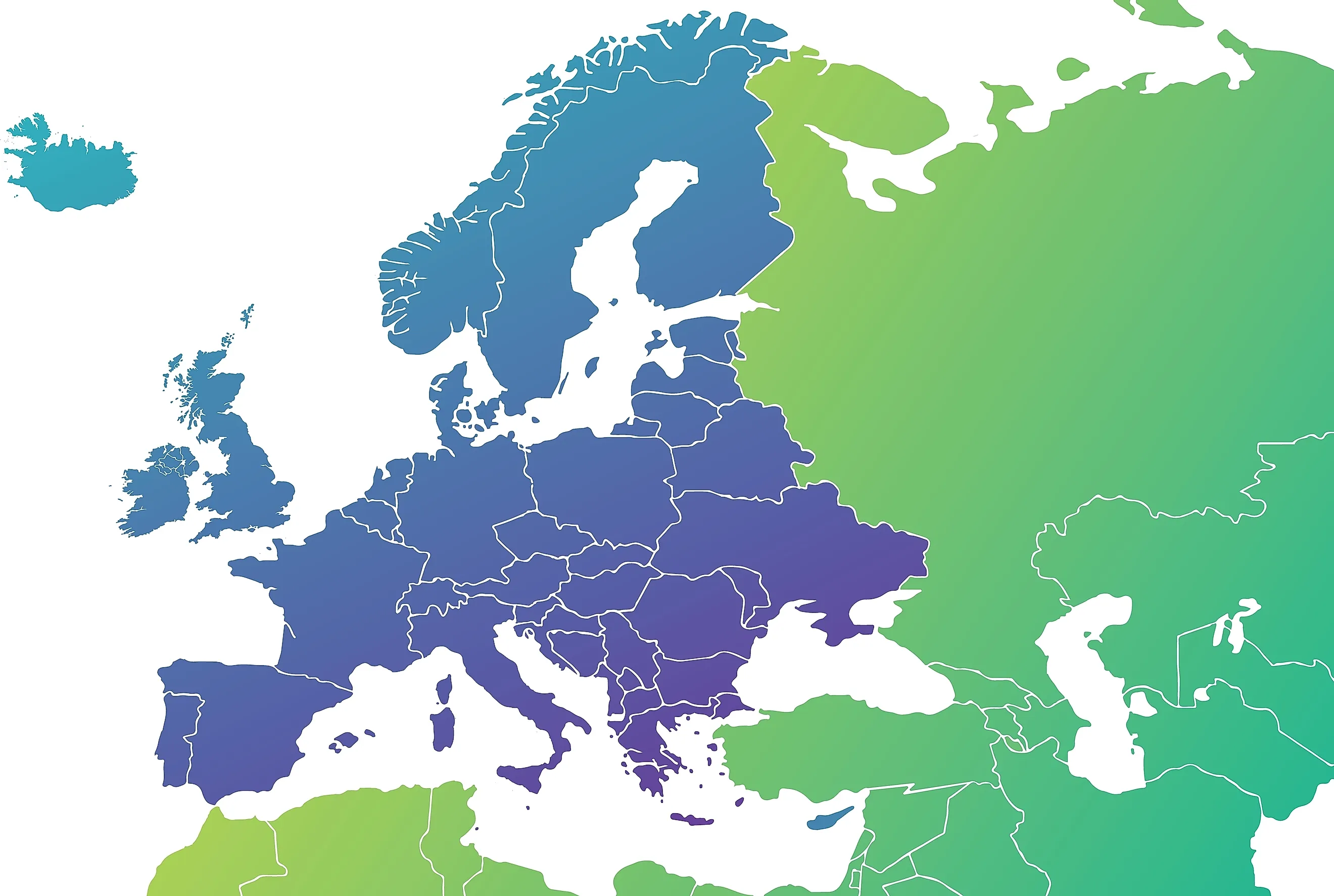
How Far North Most Of Europe Actually Sits Compared To The US
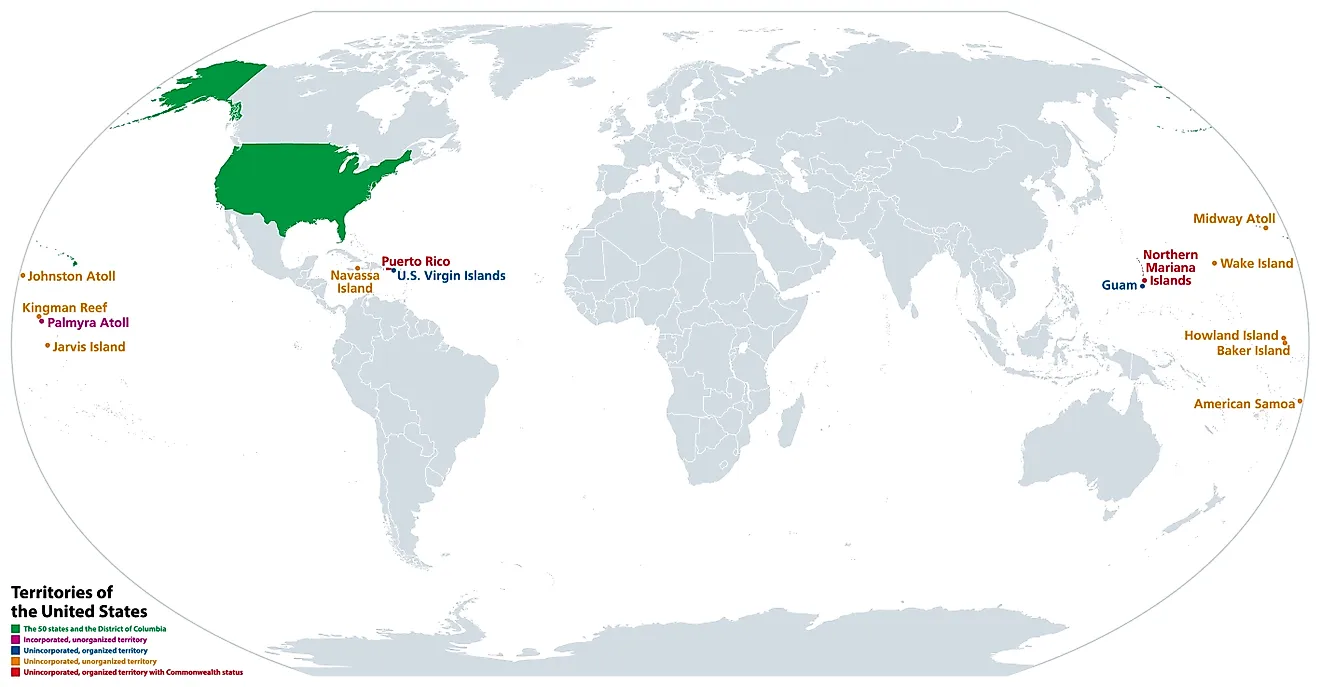
Shivering in Chicago on a cold, windy winter day, it is hard to believe that someone sitting at a cafe in Rome is almost exactly as close to the North Pole. Yet much of Europe lies north of the 49th parallel, which marks a large portion of the border between the United States and Canada. Paris sits just south of that latitude, while Prague and Kyiv are farther north. Despite their northern locations, many European cities have considerably milder winters than North American communities at comparable latitudes. The difference becomes especially clear when comparing January temperatures in cities on opposite sides of the Atlantic.
Europe's Milder Climate

Europe's comparatively mild climate, especially in winter, is largely due to its proximity to the Atlantic Ocean. The Gulf Stream and the broader Atlantic circulation system transport warm water northward, helping maintain relatively high ocean temperatures near Western Europe. However, ocean currents are only part of the explanation. Prevailing westerly winds carry mild, moisture-laden air from the Atlantic across the continent, tempering winter temperatures. North America's eastern half, by contrast, is more exposed to cold air masses moving south from the Arctic and interior Canada. Europe's extensive coastline also means that many places are close to the moderating influence of the sea.
Athens and St. Louis

At approximately 38 degrees north, Athens, Greece, sits at almost exactly the same latitude as St. Louis, Missouri. Yet their winters are quite different. Athens has a Mediterranean climate, with mild, relatively wet winters and hot, dry summers. January temperatures typically reach about 56°F (13°C), with overnight lows around 45°F (7°C). St. Louis, meanwhile, averages January highs around 40°F (4°C) and lows near 24°F (-4°C). Although both cities have occasional cold spells, Athens rarely experiences the prolonged freezing conditions that can affect Missouri.
The two cities' best-known landmarks come from very different eras. The Parthenon has stood atop the Acropolis since the 5th century BCE, while St. Louis's Gateway Arch, completed in 1965, rises 630 feet (192 meters) over the banks of the Mississippi River. With January highs in the mid-50s Fahrenheit, a winter visit to the Acropolis is a far gentler outing than a walk beneath the Arch, where January lows sit in the mid-20s.
Rome and Chicago

Rome, Italy, and Chicago, Illinois, are almost perfect matches in latitude, both sitting at roughly 41.9 degrees north. Their climates, however, are a different story. Rome has a Mediterranean climate characterized by hot summers and fairly mild winters. January daytime temperatures average around 55 F (13 C), while nighttime temperatures generally drop to around 36 F (2 C). Chicago, on the other hand, has a humid continental climate, with January average highs around 32 F (0 C) and lows near 19 F (-7 C). Chicago also averages more than 11 inches (28 centimeters) of snow in January and experiences extended periods of subfreezing temperatures.
Chicago's lakefront offers no shelter from the cold. In late January 2019, a polar vortex outbreak sent the temperature at O'Hare International Airport down to -23 F (-31 C), the city's coldest reading in 34 years, while ice built up along the Lake Michigan shoreline. Rome sees nothing comparable. Snow is rare enough in the Italian capital that a light snowfall in February 2018 was enough to close the Colosseum and the Roman Forum.
Paris and Grand Forks

Paris, France, lies about 10 miles (16 km) south of the 49th parallel, which forms much of the United States-Canada border, while Grand Forks, North Dakota, is about 75 miles (121 km) south of the line. Despite being farther south, Grand Forks has much harsher winters. Paris typically sees daytime temperatures around 46 F (8 C) in January, with nighttime lows around 38 F (3 C). Grand Forks, meanwhile, averages January daytime highs of approximately 16 F (-9 C), with overnight lows averaging around -3 F (-19 C). Snow and prolonged periods of extreme cold are familiar features of North Dakota winters, whereas Paris more commonly experiences chilly, damp weather.
Both cities have also been shaped by winter floods, though from different sources. In January 1910, after months of heavy rain, the Seine spilled into much of Paris, cresting about 28 feet (8.6 meters) above its normal level. Grand Forks' great flood came from snow instead. After a bitterly cold winter with heavy snowfall, the Red River of the North broke through the city's dikes in April 1997, forcing most residents to evacuate while a fire gutted 11 downtown buildings.
Stockholm and Anchorage

At approximately 59.3 degrees north, Stockholm, Sweden, is relatively close in latitude to Anchorage, Alaska, at 61.2 degrees north. Both cities face cold winters, but Stockholm generally benefits from greater maritime moderation. Its January average temperatures are about 31 F (-1 C) during the day and 23 F (-5 C) overnight, compared to Anchorage's averages of 23 F (-5 C) and 11 F (-12 C). Snow and freezing temperatures are common in both places, although their snowfall patterns differ markedly. Stockholm's proximity to the Baltic Sea and the influence of Atlantic air help soften its winter conditions, while Anchorage is more exposed to cold continental and Arctic air masses.
Both cities make the most of the season. Stockholm, which spreads across 14 islands where Lake Mälaren meets the Baltic, can get as little as six hours of daylight in midwinter, yet every December 10 it hosts the Nobel Prize award ceremony. Anchorage's signature winter event is Fur Rendezvous, a festival dating to 1935 that leads into the ceremonial start of the Iditarod Trail Sled Dog Race, held downtown on the first Saturday in March.
Reykjavik and Nome

Both Reykjavik, Iceland, and Nome, Alaska, sit at roughly 64 degrees north latitude, placing them near the Arctic Circle at approximately 66.5 degrees north. Reykjavik, however, has a far milder winter than its counterpart in Alaska. January daytime temperatures in the Icelandic capital average around 35 F (2 C), with overnight lows near 27 F (-3 C). Nome, by comparison, averages January daytime highs of about 13 F (-11 C) and nighttime lows around -2 F (-19 C). The major difference is Reykjavik's exposure to the comparatively mild North Atlantic, while Nome experiences a much colder subarctic climate influenced by Arctic air masses, surrounding sea ice, and regional weather patterns.
Each city has adapted to its surroundings in its own way. Reykjavik heats virtually all of its homes with geothermal hot water, which also supplies a network of mostly open-air public pools that operate all year. Nome grew up during a gold rush that began in 1898 and today hosts the Iditarod finish line on Front Street. In the winter of 1925, with sea ice cutting the town off, relay teams of sled dogs carried diphtheria serum 674 miles (1,085 km) to Nome to halt an epidemic.
Latitude Is Only Half the Story
Europe's position on the globe challenges the assumption that a more northern latitude automatically means a colder climate. Much of the continent lies north of the 49th parallel, yet cities such as Rome, Paris, and Stockholm have winters that are noticeably milder than those of North American communities at comparable latitudes. Despite lying much farther north, Reykjavik even has a January average temperature comparable to that of St. Louis, Missouri. Ocean currents, prevailing winds, and regional geography all help explain why latitude alone is an incomplete basis for predicting climate.