The Slowest-Growing Trees In America
Some of America's slowest-growing trees take decades to reach just a few feet in height, while others spend centuries developing relatively narrow trunks. Among them are ancient bristlecone pines in the western mountains, singleleaf pinyons in the dry Great Basin, and yellow cedars in the cool forests of the Pacific Northwest. They survive in environments where rocky soils, limited moisture, short growing seasons, or heavy shade restrict growth. Their slow development is also associated with remarkable longevity, with some individuals surviving for thousands of years. These five American tree species demonstrate how slowly trees can grow under demanding environmental conditions.
Great Basin Bristlecone Pine

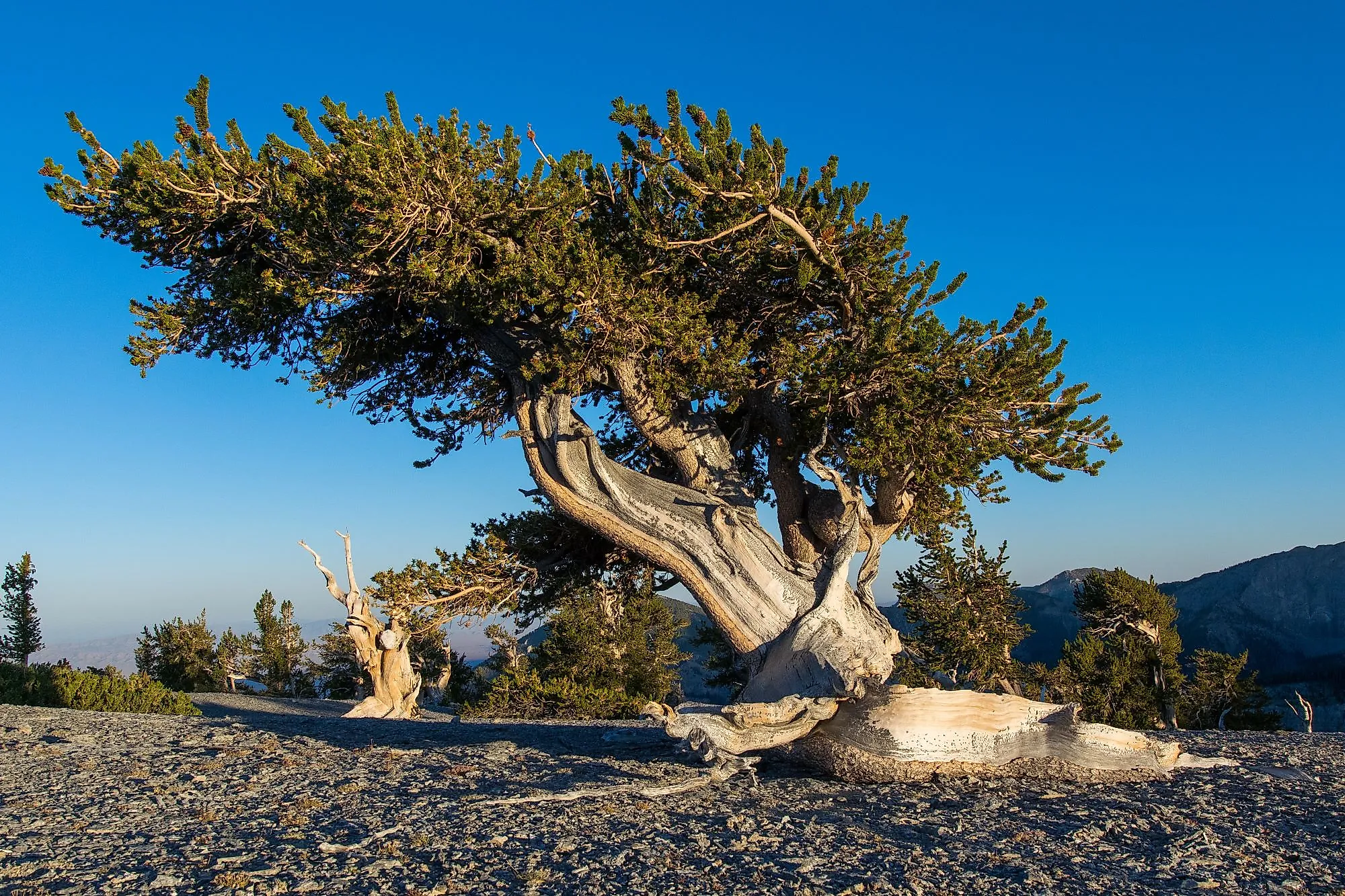
The Great Basin bristlecone pine (Pinus longaeva) grows at high elevations in California, Nevada, and Utah, including the White Mountains of eastern California. Thin, rocky soils, limited moisture, strong winds, and extreme temperatures restrict its development. The USDA Forest Service documents a 40-year-old specimen in the White Mountains that measured just 5.9 inches tall, and some bristlecone pines on Wheeler Peak in Nevada add only about an inch to their trunk diameter per century. On some sites, the pines stop gaining height at approximately 15 to 30 feet, although their trunks continue to widen. These figures reflect particularly harsh sites rather than the species as a whole.
Some Great Basin bristlecone pines have survived for more than 4,000 years, making them among the oldest known individual non-clonal trees on Earth. Their twisted trunks and partly dead branches reflect centuries of exposure to wind and severe mountain weather. Slow growth is one factor associated with this longevity. Dense, resinous wood and the ability to survive with only portions of their trunks remaining alive also contribute to their survival. Scientists use annual growth rings to reconstruct environmental conditions that extend thousands of years into the past.
Singleleaf Pinyon Pine

The singleleaf pinyon (Pinus monophylla) is one of the slowest-growing conifers in the United States. According to the USDA Forest Service, it typically requires approximately 60 years to reach a height of just 6.6 feet, and an average dominant tree may take around 150 years to develop a 12-inch trunk diameter measured about 6 inches above ground. It grows across the Great Basin and other parts of the interior West, including Nevada, Utah, and California, often on dry, rocky slopes with nutrient-poor soils. Prolonged drought and competition with surrounding vegetation can further slow it. On favorable sites, mature trees commonly reach 20 to 40 feet tall.
Despite its modest size, singleleaf pinyon produces edible pine nuts that provide an important food source for birds and mammals. Indigenous communities have harvested these nuts for generations, and they remain culturally significant. Pinyon woodlands also provide habitat and shelter for wildlife across the arid West. Because these trees grow slowly and depend on suitable conditions for seedling establishment, recovery following severe disturbances can take many decades. In some areas, woodland recovery may require more than a century, particularly where seed sources have been lost.
Yellow Cedar

Yellow cedar (Callitropsis nootkatensis), also known as Alaska cedar, is among the slowest-growing conifers in the Pacific Northwest. It grows along the Pacific Coast from southeastern Alaska to northern California, in cool, moist environments, including coastal rainforests, mountain slopes, bogs, and subalpine forests. Cold temperatures, short growing seasons, and waterlogged or nutrient-poor soils restrict its development. According to Forest Service research, yellow cedars in the northwestern Cascade Range took approximately 200 years to reach trunk diameters of just 1.2 to 3.9 inches at breast height. Trees on more productive sites may develop considerably faster.
Yellow cedars can survive for more than 1,500 years, and some of the oldest documented specimens occur in the northwestern Cascade Range. Their flexible branches help them withstand heavy snow, and, in addition to producing seeds, they can reproduce when low branches touch the ground and take root. These characteristics help the species persist where other trees struggle to establish themselves. However, yellow cedar populations in parts of Alaska and British Columbia have experienced extensive decline associated with changing winter conditions. Reduced snowpack can leave shallow roots exposed to damaging freezing temperatures.
Pacific Yew

Pacific yew (Taxus brevifolia) is a slow-growing evergreen that occurs from southeastern Alaska through western Canada and the Pacific Northwest, with populations extending into the northern Rocky Mountains. It tolerates substantial shade and can survive for extended periods in the forest understory, so a relatively small trunk may belong to a tree several centuries old. A USDA Forest Service study of Pacific yews in mature and old-growth forests of western Oregon and Washington documented diameter growth ranging from zero to about 1.2 inches per decade. Limited sunlight restricts its growth, although trees may grow faster when more light becomes available.
Pacific yew typically reaches 20 to 40 feet tall, although some specimens grow taller on favorable sites. It has reddish, peeling bark, dark green needles, and a relatively dense crown. Its hard, durable wood has historically been used for specialized woodworking and traditional tools. The species also gained scientific importance because its bark was an early source of paclitaxel, a compound used in cancer treatment. Although modern production relies on other methods and sources, the discovery highlighted the medical importance of compounds found in forest plants.
Rocky Mountain Bristlecone Pine

The Rocky Mountain bristlecone pine (Pinus aristata) grows in high-elevation environments where short summers and severe weather restrict development. Although closely related to the Great Basin bristlecone pine, it is a separate species with its own geographic distribution and growth characteristics. It occurs in mountainous areas of Colorado, New Mexico, and Arizona, often on exposed slopes with thin, rocky soils, where low temperatures and strong winds limit the length of the growing season. USDA Forest Service research documents Rocky Mountain bristlecone pines with trunk diameters of 16 to 20 inches and approximately 200 to 250 years old.
Research at Colorado's Mount Goliath Research Natural Area also recorded extremely slow annual shoot growth. Trees under 3 inches in trunk diameter averaged about three-quarters of an inch of shoot elongation per year, while those over 20 inches averaged about six-tenths of an inch. Rocky Mountain bristlecone pines can survive for 1,000 to 2,000 years, and some documented individuals have reached approximately 2,500 years of age. Like their Great Basin relatives, these trees provide valuable records of environmental change through their annual growth rings, which makes them important for scientific studies of past climate conditions.
Growth Measured in Centuries
These five trees demonstrate how growth rates vary across America's forests. Great Basin bristlecone pines can survive for thousands of years despite exceptionally slow trunk development. Singleleaf pinyons provide food for wildlife in dry western woodlands, while yellow cedars persist for centuries in cool coastal forests. Their survival also highlights the importance of conserving mature forests and protecting conditions that allow new trees to establish themselves. When a centuries-old tree dies, or a woodland experiences severe disturbance, replacing that growth may take generations. For these species, even relatively small increases in height or trunk diameter can represent decades of development.