The National Forests Where You Can Pan For Gold
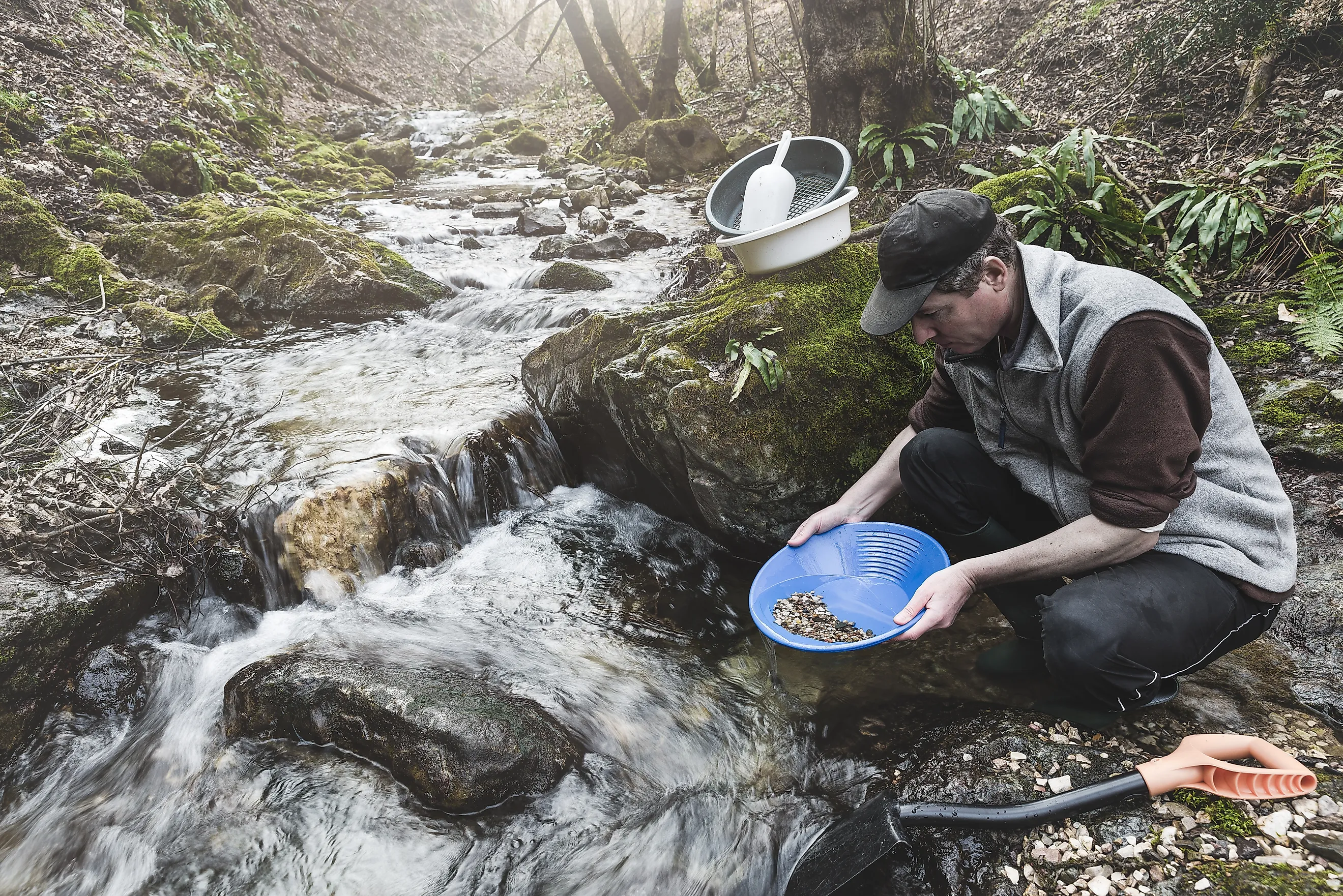
America's Wild West saw a frenzy of prospectors, but it's a common myth that they left nothing behind. While gold panning undoubtedly peaked during events like the California Gold Rush, many Americans still use this treasure-hunting method today.
Most national forests are open to recreational gold panning, making the historic hobby more accessible than ever. That being said, regulations vary between districts, and not all forests are equal in what you might find. The country's top gold panning spots may surprise you.
Black Hills National Forest

Prospectors found gold in the creeks and gulches of Black Hills National Forest in the 1870s. Though less famous than the California boom, this South Dakota gold rush was significantly more profitable.
Today, you can still pan for gold throughout much of Black Hills National Forest. But it's not as simple as choosing a random creek. Hobbyists are responsible for avoiding private property and mining claims. The online Forest Service Interactive Map and BLM Mineral & Land Records System are helpful for this.

These resources also show where gold panning is permitted. French Creek, for instance, is where the Black Hills gold rush began, and much of the area is still open for panning. Portions of Rapid Creek near the Pactola Reservoir are also popular for panning closer to Rapid City.
Alternatively, Gold Panning With RattleSnake Randy is a seasonal tour operator in the historic mining town of Rockerville. This four hour experience lets you pan for gold on a mining claim under the guidance of a professional miner.
Eldorado National Forest

Eldorado National Forest has its own ties to historic treasure hunting. During the California Gold Rush, miners dubbed the state "El Dorado" after South America's mythical city of gold. While the coveted mineral was first found in the California town of Coloma, Eldorado National Forest had its own gold-bearing streams nearby.
Today, people can still find gold in its waterways, including several forks of the American River. Much like the Black Hills region, gold panning in Eldorado requires some forethought.

Check ahead for private property and active mining claims, and contact a Ranger District with any questions you might have. As for where to pan, gold usually settles in creeks and forks rather than the fast-moving parts of a river, so these places often yield the best results.
The PiPi Campground is a popular panning area along the Middle Fork of the Cosumnes River. The US Forest Service also recommends the Cache Rock area along the Middle Fork of the American River.
Kootenai National Forest
Montanans sift for gold at the Libby Creek Recreational Gold Panning Area in Kootenai National Forest. This public prospecting site is managed by the USDA Forest Service, about 23 miles south of Libby.
The town began as a mining camp called Libbysville, when gold was first discovered in Libby Creek in 1867. These days, the Gold Panning Area lets you hunt for the gold miners left behind.
The Libby Creek area is thought to have about ten to 15 percent of its gold left. While this sounds like a small margin, the thrill of the hunt is half the fun.
The area is free to access and lets you keep whatever you find, though all material has to be processed on-site. For passionate panners wanting a multi-day search, there are primitive campsites available, and the Howard Lake Campground is just 1 mile south.
Prescott National Forest

Arizona has some of the nation's best gold panning sites, especially in Prescott National Forest. Records show that Lynx Creek and its tributaries account for some of the state's highest placer gold rates.
There are also numerous recorded instances of gold nuggets weighing several ounces. Since 1863, this national forest area has yielded over 100,000 ounces of gold.
The Lynx Creek Gold Pan Day Use Area is forest-operated and free to visit in Prescott National Forest. It is located on South Lynx Creek Road in the historic mining city of Prescott. Because it's so easy to access, this spot is perfect for families and first-time gold panners.
Even with its history of being heavily worked, Lynx Creek still has a mix of fine gold and the occasional small nugget.
Uwharrie National Forest
America's first recorded gold was found in North Carolina in 1799, and the state remains a top place to pan. Although most gold-rich land here is privately owned, the majority of Uwharrie National Forest is open to recreational panning.

The forest is situated inside the Carolina Slate Belt, a geological region known for its gold and silver mineral wealth. Much like Lynx Creek, the region has been heavily worked, but you can still find gold in many rivers and creeks.
The Uwharrie River is a popular place to pan for gold and can be reached from Highway 109. Further downstream, River Road leads to the quieter Pee Dee River. This waterway hugs the western boundary of Uwharrie National Forest, providing more seclusion and fewer people. Smaller Uwharrie tributaries such as Spencer Creek and Duncombe Creek are also less crowded for gold panners seeking solitude.
Boise National Forest

Much of Boise National Forest overlaps with the Boise Basin, the historic heart of Idaho's gold country. Located in southwestern Idaho, the Boise Basin first struck gold in 1862, attracting thousands of fortune seekers to the region. The subsequent gold rush and following years went on to yield about 2.8 million ounces of gold.
There are countless areas in Boise National Forest where you can pan in the same waters prospectors did over 160 years ago. Placer gold can be found in several creeks feeding the Boise and Payette rivers.
Quartzburg, Mores Creek, and Grimes Creek are common gold-yielding waters, and most of their land is inside Boise National Forest. The Boise River itself also runs through the forest, making this another preferred panning spot.
Know Before You Go

In most cases, you don't need a permit for recreational gold panning in United States national forests, as long as the activity is limited to non-motorized hand tools. However, rules and laws can vary from place to place, so it's important to check regulations for the exact forest you're visiting.
For instance, a free permit is legally required to pan for gold in White Mountain National Forest. Panning without permits here may result in fines, citations, and other penalties.
Certain national forest areas can be off limits for panning as well. In addition to private land and mining claims, Designated Wilderness Areas and Wild and Scenic River corridors are commonly restricted from prospecting.
As previously mentioned, the Forest Service Interactive Map and BLM Mineral & Land Records System are helpful online resources to know where panning is allowed. You can also call a specific Ranger District to confirm regional rules and restrictions.
Gold Panning In National Forests: Profit or Passion?
Many see the American gold rush as the ultimate get-rich-quick scheme for everyday folks. In reality, only a fraction of history's gold-seekers became wealthy from prospecting, and the same could be said today.
You probably won't strike it rich panning for gold in a national forest, but the experience is what most people treasure most.
That being said, exploring the mineral-rich areas in this guide will increase your chances of finding a glittering speck in your pan.