9 Most Peaceful Small Towns In Connecticut
Connecticut's most peaceful towns trade busy streets and crowded attractions for open farmland, secluded trails, and quiet waterfronts. In Woodstock, working dairy farms and the historic Roseland Cottage preserve the town's rural character, while Bridgewater's 106-acre Jane Pratt Farm Preserve offers a glimpse of the countryside. Along the coast, Stonington Borough invites leisurely walks to duBois Beach, overlooking Fishers Island Sound. Farther inland, Kent offers wooded hiking trails and sweeping mountain views at Macedonia Brook State Park. Serving up preserved farmland to secluded stretches of coastline, these Connecticut towns make finding some peace and quiet remarkably easy.
Kent

The small village of Kent is set in the lovely Litchfield Hills in northwestern Connecticut, just over four miles east of the New York border. The main earmark of this town is its natural setting, surrounded by deciduous forests, river valleys, waterfalls, and rolling hills. Kent Falls State Park is a perfect place to start a visit here. You can cross over a covered bridge and hike up a stepped trail to view the 250-foot-high waterfalls. The Appalachian Trail runs past Kent, just to the west of town, and Macedonia Brook State Park is another great place for hiking and camping. There are many other opportunities for soaking in nature, hiking, or just driving around curving country roads. The laid-back village area is tiny but full of character. There are small galleries, places to eat, and an independent bookstore, the House of Books.
Litchfield

About 20 miles east of Kent is Litchfield, a beautifully preserved colonial-era town. The village is easy on the eyes, with a large central green, white-steepled churches, and tree-lined streets. In fact, it is frequently showcased in travel magazines as one of Connecticut's prettiest towns. This is the perfect place for a leisurely stroll past boutiques and antique shops and eat a casual meal. Try Market Place Tavern, which is set inside of a historic jail.
Driving around the area will take you past farms with old stone walls and beautiful woods. Topsmead State Forest is home to the Edith Chase cottage, a preserved 1920s country estate. Stop at local wineries as you wend your way along the country roads. Although there is plenty of nature to soak in and hiking is available, the peaceful nature of Litchfield is more about an old-style, relaxed, small town and its amenities.
Bridgewater

Bridgewater, one of the least densely populated towns in the state, is about 22 miles south of Litchfield. This is a great place for a peaceful visit if you would like to be surrounded by bucolic farmland and antique red barns. The town itself is very quiet with a lovely original New England atmosphere. The Village Store & Bistro is housed within a historic building; the Burnham Library is a great example of the Greek Revival architectural style with tall white columns, and the small historic district has other lovely buildings and a steepled white church.
For such a small town, it has surprisingly varied terrain. Wooded areas, lots of rolling hills, wetlands, meadows, and farmland can all be found within its boundaries. The Sunny Valley Preserve has hiking trails, and nearby Lovers Leap State Park in New Milford is a stunning spot for views over Lake Lillinonah and sunsets.
Barkhamsted

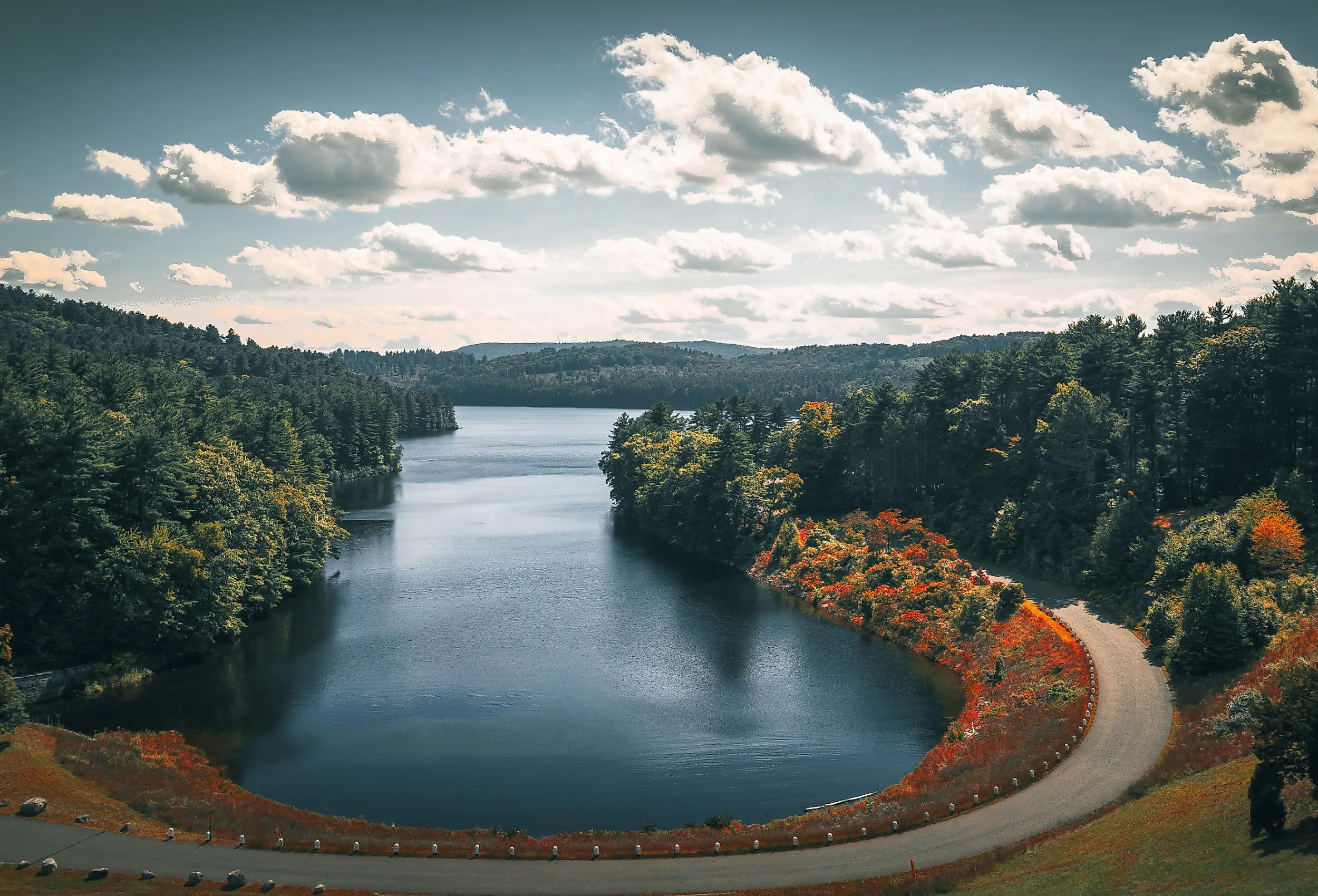
Northeast of Litchfield, and about 20 miles west of Hartford, is the village of Barkhamsted. This is the place to go for a true rural and woodsy treat, rather than a town with lots of boutiques and restaurants. The scenery here differs from the wooded areas of Kent, with fewer hills, denser wooded areas, and more streams and rivers. To begin a visit, start at the softly stoned Saville Dam and its gatehouse, completed in 1940. After that, there are numerous spots for hiking and strolling, such as the Tunxis Trail that leads to the huge, jumbled rocks known as the Indian Council Caves. The Lighthouse Trail is a short loop with a climb to the historic site. Interestingly, there was never an actual lighthouse in this spot. It was named that way because light from the settlement's cabins would help stagecoach drivers to navigate in the dark.
The town of Barkhamsted has two "downtown" areas, Riverton and Pleasant Valley. In Riverton, which is very small, there are some historic buildings and a general store, while Pleasant Valley has a rare drive-in movie theater.
Woodstock

Woodstock is located in the northeastern corner of the state, on the Massachusetts border, sometimes called the "Quiet Corner." It's quite spread out—62 square miles with a population of about 8,500 as of 2025, according to the town. You will find a much more agricultural feel here in general. Woodstock has more operating dairy farms than any other municipality in Connecticut. There are a few village areas, rather than just one central downtown. Antique shops, craft shops, and other businesses are sprinkled in and around light industry.
Woodstock was settled quite early, in the late 1600s, and has a long history of farming. At that time, it was actually a part of Massachusetts. It became part of Connecticut in 1749. This is a great area to drive around and explore historic architecture, orchards with apple presses, and wineries. While doing so, stop and tour Roseland Cottage, a beautiful, pink, Gothic Revival home that was originally occupied by a wealthy New England family.
Colebrook

Colebrook, in northwestern Connecticut, is about 15 miles from Barkhamsted and five miles just south of the Massachusetts state line. It has a very small population of only about 1,360 people and truly feels secluded. Similar to Woodstock, it's old New England farmland, with the signature hand-made stone walls everywhere you look, lightly wooded areas, and lots of quiet country roads.
The downtown is very limited, in terms of shops and restaurants, but that might be just what you're looking for. There are the wonderful Colebrook Store, built in 1812; the 1816 Seymour Inn (which now houses the Historical Society); and the 1794 Samuel Rockwell House. The village center is listed on the National Register of Historic Places as a historic district. Right outside of it is the Norbrook Farm Brewery. There are also plenty of outdoor activities, including fishing and boating on the Colebrook Reservoir and hiking in the Algonquin State Forest, which has miles of trails.
Guilford

Towns built by the water exude peace. Guilford is not only right on Long Island Sound, with beaches and a marina, but also famous for reminding visitors of the town featured in the television series Gilmore Girls (it wasn't actually filmed here). It's just cozy and filled with charm. Sit on a bench in the huge 12-acre town green and soak up the relaxing vibe, surrounded by cute shops and eateries.
The town was settled in 1639 and therefore has a tremendous number of historic homes, the third largest of any in New England. The Henry Whitfield State Museum is housed in the oldest stone house in New England. There are a multitude of beaches along the coast. A drive around the area will lead you to all kinds of apple picking spots, farm markets with homemade pie, and nature walks.
Essex

Another water-side town is Essex, a historic river town along the tree-lined Connecticut River, about six miles from the coast. It is actually comprised of three distinct, small village centers: Essex Village, Centerbrook, and Ivoryton. The major historic feature of this town is its long history as a maritime center. More than 500 vessels were built here over its shipbuilding history. Many historic homes in town bear the names of sea captains who lived here on brass plaques. A visit to the Connecticut River Museum will tell you more about this vital history.
You can also enjoy time on the river itself, which is an even more peaceful way to spend time. The Essex Steam Train & Riverboat Company offers river excursions and a vintage train ride.
Stonington

A visit to Stonington is like entering a preserved seaside village from days gone by. This town is not as busy as some coastal towns in Connecticut can be, so waterfront strolls and time on local Dubois Beach will be truly quiet. If you are visiting overnight, there are bed and breakfast options to stay in and an old lighthouse to visit, built of soft grey granite, where you can climb to the top to see the vista across Fishers Island Sound. In the village itself, there are small shops like Mountain Hollow on Bayview Ave. to visit.
Stonington and the surrounding area were originally occupied by the Pequot people. The first English settlers arrived in 1649, and, like Woodstock, it was once a site of significant dispute between the state of Massachusetts and the state of Connecticut. During the 18th and 19th centuries, it became a very important maritime port because of its protected harbor, where West Indies trade occurred, ships were built, and wealthy merchants built homes. Many whaling ships started their journey here. This attracted Portuguese and Irish immigrants. All of these factors have created a rich history and mix of cultures that can be explored today in museums and restored homes. If your definition of peaceful includes dabbling in history, Stonington fits the bill.
A Restful Visit
Peace comes in different forms across Connecticut's small towns. In Kent, it might mean hiking past waterfalls and wooded hillsides, while Barkhamsted offers secluded forest trails and quiet afternoons near the Saville Dam. Those who prefer a slower pace without venturing far into the wilderness can browse Litchfield's antique shops or enjoy a leisurely riverboat excursion in Essex. Along the coast, Stonington's historic streets and Guilford's expansive town green offer equally inviting places to unwind. Whether it's a weekend spent exploring rural backroads or an afternoon beside the water, these towns prove that some of Connecticut's most rewarding experiences are also its least hurried.