The National Forests With The Most Western Diamondbacks
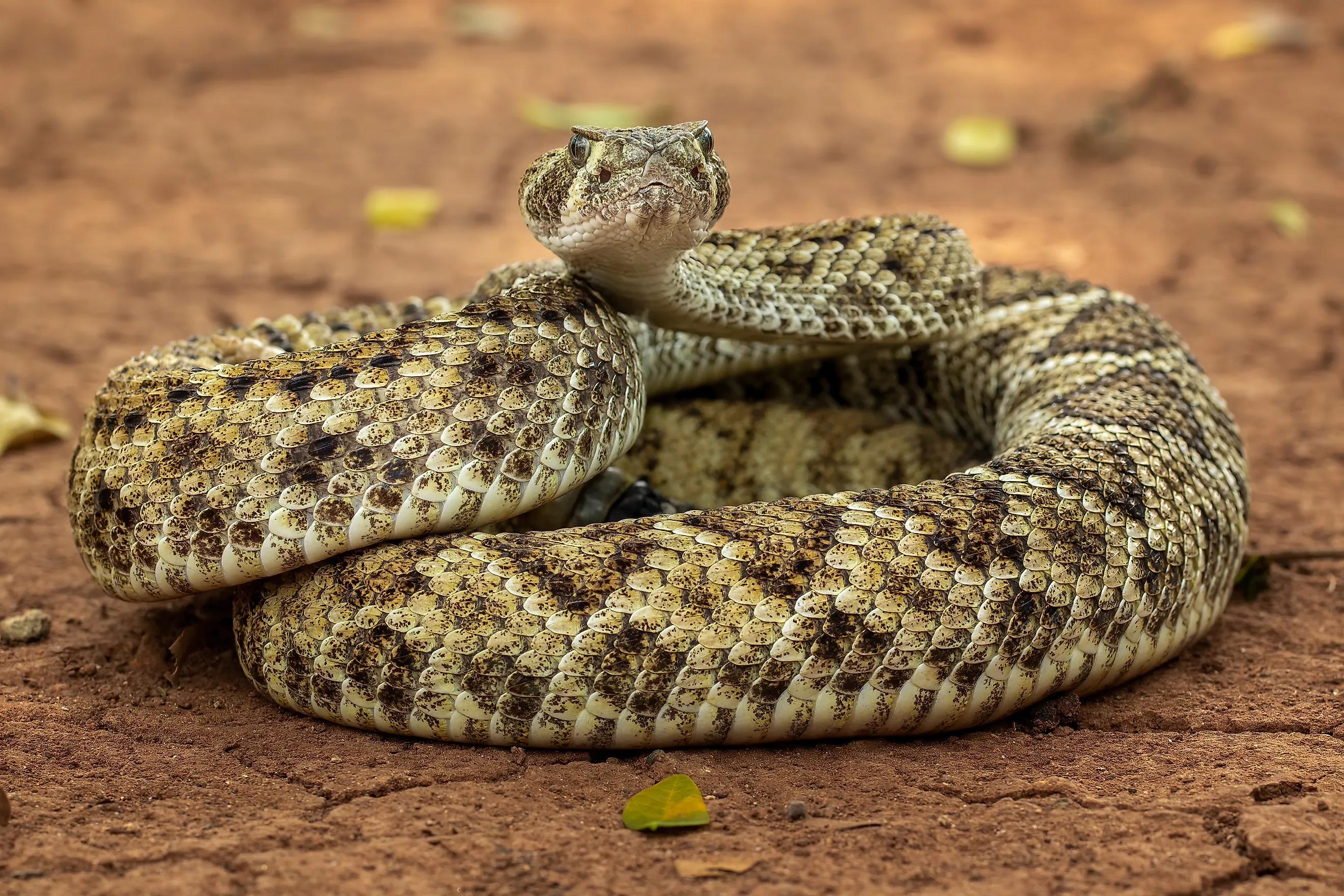
Arizona's largest rattlesnake can grow past five feet long, but in the state's central and southeastern mountains it stops at about 5,300 feet. That ceiling keeps the western diamondback on the bottom edge of the Southwest's national forests, where juniper gives way to desert scrub, so the forests with the most diamondbacks are the ones with the most low ground. On a forest topped by a 12,633-foot peak, the snake gets only a strip of creek canyon. Where another forest bottoms out at 1,300 feet, a picnic area called Rattlesnake Cove sits well inside its range. At one monument within these forests, diamondbacks turn up in every month, November included.
Tonto National Forest, Arizona

Tonto National Forest reaches lower than any other forest on this list, with elevations between 1,300 feet among Sonoran Desert cacti and 7,900 feet in ponderosa pine. Six man-made lakes run in a chain through that lower country. Bartlett Reservoir, formed by a dam on the Verde River in the Cave Creek Ranger District, sits at 1,798 feet. The district's vegetation changes with elevation through desert, semi-desert grassland, chaparral, and piñon-juniper, and the reservoir lies in the lowest of those bands, well inside the diamondback's range. The Rattlesnake Cove Picnic Site is a day-use area on its shore, and at SB Cove, campers can park RVs and trucks close to the water when lake levels are low.
On the Salt River side of the forest, Tonto National Monument is on a slope above Roosevelt Lake, surrounded by the forest. The western diamondback is the snake seen most often at the monument. It is most active in spring and summer, though it may be encountered in any month of the year.
Prescott National Forest, Arizona

Up the Verde from Bartlett, Prescott National Forest starts in Sonoran Desert at its lowest elevations, with chaparral and then piñon and juniper above. Eight sites in the forest give access to the Verde River, and one of them, Beasley Flat, has picnic facilities and a nature trail beside the water. In the foothills east of Mingus Mountain, the Blowout Wash Trail System leads into high desert on routes such as Mesquite Hills Trail No. 558. The western diamondback is one of the four most common rattlesnakes in the Verde Valley, along with the black-tailed, Mojave, and Arizona black, according to University of Arizona Cooperative Extension. Diamondbacks there are most active in the morning and evening during spring and fall. In the hottest months of summer, they shift to hunting at night, waiting in ambush for mice, rats, ground squirrels, and rabbits.
Coconino National Forest, Arizona

Coconino National Forest spans more than 10,000 feet of elevation, with Arizona's highest point, 12,633-foot Humphreys Peak, at the top and 2,600 feet at the bottom. Below the Mogollon Rim in central Arizona, western diamondbacks reach about 5,300 feet, so the snake's share of the Coconino is a narrow band in the Red Rock Ranger District and the creek canyons that drain toward the Verde.
Wet Beaver Creek, at 3,783 feet, runs through upper Sonoran Desert inside that band, and the Bell Trail No. 13 is the main route into its canyon and the Wet Beaver Creek Wilderness. Fossil Creek is a little lower, at 3,500 feet, at the bottom of a canyon 1,600 feet deep. The Waterfall Trail and the Bob Bear Trail No. 18 both reach the water.
Down in the Verde Valley, the only venomous snakes living in or around Montezuma Castle National Monument on a regular basis are the western diamondback, the black-tailed rattlesnake, and the western coral snake. The monument asks visitors to give a snake at least six feet of space, and if a rattle sounds but the snake is out of sight, to hold still and not back up.
Coronado National Forest, Arizona and New Mexico

In southeastern Arizona and the bootheel of New Mexico, Coronado National Forest is split among 17 mountain ranges in 12 separate units, with desert and desert grassland surrounding each one. Some of the ranges rise more than 6,000 feet above the desert floor, so the diamondback country on the Coronado runs as a ring around the base of every unit.
Rattlesnake sightings at Sabino Canyon, in the Santa Catalina Mountains near Tucson, had already begun by early April 2025. More than a million people a year visit the canyon, and its Seven Falls trail follows Bear Canyon Creek for 2.5 miles, crossing the stream seven times. Western diamondbacks mate in March and April, at the start of their active season.
Desert temperatures pass 100 degrees for weeks on end in summer, and the snakes hunt mostly at night. On the road up to Madera Canyon in the Santa Rita Mountains, between Continental School and Box Canyon Road, Mojave rattlesnakes and western diamondbacks turn up on the same stretch. Young diamondbacks are born in August, and a second mating season runs between late August and early October. At Coronado National Memorial, bordered on the north and west by the forest in the Huachuca Mountains, the western diamondback is one of four rattlesnake species, and snakes there are most active April through October. By late October, diamondbacks are heading for their winter dens.
Gila National Forest, New Mexico

East across the New Mexico line, a species checklist for Gila National Forest rates the western diamondback as common in oak woodland and oak-juniper as well as desert, so the snake's band on the Gila reaches into the wooded foothills. The forest's lowest ground is at 4,200 feet, well above the Tonto's floor, and its highest peaks stand near 10,900 feet.
Deep in the forest, the West and Middle Forks of the Gila River meet at 5,600 feet near Gila Cliff Dwellings National Monument. The Middle Fork Trail follows the river to several hot springs, among them Lightfeather Hot Springs, and backpackers and horse riders use it to reach the backcountry. The monument's backcountry guidance notes that rattlesnakes along these routes react defensively when startled or stepped on.
Lincoln National Forest, New Mexico

Southeast of the Gila, the lowest of Lincoln National Forest's five life zones is Chihuahuan desert, at about 4,000 feet. The forest's Guadalupe Ranger District covers the spine of the Guadalupe Mountains for nearly 50 miles northwest of the Texas line. Sitting Bull Falls, 42 miles west of Carlsbad, is the district's one developed facility, a desert oasis where a series of spring-fed waterfalls drops about 150 feet into a canyon at about 5,000 feet. A day visit costs $10 per vehicle, and several hiking trails start at the falls.
South of the district, two national parks in the same mountains have documented the snake. Western diamondbacks are one of five rattlesnake species at Guadalupe Mountains National Park in Texas, and Carlsbad Caverns National Park recorded them in its 2003 to 2004 reptile inventory. Across New Mexico, the western diamondback is the largest venomous snake and lives in all but five counties.
Between late October and early March, western diamondbacks wait out the cold in caves and burrows, some of them in communal dens, within the same range of elevation they hunt the rest of the year. Of these forests, the Tonto extends lowest into that range, down to 1,300 feet. The Rattlesnake Cove Picnic Site on Bartlett Reservoir sits at 1,798 feet, about 3,500 feet below the elevation where Arizona's diamondbacks give out. On the Coconino, the snake has only a strip of creek canyon beneath a summit above 12,000 feet. When the snakes leave their dens in March, their first mating season of the year begins on those same lower slopes.