The National Forests With The Most Foxes
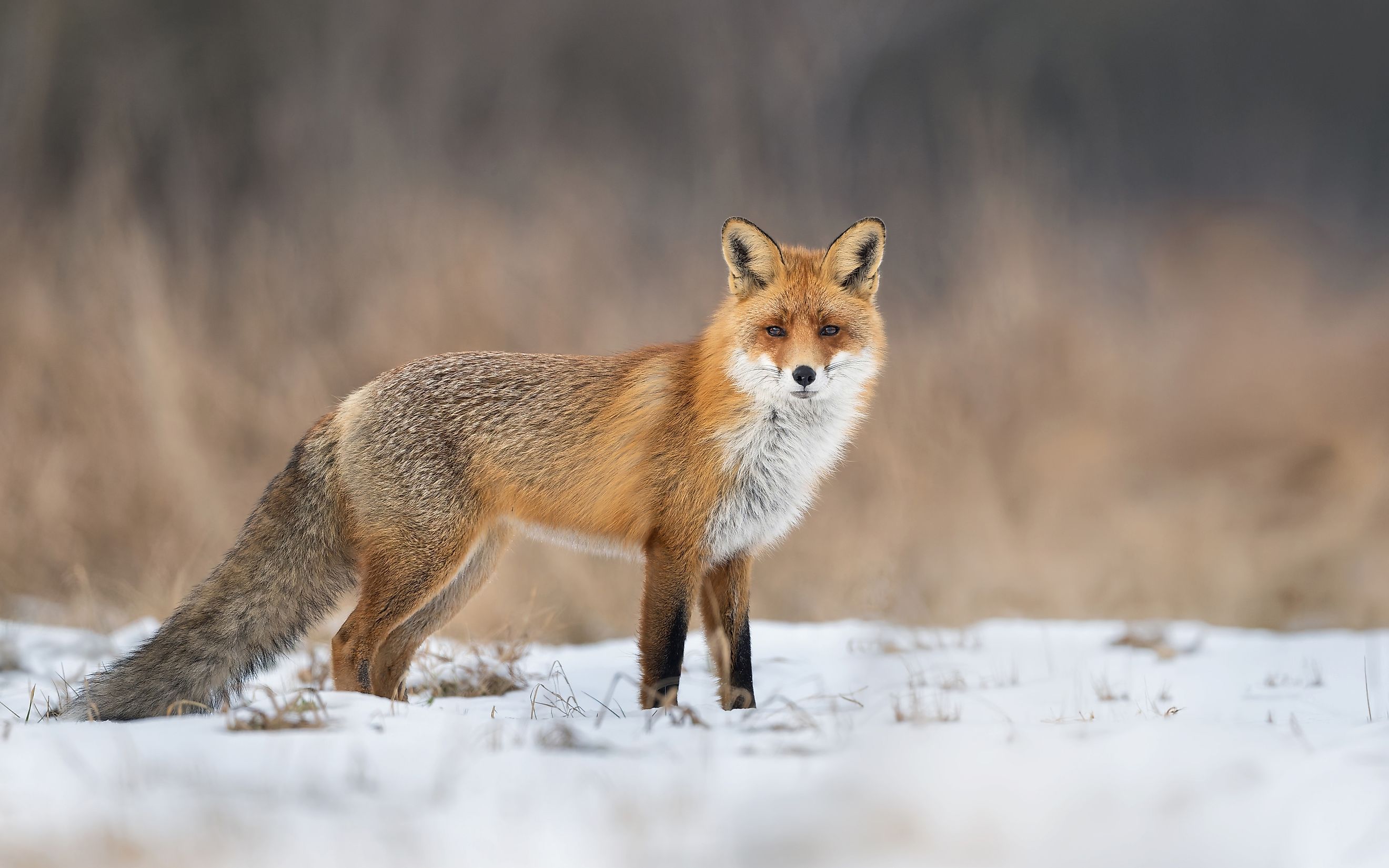
Several fox species inhabit the United States, but the red fox is among the most widespread, occurring across the contiguous United States and Alaska. Most red foxes weigh around 9 to 11 pounds, although their size varies. Despite their name, red foxes come in several color variations, including black, silver, and cross forms. They also develop thicker coats in winter to help withstand colder temperatures.
Both red and gray foxes occupy a variety of habitats, including woodlands, grasslands, and areas where forests meet open country. National forests provide hunting grounds, denning sites, and shelter for these adaptable predators. Across the Black Hills of South Dakota and as far north as Alaska's Chugach region, the following national forests support fox populations in distinctly different environments.
Black Hills National Forest - South Dakota and Wyoming

Black Hills National Forest spans approximately 1.2 million acres of forested hills and mountains in western South Dakota and northeastern Wyoming. Red foxes inhabit the region, particularly areas where woodlands meet grasslands and open meadows. These habitats provide hunting opportunities for foxes, which feed on rodents, rabbits, and other small animals. Although dense conifer forests are less favorable for red foxes, the Black Hills contain a mixture of vegetation and open areas that supports their presence.

Red foxes play a role in the local food web by preying on small mammals, including rodents. Spotting one can require patience, given the forest's size and the animals' generally elusive behavior. Foxes are often most active around dawn and dusk, when they may emerge along forest edges or cross open meadows in search of food. Their reddish coats and bushy tails can make them recognizable against the surrounding vegetation.
Angeles National Forest - California

Angeles National Forest lies within the mountains surrounding the Greater Los Angeles metropolitan area, providing important wildlife habitat near one of the country's largest urban regions. The forest contains chaparral, oak woodlands, and mountainous terrain, including habitats used by gray foxes. Unlike red foxes, gray foxes belong to the genus Urocyon and are particularly well adapted to wooded and brushy environments. They generally weigh between 6 and 15 pounds and have coarse, salt-and-pepper gray fur with reddish coloring along their sides and legs.

Gray foxes are opportunistic feeders, eating rodents, rabbits, birds, insects, and seasonal fruits. They are also capable climbers, using their curved claws to ascend trees when escaping danger or searching for food. The forest's oak woodlands and chaparral provide both shelter and feeding grounds. Wildlife watchers may encounter gray foxes near woodland edges, although their secretive behavior and nocturnal activity make sightings unpredictable.
Daniel Boone National Forest - Kentucky

Daniel Boone National Forest manages more than 700,000 acres of federal land across eastern Kentucky, within a proclamation boundary spanning approximately 2.1 million acres. Its rugged landscape includes forested ridges, sandstone cliffs, valleys, and numerous streams. Both red and gray foxes occur in the region, taking advantage of different habitats throughout the forest. Red foxes frequently use open areas and forest margins, while gray foxes are particularly associated with wooded environments and dense vegetation.

The forest's mixture of habitats provides foxes with food sources such as mice, voles, rabbits, insects, and fruit. Gray foxes can also climb trees, an unusual ability among North American canids that helps them escape predators and access food. Daniel Boone National Forest offers hundreds of miles of trails through its wooded terrain, providing chances to observe wildlife.
Chugach National Forest - Alaska

Chugach National Forest spans approximately 5.4 million acres in southern Alaska, encompassing portions of the Kenai Peninsula, Prince William Sound, and the Copper River Delta. Its landscapes include temperate rainforests, coastal wetlands, alpine environments, and glaciers. Red foxes occur in the Chugach region, including mainland habitats around the Kenai Peninsula. Their adaptability allows them to occupy open and brushy environments, where they hunt small mammals and exploit other available food sources.

The forest's coastal geography creates distinct wildlife habitats, with mainland areas and islands supporting different animal communities. Some islands in the Chugach region also have a history of fox introductions associated with Alaska's fur-farming industry. Red foxes are well equipped for northern conditions, developing dense winter coats and using their bushy tails for insulation while resting. Their varied diet, which can include rodents, birds, insects, berries, and carrion, helps them survive in environments where food availability changes considerably between seasons.
Chequamegon-Nicolet National Forest - Wisconsin

Chequamegon-Nicolet National Forest encompasses more than 1.5 million acres of federal land across northern Wisconsin. Its landscape includes hardwood forests, conifer stands, wetlands, lakes, and open areas that provide habitat for numerous mammals. Red foxes are documented within the forest, including in the area surrounding Richter Lake Hemlocks Research Natural Area. Although both red and gray foxes occur in Wisconsin, gray foxes are more strongly associated with the southern and southwestern portions of the state.

Red foxes use forest borders, openings, and other habitats where they can hunt small mammals and find shelter. Their diet includes mice, voles, rabbits, birds, insects, and fruit, allowing them to draw on seasonal food sources. The forest also supports larger predators, including gray wolves and coyotes, which can compete with or occasionally kill foxes. Red foxes generally avoid direct encounters with these larger canids, using concealment and their ability to move quickly through varied terrain.
Watching For Foxes In National Forests
Foxes inhabit national forests across the United States, favoring environments that provide food, shelter, and suitable denning sites. Although red and gray foxes differ in their habitat preferences and behavior, both are versatile predators that contribute to forest ecosystems. Woodland edges, open meadows, and brushy areas are among the places where they may be encountered. Early morning and evening are good times to watch for these wary animals as they move through the landscape.