The Counties Where Almost Nobody Lives
America is a big place. For every densely populated, hectic big city, there are many vast, empty areas that next to no one calls home. Across the country, there are counties where you'll find fewer people than would fit on a fully loaded 747 airplane. These counts are based on 2025 U.S. Census Vintage estimates. Here's a closer look at the counties where almost no one lives.
Loving County, Texas (Population: 52)

Just over 50 people live in Loving County, located in a sparsely populated corner of west Texas, along the New Mexico border. It may be hard to believe, but that's fallen over 16% from 2020 levels, when 62 people called the area home. They're spread across nearly 669 square miles, meaning there's only one resident for every roughly 13 square miles.
Loving County was established in the late 19th century, growing to a population of several hundred before declining to present levels. The area's economy relies almost entirely on oil and gas production and exploration, which bring hundreds of employees into the area to work, most from outside the county. Outside of the small community of Mentone, there's essentially nothing in the way of services or settlements in the county.
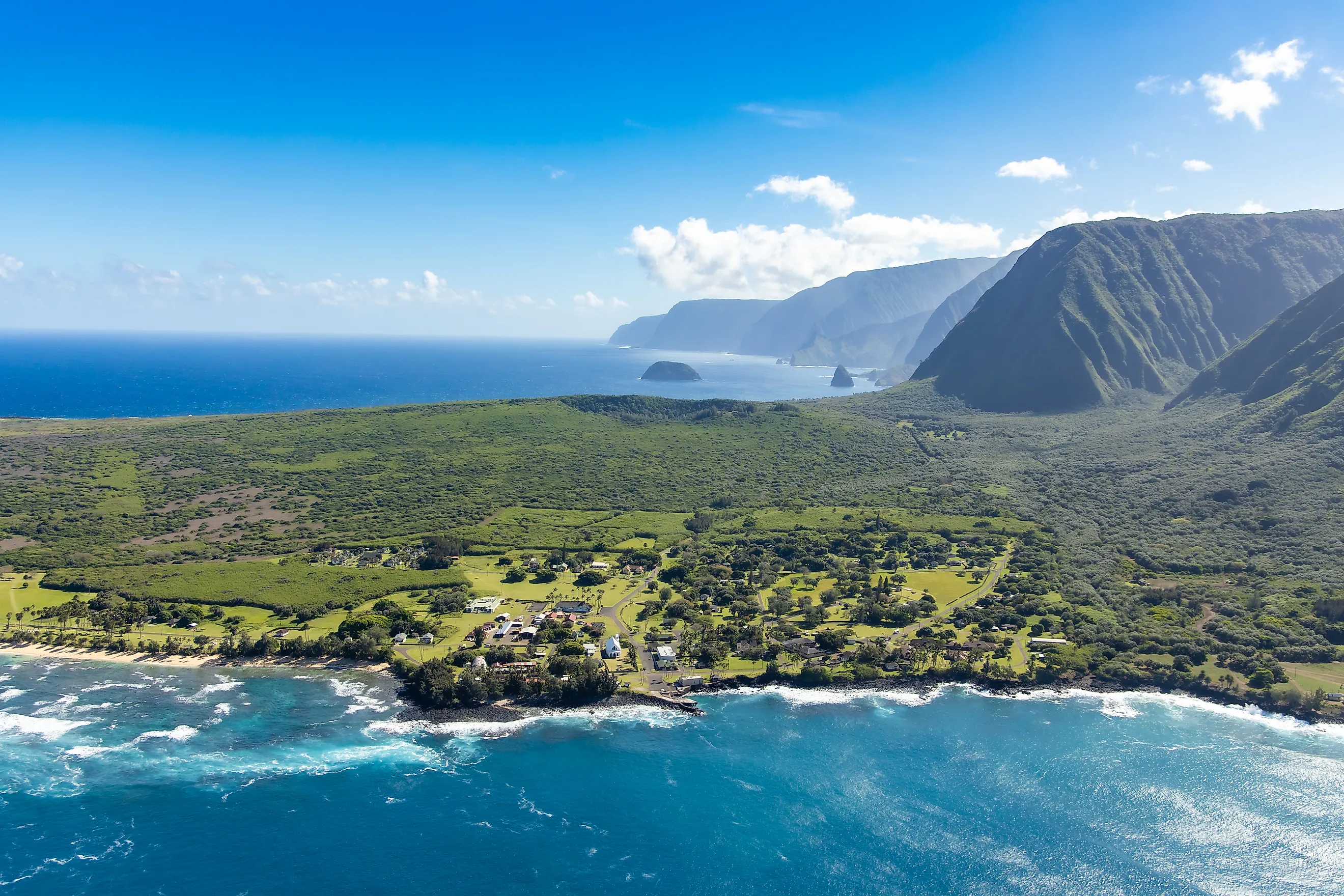
Kalawao County, Hawaii (Population: 82)

Kalawao County may only span a small area of roughly 12 square miles on the north shore of the Hawaiian island of Molokai. However, just 82 people are residents of the remote area, making it a clear second-place for America's least-populated counties.
The county's land boundary is contiguous with that of Kalaupapa National Historical Park, a National Park Service property that protects and preserves the history of the area, which was once used to isolate those suffering from the contagious Hansen's disease, also known as leprosy. It's also administered by the Hawaii Department of Health, rather than a traditional county government. Access is strictly limited to local residents, typically patients who've been allowed to remain in the area after isolation programs ended in the mid-20th century, those caring for them, and the state and federal employees who work there on official business. General visitors need a permit issued through the Hawaii Department of Health and typically come on a guided tour, while guests of residents can arrange a permit through their host.
King County, Texas (Population: 192)

King County is home to just 192 people spread across more than 910 square miles of northwest Texas, giving it a population density of barely one person for every five square miles. That's down sharply from the 265 residents counted in 2020, part of a much longer decline from a population that topped 1,000 in the early 20th century.
The county has been traditionally associated with ranching and farming, including the still-operating Four Sixes Ranch. However, it suffered significant population losses during the Great Depression and Dust Bowl, as well as the mechanization of farming and transition to oil and gas exploration. Today, Guthrie remains one of the few remaining communities and serves as the county seat.
Kenedy County, Texas (Population: 319)

Kenedy County sits along the Gulf of Mexico near the southern tip of Texas, spanning 1,459 square miles of mostly empty space, including portions of Padre Island National Seashore. Just 319 people called it home in 2025, down from 350 in 2020. That's barely a third of the nearly 900 people who called the area home at its peak in the 1960s.
Historically, the county has been dominated by large ranches spanning tens of thousands of acres each, an economic model that needs plenty of open land but relatively few people to operate and maintain it all. What little development exists in Kenedy County is located along Interstate 69E, including county seat Sarita, a tiny community of only a few streets.
McPherson County, Nebraska (Population: 369)

West-central Nebraska's Sandhills region is home to McPherson County, where just 369 people are spread across roughly 859 square miles. That works out to fewer than half a resident per square mile, and it's only getting roomier. The population has continued to fall from the 539 people who lived there in 2010 and the 399 who did in 2020.
The county was established in 1890 and remains almost entirely devoted to agriculture and ranching, with no incorporated communities at all, including county seat Tryon. Much of the landscape consists of open ranch land and rolling hills, with homes and services scattered widely across the region.
Arthur County, Nebraska (Population: 396)

Immediately to the west of McPherson County lies Arthur County, America's next least-populated county. It's a tribute to just how empty the Sandhills region is that the two counties combine for fewer people than live in some large urban apartment complexes. Arthur County has similarly shrunk, down over 8% since 2020, when 434 people lived in the county's 715 square miles.
It was established in 1913 after the area's population grew sharply due to early 20th-century homesteading. Today, the largest community is the village of Arthur, which offers a few local businesses and amenities amid the vast, primarily agricultural surroundings. At one point, it claimed to have the smallest county courthouse in the country until a new building was constructed in the 1960s.
Few People, Plenty of Space in America's Empty Counties
For those used to densely packed cities or crowded suburbs, it can be hard to imagine quite how few people live in some entire counties. But whether on the shores of Hawaii or the plains of Nebraska, the data is clear. These counties truly stand out when it comes to areas where next to nobody lives.