US Towns That Look Like They Belong in Another Country
A handful of American towns have staked everything on looking like somewhere else entirely. Helen mandated Bavarian facades on every building back in 1969 and pulled itself out of a freefall. Pella plants more than 300,000 tulips each May and shapes its garden pond like a wooden shoe. In Fredericksburg, shopkeepers along Main Street still chat in Texas German. What started as survival strategy or stubborn heritage now fills these streets with polka bands, stroopwafels, and schnitzel.
Solvang, California

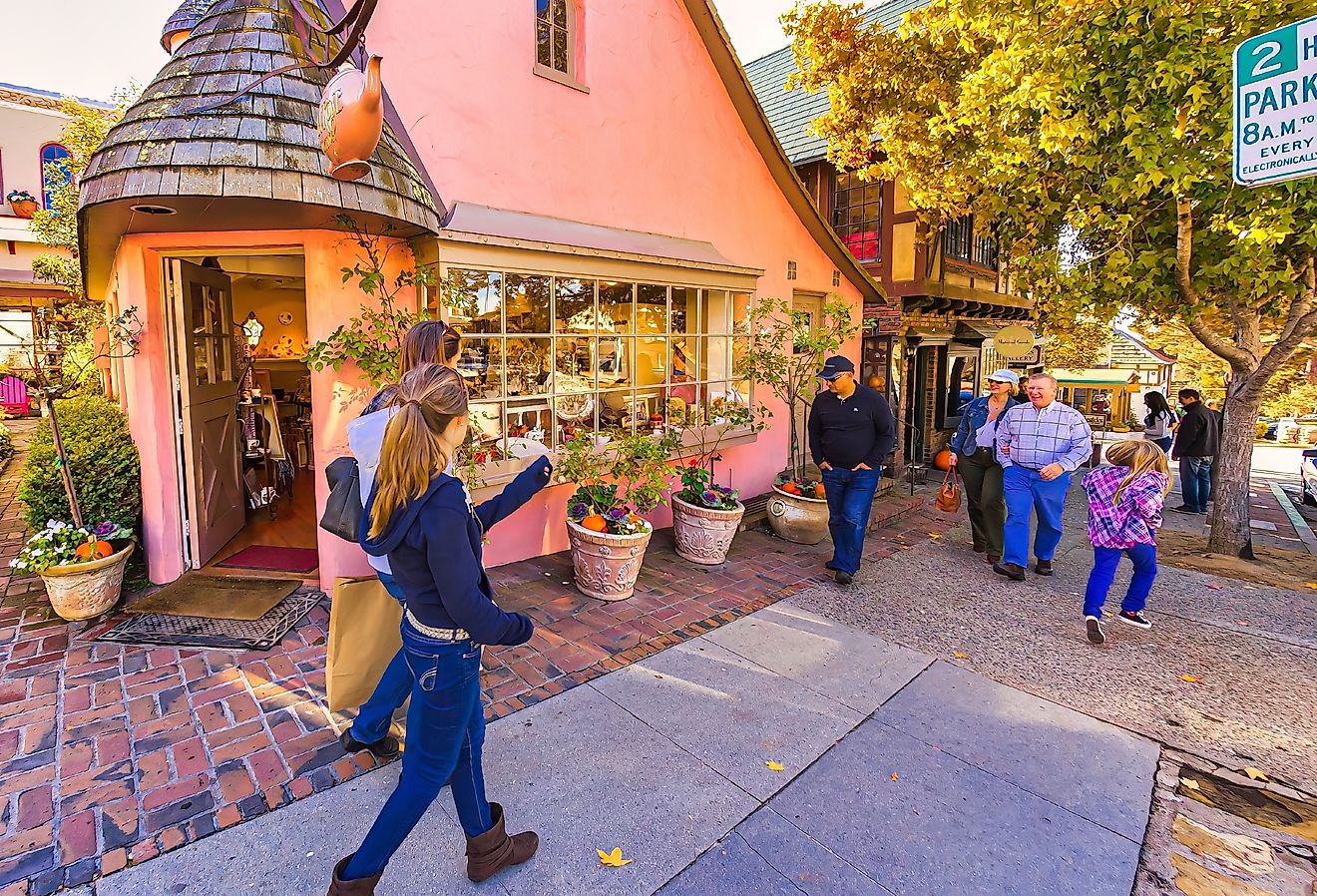
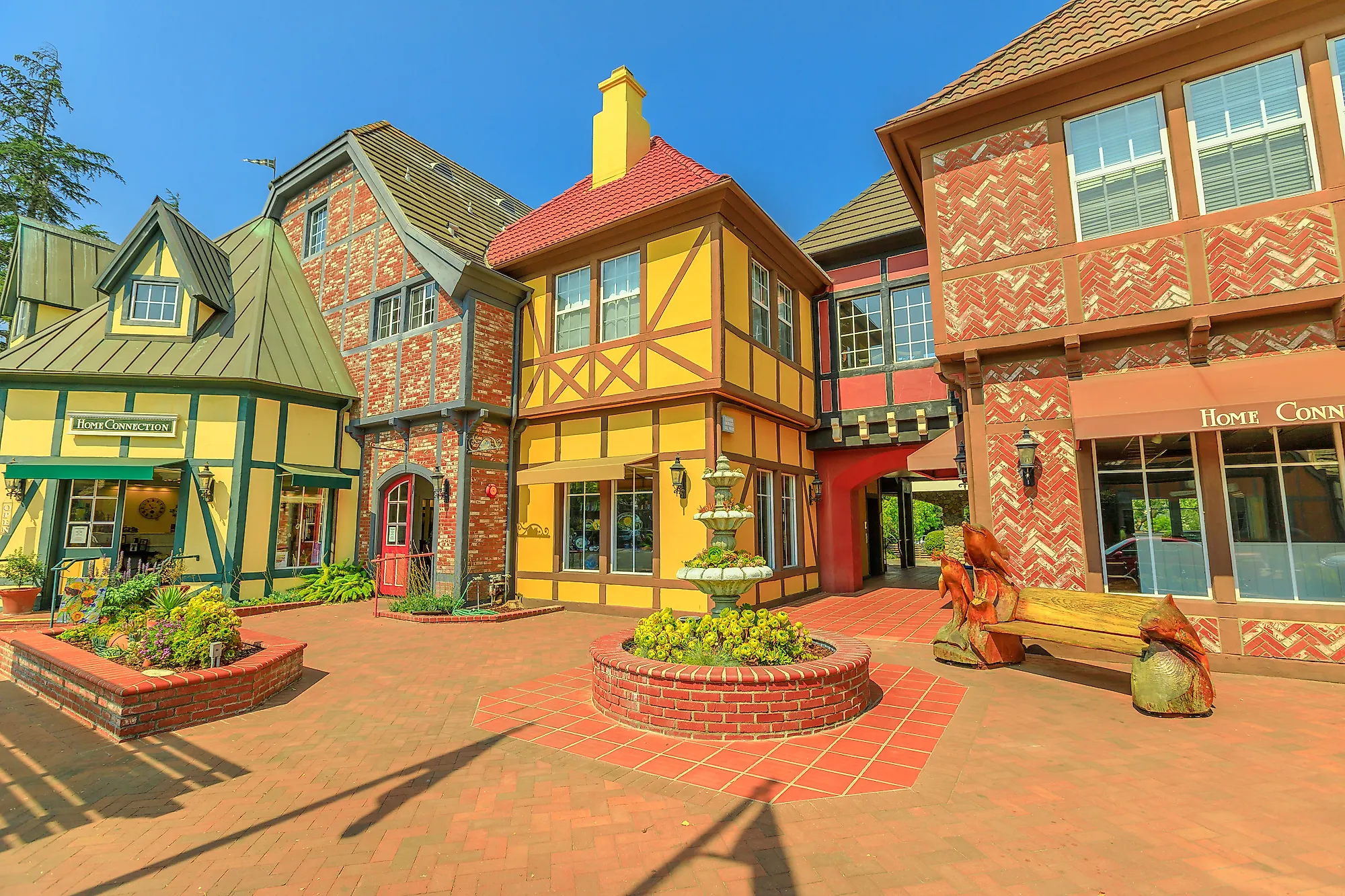
Solvang brings Denmark to sunny California. Known as the "Danish capital of America" and covering just two square miles, Solvang revolves around Danish culture and food, and its architecture makes visitors feel transported to a Scandinavian town. Plastic storks on several rooftops complete the picture, bringing Danish good luck to an American main street. Three Danish immigrants established Solvang in 1911, seeking a sunny place to settle; the name means "sunny field" in Danish. They opened a Danish folk school that same year, the community completed a Danish-style Lutheran church in 1928, and Solvang rose to national fame in 1947 after the Saturday Evening Post profiled its Danish soul in an article titled "Little Denmark." Today, Denmark is present everywhere. A Hans Christian Andersen museum sits above The Book Loft, a replica of Copenhagen's Little Mermaid statue watches over the street, and Danish street names like Atterdag Road and Copenhagen Drive fill the map. The Solvang Viking Museum displays Norse artifacts and model ships, while the Elverhøj Museum of History and Art houses Danish arts and crafts. The Danish Mill Bakery and Coffee Shop turns out traditional pastries, the Red Viking Restaurant serves Scandinavian dishes, and peasants FEAST offers a farm-to-table menu.
Helen, Georgia

While Solvang is all about Denmark, Helen, Georgia, is all about German culture. Helen's Oktoberfest draws visitors from across the country, running mid-September through the end of October with sauerkraut, schnitzel, and all the beer anyone could wish for. The opening parade features the Tapping of the Keg, and there is plenty of polka dancing. The Festhalle, just off downtown, hosts Oktoberfest bands and serves German brats. Other festivals fit the same aesthetic, including the Bavarian Nights of Summer and the Volksmarch in Unicoi Park, which celebrates the return of animals and plants after winter.
Helen's German identity was adopted, not inherited. The town was named after the daughter of a railroad surveyor when it was laid out between 1912 and 1913. When Helen later went into decline, it opted to remake itself as a replica Bavarian village, and since 1969 all buildings have been required to adopt the southern German style. Today, these buildings are attractions in their own right, especially the Helen Arts and Heritage Center. Taverns and pubs on the Chattahoochee River serve German beer, and the bakeries sell fried cheese and bratwurst. When Christmas rolls around, the annual Christkindlmarkt resembles Germany's Christmas markets, and a Christmas Parade brings German dancing and German holiday characters. After sunset, the annual Lantern Parade lights up the night as children release decorated lanterns, ending with s'mores and hot cocoa at the Festhalle.
Leavenworth, Washington

Washington has its own German town in the mountains. Like Helen, Leavenworth was not always a Bavarian town. In the late 1800s, logging and sawmilling flourished here thanks to the railroad, but when the line was rerouted, Leavenworth all but vanished. By the 1960s, hardly anyone made the trip, so town leaders decided to remodel Leavenworth after a Bavarian village. It is now one of the state's most visited towns. The downtown buildings all carry the Bavarian look, hanging flower baskets line the walkable core, and Bavarian murals appear throughout town. During the fall, everyone gears up for Oktoberfest as the foliage frames the town with German dancing and German beer. The Cheesemonger's Shop stocks 90 different cheeses year-round, and the Gingerbread Factory rises to the occasion with gingerbread cookies and cupcakes. The theme carries into the Nutcracker Museum, where Oktoberfest-themed nutcrackers are on display. Bavarian music plays in the town square throughout the year, weekends bring polka bands and yodeling, and there is even a reindeer farm on the edge of town.
Alys Beach, Florida

Alys Beach, a luxury beach town in Florida, goes full Santorini with white houses set against a deep green sea. The look is practical as well as pretty: the reflective white surfaces keep the houses cool, and the masonry construction protects against hurricanes. Stone paths, purple bougainvillea, and white sand round out the Greek-getaway impression, with no tiki huts or pastel cottages in sight. The resemblance is something of an accident. The town's architecture was actually modeled on the courtyard houses of Central America and Bermuda, which is why the courtyards hold fountains and Bermudian butteries. Still, the Mediterranean feel continues at the Caliza Pool, where tropical plants surround the water and the white walls catch the sun. At Gulf Green, an open lawn above the water, people gather to sit on the grass and mingle, giving Alys Beach an even more European atmosphere.
Pella, Iowa

Pella prides itself on being a Dutch destination in the Midwest. Each May, the Tulip Time Festival brings out more than 300,000 tulips, along with a Dutch Costume Parade, traditional street music and dancing, and Dutch food. The Klokkenspel clock tower puts on an hourly show featuring figures from the town's history. Pella has held on to its Dutch heritage since immigrants seeking religious refuge founded it in 1847, and the Historical Village and Museums show what those early years looked like. The Scholte House Museum preserves the home and belongings of founder Hendrik Scholte and his wife, Maria. Pella is also home to the Vermeer Windmill, the tallest working grain windmill in the United States. Dutch food is everywhere: tulip beer during the festival, Gouda from Frisian Farms, and fresh stroopwafels and Dutch letters from the bakeries. Families head to Wonder Spelen Park, a Dutch-themed playground, and to the sunken gardens, where the pond is shaped like a wooden shoe. During the Christmas season, Pella goes all out with the Kerstmarkt, a Dutch Christmas market, and a Sinterklaas parade.
Holland, Michigan

Holland lives up to its name with an annual tulip festival and working windmills. Like Pella, Holland is basically the Netherlands of America. Dutch Calvinist Separatists settled the town in 1847, and it has held on to that heritage ever since, with downtown blocks of Dutch-style buildings and shops. The Hungry Dutchman Cafe welcomes visitors with Dutch phrases painted on the ceiling beams and a menu of kroketten (deep-fried beef croquettes with Dutch mustard), erwtensoep (Dutch pea soup), and frikandel (a Dutch-style hot dog).
At Windmill Island Gardens, the De Zwaan mill is the only authentic working Dutch windmill in the United States, still turning wheat into flour. The grounds also hold a vintage carousel, a Dutch street organ, Friesian horses, and a maquette depicting Dutch life in the 1840s. Holland hosts its own Tulip Time Festival every May, celebrating millions of blooms with wooden-shoe dancing and floats. In December, the mill takes center stage during Magic at the Mill, when it is decorated with fairy lights and surrounded by thousands of illuminated LED tulips over the first three weekends of the month. Sinterklaas makes an appearance as a synchronized light-and-music show plays.
Fredericksburg, Texas

German influence is everywhere in Fredericksburg, the second town in Texas founded by the Adelsverein. In 2026, National Geographic featured it on its list of the best small towns in the U.S., largely thanks to a Main Street with an unmistakable European look. Chain stores are not allowed on this stretch, which anchors the town's National Historic District, and strollers might still hear Texas German spoken by local shopkeepers. The Pioneer Museum, a 3.5-acre complex on Main Street, depicts the lives of the original German immigrants, while the Vereins Kirche Museum stands in the town center with paintings and photographs dating back at least a hundred years. Fredericksburg keeps its German culture loud and current with a three-day Oktoberfest every October, complete with cold German brews, live polka, and games. Sangerfest brings German choirs together to celebrate their heritage, and the Gillespie County Bundes Schuetzenfest, a shooting competition, crowns a new Schuetzenkoenig, or King of Marksmen, every year.
New Glarus, Wisconsin

New Glarus sits among woodland pastures and green hills that resemble the farmlands of Glarus in Switzerland, which is why people call it America's Little Switzerland. It was settled by 108 Swiss pioneers in 1845, an event the town still commemorates with Swiss festivals and chalet-style architecture. Walking the streets, visitors take in the chalets, murals, and flower boxes that could pass for a Swiss Alpine village. The Swiss Volksfest brightens the summer with alphorn music, Swiss food, and yodeling. Every June, the Heidi Folk Festival stages a play about Heidi and her friends, complete with live kittens and goats. In August, the Wilhelm Tell Festival brings choral singing, Swiss flag-throwing, and a pageant. The Christmas season opens with the Christkindli Market at the start of December, featuring mini wooden chalets, holiday gifts, and horse-drawn sleighs, while the Adventsfenster reveals a new decorated Advent window each evening of the month. When January comes, Silvesterklausen sees costumed revelers going door to door to ring in good fortune for the year ahead. Year-round, the New Glarus Bakery offers apple fritters and nut horns, Glarner Stube serves schnitzel and fondue, and the Chalet Cheese Haus produces artisan cheese for tastings.
World Culture in American Towns
These towns want tourists, but they are more than tourist towns. Several of them, Helen and Leavenworth most dramatically, survived economic decline by reinventing themselves around a heritage, while others like Pella and New Glarus simply never let theirs go. Some hold onto their dialects, others invest in traditional festivals, and all of them keep history alive on their main streets. Visiting them shows just how much effort goes into preserving the past for the next generation.