10 Largest Shopping Malls In America
Retail keeps writing the shopping mall's obituary, and the country's biggest malls keep not reading it. The ten below are enclosed, climate-controlled giants that pull in tens of millions of visitors a year, and several have answered the death of the mall by turning themselves into something closer to indoor cities, with ski slopes, aquariums, and roller coasters bolted onto the food court. A quick note on the ranking: these are ordered by total square footage, the standard yardstick for comparing mega-malls, which is why the list leans toward places where a good chunk of that footage is given over to a theme park rather than a Gap. We stuck to fully enclosed malls, which leaves out open-air giants like Honolulu's Ala Moana and outlet sprawls like Sawgrass Mills.
1. Mall of America, Bloomington, Minnesota - 5,600,000 sq. ft.

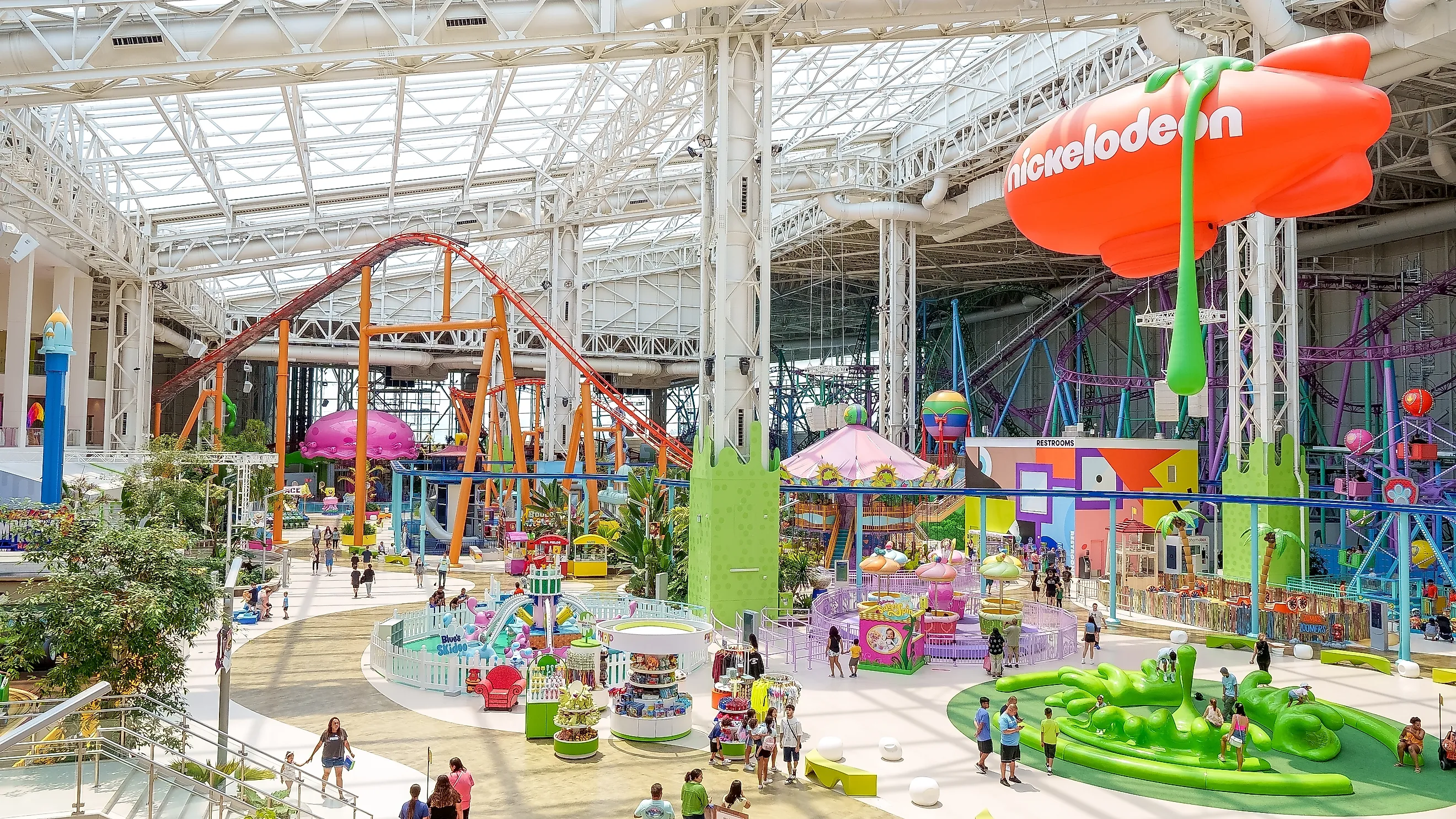
Calling Mall of America a mall undersells it. At 5.6 million square feet, the country's largest is really a small landlocked city that happens to sell jeans, wrapped around Nickelodeon Universe, an indoor theme park with more than two dozen rides, and an aquarium you walk through in a glass tunnel while sharks cruise overhead. It opened in 1992 under the Triple Five Group, holds over 520 stores, and draws crowds in the tens of millions every year, a fair share of them tourists who came for the roller coaster and stayed for the Nordstrom. It sits about 15 minutes from downtown Minneapolis and St. Paul, and nobody has ever seen all of it in one day.
2. American Dream, East Rutherford, New Jersey - 3,000,000 sq. ft.

American Dream is the newest mall on this list and had the worst timing imaginable. It opened in stages starting in late 2019, which gave it roughly one good quarter before a pandemic shut the doors of malls across the country. It survived, and today the East Rutherford complex is more amusement park than shopping center: another Nickelodeon Universe, the DreamWorks Water Park, a Legoland, a mini-golf course, and Big SNOW, the only indoor real-snow ski slope in the Western Hemisphere. The retail, some 450 tenants when fully leased, almost feels like an afterthought squeezed between the rides.
3. The Galleria, Houston, Texas - 3,000,000 sq. ft.

The Galleria is Texas's largest mall, and it treats shopping as just one item on the itinerary. Opened in 1970 in Houston's Uptown District and run by the Simon Property Group, it packs roughly 400 stores around two Westin hotels and a full-size indoor ice rink that has trained Olympic-level skaters, right there under the glass roof. The luxury flagships, Neiman Marcus and Saks among them, sit a short walk from the everyday chains, so you can buy a winter coat and then go ice skating in Texas without leaving the building.
4. King of Prussia, King of Prussia, Pennsylvania - 2,793,200 sq. ft.

The largest mall on the East Coast spent decades as two malls in denial. King of Prussia, outside Philadelphia, opened in 1963 as two separate buildings, the Plaza and the Court, standing across from each other and pretending the other did not exist. They were finally joined into a single complex in 2016, and the result is a Simon-owned giant with around 450 stores and a luxury wing stocked with the names, Gucci, Cartier, Louis Vuitton, that draw shoppers from several states over.
5. Aventura Mall, Aventura, Florida - 2,700,000 sq. ft.

Aventura is the largest mall in Florida and the rare luxury center with a playground attitude. Between the Louis Vuitton and Cartier storefronts north of Miami stands the Aventura Slide Tower, a working 93-foot slide by artist Carsten Holler that deposits shoppers, dignity optional, back near the food court. The three-story mall opened in 1983, runs about 300 stores, and treats contemporary art as part of the fixtures, with commissioned pieces scattered among the escalators.
6. South Coast Plaza, Costa Mesa, California - 2,623,385 sq. ft.

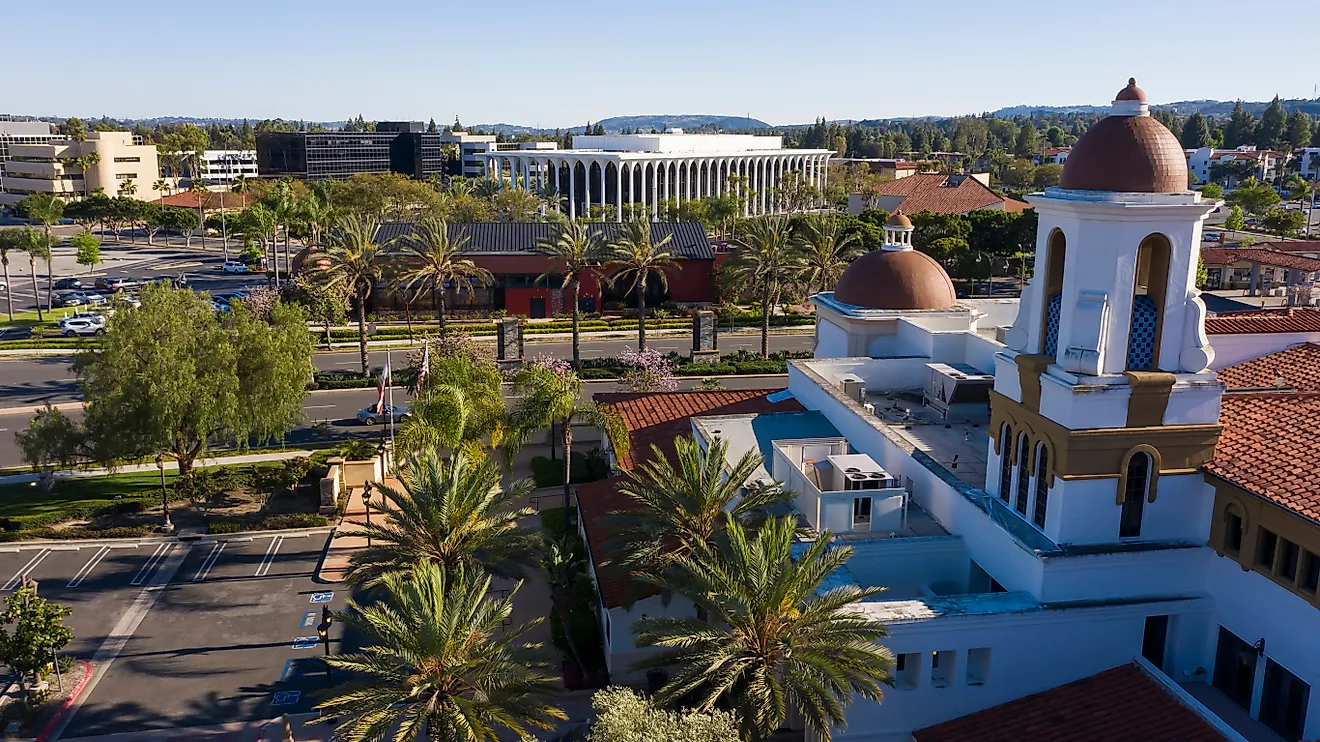
South Coast Plaza sits on land that used to grow lima beans. The Segerstrom family farmed the California fields, held onto the ground, and in 1967 opened what is now the highest-grossing shopping mall in the United States, still family-owned. Its 270-odd stores lean hard into luxury, with one of the densest concentrations of designer flagships anywhere in the country. The lima beans are long gone; the Gucci is not.
7. Del Amo Fashion Center, Torrance, California - 2,517,765 sq. ft.

Before Mall of America came along, Del Amo wore the crown. The Torrance center held the title of largest mall in America until 1992, and while it has since slipped down the rankings, it never got smaller, just out-sized. It traces back to 1961, took its current shape when two adjacent malls merged, and today spreads more than 250 stores across three levels along with a movie theater and an outdoor village wing tacked onto the enclosed core.
8. Tysons Corner Center, Tysons, Virginia - 2,400,000 sq. ft.

Tysons Corner Center did not just open in a suburb; it created one. When it opened in 1968 as one of the first fully enclosed, climate-controlled malls in the Washington, D.C., area, it sat at a rural Virginia crossroads. The mall pulled in hotels, office towers, and traffic until the crossroads became Tysons, the textbook example of an American edge city. Now owned by Macerich and anchored by Macy's, Nordstrom, and Bloomingdale's, it remains the largest mall in the D.C. region, with a Metro station bolted to its side.
9. Destiny USA, Syracuse, New York - 2,400,000 sq. ft.

Destiny USA leans further into entertainment than almost anywhere else on this list, which is fitting for a mall built on a former landfill in Syracuse. Opened in 1990 as the Carousel Center and expanded and renamed in 2012, the six-level complex runs an indoor go-kart track, a sky-high ropes course, a Dave and Buster's, and a restored antique carousel alongside its 250-plus stores. It is the largest mall in New York State, and it draws around 26 million visitors a year to a city better known for its winters.
10. Roosevelt Field, Garden City, New York - 2,372,053 sq. ft.

Roosevelt Field has the best origin story of any mall in America. It stands on the Long Island airfield where Charles Lindbergh took off for Paris in 1927, and it is named for it. When it opened in 1956 it was an open-air center designed by a young, not-yet-famous I. M. Pei, decades before his Louvre pyramid; it was later enclosed and expanded into the two-level giant it is today. Simon-owned and home to more than 240 stores, it is the largest mall on Long Island, and one of the few where the parking lot is a footnote to aviation history.
The Last Word
Notice how few of these are really about shopping anymore. The biggest American malls kept their footprints and swapped the point of them: a ski slope here, an aquarium there, a go-kart track where a department store used to be. Whether that counts as reinvention or a very expensive hedge against the internet is a fair question, but it is working, because the crowds keep coming, and the obituaries keep getting filed early.