The Oldest Wineries Still Operating In America
If you've ever taken communion in an American church, there's a fair chance you've already tasted the work of one of the wineries on this list. Altar wine is how most of them survived Prohibition, the national ban on making and selling alcohol from 1920 to 1933 that permanently closed hundreds of American wineries.
We've ranked the survivors by the year each winery first made wine at the site where it still makes wine today, using the date from the winery's own published history.
Prohibition isn't a disqualifier so long as the business never stopped, whether by bottling sacramental and medicinal wine under a federal permit, pressing grape juice, or selling grapes to home winemakers, which the law allowed. Here are the oldest wineries still operating in America.
Brotherhood Winery, Washingtonville, New York (1839)
The hand-dug cellars beneath Brotherhood Winery in Washingtonville, in the Hudson Valley 50 miles northwest of New York City, are the basis for its claim to be America's oldest winery. John Jaques, a cobbler who grew native grapes behind his shoe store from 1824, dug the first brick-vaulted cellar in 1839 and sold his first vintage that year.
In 1886, his sons sold the winery to J.M. Emerson & Son, New York wine merchants who gave it the Brotherhood name.
When Prohibition arrived, the company obtained a federal permit to make medicinal and sacramental wine, which the law allowed. Connections with the Roman Catholic Archdiocese of New York kept the altar-wine orders coming, and the winery still makes altar wine from its own Concord and Niagara grapes, two native American varieties.
Now listed on the National Register of Historic Places, the winery offers guided tours with tastings. The on-site restaurant, 1839, is named after the year the winery was founded.
Renault Winery, Egg Harbor City, New Jersey (1864)
During Prohibition, a bottle of Renault Wine Tonic, 22 percent alcohol and sold by pharmacists across the country, came with a label warning not to chill it, as that would turn the medicine into wine.
That tonic is how Renault Winery in Egg Harbor City, in the pine country of southern New Jersey, survived Prohibition after a local grocer bought it in 1919 and secured a federal permit for sacramental and medicinal wine.
The winery's first vines were planted in 1864 by Louis Nicholas Renault, an immigrant from France's Champagne region. By 1870, he was selling sparkling wine, and the winery claims to be one of only a handful in the country that is still allowed to call its sparkling wine champagne.
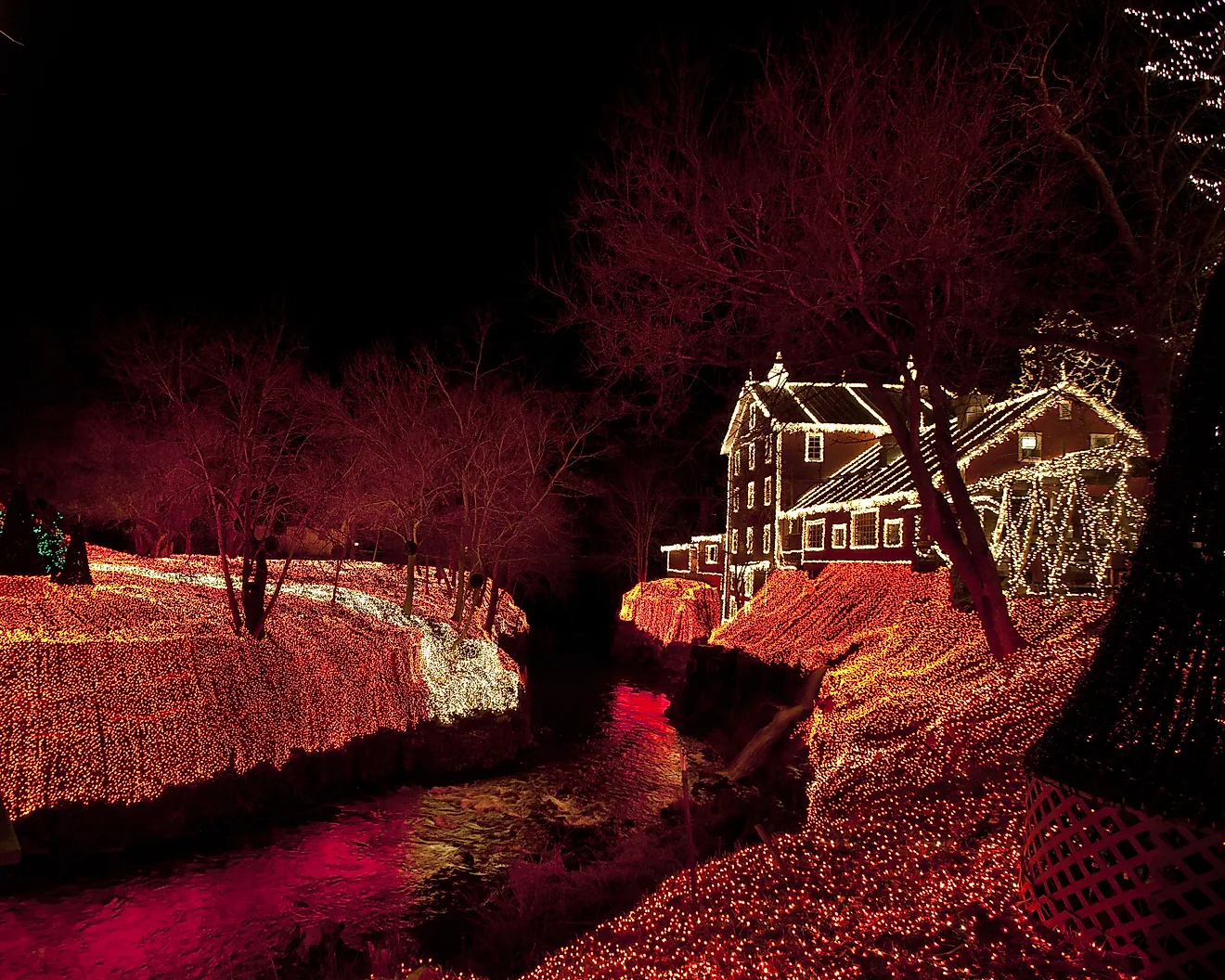
Now known as Renault Winery Resort, the property features the 55-room Château Renault hotel and the Taste 1864 tasting room. Weekend tours with wine tastings are available, and Vintner Wonderland, a holiday fair with igloos and an ice rink, runs from the day after Thanksgiving to the third weekend of January.
Beringer Vineyards, St. Helena, California (1876)

In 1934, the year after Prohibition's repeal, Beringer Vineyards in St. Helena became the first winery in California's Napa Valley to open its cellars to the public for tours. A federal license to make altar wine kept the business going through the dry years, enabling the winery to hit the ground running once alcohol sales were legalized again.
Beringer was founded when German immigrants, Jacob and Frederick Beringer, bought 215 acres at the foot of Spring Mountain on the edge of St. Helena in 1875. The brothers' first vintage was produced in 1876, and soon after, Chinese immigrant labourers were hired to chisel 1,000 feet of tunnels into the hillside behind the winery to store the winery's vintages.
Rhine House, completed in 1884 as Frederick's home and modeled on the family house in Mainz, their hometown on the Rhine, is now used as the winery's reserve tasting room. The winery celebrated its 150th anniversary on November 25, 2026, by lighting a 36-foot tree built from wine barrels.
Wiederkehr Wine Cellars, Wiederkehr Village, Arkansas (1880)

Johann Andreas Wiederkehr and his wife Katherine left their home in Switzerland in 1880 after answering a railroad advertisement for settlers, settled on St. Mary's Mountain in the Ozark foothills of western Arkansas, and made their first wine from local berries before turning to grapes. According to the family, a permit from the Catholic Diocese of Little Rock to make sacramental wine during Prohibition was granted.
The operation grew quickly after Prohibition, from storing 1,500 gallons of wine in 1934 to two million by 1975. That same year, Wiederkehr Village, the community that evolved around the winery, was incorporated.
The winery, now operated by the third and fourth generations of the family, has served Swiss cheese fondues and schnitzel in its Weinkeller Restaurant since 1967.
The restaurant itself is set in the original 20-by-30-foot stone cellar that Johann dug by hand in 1880. The old log cabin he built above it is now the Vintage 1880 Shoppe, where tastings are offered.
Wente Vineyards, Livermore, California (1883)
Most of the Chardonnay grown in California descends from cuttings that Ernest Wente had shipped from a nursery in Montpellier, France, in 1912. It's a lineage that Wente Vineyards in Livermore puts at over 75 percent of the state's plantings.
His father, Carl H. Wente, a German immigrant who learned winemaking from the founder of Napa's first commercial winery, had bought 47 acres in the Livermore Valley, east of San Francisco Bay, in 1883.
The winery survived Prohibition by making 30,000 gallons a year of sweet white wine for Beaulieu Vineyard in Napa, which held a contract to supply the Catholic Church. The family released the country's first wine labeled as Chardonnay in 1936. The caves dug in 1911, before refrigeration, into the hillside of its second property, the former Cresta Blanca winery on Arroyo Road, are now used for seated wine and food pairings.
The family also owns The Course at Wente Vineyards, an 18-hole golf course designed by Greg Norman that opened in 1998, and The Grill restaurant beside it. They also run a summer live-music series from June to October.
Concannon Vineyard, Livermore, California (1883)

A 1925 Riesling, a 1929 sherry, and a 1929 shipping box preserved in the Smithsonian's National Museum of American History in Washington prove that Concannon Vineyard, also in Livermore, kept bottling under its own label right through Prohibition.
It was one of only a handful of wineries in the country licensed to make, bottle, and sell sacramental wine under its own name.
Unlike most wineries, Concannon started off in the business of altar wine, so it was well-versed in the field when Prohibition hit. It was established by an Irish immigrant, James Concannon, in 1883 after he was encouraged to grow grapes for altar wine by the archbishop of San Francisco.
He also imported Cabernet Sauvignon cuttings from Bordeaux in 1893, one of which became the Mother Vine that gave California three of its most planted Cabernet vine strains. The original winery building from 1883 now houses the tasting room.
Val Verde Winery, Del Rio, Texas (1883)
Thick walls keep the original winery building at Val Verde Winery cool. And given its location in Del Rio, Texas, that kind of thing matters. It was started by Frank Qualia, an immigrant from Milan, Italy, who leased ten acres of irrigated land in Del Rio in 1882. He made his first wine from Lenoir grapes, a dark variety also known as Black Spanish, in 1883.
Qualia got through Prohibition by selling table grapes and sacramental wine, and by the late 1950s, Val Verde was the only winery left in Texas. Descendants introduced the Herbemont grape, another Southern variety, to Texas, and in 1982 the winery began producing Don Luis Tawny Port, a fortified wine made from Lenoir grapes.
Now run by the fourth generation of Qualia's family, winery tours and tastings are offered in the old production building or on the lawn under the pecan trees.
Heineman's Winery, Put-in-Bay, Ohio (1888)

A well dug in 1897 saved Heineman's Winery during Prohibition. Workers digging 40 feet below the winery on South Bass Island, in the western basin of Lake Erie, inadvertently broke into Crystal Cave, a hollow rock lined with crystals known as a geode. At 35 feet across at its widest point, it is recognized by Guinness World Records as the largest such rock on Earth.
Gustav Heineman, a German immigrant, founded the winery in 1888, and by 1900 it was one of 17 in Put-in-Bay, a village on South Bass Island that has become known as the "Key West of the North." It was the only one to survive the dry years thanks to sales of unfermented grape juice and the admission charged to see the cave. Combined cave and cellar tours are still available.
Saved By The Altar
Six of the eight wineries on this list only survived Prohibition thanks to a permit they held that allowed them to make wine for churches or the medicine cabinet.
The other two got by thanks to sales of grapes and juice, and in one case, its cave tours as well. So next time you take a sip of communion wine or enjoy some grape juice, raise a glass to the people who kept their vines growing and their cellars full. Cheers!