Where Bobcats And Mountain Lions Overlap
Cat lovers have reason to cheer, as they can find bobcats and mountain lions across the same range. Bobcats are found in all of the western states that mountain lions frequent. However, this enthusiasm comes with a few caveats, as mountain lions have a more restricted habitat than bobcats, which can hide in just about any forest in America. In addition, unlike housecats, which can eventually be forced to get along, these two species aren't friendly to each other and may at times fight for food and territory.
Mountain lion habitat

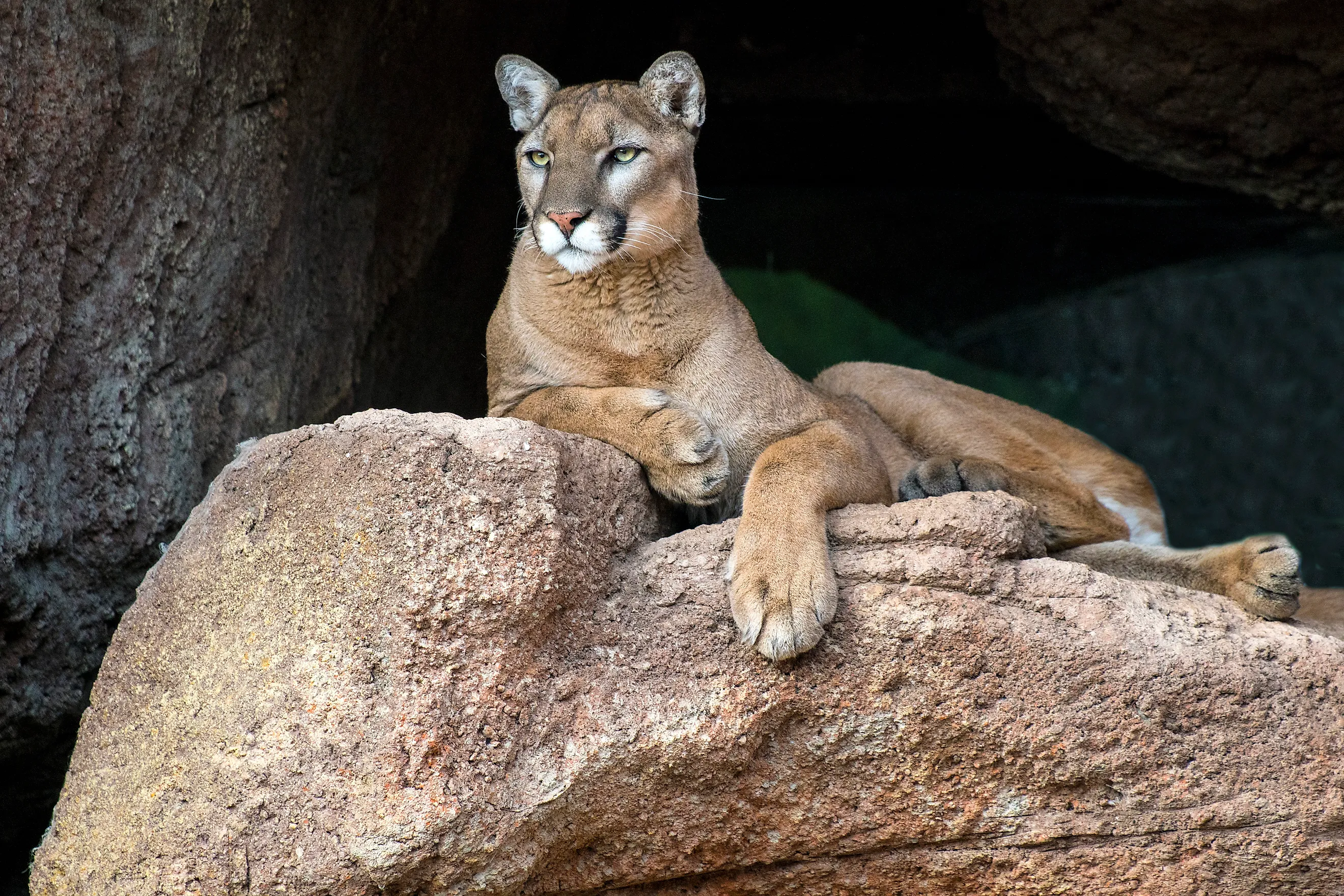
Also known as cougars, or by their scientific name Puma concolor, mountain lions used to be found in all of North and South America. Today, their habitat is more limited. Their northernmost territory is in British Columbia and Alberta before moving south, encompassing Washington, Idaho, Montana, Oregon, Wyoming, California, Nevada, South Dakota, North Dakota, Nebraska, Utah, Colorado, Arizona, New Mexico, Texas, and the nation of Mexico. There is also a populatio known as the the Florida panther found in the southwest Florida.
Mountain lions' range also extends into South America, although this variety is commonly referred to as the South American cougar or the Andean mountain lion after the Andes Mountain Range.

The name mountain lion originates from Spanish explorers who called it a cat of the mountain. Although commonly found near mountains, a mountain lion can also inhabit spaces right at sea level, such as forests on the coasts, or in deserts. Their biggest concentrations tend to be in higher elevations in canyons or mountains. What truly determines their range is not any one geographical feature, but the presence of their main prey: deer.
Mountain lions have large territories, with males roaming for more than 100 square miles, while females range from 20 to 60 square miles. Although previously believed to be solitary other than during mating season, recent research has revealed that mountain lions may interact with each other more frequently. During the winter, a study found that mountain lions will share food with each other, including ones they are not related to. Researchers believe that in these environments, one larger male is dominant over the territory, and other males and females live there and share food with each other.
Bobcat habitat
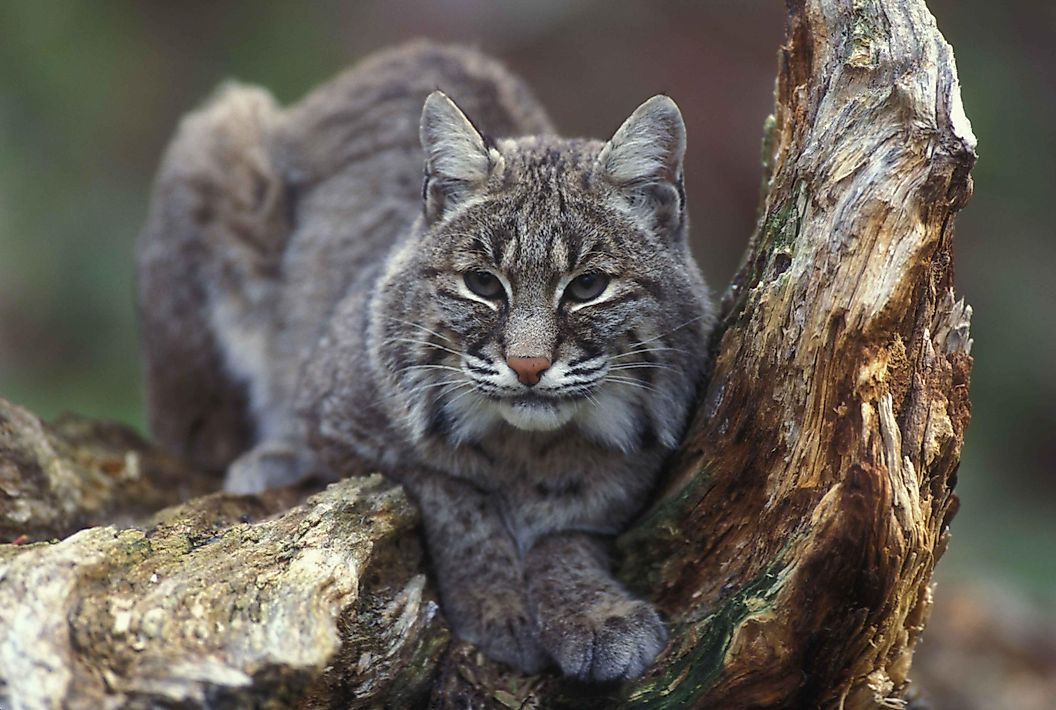
Bobcat's scientific name is Lynx rufus. They are often confused with lynx, as their range does overlap in some northern states and Canada. They lack the long tufted ears of lynx, and they have a short, bobbed tail, which is where they get the name bobcat.
While bobcats don't live in South America, they are found throughout far more of the U.S. than mountain lions. They are extant across southern Canada and virtually the entire lower 48 states, with a few geographical areas without any major populations.
The only state in the lower 48 without bobcats is Delaware, with the state government officially listing it as extirpated. This is due to hunting and habitat destruction. Much like the mountain lion, bobcats are experts at living in different environments, such as mountains, boreal forests, bottomland forests, swamps, deserts, scrublands, and many other places. Generally speaking, they prefer forested coverage, with plenty of trees for them to climb up. They have thinner coats than lynxes, meaning they tend to avoid very cold areas such as around the northern regions of the Great Lakes.

A bobcat feeds on smaller prey than the mountain lion, such as squirrels, mice, snakes, lizards, and sometimes pets. However, they will go after smaller deer for an extra boost in calories.
As far as social behavior goes, bobcats don't show any signs of forming major social groups, and instead are solitary, save for mating or a mother and her young, usually with two to four kittens per litter. Bobcats mark their territory through urination to avoid competition, with a male having a larger territory that overlaps with several females.
Mountain lion vs bobcat
When comparing the two, the biggest difference is their size. Bobcats are 1.5 to 2 feet tall at their shoulders, with a length of 25 to 41 inches, and can weigh anywhere from 9 to 33 pounds. Some of them, therefore, would be the same weight as a domestic housecat, which can range from 5 to 20 pounds, but are shorter, with shoulder heights usually below 10 inches.
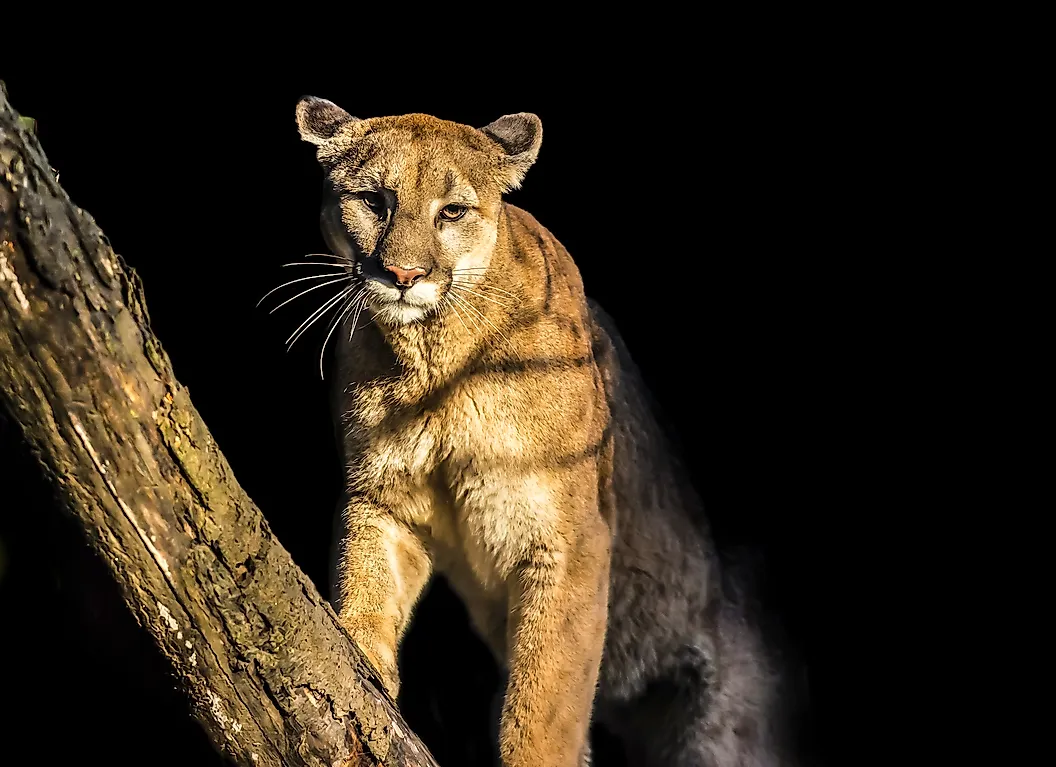
Mountain lions meanwhile tower over their bobcat counterparts, at 30 inches in height and 8 feet in total length from nose to tail, with the tail making up a third of their total length. In terms of size, they average between 75 and 175 pounds, with some growing up to 276 pounds.
Despite the bobcat's smaller size, it is quite fast, able to sprint at 30 miles per hour. The mountain lion is faster, however, with an average sprinting speed of 40 to 50 miles per hour. Bobcats use their eyesight and hearing to detect prey and will stalk it until they can pounce on it. If the prey gets away, the bobcat will typically not pursue.

Mountain lions are ambush predators that will run quickly for short distances to pounce on deer, elk, sheep, hogs, or other smaller mammals. After killing the animal, they will drag it to a hiding spot, which they will cover with leaves or whatever is available. This carcass then becomes their meal; they can return to it for several days or share it with other mountain lions. Although they prefer deer, their jaws are strong enough to bite through the shell of a desert tortoise, with estimates putting it anywhere between 350 and 400 psi.
Neither the bobcat nor the mountain lion can roar, but they do possess similar vocalizations, such as hissing, chirping, or growling. The mountain lion's "roar" that people describe is usually its loud scream, which some confuse with a human. One cuter sound both can make is a purr, used for comfort and communication between a mother and kittens.
Do mountain lions and bobcats get along?

Bobcats and mountain lions can be found together in the same areas, including in national parks such as Saguaro National Park in Arizona, with bobcats often wandering outside of the park to eat rabbits and quail.
Despite both being cats, these two species don't tend to get along. Bobcats have good reason to be threatened by the larger and stronger mountain lion. In the few videos that exist of their interactions, it is typically hostile.

In one video, caught in 2024 in British Columbia, a mountain lion chased a bobcat up a tree, while the bobcat was trying to keep its distance and was growling at the mountain lion. In addition, mountain lions are known to eat slain bobcats.
The bobcat does have one defense: white spots on the back of their ears. The hypothesis is that these spots look similar to eyes and can confuse predators that are trying to ambush them.
These cool cats are some of America's biggest
No mammal can compete with mountain lions when it comes to the West Hemisphere range, both of which are so large that encounters between these cats happen with enough frequency to be caught on film.
These cats are true survivors, finding a way to live in hot and cool environments, through swamps, forests, and canyons as long as they can find enough to eat. Thankfully, humans aren't on the menu for either, and only the mountain lion poses a serious threat to humans. Such attacks are rare, as mountain lions are far more interested in catching deer than interacting with humans or their smaller bobcat relatives.