Towns Sitting Directly on a Fault Line
The ground under a few of the world's great cities is loading up, one millimeter a year, along cracks in the crust called fault lines. What decides whether that stored energy becomes a footnote or a catastrophe is not just the size of the quake, but also where people built, how they built, and how much warning the science gave them. Los Angeles and Tokyo turned past disasters into strict building codes. Kathmandu and Tehran face comparable hazards with far weaker construction overhead. Christchurch shows a third danger entirely, a fault nobody had mapped until it broke. The eleven cities below all sit on or beside an active fault. Some have engineered themselves toward safety, and some are still waiting on borrowed time.
Los Angeles, California

Los Angeles rides the boundary between the Pacific and North American plates, the master seam of the San Andreas Fault system. That geologic restlessness generates roughly 10,000 quakes a year across the region, though almost all are far too small to feel. The San Andreas itself skirts the mountains north of the basin, but a web of local faults threads directly under the metropolitan area.
One of those local faults delivered the region's hard lesson. On March 10, 1933, a magnitude 6.4 quake struck the Newport-Inglewood Fault offshore of Long Beach at 5:54 p.m., killing between 115 and 120 people and causing about $40 million in damage. Most deaths came from unreinforced masonry raining down on people who had fled into the streets. The disaster rewrote California's building codes, and the Field Act that followed still governs how the state's schools are constructed today.
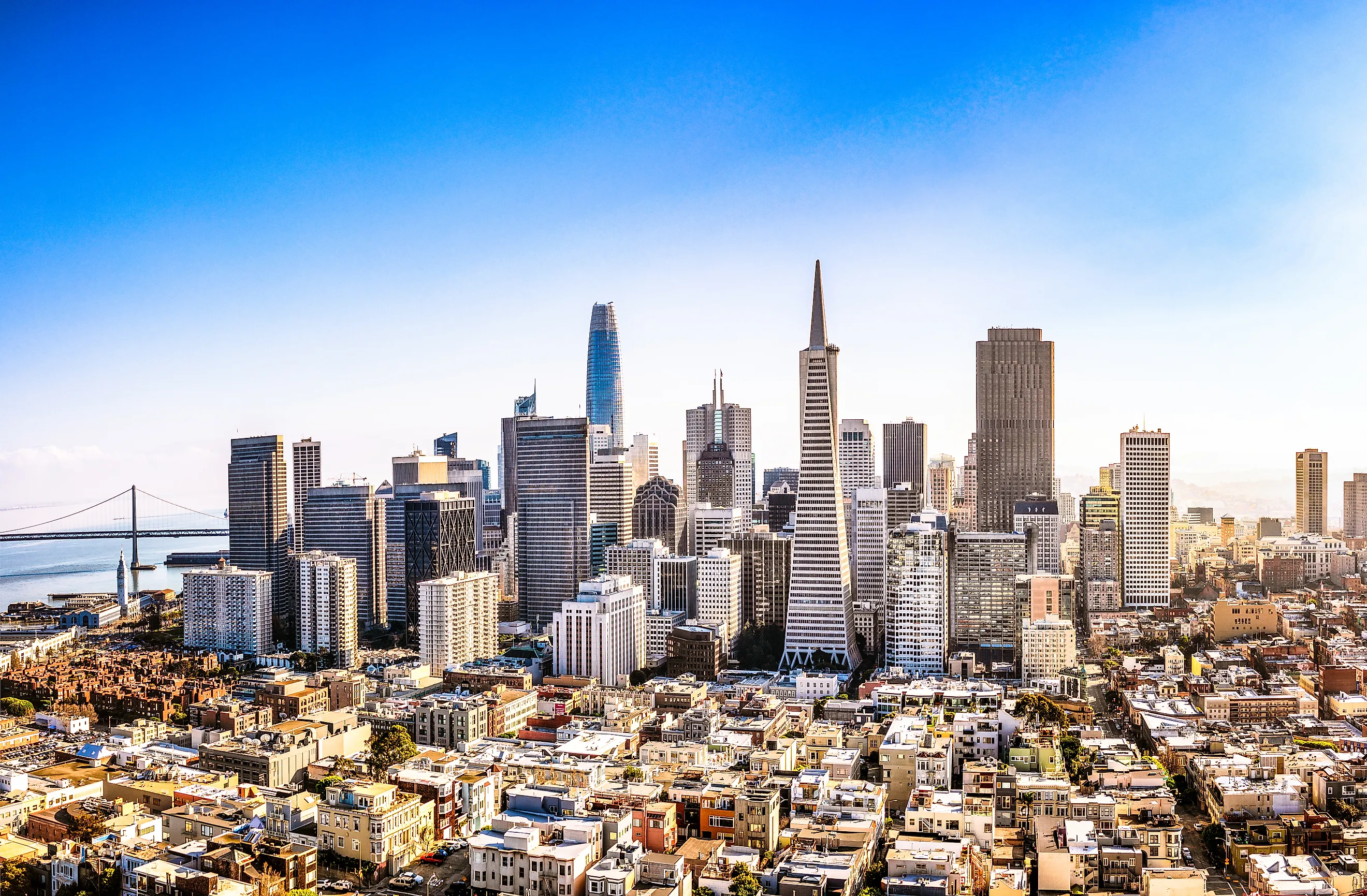
San Francisco, California

San Francisco owns the most famous earthquake in American history, the 1906 rupture of the San Andreas that burned much of the city to the ground. The threat that worries seismologists now, though, lies across the bay. The Hayward Fault runs straight through the East Bay's dense urban core, and it may be the single most-studied fault on the planet because of it.
The Hayward last broke in 1868, a magnitude 6.8 quake once called the "Great San Francisco earthquake" before 1906 claimed the title. Studies of past ruptures show they arrive on average about every 140 years, and the last one was more than a century and a half ago. The U.S. Geological Survey puts the odds of a major Bay Area quake in the next few decades at roughly three in four, which is why the region has poured money into retrofitting bridges, freeways, and older buildings.
Seattle, Washington

Seattle sits inside the Pacific Ring of Fire, and the Seattle Fault, a zone of shallow thrust faults, cuts east to west beneath the southern part of downtown. Geologists only recognized it as a serious hazard in 1992, when a cluster of studies revealed that the fault produced a major earthquake roughly 1,100 years ago. The evidence included a raised shoreline, drowned forests, and a tsunami deposit in Puget Sound.
The city has not seen a large quake on that fault in modern times, but the modeling is sobering. A 2002 study estimated that a magnitude 7 event on the Seattle Fault would damage more than 80 bridges across the Seattle-Tacoma area, and a slightly stronger shock could cause several to fail outright. Losses to regional business were projected in the billions. Those numbers helped drive the city's ongoing effort to retrofit unreinforced masonry, the same building type that failed in Long Beach.
Tokyo, Japan
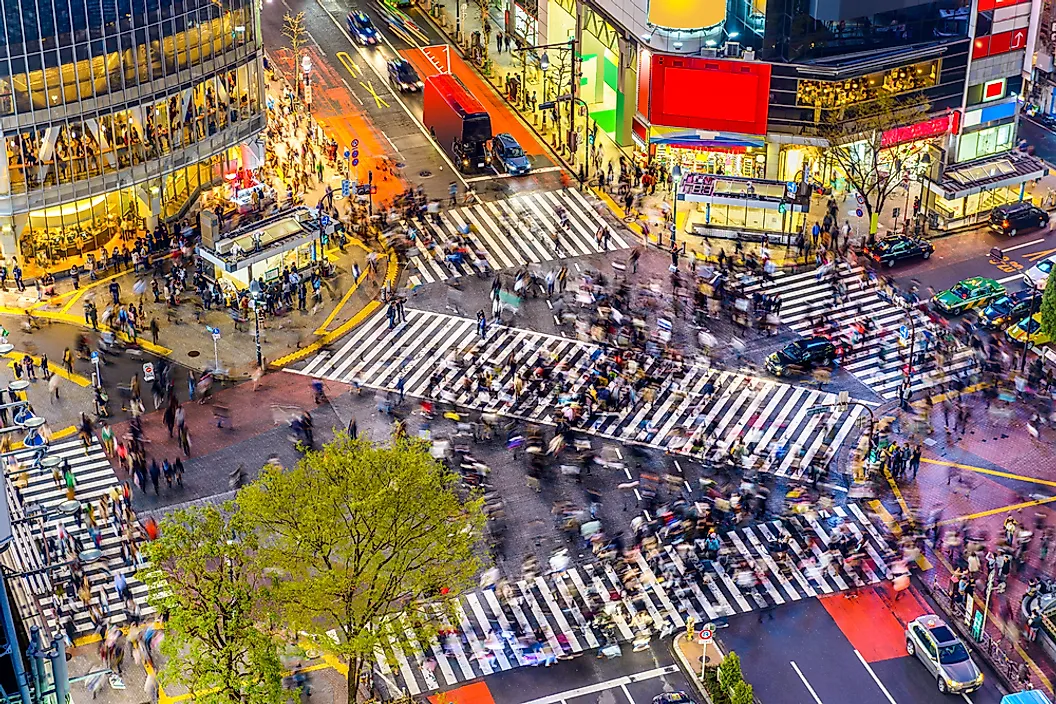
No major city has more experience preparing for the earth to move than Tokyo. The metropolis sits atop the meeting point of several tectonic plates, laced with shallow crustal faults just a few miles down and threatened by subduction zones offshore. The famous Itoigawa-Shizuoka and Median Tectonic Lines run through central Honshu well to the west, but the Kanto region's own hidden faults are hazard enough.
The turning point was the Great Kanto Earthquake of 1923, which flattened much of Tokyo and Yokohama and killed more than 140,000 people, most of them in the firestorms that followed. Out of that catastrophe grew a century of seismic engineering. Today Tokyo's towers ride on base isolators and tuned mass dampers designed to sway rather than snap, making its skyline one of the most quake-resilient anywhere. The Pacific Ring of Fire guarantees the next big one is coming; the engineering is a bet that the city will still be standing after.
Wellington, New Zealand
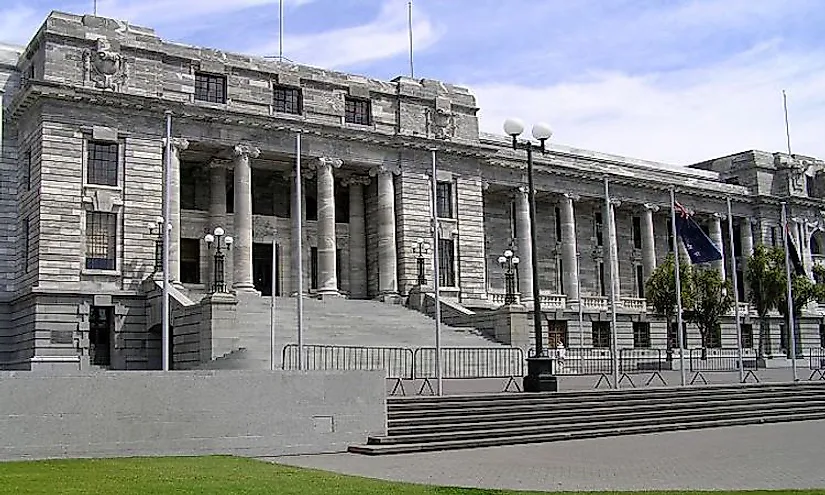
New Zealand's capital straddles the Wellington Fault, which runs through the heart of the city and its surrounding towns. Several hundred smaller faults have been mapped beneath the urban area, a reminder that Wellington was built on some of the most active ground in the country. The city knows it, and its building code is among the strictest in the world.
The fault also does something quietly remarkable. Beneath Wellington, geologists have tracked slow-slip events, episodes in which the plates creep past each other over weeks or months rather than in a violent snap. These "silent earthquakes" release energy comparable to a magnitude 7 quake but cause no damage at all, because the motion is spread across so much time. Studying them is helping scientists understand how strain builds toward the ruptures that do turn violent.
Kathmandu, Nepal
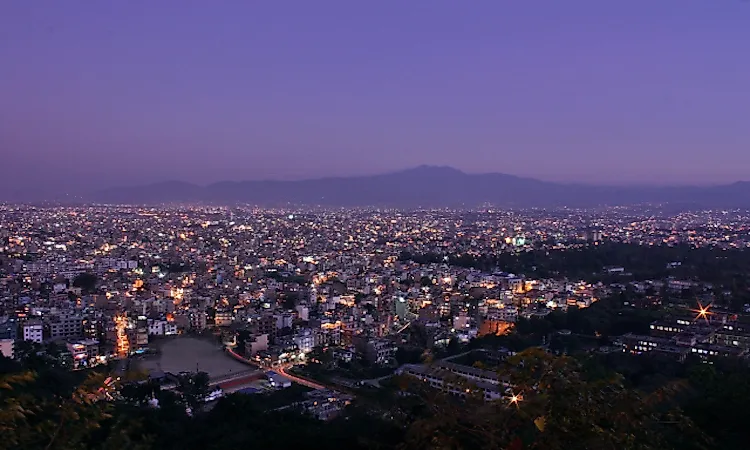
Kathmandu sits in one of the most tectonically violent settings on the planet, the Himalayan Arc, where the Indian plate is driving under the Eurasian plate and lifting the mountains higher every year. That collision powers the Main Himalayan Thrust, which runs beneath Nepal and directly under the Kathmandu Valley. The plates converge at roughly 45 millimeters a year, and the valley's soft former-lakebed soil amplifies whatever shaking reaches it.
The consequences arrived in 2015, when the magnitude 7.8 Gorkha earthquake killed nearly 9,000 people, injured more than 22,000, and displaced some 3.5 million. Seismologists warn that the quake released only part of the strain stored along that stretch of the thrust, and that a future rupture could match or exceed it. Rebuilding to a higher standard has been slow and uneven, which is exactly the gap between hazard and readiness that decides how the next one plays out.
Tehran, Iran
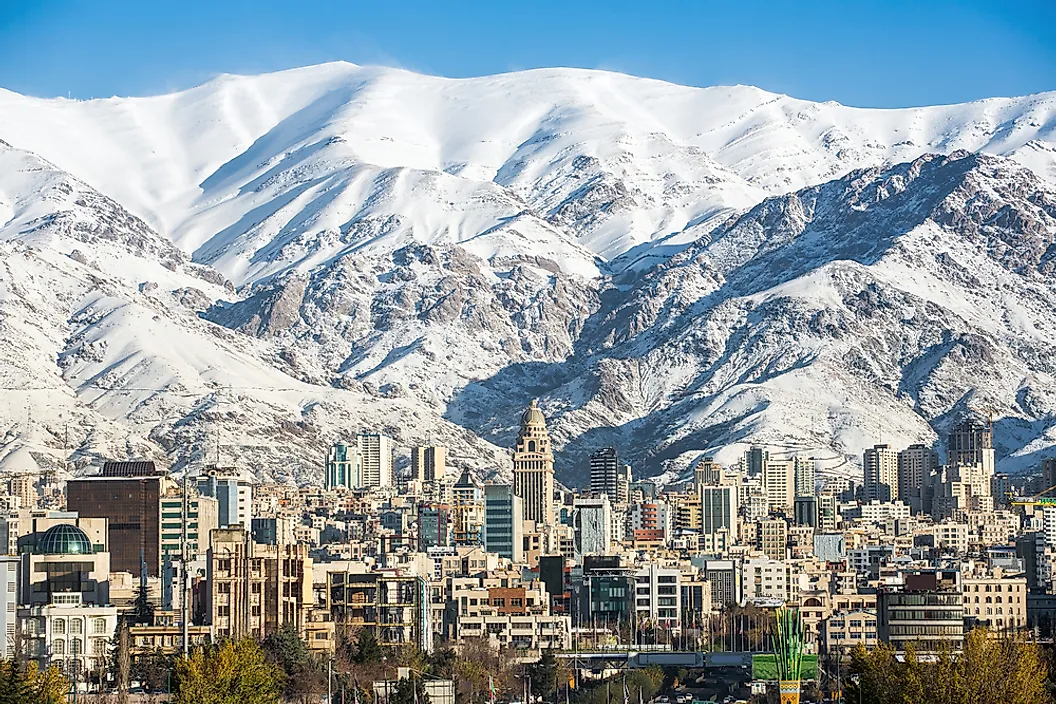
Close to 14 million people live in Tehran, and the North Tehran Fault runs directly beneath the capital's northern districts. The reverse fault stretches about 124 miles, and researchers judge it capable of generating a quake of magnitude 7 or higher. The northern neighborhoods that sit closest to it are also among the city's most built-up.
The greater danger is not the fault itself but what stands on top of it. A 2023 study concluded that a large quake would collapse a significant number of the city's buildings, many of them raised quickly and without full permits during decades of rapid population growth. That combination, a capable fault under a dense city with vulnerable construction, is the recipe seismologists find most alarming. Iran's history of deadly earthquakes gives the warning weight.
Istanbul, Turkey

The North Anatolian Fault is often compared to the San Andreas, and for good reason. It is an active strike-slip fault of similar length and slip rate, marking the boundary between the Eurasian plate and the Anatolian sub-plate, and it passes just south of Istanbul beneath the Sea of Marmara. A city of more than 15 million sits on its doorstep.
What unsettles scientists is the fault's pattern. Since the 1939 Erzincan earthquake, a series of major ruptures has marched steadily westward along the fault, each one loading the next segment. That progression points toward the Marmara segment beside Istanbul, the one stretch that has stayed ominously quiet. Turkey has strengthened its building codes and launched large retrofit programs, but the older, denser districts remain the great unknown.
Mexico City, Mexico

Mexico City shows that a city does not have to sit on a fault to face a fault's fury. The seismic engine lies more than 200 miles away off the Pacific coast, where the Cocos plate grinds beneath the North American plate along the Middle America Trench. The problem is what the city was built on: the drained bed of ancient Lake Texcoco, whose soft clay amplifies distant shaking by as much as five to fifty times, like jelly wobbling on a plate.
That amplification made the 1985 quake catastrophic, killing thousands even though its epicenter was hundreds of miles away. When another strong quake struck on September 19, 2017, the anniversary of the 1985 disaster, the lakebed again turned moderate shaking into collapsed buildings. In response the city built one of the world's most advanced early-warning systems, which can give residents seconds to tens of seconds of notice before the waves arrive.
Christchurch, New Zealand

Christchurch is the cautionary tale about faults no one knew were there. Before 2010 the city was considered relatively low-risk, sitting well away from New Zealand's main plate boundary. Then the magnitude 7.1 Darfield earthquake ruptured the Greendale Fault, a structure so hidden it had never been mapped, about 25 miles to the west.
The deadly blow came five months later. On February 22, 2011, a magnitude 6.2 quake broke a previously unknown blind fault beneath the Port Hills, just southeast of downtown. Shallow, close, and aimed almost directly at the city center, it killed 185 people and destroyed much of the central business district. The disaster forced seismologists worldwide to take hidden faults far more seriously, and it reshaped how New Zealand assesses risk in places once thought safe.
Beirut, Lebanon
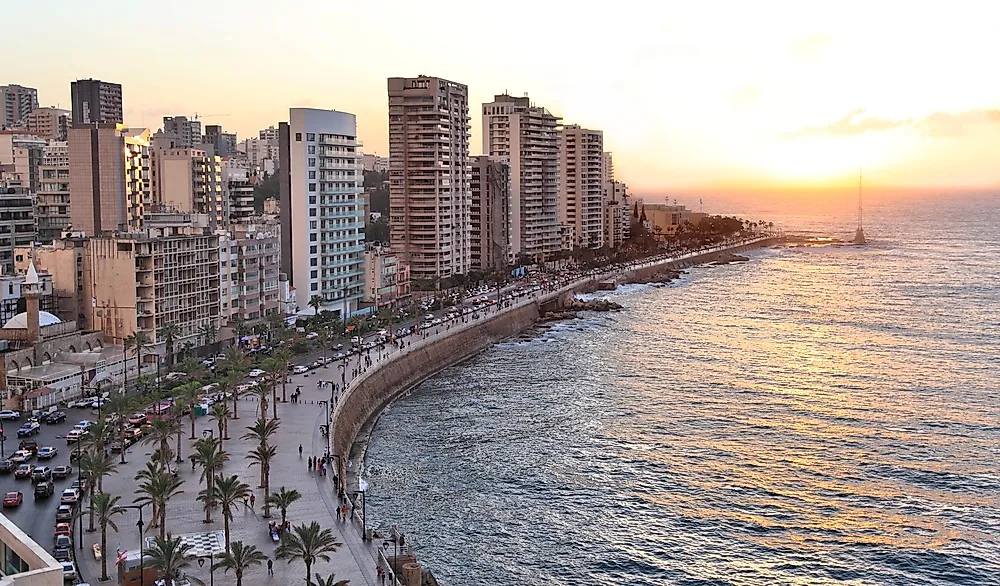
Beirut sits in a seismic zone shaped by three main fault systems, part of the larger boundary where the Arabian and African plates meet. The closest of them, the Roum Fault in southern Lebanon, is considered the biggest single contributor to the region's earthquake hazard. The city's long recorded history makes the danger easy to trace and easy to underestimate.
The last truly catastrophic earthquake here struck in 551 AD, generating a tsunami that battered the coast. Nearly fifteen centuries of relative quiet have let strain accumulate, and many geologists now describe the region as overdue for a major event. That long silence is the hardest kind of hazard to plan for, because the memory of the last disaster has faded entirely from living experience.
Living With the Fault Beneath
Read these eleven cities side by side and a pattern emerges that has nothing to do with luck. Tokyo took its 1923 catastrophe and turned it into a century of engineering; San Francisco and Seattle are spending heavily to retrofit before their faults break again. Kathmandu, Tehran, and Beirut face comparable or greater hazards with far less protection standing between the fault and the people above it. The fault line sets the stakes, but the building codes, the early-warning networks, and the political will to enforce them decide the outcome. The earth will keep moving on its own schedule. What each of these cities does before it moves is the part still up for grabs.