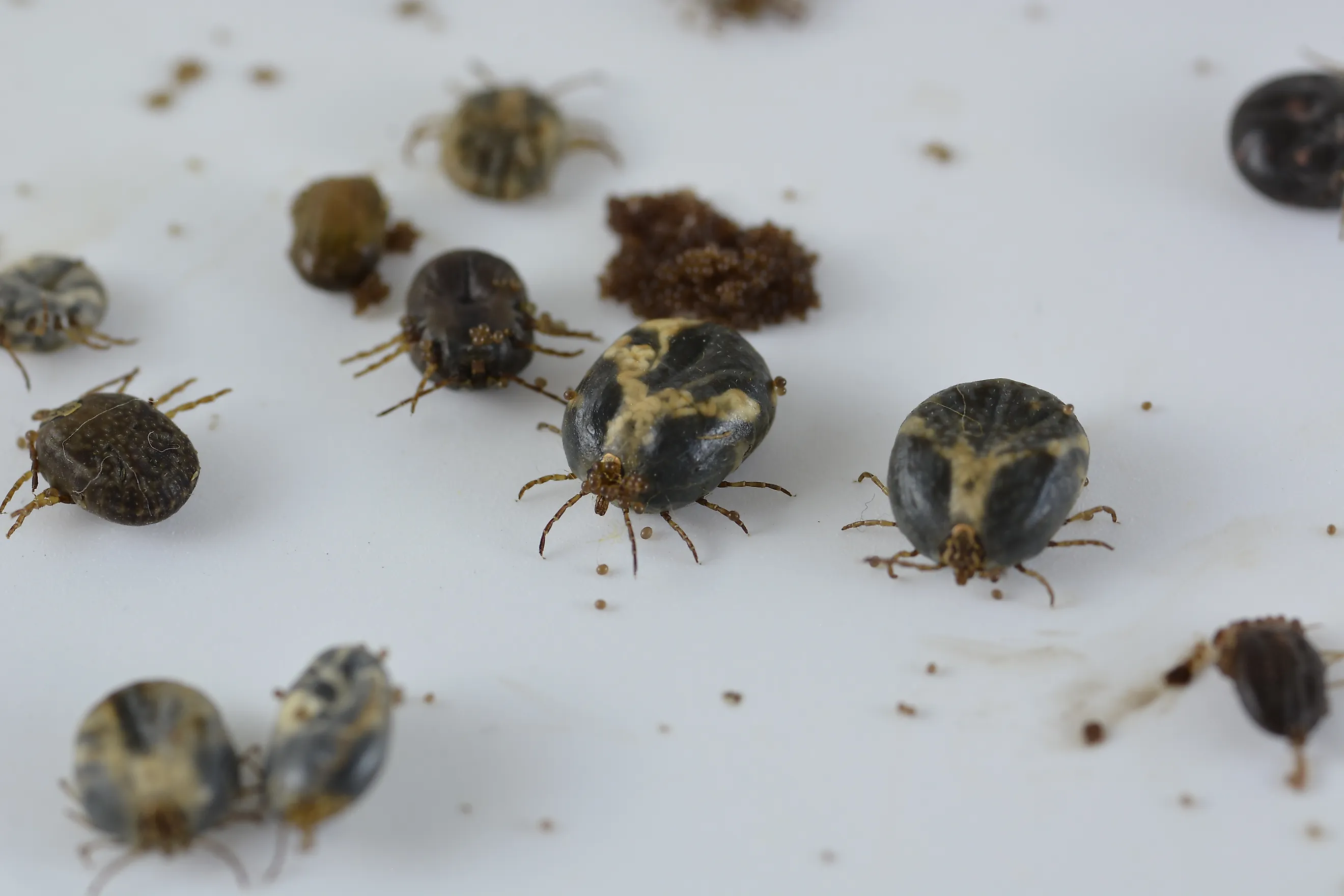
6 Tick Infested Areas In New Zealand
New Zealand has only one tick known to infest livestock, the New Zealand cattle tick (Haemaphysalis longicornis). It is especially well established in warmer parts of the North Island, although scattered populations also occur in the South Island. The tick spends part of its life cycle in vegetation such as long grass, where it waits for cattle, dogs, and other passing hosts.
The disease picture is different from that of countries where Lyme disease is established. Lyme borreliosis is not present in New Zealand, while the country's most significant established tick-associated disease is Theileria orientalis Ikeda, which can cause severe anemia in cattle. Babesia gibsoni has also received attention after two linked cases were confirmed in Christchurch dogs. These areas have been selected because of documented cattle-tick populations, surveillance records, or evidence of tick-associated animal disease.
Northland

Northland is one of New Zealand's longest-established cattle-tick areas. Haemaphysalis longicornis was recorded near Kaitaia by 1910, and it remains particularly common on cattle in northern New Zealand. Warm conditions and extensive pasture allow ticks to complete their life cycle, with immature stages able to wait in long grass for passing hosts.
Northland also sits at the center of the country's history with Theileria orientalis Ikeda. The strain was first identified in New Zealand in September 2012 after anaemia and deaths occurred in a Northland dairy herd. MPI testing in 2013 found T. orientalis in 97% of the 35 Northland herds sampled, while the Ikeda type was detected in 94%. Those figures measure herd exposure rather than the number of ticks in the landscape. They nevertheless show how firmly the cattle tick and its most important livestock disease became established in the region.
Auckland And Franklin

Rural areas south and north of central Auckland also fall within the established range of Haemaphysalis longicornis. Franklin, including the pastoral country around Pukekohe, has the combination of livestock and grassland that allows cattle ticks to find hosts and survive between feedings.
Recent MPI surveillance confirms that the species remains present in the wider Auckland region. Several investigations reported in 2024 involved ticks removed from dogs that were initially suspected to be exotic species. Laboratory identification instead confirmed the endemic New Zealand cattle tick. Ikeda has also circulated through the wider Auckland-Waikato area. MPI surveillance found the Ikeda type in 33% of sampled herds in that combined region in 2013. By 2014, the figure had risen to 54%. For residents, the practical risk remains much greater for livestock than for people.
Waikato

Waikato's large dairy industry puts livestock and cattle ticks in close contact across an extensive pastoral landscape. MPI investigations have confirmed Haemaphysalis longicornis in the region, including a tick found on a veterinarian's clothing after a day of consultations. The region was also involved in the early spread of Theileria orientalis Ikeda after the Northland outbreak. Cases moved into Waikato during 2013. In the combined Auckland-Waikato surveillance area, 55% of sampled herds had evidence of some type of T. orientalis that year. The proportion increased to 70% in 2014. Long grass and humid vegetation are particularly relevant to the tick's life cycle. Larvae can remain away from their hosts for part of their development before attaching to livestock or other animals that pass through the vegetation.
Bay Of Plenty

The Bay of Plenty lies within the main North Island range of the New Zealand cattle tick. Its relatively mild climate and substantial areas of pasture suit a species that performs best under moist, warm-temperate conditions.
MPI surveillance has confirmed Haemaphysalis longicornis in the region, including a tick collected from a dog during a 2024 investigation. Theileria records provide further evidence of the area's long association with tick-borne livestock disease. MPI found T. orientalis in 34% of sampled Bay of Plenty cattle herds in 2013 and 50% in 2014. The Ikeda type appeared in 10% and 31% of the sampled herds, respectively. Those percentages should not be read as tick-density measurements. They instead show how widely cattle had been exposed to a parasite transmitted by an established regional tick population.
Gisborne And Hawke's Bay

The eastern North Island has a long history with Haemaphysalis longicornis. Research conducted in the 1970s found the tick on a large proportion of farms in the East Coast and northern Hawke's Bay area, with its distribution influenced by rainfall, temperature, and elevation. More recent MPI surveillance has continued to confirm cattle ticks in Hawke's Bay.
Theileria orientalis has also been documented across the region. MPI grouped Gisborne and Hawke's Bay together in its 2013 and 2014 surveillance. Evidence of T. orientalis rose from 35% of sampled herds in 2013 to 53% the following year. The Ikeda type increased from 12% to 34%. Grazing livestock provide abundant hosts, while low-elevation pasture and other vegetation give ticks places to survive between blood meals.
Nelson-Tasman And Golden Bay

Cattle ticks are much less widespread in the South Island, but Nelson-Tasman is a well-documented exception. Records around Golden Bay stretch back decades, with Haemaphysalis longicornis reported around Collingwood and Takaka as early as the 20th century.
Recent surveillance shows that the population persists. MPI's 2024 reporting included cattle ticks collected from a Nelson-Tasman dog. A separate investigation involved a flock of sheep with heavy tick parasitism, which was again confirmed as Haemaphysalis longicornis. The region's significance lies in having established or recurring populations well south of the tick's main North Island range. MPI considers the top of the South Island part of the species' known New Zealand distribution, although populations become more scattered farther south as climatic conditions become less favorable.
What To Do If You Find A Tick In New Zealand
New Zealand cattle ticks are established, so finding one in an area where they already occur does not necessarily indicate a new biosecurity threat. An unusual-looking tick or suspected exotic species should still be reported to MPI through the Exotic Pest and Disease Hotline at 0800 80 99 66.
Dog owners in affected areas can reduce exposure by keeping pets current with veterinarian-recommended tick treatments. Livestock owners should watch for heavy tick burdens and signs of anemia in cattle, particularly in established North Island tick regions. People spending time in long grass or around livestock can also check their clothing and animals afterward. New Zealand's tick problem remains primarily veterinary and agricultural, with risk varying substantially according to region, habitat, and host.