The Most Charming River Towns In Maine
Shipwrights have been building vessels on the banks of the Kennebec at Bath for more than four hundred years. That is the kind of history a working river leaves behind in Maine. Kennebunkport grew up around a bridge over the Kennebunk in Dock Square. Wiscasset made its fortune shipping goods down the tidal Sheepscot. Damariscotta still pulls most of Maine's farmed oysters from its river. Each of these seven towns owes its shape to the water running through it.
Kennebunkport

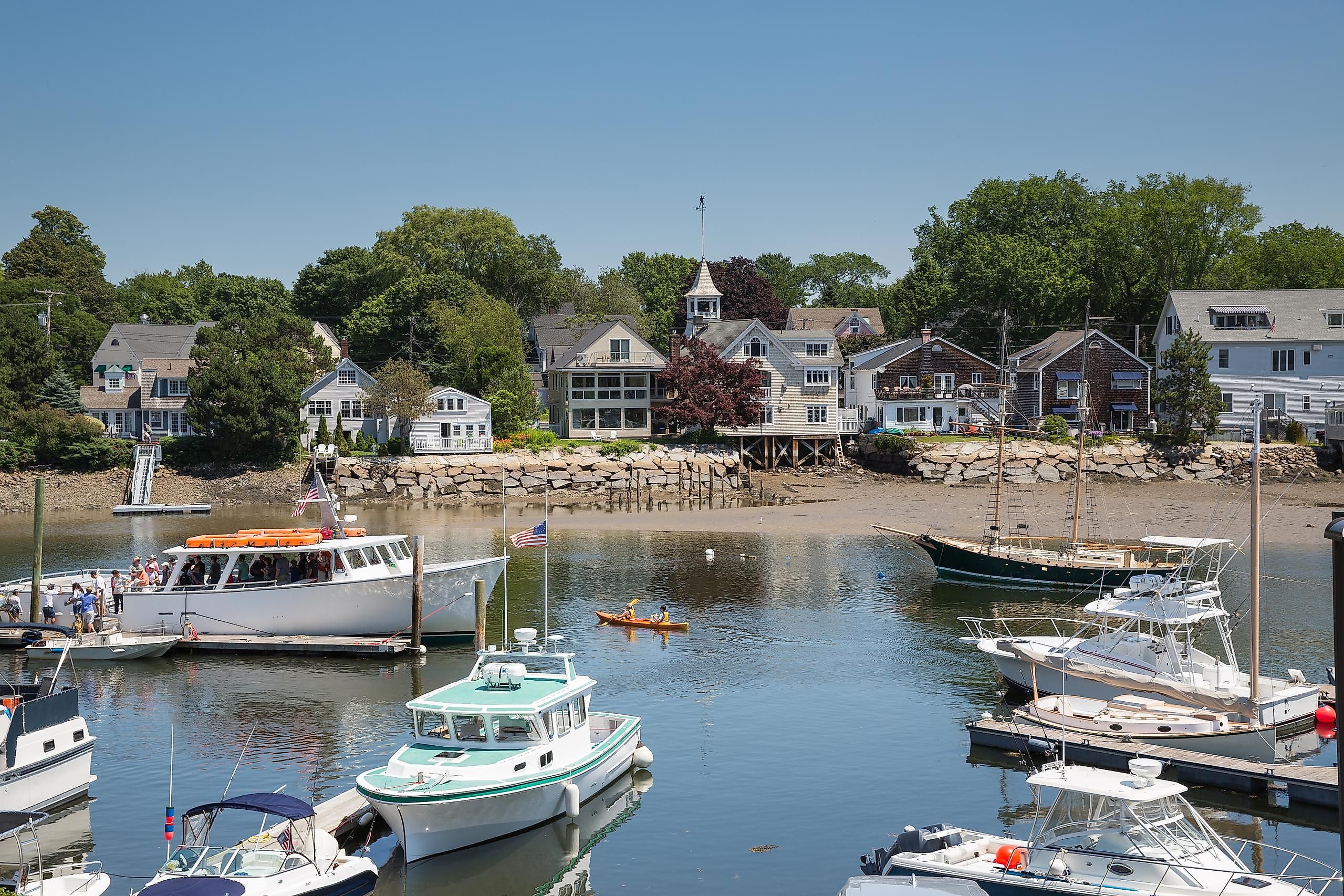
TheKennebunk River runs straight through the middle of Kennebunkport, splitting it from neighboring Kennebunk at the bridge in Dock Square in the center of town. Its well-preserved 19th-century buildings now house art galleries and seafood restaurants, some perched right over the water where shipbuilding and river trade once reigned.
Visitors can get a taste of the old days aboard the Schooner Eleanor, a wooden gaff-rigged sailboat that runs trips from the river right out to the open Atlantic. The town's connection to its river and the sea can also be experienced aboard the Rugosa, a lobster boat that offers tours while hauling traps along the way.
A short walk from the square, Ocean Avenue follows the river toward the sea and then along the rocky shoreline. It passes Walker's Point Estate, the seaside summer estate of the Bush family, and joins the Parsons Way Shore Walk. This paved two-mile path follows the Cape Arundel coast past Spouting Rock and Blowing Cave, where incoming surf forces water up through gaps in the ledge.
Bath

Shipbuilders have worked on the banks of the Kennebec River in Bath for more than 400 years, a fact that led to it being dubbed the "City of Ships." The best place to learn more about this rich history is the Maine Maritime Museum. Spread across 20 riverfront acres, its centerpiece is the Percy & Small Shipyard, the country's last surviving yard where large wooden sailing vessels were built.
Make a beeline for the sculpture of the Wyoming, a six-masted schooner launched here in 1909. Commemorating the largest wooden sailing ship ever built in North America, this evocative sculpture shows the vessel's huge scale. The museum also runs summer cruises past the cranes of Bath Iron Works, a shipyard founded in 1884 that still builds Navy destroyers on the Kennebec.
Waterfront Park stretches along the Kennebec with benches and a bandstand, and is where the Bath Farmers Market takes place each Saturday. Next to it, the Freight Shed is home to Maine's First Ship. A working reconstruction of the Virginia, this small sailing ship is modeled on the first oceangoing vessel built by English colonists in the New World, launched at the nearby Popham Colony in 1607.
Wiscasset

Set on a hillside above the tidal Sheepscot River, Wiscasset quite rightly puts the words "prettiest village in Maine" on its welcome signs. Once the busiest seaport north of Boston, the fortunes made in shipping and shipbuilding account for the mansions that still line its streets. The Castle Tucker mansion, built in 1807, overlooks the river and boasts an interior largely unchanged since the early 1900s. A few blocks away, Nickels-Sortwell House was completed the same year at the top of Main Street.
The town has earned a well-deserved reputation for its seafood scene. Arrive in summer, and you'll find foodies lining up atRed's Eats, a small red takeout shack at the foot of the Route 1 bridge, known for its famous (and generous) lobster rolls. Grab your grub and wander the working side of town with its lobster boats and old wharf pilings. Across the bridge, Fort Edgecomb is an octagonal wooden blockhouse built in 1809 to guard the Sheepscot.
Damariscotta

Growers on the tidalDamariscotta River produce 80% of Maine's farmed oysters, making Damariscotta a must-visit for seafood fans. Humans have prized these waters for shellfish for thousands of years, and theWhaleback Shell Middenbears witness to this fact. Now a State Historic Site, a short riverside trail leads to the remains of a heap of oyster shells discarded by Native people more than 2,000 years ago. Though now much smaller than it once was (farmers carted much of it off for chicken feed in the late 1800s), it still impresses.
Companies like Damariscotta River Cruises take tourists for a close-up look at the river's floating oyster farms, with most offering tastings as part of the experience. As for when to visit, shoot for the Pemaquid Oyster Festival. Held the last Sunday in September, this popular event celebrates the oyster harvest with raw bars and a shucking contest.
Hallowell

Water Street in Hallowell runs a block up from the Kennebec River and is lined with brick buildings constructed during the town's river port days. Ice, granite, and lumber were all shipped downriver from here, and the whole downtown is now protected as the Hallowell Historic District. In addition to its reputation among antique enthusiasts (check out the Hallowell Antique Mall), the street is known for its artsy vibe, with places like The Blanchard Gallery a popular stop for tourists and artsy locals.
The Kennebec River Rail Trail passes through town and is where to go for the best views of the river. This paved 6.5-mile path follows the river from Augusta through Hallowell to Gardiner, passing the spot where locals watch sturgeon leap from the water on summer evenings. Just south of downtown, Vaughan Woods (known to locals as "Hobbit Land") is a pleasant, wooded ravine with footpaths and old stone bridges.
Skowhegan

The Kennebec River narrows into a rocky gorge as it passes through downtown Skowhegan and is undoubtedly one of the prettiest urban river scenes in the state. Named after the Abenaki for "watching place" (it was here that Native people once speared salmon), Skowhegan is best explored along the Run of River walking path. It follows the gorge past exposed bedrock, rapids, and old dam sites, and a fun swinging bridge crosses the south channel from Skowhegan Island to the south bank.
On the corner of High Street and Madison Avenue stands the Skowhegan Indian, a 62-foot wooden sculpture carved in 1969 and one of the tallest of its kind. A short walk away, Coburn Park spreads along the riverbank and puts on free summer concerts from its gazebo.
Fryeburg

Located in the western Maine foothills, it's the Saco River that can lay claim to shaping the community of Fryeburg. The river here is shallow, sandy, and slow, making it one of the state's most popular places for a paddle. Outfitters like Saco River Canoe & Kayak rent canoes, kayaks, and tubes for trips that can last a couple of hours or several days, with put-ins at spots like Swan's Falls upstream. Weston's Beach, a long sandy bank off River Street, gives swimmers and picnickers easy access to the same water.
Head a little west of the town center, and you'll find the scenic Hemlock Covered Bridge. Built in 1857 over an old channel of the Saco, it's a great riverside selfie spot. As for when to visit, shoot for October and the Fryeburg Fair. Held since 1851, it's the largest agricultural fair in Maine and attracts more than 300,000 people over eight days of harness racing, ox pulls, and fairground attractions.
Following Maine's Rivers
What sets these seven towns apart is how directly the water still runs their days. Bath and Wiscasset turned deep-water access into shipyards and merchant fortunes, and the mansions and museums remain. Hallowell and Skowhegan grew where the Kennebec could power mills and move freight inland. Damariscotta and Fryeburg trade on their rivers now for oysters and paddling rather than cargo. The current that built each place is still the reason to visit it.