The Best Small Towns in Texas for a Weekend Retreat
In Fredericksburg, the Main Street is wide enough to U-turn a horse-and-buggy and lined with a hundred wine tasting rooms. In Marfa, unexplained lights blink on the desert horizon while minimalist art fills old army sheds. In Port Aransas, you can drive your car straight onto 18 miles of Gulf sand. That is the range packed into a single Texas weekend, and the trick is picking a town small enough to slow you down but stocked with enough to fill two or three days. These nine small towns each make an easy Friday-to-Sunday base, and no two feel remotely alike. Pick a direction and go.
Fredericksburg

Start in the Hill Country's beating heart. Fredericksburg was founded by German settlers in 1846, and it has leaned all the way into that heritage: a mile-long Main Street of limestone storefronts, biergartens, and a town square, the Marktplatz, anchored by a replica of the old octagonal Vereins Kirche. The streets here are famously wide, built so a horse-and-buggy could pull a U-turn, and today they are lined with more than 100 wineries and tasting rooms in and around town.
History buffs get an unexpected heavyweight: the National Museum of the Pacific War, a sprawling Smithsonian-affiliate here because Fredericksburg was the hometown of Fleet Admiral Chester Nimitz. Walk the 700-plus historic structures on a self-guided tour, then drive 15 minutes out to Enchanted Rock, a giant pink-granite dome you can hike for a sunset over the whole region. It is the rare town that satisfies wine people and history people in the same afternoon.
Wimberley

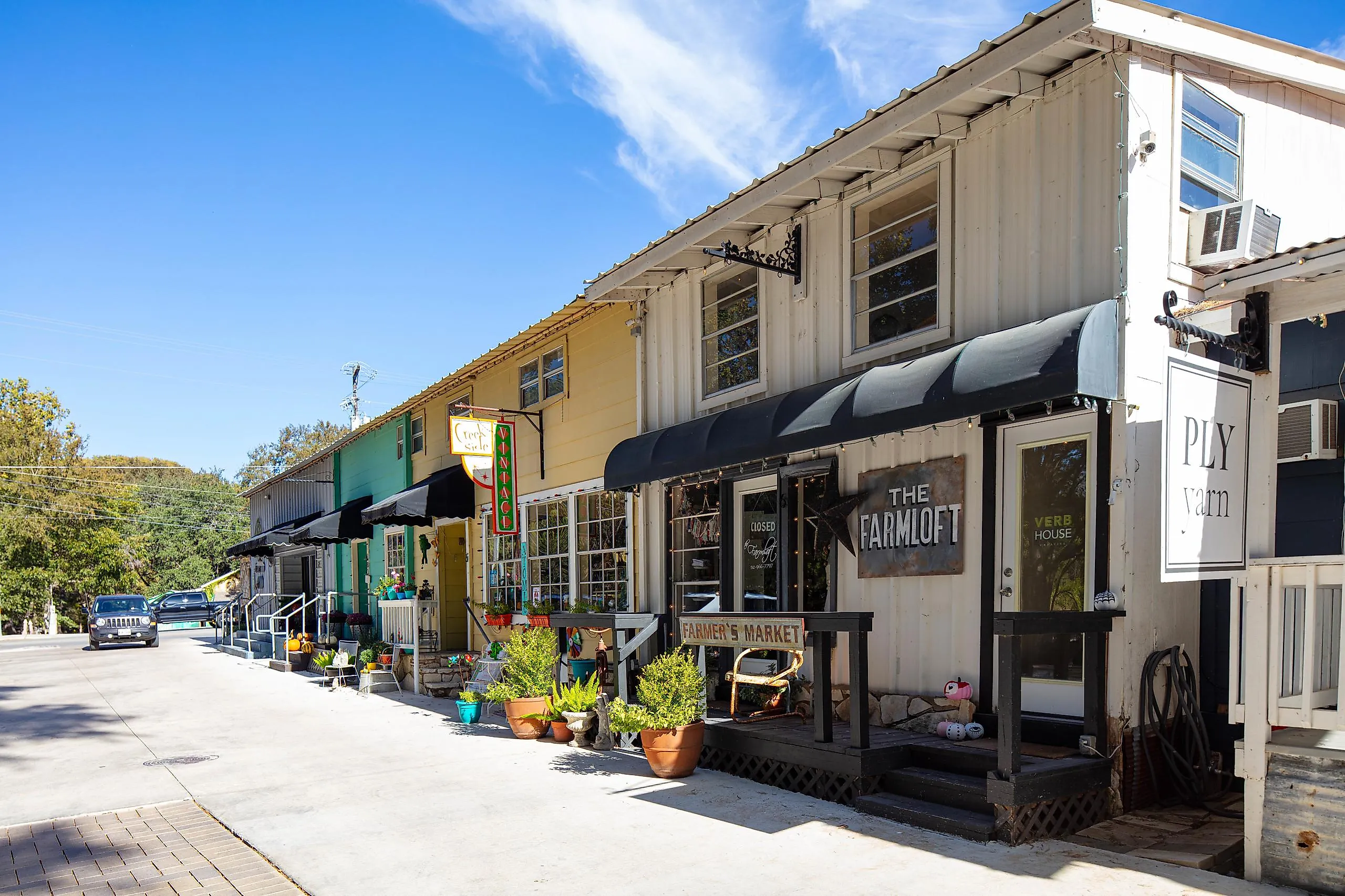
Twenty minutes off the beaten path, Wimberley is the Hill Country at its most swimmable. The star is Blue Hole, a spring-fed swimming hole where a rope swing hangs over jade-green water shaded by ancient cypress trees, the kind of spot that ruins ordinary pools for you forever. Just north, Jacob's Well is an artesian spring dropping into one of the longest underwater cave systems in Texas, mesmerizing to look at and strictly reservation-only to swim.
Back in the village, Wimberley Square is a cluster of galleries, boutiques, and cafes made for aimless wandering, and on the first Saturday of the month, Market Days turns the town into one of the largest outdoor markets in the region. Book a night at a creekside cabin and you have got the whole formula: swim, browse, repeat.
Dripping Springs

Officially the "Gateway to the Hill Country," Dripping Springs takes its name from the water that trickles off its limestone ledges, and the headliner is Hamilton Pool Preserve, a collapsed grotto where a 50-foot waterfall spills into a jade swimming hole beneath a stone overhang. It is so popular you will need a reservation, and it is worth every bit of the planning.
The town has quietly become a drinks destination, too. It bills itself the "Wedding Capital of Texas," but it might as well claim the tasting-room capital: Deep Eddy Vodka distills here, Twisted X brews here, and hillside wineries like Bell Springs pour local vintages with a plate of good food and a Hill Country sunset. Add the Texas Hill Country Olive Company, a 15-acre grove with a Tuscan-style villa, and you have got a weekend that never strays far from a glass in hand.
New Braunfels

New Braunfels is where you go to get on the water. Two spring-fed rivers, the Comal (the shortest river in Texas) and the Guadalupe, run right through town, and tubing them on a hot afternoon is practically the state religion. Landa Park spreads across 51 acres along the Comal with a spring-fed swimming pool, a miniature train, and shady picnic lawns, while Schlitterbahn set the standard for the American water park right here.
The soul of the town, though, is Gruene, a historic district on the National Register that used to be its own village. At its center stands Gruene Hall, built in 1878 and the oldest continually operating dance hall in Texas, a tin-roofed room where George Strait and Lyle Lovett cut their teeth and where live music still spills onto the porch on weekend nights. Tube by day, two-step by night.
Jefferson

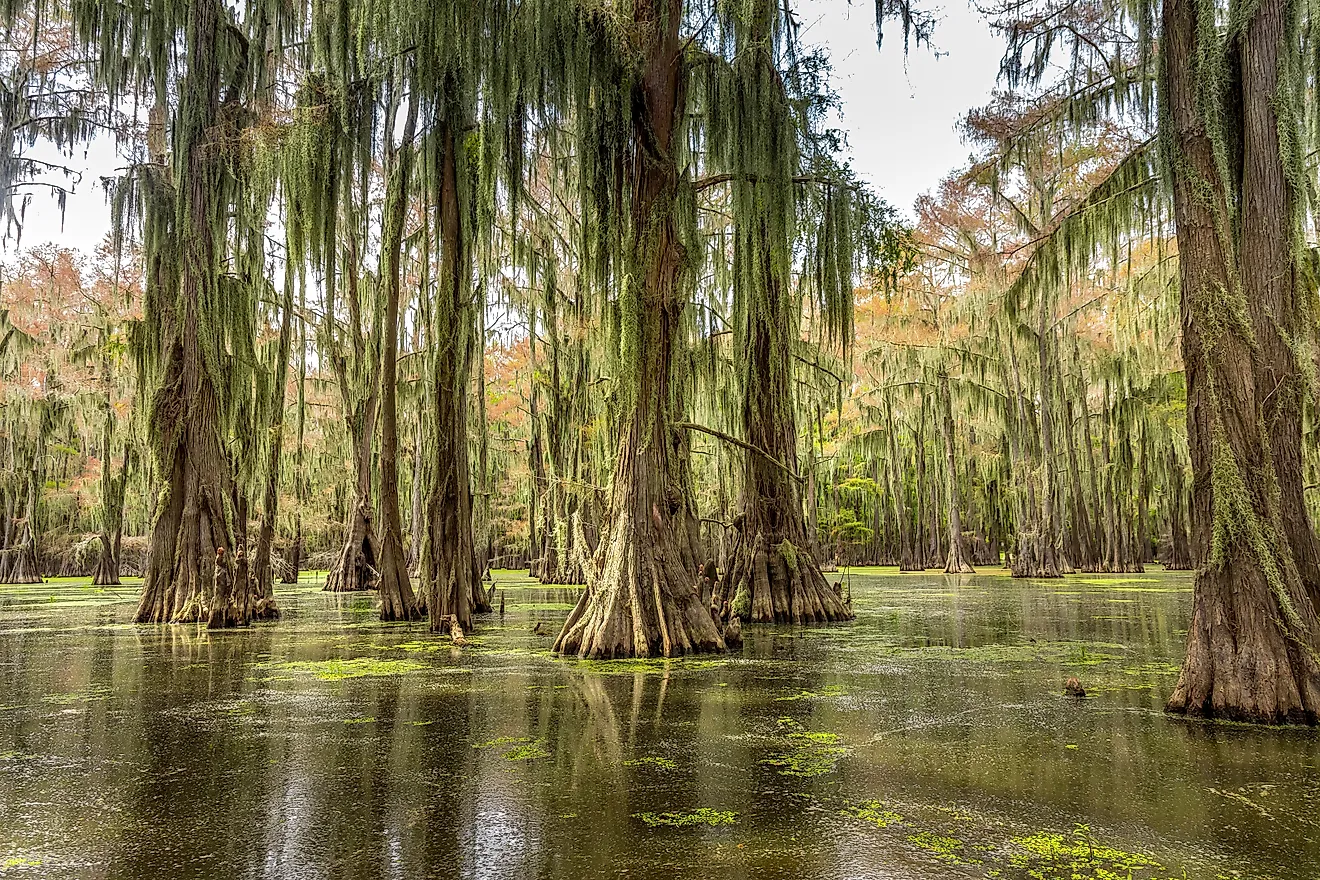
Swing east into the Piney Woods and the vibe changes completely. Jefferson, a town of about 2,000 on Big Cypress Bayou, was once one of the busiest inland steamboat ports in Texas, and when the river trade dried up and the railroad bypassed it, the town simply stopped in time. The payoff for you is a downtown of brick storefronts, antebellum homes, gas lanterns, and antique shops that has earned it the nickname "the Bed and Breakfast Capital of Texas," with more than 40 of them.
This is a town built for a slow weekend. Take a bayou boat tour through the cypress, ride the restored steam train of the Jefferson Railway, or bed down at the 1858 Excelsior House, one of the oldest continuously operating hotels in the state. Jefferson also claims to be one of the most haunted towns in Texas, so if a lantern-lit ghost walk is your idea of a good evening, you are in luck.
Granbury

Southwest of Fort Worth, Granbury wraps its whole downtown around a limestone courthouse square, the first town square in Texas listed on the National Register of Historic Places. The 1890 Hood County Courthouse holds the center, ringed by restored brick buildings full of wine bars, boutiques, and the historic Granbury Opera House, which still stages live shows year-round.

Then there is the lake. Lake Granbury laps right up to downtown, with a sandy City Beach, boat launches, and lakeside restaurants that turn a history stroll into a full weekend. The town has a mischievous streak, too, claiming both the grave of outlaw Jesse James and a doll museum among its attractions. Historic square plus a beach a block away is a hard combination to beat.
Marfa

Now for the strangest, and maybe the most magnetic, town on the list. Out in the high desert of West Texas, tiny Marfa became an unlikely art-world pilgrimage after minimalist Donald Judd moved here in the 1970s and filled old army sheds with massive installations, now the Chinati Foundation. Add the Ballroom Marfa art space and a downtown of galleries, and you have a place where cutting-edge art sits next to a 1880s courthouse in the middle of nowhere.
The town's other claim is the Marfa Lights, mysterious glowing orbs that appear on the southeastern horizon on clear nights, unexplained for over a century and viewable from an official roadside platform. Between the art, the lights, the design-hotel scene, and the sheer remoteness, Marfa is less a weekend trip than a personality test. You will either never want to leave or never fully understand it.
Marshall

Back in East Texas, Marshall calls itself the "Birthplace of Boogie-Woogie," and it backs up the music with serious architecture. The 1900 Harrison County Courthouse anchors the square in a showy mash-up of Renaissance Revival, Beaux-Arts, and Classical styles, and it lights up for the Wonderland of Lights, one of the largest holiday light festivals in the country, every winter.
The town does historic lodging well. Ginocchio, a restaurant with an elegant brick-and-dark-wood interior, occupies part of the 1896 Ginocchio Hotel, and the 1929 Art Deco Hotel Marshall was once the grandest stop in East Texas. Between the courthouse, the museums, and the boogie-woogie legacy, Marshall rewards travelers who like their weekends soaked in history and a little bit of rhythm.
Port Aransas

End at the coast. "Port A," on Mustang Island, is the Texas beach weekend distilled: miles of open Gulf sand you can actually drive onto, a working harbor full of shrimp boats, and a laid-back, golf-cart-friendly pace that peels the stress right off. The beach runs for some 18 miles, so even on a busy weekend you can find your own patch of sand.
There is more here than sunbathing. The Leonabelle Turnbull Birding Center sends a boardwalk out over the wetlands, where roseate spoonbills and alligators put on a show, and Roberts Point Park has an observation tower for watching dolphins escort the boats through the channel. Duck into the little Chapel on the Dunes, catch a redfish, and let the last night of the weekend fade out over the water.
Pick Your Texas Weekend
That is the beauty of a Texas weekend: the state is big enough that you never have to repeat yourself. Sip wine among the limestone storefronts of Fredericksburg, tube the rivers of New Braunfels, chase ghosts through the bayou port of Jefferson, puzzle over the desert lights of Marfa, or just drive onto the sand at Port Aransas. Nine towns, five wildly different corners of one state, and every one of them close enough to reach by Friday night. Your only real problem is picking just one.