11 Coziest Towns to Visit in Texas in 2026
Cozy towns abound in Texas, thanks in part to its network of more than 250 counties, which created a wide network of small courthouse-square communities, and the German settlers who gave many Central Texas communities their dance halls, beer gardens, and festivals. In Fredericksburg, that charm shows up in East Main Street tasting rooms, nearby wineries like Grape Creek, and easy day trips to Enchanted Rock State Natural Area. Castroville offers a different kind of small-town appeal, with its Alsatian heritage on display at the Steinbach House and the Landmark Inn State Historic Site along the Medina River. For a cute, small town retreat, the 11 Texas towns below offer the best of what the state has to offer.
Fredericksburg

Fredericksburg is a charming town located in the heart of Texas Hill Country, best known for its German heritage and scenic countryside. This community of about 11,000 residents offers a warm, inviting atmosphere for both locals and visitors, with its wide variety of wineries and interesting attractions. Wine enthusiasts will enjoy exploring numerous wineries and tasting rooms, making Fredericksburg a popular spot for relaxation and wine tours year-round. Most tasting rooms are conveniently located along East Main Street, with Grape Creek being among the most popular. For outdoor fun, Enchanted Rock State Natural Area, just a short drive away, offers trails and impressive granite formations perfect for hiking during the day and stargazing at night under the region’s beautifully clear skies.
Castroville

Castroville, a town of roughly 3,200 residents located west of San Antonio, is known as the “Little Alsace of Texas” because of its longstanding Alsatian heritage. Founded in 1844 by immigrants from the Alsace region of France, Castroville preserves much of this history through its themed architecture, including the Steinbach House, an authentic 17th-century Alsatian home moved from France and reassembled in Castroville’s city park. The town’s historic district features over 50 structures from the 1800s, with several houses and churches showcasing unique Alsatian designs. The St. Louis Catholic Church, built in 1870, is a notable example of the town’s heritage and remains an active place of worship. The Landmark Inn State Historic Site is another notable site, with its well-preserved 19th-century inn, mill, and gardens along the Medina River. Outdoor activities in town include walking paths along the river and various public spots for fishing and boating.
Wimberley

Located where the Blanco River meets Cypress Creek, Wimberley is a favorite destination for visitors seeking natural swimming spots like Blue Hole Regional Park, where clear spring-fed waters and shady cypress trees create a tranquil environment. Wimberley is also well-known among artists and art lovers, with numerous art studios, local galleries, and craft shops around the town square. The Wimberley Valley Art League hosts several exhibits throughout the year, attracting artists from across Texas. Additionally, Wimberley hosts its own Market Days, one of the largest open-air markets in the area. On the first Saturday of each month from March through December, local artisans, antique shops, and food vendors gather here.
Port Aransas

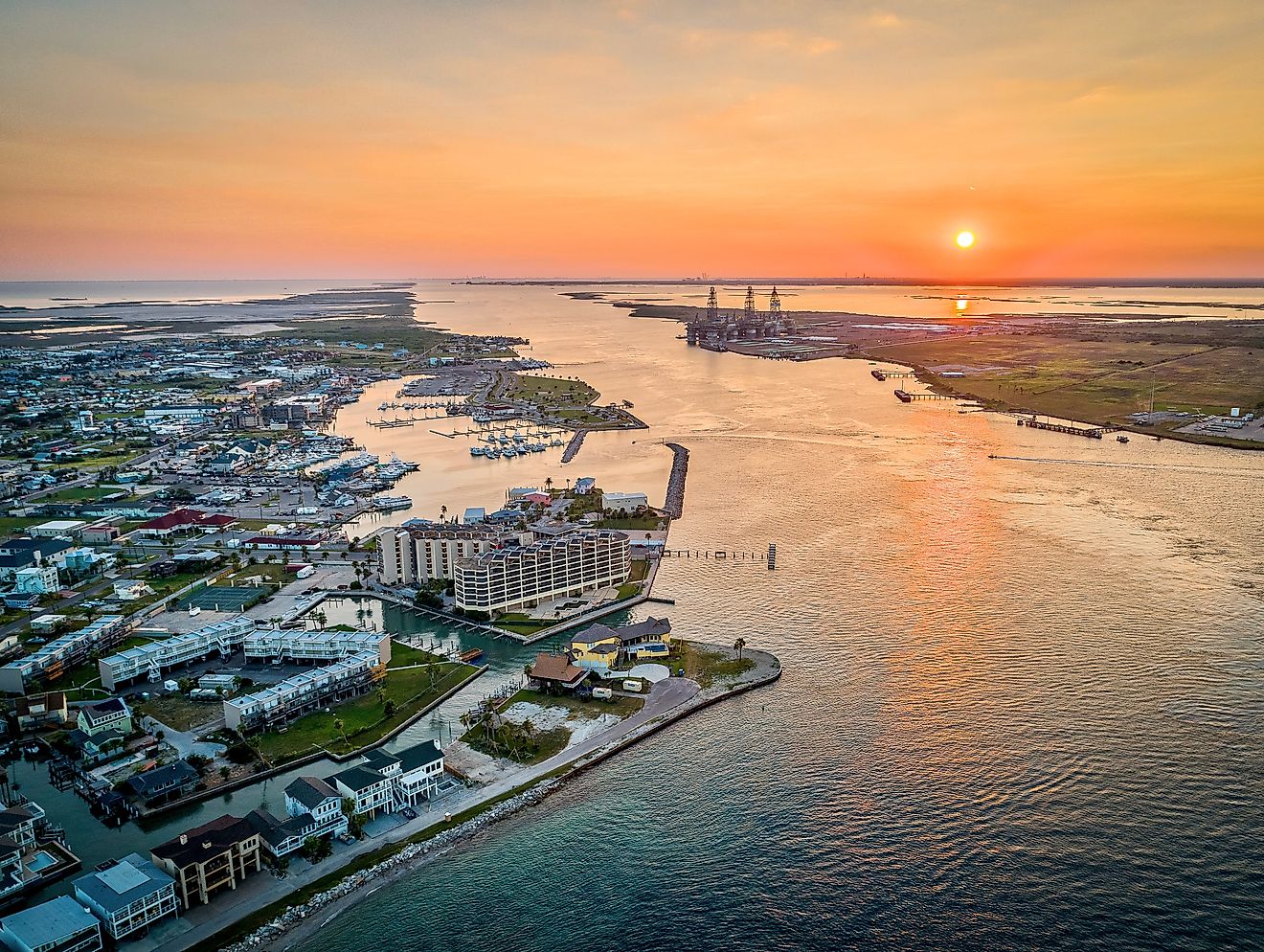
Port Aransas is a picturesque coastal town on Mustang Island just outside Corpus Christi, a popular spot for Gulf Coast visitors looking to enjoy a weekend at the beach. Port Aransas Beach extends for miles and is well-known for swimming, surfing, and fishing, with several piers and designated fishing areas along the shoreline. Roberts Point Park is another scenic spot on the water. Located on the harbor, this park features observation towers for dolphin watching and access to various boat tours available to book around the bay. For a more educational experience, the University of Texas Marine Science Institute in Port Aransas offers a public Wetlands Education Center that highlights local marine life and habitats, with educational trails and exhibits providing a hands-on lesson about coastal ecosystems. The Leonabelle Turnbull Birding Center is also very popular among birdwatchers, featuring observation platforms and boardwalks through nearby wetlands that attract migratory and native bird species year-round. Port Aransas is perhaps best known for hosting the annual Texas SandFest, a sand sculpting competition that attracts world-class artists to craft massive and intricate works on the local beaches.
Nacogdoches

Nacogdoches is recognized as the oldest town in Texas, making it a must-visit for history enthusiasts. Founded in 1779, it features several key historic sites, such as the Sterne-Hoya House Museum, an 1830s home showcasing artifacts from Texas’s early days as a state. Additionally, the Old Nacogdoches University Building, built in 1845, offers insights into early education in Texas and is open for tours throughout the year. Nearby, Millard’s Crossing Historic Village displays numerous structures from the early 1800s, including homes, a chapel, and a general store, giving visitors a tangible sense of life during Texas’s pioneering era. The town is also home to the SFA Mast Arboretum at Stephen F. Austin State University, where well-maintained trails meander through gardens featuring native plants, trees, and other unique horticultural displays.
Salado

Salado, a village located between Austin and Waco, is rich in historic and cultural landmarks that are definitely worth visiting. The town also revolves around Salado Creek, offering a public trail suitable for walking and fishing. Main Street hosts several notable sites, including the Salado Museum and College Park, which preserves the location of Salado College (1859-1885). The museum features exhibits about early Central Texas settlement and the college's impact on local education. Salado is also home to the Stagecoach Inn, built in the 1860s along the Chisholm Trail, originally serving travelers moving cattle to northern markets. Today, the inn still operates, providing lodging and a popular restaurant serving Texas-inspired dishes. Visitors can also enjoy the Salado Glassworks, where they can see live glassblowing demonstrations and participate in seasonal events to create or commission their own art pieces.
Gruene

Gruene, a historic district within the city of New Braunfels, sits along the Guadalupe River and boasts a strong aesthetic and cultural appeal with its abundant 19th-century architecture and notable live music venues. For one, Gruene Hall, established in 1878, is Texas’s oldest continually operating dance hall and a key attraction where you can enjoy live performances from local and visiting musicians. The hall retains its original structure, including wooden floors and large open-air windows, providing visitors with an authentic Texas dance hall experience. Near Gruene Hall, the General Store is the place to find classic Southern goods, such as antiques and handmade candies. Gruene’s Historic District also features several other shops with handcrafted items, along with the Gristmill River Restaurant & Bar, housed in a converted 1870s cotton gin overlooking the beautiful Guadalupe River. For those wanting to get closer to the river, nearby outfitters offer equipment rentals for tubing and kayaking during the warmer months, making Gruene a highly popular summer destination in Texas.
Jefferson

Jefferson was once a bustling riverport in the 1800s, but today the town of 2,000 residents is recognized as one of Texas’s best-preserved historic landmarks. The Jefferson Historical Museum is a great place to start your visit. Located in a former courthouse from 1888, it features exhibits about the area’s steamboat era, Civil War history, and historic artifacts. The nearby Jefferson Railway offers scenic rides on a restored steam train along the Big Cypress Bayou, with seasonal trips and special events available. Book your ride for a unique tour of the town! Also notable is the Excelsior House Hotel, built in 1858, which is one of Texas’s oldest continuously operating hotels. The hotel retains much of its period furnishings, and notable past guests include Ulysses S. Grant and Oscar Wilde. Besides its historic sites, Jefferson is surrounded by many bayous and lakes, making it a popular spot for fishing and boating.
Llano

Llano is a famous small town in the Texas Hill Country and attracts visitors year-round with its granite landmarks, historic sites, and outdoor activities. Llano sits along the banks of the Llano River, with nearby Badu Park providing easy public access for swimming, fishing, and riverside picnics. The Llano Earth Art Fest, held every year, celebrates stone-stacking and "natural art" along the riverbanks. Another artistic attraction is the Llano Fine Arts Guild & Gallery, which displays local artwork and supports the town’s small but lively arts community. A significant historic site is the Llano County Courthouse, built in 1893 and known for its distinctive Romanesque Revival architecture. The Red Top Jail is another worthwhile historic stop, built in 1895 and operated until 1982. It is now open for tours, offering a glimpse into late 19th-century penal life in Texas. Just outside Llano, you can explore the scenic Llano Uplift region, famous for its striking granite outcrops, including the Enchanted Rock State Natural Area.
Alpine

West Texas is more than just the gateway to Big Bend National Park. At the heart of the town, Sul Ross State University hosts the Museum of the Big Bend, which displays exhibits on local geology, Native American history, and ranching traditions. This museum is essential for understanding the cultural and natural heritage of the Big Bend area and is a must-see for visitors. Alpine’s downtown features historic landmarks like the Holland Hotel, built in 1928, which still welcomes guests and highlights its stunning Spanish Revival architecture. The area is also decorated with local galleries and murals, including the Rangra Theater, in operation since 1927. As noted, Alpine is a favored starting point for exploring Big Bend National Park, offering activities such as hiking, camping, stargazing, and scenic drives through the desert.
Marfa

Marfa is perched on a stark yet beautiful desert landscape in the far western part of Texas. It has become a hotspot for artists and nature lovers, with local institutions like the Chinati Foundation, established by artist Donald Judd, serving as a central attraction. The foundation frequently hosts large-scale installations and exhibits that reflect the town's evolving history and art scene. In addition to the Chinati Foundation, Marfa boasts several other galleries, including Marfa Contemporary and Ballroom Marfa, which showcase rotating exhibits and installations focusing on both emerging and established artists. Be sure to explore the surrounding desert, whether by hiking or taking a short road trip along nearby highways. As for parks, Big Bend Ranch State Park is well known for its network of trails and access to the Rio Grande. Marfa is also famous for the mysterious “Marfa Lights,” an unexplained phenomenon visible from a viewing station just outside town. Try to see them at night, and if you miss the chance, you'll still enjoy a stunning starry sky with minimal light pollution.
See These Comforting Towns in Texas in 2026
Texas is already well known for its laid-back and down-to-earth charm. These small towns exude this southern charm in a way that big cities simply can't. From the wide open plains of West Texas to the pine-covered hills to the east, it is clear that comforting communities can be found all across this massive and diverse state.
How many of these amazing small towns will you be able to visit before 2024 comes to an end?