Alabama's 12 Best Retirement Towns Ranked
Alabama makes retirement dollars stretch. The state does not tax Social Security income, and nearly one in five residents is 65 or older. The 12 towns ahead cover Fort Payne's sandstone bluffs above the Little River, Gulf Shores' white-quartz beaches, the Eastern Shore of Mobile Bay, and the wooded ridges south of Birmingham, and they are ranked by average home value, with the most affordable options first. Fort Payne keeps home values under $200,000 with a regional hospital close by. Fairhope trades a higher price point for bayfront sunsets and a walkable downtown. The list shows just how wide the retirement map can be here.
Fort Payne

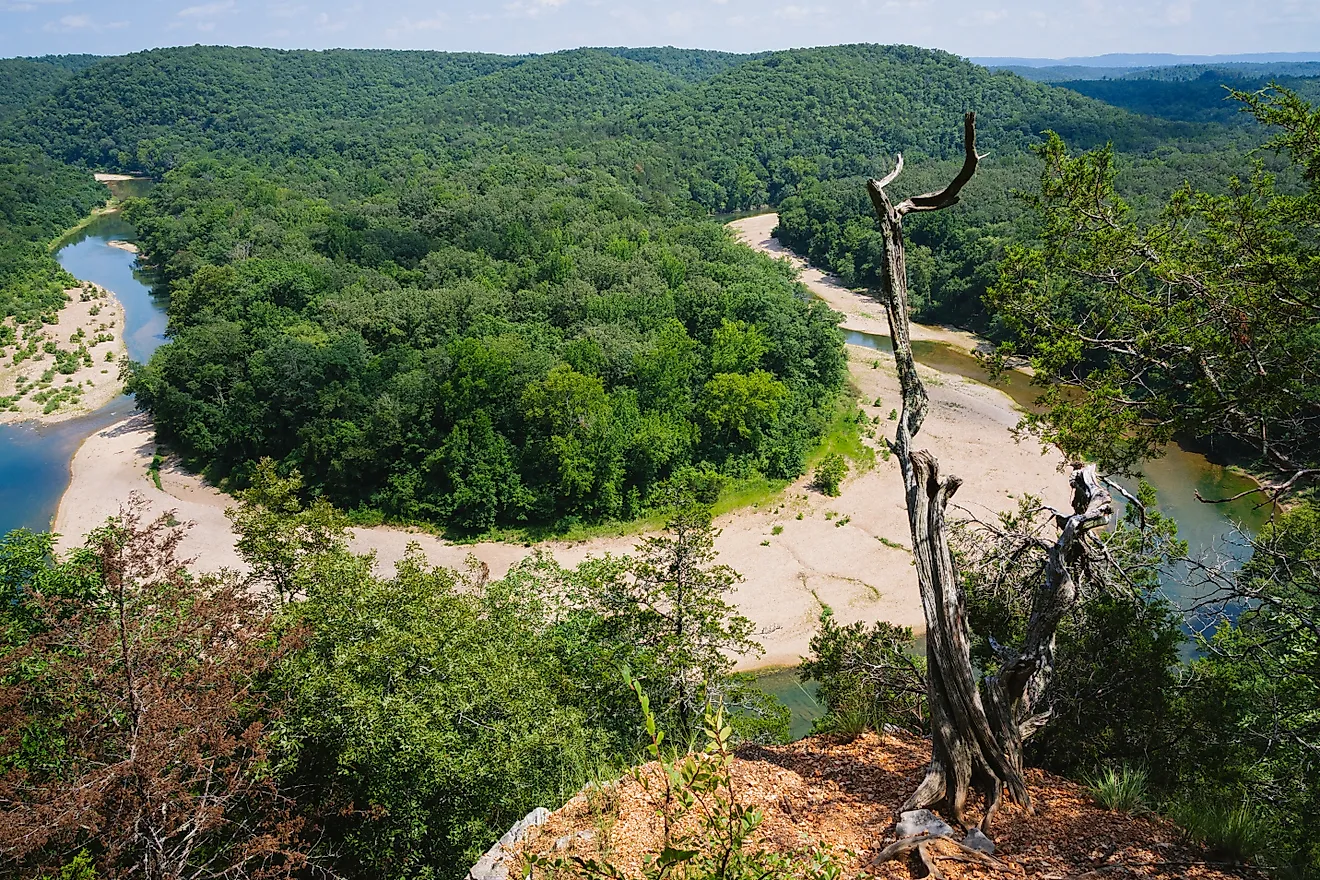
The southern Appalachians fold into northeastern Alabama at Fort Payne, a DeKalb County city of roughly 14,000 set between Lookout Mountain and Sand Mountain. Sandstone bluffs frame the West Fork of the Little River as it cuts through the plateau, and the Zillow average home value sits at around $200,000 (as of March 31, 2026). That figure is roughly $36,000 below Alabama's statewide average of $236,000, giving retirees real room to maneuver on a fixed income.
In-town healthcare is provided by DeKalb Regional Medical Center, a 134-bed acute-care hospital with 24-hour emergency services. The town's history is on display at the Fort Payne Depot Museum, an 1891 Richardsonian Romanesque train station now listed on the National Register of Historic Places, where rooms full of regional artifacts trace the area through Cherokee removal and the city's mining and textile mill eras. DeSoto State Park spans more than 3,500 wooded acres along the river, with CCC-built cabins, waterfalls dropping over sandstone ledges, and well-marked hiking trails. South of town, Little River Canyon National Preserve opens into one of the deepest canyon systems east of the Mississippi, where 600-foot cliffs and overlooks deliver the kind of long view that may make you want to move here.
Cullman

Cullman is between Birmingham and Huntsville, a north-central Alabama town of about 21,000. The Zillow average home value is around $260,000, right around the state average. The 65-and-older population share is approximately 19%, providing retirees with a peer community already in place.
Cullman Regional Medical Center, a 175-bed nonprofit hospital owned by the Health Care Authority of Cullman County, serves more than 175,000 residents across a five-county service area, with over 50 physicians, robotic surgery, and a full cardiac program. The Neighborhood at Cullman, a Phoenix Senior Living community on Lake Catoma, offers assisted living and memory care in a lakefront setting.
German Catholic heritage threads through Cullman's most-visited sites. Ave Maria Grotto, a four-acre garden in a former quarry on the grounds of St. Bernard Abbey, holds 125 miniature reproductions of famous religious structures hand-built over five decades by a Benedictine monk and is listed on the National Register of Historic Places. Clarkson Covered Bridge, a 1904 town-lattice span over Crooked Creek, leads to a county park with hiking trails and a period gristmill added during a 1975 Bicentennial restoration. Downtown, the historic Cullman County Courthouse and the long-running Festhalle Farmers Market under shaded sidewalks are built for slow afternoons.
Opelika

Opelika sits in the rolling Piedmont of east-central Alabama, the seat of Lee County and the older twin to neighboring Auburn. The town of roughly 37,000 retains the brick-and-rail bones of its 1850s railroad heritage while steadily drawing on the cultural and medical infrastructure supported by Auburn University next door. The Zillow average home value is around $300,000, and the 65-and-older share of the population runs near 19%.
Healthcare in Opelika is a genuine regional asset. East Alabama Medical Center, a 316-bed acute-care hospital, serves an 11-county service area as a Newsweek Best-In-State Hospital, a Level III Trauma Center, and a designated Robotic Surgery Center of Excellence. Senior living options include Arbor Springs Health and Rehabilitation Center, a 225-bed facility offering long-term and skilled nursing care.
The Railroad Avenue Historic District preserves 105 brick commercial buildings on the National Register of Historic Places, with the rail corridor still active and restored storefronts now housing restaurants, galleries, and a Saturday market. The Lee County Courthouse, an 1896 neoclassical landmark, presides over a downtown square.
Alabaster

Alabaster spreads across northern Shelby County, 25 minutes south of Birmingham along the Cahaba River corridor, and is home to roughly 33,000 residents. The town grew around the lime and limestone industry that gave it its name, and that geology still shapes the wooded ridges, sinkhole ponds, and creek bottoms that frame the city today. The Zillow average home value is approximately $300,000, and proximity to UAB Medicine Hoover Primary and Specialty Care has made the town one of the steadier draws for retirees migrating south out of Birmingham proper.
In-town healthcare is available at Baptist Health Shelby Hospital, a 252-bed acute-care facility offering 24-hour emergency services, orthopedics, neurology, and a full heart-and-vascular program. The Alabaster Senior Activity Center runs daily programming in fitness, expressive arts, group travel, and volunteer placement, and serves as the social hub for the town's older residents.
For outdoor recreation, Veterans Park, a 90-acre municipal park, threads paved walking trails through hardwood stands and around two stocked fishing ponds. The Buck Creek Trail, part of the city's Siluria Mill District and listed on the Alabama Register of Landmarks and Heritage, runs through 160 acres of restored mill grounds connecting Buck Creek Park, the Senior Activity Center, and Warrior Park.
Pelham

Pelham, in the narrow valley where Oak Mountain rises from the Cahaba River basin 20 miles south of Birmingham, has a population of roughly 25,000. The town grew up around the rail line and limestone quarries of the late 1800s and now functions as one of the most outdoor-oriented suburbs in central Alabama, with the largest state park in the system within the city limits. The Zillow average home value is around $320,000, higher than the state average but still below the national average of approximately $360,000.
Healthcare options in Pelham include Encompass Health Rehabilitation Hospital of Shelby County, which operates in town as a specialized rehabilitation facility for stroke, orthopedic, and neurological recovery. UAB Hospital, named the best hospital in Alabama by Newsweek and Statista in 2025, sits less than 30 minutes north. Gardens of Pelham offers assisted living and memory care for retirees who want a smaller residential setting close to family and medical facilities.
Outdoor living means access to Oak Mountain State Park, which spans 11,861 acres of ridge-and-valley terrain across the city's eastern edge, with more than 50 miles of hiking, biking, and equestrian trails, two fishing lakes, and a demonstration farm. Inside the park, the Alabama Wildlife Center rehabilitates nearly 2,000 native birds each year and runs a flight-aviary observation deck open to the public. Across town, Ballantrae Golf Club lays an 18-hole course across rolling pasture, with the Fireside Grill drawing as many retirees for the post-round meal as for the course itself.
Athens

Athens centers the Tennessee Valley of north Alabama, the seat of Limestone County, and is a half-hour west of Huntsville along US 72. The town has roughly 32,500 residents, and the Zillow average home value is around $300,000.
Healthcare is available at Athens-Limestone Hospital, a 71-bed acute-care facility with 24-hour emergency services, supplemented by a new Limestone County surgery center. Limestone Manor, a well-rated assisted-living community, offers retirees solid in-town care options.
The town's character is evident at Athens State University, founded in 1822 and the oldest institution of higher learning in Alabama, which sits at the edge of downtown. McCandless Hall, the 1914 fine arts building, hosts a steady stream of cultural programming and public concerts. Big Spring Memorial Park, in the historic Beaty District just east of the courthouse square, opens onto a duck pond and bandstand where the city stages outdoor events through the warm months.
Daphne

Daphne sits on the bluffs above Mobile Bay along the Eastern Shore, 20 minutes east of Mobile across the bay bridge, with a population of roughly 27,000, and is a popular spot for seniors on the Gulf Coast. About 17% of residents are 65 or older, and the Zillow average home value is $323,000 for those considering purchasing a home.
For healthcare, Thomas Hospital has been certified by The Joint Commission as a Primary Stroke Center and is located 7 miles south in Fairhope. It provides 24-hour emergency, cardiology, and critical care services for the entire Eastern Shore. Daphne itself is home to The Brennity at Daphne, which offers assisted living and memory care, as well as Seagrass Village and Gardens of Daphne.
Bay-front living means access to May Day Park, dedicated in 1887 and one of the oldest municipal parks on the Gulf Coast. It includes a fishing pier extending into the bay, plus picnic pavilions, tennis courts, and a swimming beach. Village Point Park Preserve, a 50-acre bayfront preserve, protects the Jackson Oak, a 95-foot live oak estimated at more than 300 years old, where Andrew Jackson is said to have addressed troops in 1815. The Daphne History Museum, housed in the 1858 Old Methodist Church and the second-oldest church building in Baldwin County, preserves the city's history on the National Register of Historic Places, with original pews, the original chandelier, and a permanent collection that traces the area's settlement.
Fairhope

Fairhope holds the bluffs of Mobile Bay's Eastern Shore directly south of Daphne, a town of roughly 24,000 founded in 1894. Fairhope is a top retirement destination, with average home values indicating its popularity at around $460,000.
In-town healthcare is provided by Thomas Hospital, a full-service acute-care facility with 24-hour emergency services, cardiovascular care, critical care, and an integrated outpatient pharmacy. The Brennity at Fairhope Senior Living offers senior-living options, including independent and assisted-living apartments, and a robust calendar of community programming.
The Fairhope Municipal Pier, a quarter-mile timber pier extending into Mobile Bay, sits at the foot of a city-maintained rose garden and a working marina. Tolstoy Park, the small parcel that preserves the Henry Stuart House, includes the 1923 round concrete dome that a tubercular hermit built and lived in for 19 years, now listed on the National Register of Historic Places. Downtown, locals have access to Page and Palette, an independent bookstore in continuous family operation since 1968.
Gulf Shores

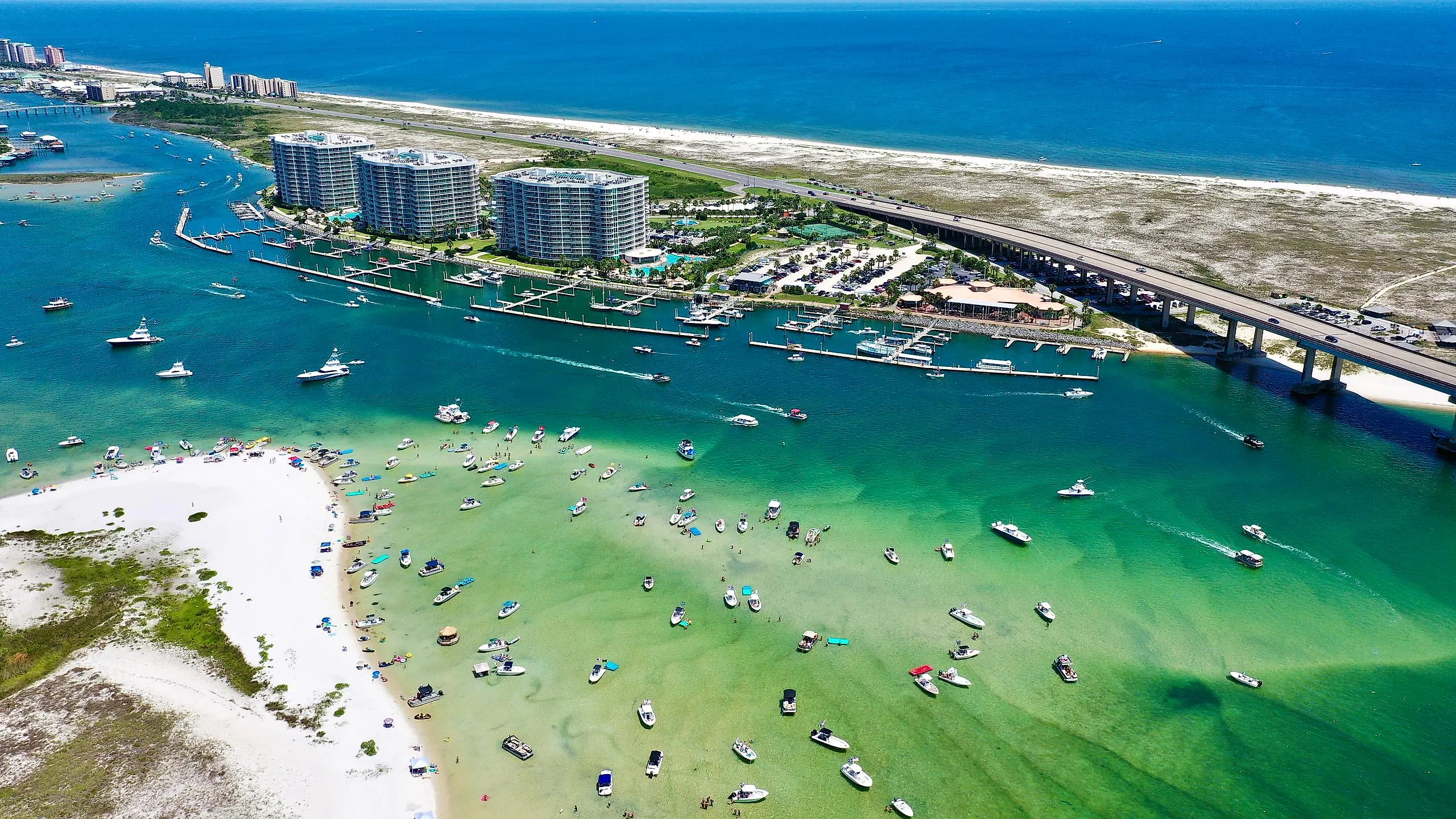
Gulf Shores stretches along 32 miles of white quartz beach on Alabama's Gulf Coast, a city of roughly 16,000 year-round residents whose population multiplies several times over in summer. The 65-and-older share runs near 26%, and the town has built its civic infrastructure around a population that splits its time between Gulf-front living and active outdoor recreation. The average home value is $450,000.
Emergency care in Gulf Shores is provided by the Baldwin Health Freestanding Emergency Department, a full 24-hour ER within the city limits, with full hospital services 12 miles north at the Baldwin Health main campus in Foley. The David L. Bodenhamer Recreation Center, a city-run facility, offers daily aquatics, pickleball, tennis, and crafts workshops.
The coastline shapes nearly everything in Gulf Shores. Gulf State Park, a 6,150-acre coastal preserve, threads 28 miles of paved trails through maritime forest, freshwater lakes, dune systems, and 3.5 miles of public beach. The Alabama Gulf Coast Zoo, locally known as the Little Zoo That Could after a 2017 expansion onto a 25-acre nature preserve, houses sloths, lemurs, big cats, and a marsh boardwalk that runs through native coastal habitat. Closer to the beach road, Pirate's Island Adventure Golf runs two themed mini-golf courses through waterfalls and pirate ships that grandchildren rate as the highlight of every visit.
Vestavia Hills

Vestavia Hills, atop Shades Mountain immediately south of Birmingham, is a city of roughly 38,000 named for the Vestavia mansion and Roman-temple replica that the city's founder built on the ridge in 1925. The mountain elevation gives the town a cooler microclimate than the valley floor below. The average home value is $560,000, and the 65-and-older share runs near 19%.
Healthcare options include Grandview Medical Center, a 434-bed acute-care hospital, located 15 minutes away. UAB Hospital, itself 20 minutes from the front door, offers advanced and specialty care.
Vestavia Hills carries its founder's classical obsession in stone. The Sibyl Temple, a 1929 gazebo modeled on the Temple of Sibyl at Tivoli, Italy, sits in a city park overlooking the valley after being relocated by the Vestavia Hills Garden Club in 1975, and is listed on the Alabama Register of Landmarks and Heritage. The Statue of Liberty Replica, a 36-foot bronze cast in France in 1958 and once mounted atop the Liberty National Life Insurance building in downtown Birmingham, was relocated to a 60-foot granite pedestal at Liberty Park in 1989 and still burns a gas-flame torch around the clock. Vestavia Country Club, with its 18-hole course, tennis program, swimming complex, and dining room, is a top spot for the town's retired residents.
Orange Beach

Orange Beach lines the easternmost stretch of Alabama's Gulf Coast, a small city of roughly 7,400 year-round residents with the highest 65-and-older share on this list at 27.8%. The town sits between the back bays of Wolf Bay and Bay La Launch and the open Gulf, with a marina-and-canal geography that has made it the boating capital of the Alabama coast and a steady draw for retirees who want water access at the front door. The Zillow average home value is around $680,000.
In-town medical care is provided by Southern Rapid Care Urgent Care for routine needs, with Baldwin Health, a full-service hospital in Foley, 16 minutes north, for emergency and inpatient services. The town's compact size and concentration of retirees has produced an unusually dense network of private senior-living and care-coordination providers operating out of the surrounding residential developments.
The water dictates the day in Orange Beach. Cotton Bayou, the eastern Gulf-front section of Gulf State Park, runs a beach pavilion and bath house onto some of the cleanest sand on the Alabama coast, with the bayou itself opening into one of the most protected small-craft launches in the region. The Wharf Amphitheater, a 10,000-seat outdoor concert venue inside The Wharf marina and shopping complex, draws major touring acts through fall and anchors the town's evening calendar. Orange Beach Sportsplex, a city-run multi-field complex on Canal Road, hosts pickleball tournaments and senior softball leagues year-round and has become one of the most active senior-recreation hubs on the Gulf Coast.
Mountain Brook

Mountain Brook occupies the wooded hills southeast of Birmingham proper, a city of roughly 22,000 residents organized around five small village centers (Mountain Brook Village, English Village, Crestline Village, Cahaba Village, and Overton Village), each with its own walkable shopping and dining core. The average home value is over $1 million, a marker that Mountain Brook sits at the premium end of the state's retirement spectrum.
Advanced healthcare is available at UAB Hospital, named the best hospital in Alabama by Newsweek and Statista in 2025, with St. Vincent's Birmingham equally close on the east side.
Jemison Park, a 54-acre park threaded by hiking trails along Shades Creek, passes The Old Mill, a former gristmill turned tearoom that now stands as a private residence and a familiar marker on the trail. Cahaba River Walk Park, a five-acre riverfront park opened in 2015, features stone steps down to the Cahaba River for fishing and swimming, along with a dog park and a paved loop trail above. In Mountain Brook Village, Davenport's Pizza Palace opened in 1964 and remains the oldest pizzeria in Birmingham, while across the city in Crestline Village, Dyron's Lowcountry has become a metro destination for Lowcountry cuisine and Gulf seafood.
Alabama's appeal as a retirement state runs deeper than the absence of a state tax on Social Security income or the warm year-round climate. The 12 towns above cover both ends of the affordability spectrum and the geographic range of the state, with Fort Payne anchoring the most affordable mountain end and Mountain Brook anchoring the premium suburban end, plus the Gulf Coast bluffs and the Eastern Shore in between. For retirees weighing mountain mornings, bay sunsets, or a walkable village square, Alabama offers a retirement town to match each priority.