13 Small Towns In Illinois Were Ranked Among US Favorites
Illinois's small towns make US-favorites lists through specific local draws that pull travelers off the interstate. Galena built its name on cobblestone lead-mining streets and Ulysses S. Grant's hometown house. Woodstock turned its town square into a destination for Groundhog Day fans. Nauvoo became a pilgrimage stop for Latter-day Saints retracing the 1840s exodus. Geneva and St. Charles run river-town tourism on the Fox, while Galena, Fulton, and Elsah anchor the Mississippi. The 13 towns ahead each earn their place with something the others do not have.
Galena

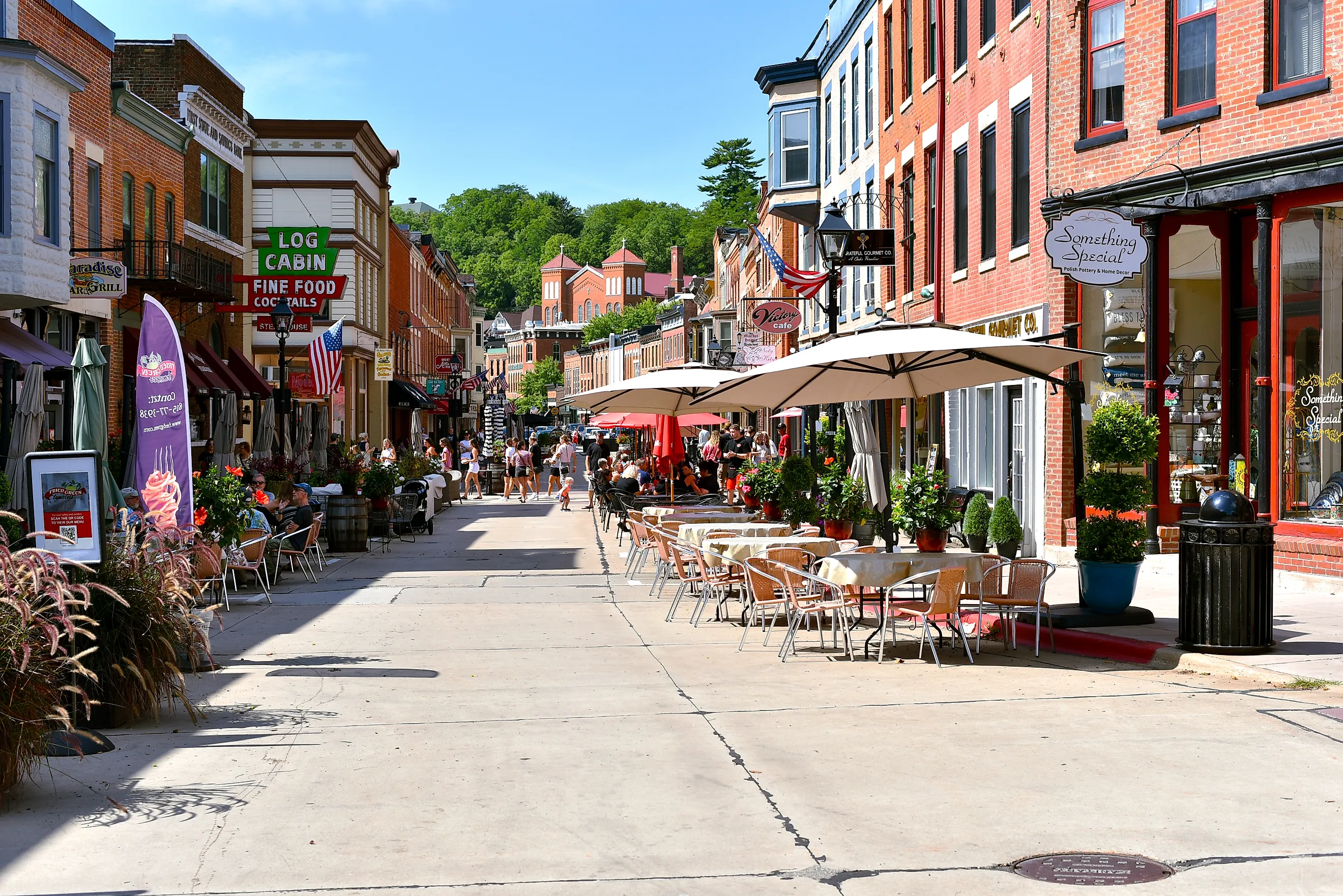
Galena's downtown winds through a preserved 19th-century streetscape that reflects the lead-mining boom that made the town one of the most important commercial centers in the Upper Mississippi during the 1840s and 1850s. The Ulysses S. Grant Home, the residence given to the Civil War general (and later 18th US president) by Galena residents in 1865, is the most-visited stop in town and is operated as an Illinois State Historic Site. The Galena History Museum on Bench Street covers the town's industrial past, the Civil War, and the post-mining tourism revival in a single building. Main Street holds antique shops, restaurants, and one of the oldest continuously operating hotels in the Midwest, the DeSoto House Hotel, which opened in 1855 and still hosts overnight guests. Above town, the steamboat-era observation point at Grant Park gives a long view down the Galena River and across to East Dubuque.
Woodstock

Woodstock sits about an hour northwest of Chicago and is best known as the filming location for the 1993 movie Groundhog Day. The Woodstock Square is the recognizable town green from the film, and fans walk the loop with the movie playing in their heads. The Old Courthouse Arts Center on the square hosts rotating exhibitions of regional artists, and the 1889 Woodstock Opera House, listed on the National Register of Historic Places, stages plays and concerts year-round. Public House on the Square handles farm-to-table dining in a historic storefront on the green. Each February 2, the town hosts a multi-day Groundhog Day celebration with screenings, walking tours, and a community dinner that pulls film fans into the town for the weekend.
Mount Carroll

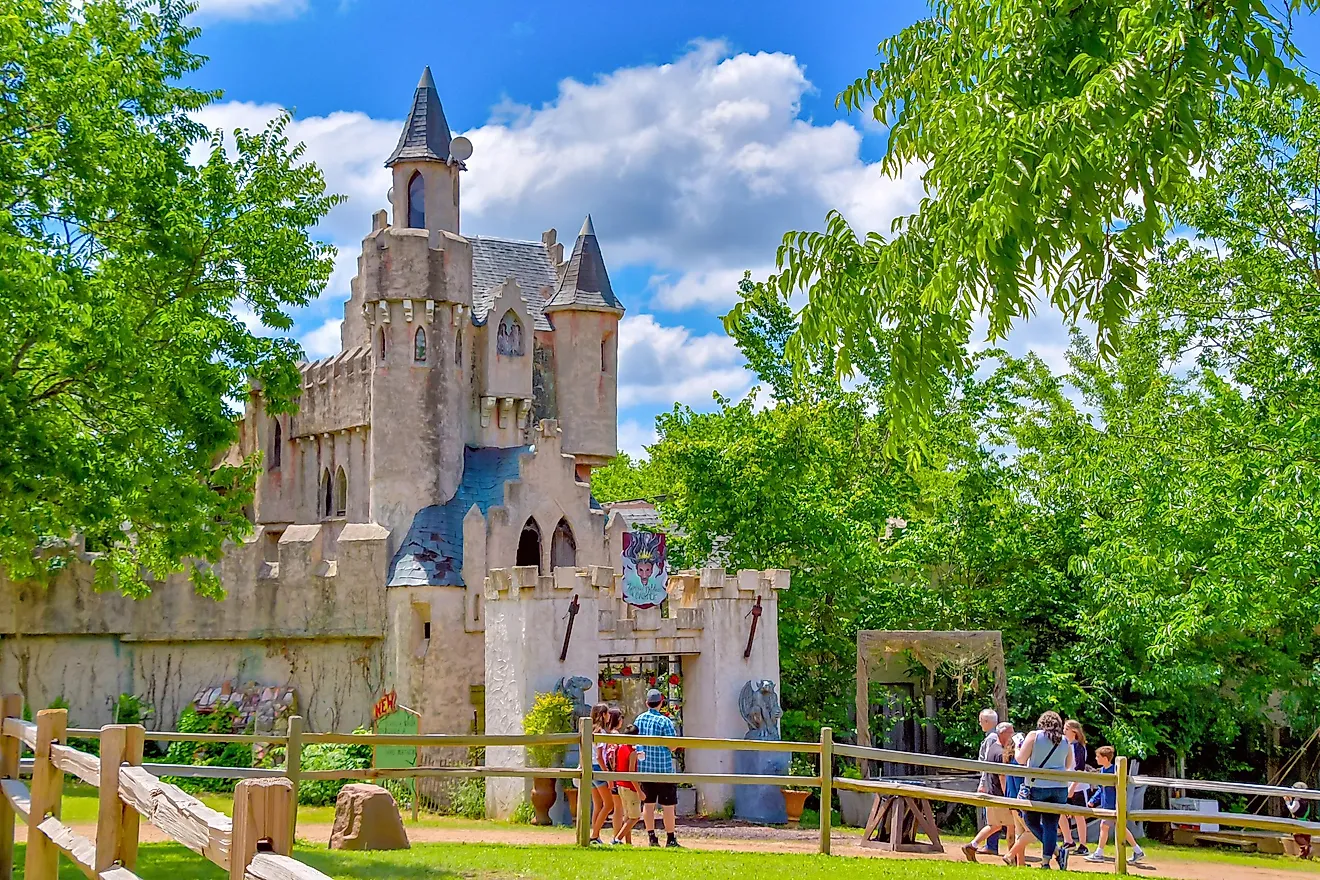
Mount Carroll, the seat of Carroll County in northwestern Illinois, sits in the rolling driftless farmland a short drive from the Mississippi. The town's most famous attraction is Raven's Grin Inn, a year-round haunted-house tour that owner Jim Warfield has been running out of his own five-story 19th-century Victorian since the late 1980s; the tours run one to three hours and are guided by Warfield himself in person. Just outside town, Timber Lake Playhouse stages summer productions in an open-air theater that has operated as a regional theater training program since 1962. Mississippi Palisades State Park, about 15 minutes northwest in Savanna, has limestone cliffs above the river that draw hikers, climbers, and birders.
Princeton

Princeton is a Bureau County town with the kind of historic depth that comes from settlers staying put. The Bureau County Historical Society Museum on Park Avenue West holds exhibits on pioneer life and Native American history. The Red Covered Bridge, a wooden bridge built in 1863 that still spans Big Bureau Creek about a mile north of town, is the most-photographed local landmark and one of only a small number of historic covered road bridges still in use in Illinois. Hornbaker Gardens, a working specialty nursery on the south edge of town, is open to the public from spring through fall and runs one of the largest daylily display gardens in the Midwest, with hundreds of named varieties planted along walking paths. The Hennepin Canal Parkway State Trail runs nearby for hiking and cycling along the historic 1907 canal corridor.
Geneva

Geneva sits along the Fox River about 35 miles west of Chicago and runs a downtown of restored 19th-century commercial buildings along Third Street. The Fabyan Windmill, a Dutch-style smock mill relocated to the Fabyan Forest Preserve in 1914 and restored to working condition, is the town's most-recognized landmark, and the same forest preserve includes a small Japanese garden originally laid out for Colonel and Mrs. George Fabyan in 1910. The Geneva History Museum on Third Street covers the town's settlement and railroad past. Downtown restaurants run from sit-down Italian at FoxFire to a working downtown of independent boutiques and cafes that consistently keep Geneva on the regional weekend-trip lists from Chicago.
Fulton

Fulton sits on the Mississippi River across from Iowa, on the original 1913 Lincoln Highway route, and was settled in part by Dutch immigrants in the 19th century. The De Immigrant Windmill, an authentic Dutch-built smock mill assembled on the Mississippi levee in 2000, is the town's most-photographed landmark and is open for guided tours seasonally. The Windmill Cultural Center next to the mill explains the history of Dutch settlement in the region, and Heritage Canyon, an open-air museum on a wooded site that gathers preserved 19th-century buildings into a walking-tour village, runs along Fourth Street north of downtown. The Great River Trail, a paved multi-use path along the Mississippi, runs through Fulton north toward Savanna and south toward Albany.
Ottawa

Ottawa sits at the confluence of the Illinois and Fox Rivers and was the site of the first Lincoln-Douglas debate in 1858, an event that is now commemorated by the Lincoln-Douglas Debate Square in the heart of downtown with bronze statues of both men. The Reddick Mansion, an 1857 Italianate house just off the square, is the town's most-photographed historic building and operates as a public museum. The Illinois and Michigan Canal State Trail runs through town for hikers and cyclists, and the Illinois River Cruises operate seasonally out of the riverfront. Tangled Roots Brewing Company, downtown, is the local craft brewery anchor.
Nauvoo

Nauvoo, on a horseshoe bend of the Mississippi in western Illinois, was the temporary headquarters of the Latter-day Saints from 1839 until their westward expulsion in 1846, and the town remains a destination for LDS history. The Nauvoo Temple, rebuilt in 2002 on the original 1840s foundation, anchors the bluff above the river. The Joseph Smith Historic Site preserves the Smith family homes, the Red Brick Store, and the Smith family cemetery from the 1840s settlement period. Baxter's Vineyards and Winery, founded in 1857 in part of the original LDS-era settlement, is the oldest winery in Illinois and runs tastings on its working vineyard at the south end of town. Scovil Bakery operates as a working 1840s reproduction bakery in the historic district, with cookies baked in a wood-fired oven and tours of the period kitchen.
Rockton

Rockton sits at the confluence of the Pecatonica and Rock Rivers in northern Illinois, near the Wisconsin line. The downtown holds a cluster of mid-19th-century Greek Revival limestone buildings, including the 1846 Old Stone Church (the oldest church in Winnebago County), the Talcott Free Library in an 1854 former feed-and-grain store, and the Rockton Historical Society Museum in an 1856 grout house. Macktown Forest Preserve, north of town along the Pecatonica, runs interactive pioneer exhibits and walking trails on the site of a 1830s Native American and settler trading post. Kinnikinnick Creek Conservation Area, a short drive away, has white-oak woodland trails and consistent birding for red-tailed hawks, Eastern bluebirds, and barred owls. The Rock River runs through town and is paddleable for most of the warm-weather months.
Lebanon

Lebanon sits about 25 miles east of St. Louis, Missouri. The Mermaid House Hotel, an 1830s building on St. Louis Street that hosted Abraham Lincoln during his circuit-riding years and Charles Dickens during his 1842 American tour, is now operated as a museum by the Lebanon Historical Society and is open for guided tours by appointment. McKendree University, founded in 1828 as Lebanon Seminary and the oldest institution of higher education in Illinois, gives the town a college-town feel along its tree-lined campus. The McKendree Bell Tower, the most-photographed feature on campus, stands near the center of the historic quad. Walking tours of the historic district highlight the town's Underground Railroad connections; Lebanon's location on the National Road and its strong Methodist abolitionist community made it an active stop on the route to Canada.
St. Charles

St. Charles sits along the Fox River north of Geneva and built much of its tourism economy around riverfront access. Pottawatomie Park runs the St. Charles Belle II and the Fox River Queen, two paddlewheel riverboats that operate sightseeing cruises on the Fox from spring through fall. Garfield Farm Museum, a working 1840s prairie farm preserved in its original 1843 layout, hosts hands-on demonstrations of period agriculture about five miles west of town. The Arcada Theatre on Main Street, an atmospheric movie palace opened in 1926 and restored over the last two decades, hosts live concerts and films year-round and is one of the more-active small concert venues in the Chicago suburbs.
Elsah

Elsah sits along the Mississippi on the Great River Road in southwestern Illinois, between the river and the limestone bluffs of the Piasa palisades. The entire village was the first community to be listed in the National Register of Historic Places as an entity, in 1973, with all of its mid-19th-century houses included in the listing. Mill Street holds the most-photographed row of preserved Victorian and stone houses, and the Elsah Museum at LaSalle and Mill Streets covers the town's settlement and Mississippi shipping history. The Green Tree Inn runs as a small bed-and-breakfast in a historic frame building on Mill Street. Principia College, on the bluff above the village, designed in part by Bernard Maybeck and listed as a National Historic Landmark District, is open for prearranged tours.
Greenville

Greenville is the seat of Bond County in southwestern Illinois, about 50 miles east of St. Louis. The American Farm Heritage Museum, on a 50-acre site east of town, holds vintage tractors, farm equipment, and a working steam-engine collection that runs during seasonal events. The Richard W. Bock Sculpture Museum on the Greenville University campus displays the work and personal effects of the architect-sculptor known for collaborating with Frank Lloyd Wright on architectural ornamentation, including handwritten letters, photographs, and one of the leaded stained-glass windows from the Bock-Wright collaboration. Governor Bond Lake holds bluegill, bass, and catfish, with shoreline trails and a public boat ramp. Greenville University, a private liberal arts college founded in 1892, sits at the center of town and gives Greenville its small-college feel.
The Range
Each of these 13 Illinois towns earns its place a different way. Galena leans on its lead-mining cobblestones and the Grant Home. Woodstock pulls Bill Murray fans to the courthouse square. Nauvoo runs on LDS history and the rebuilt temple. Geneva and St. Charles share the Fox River and trade on the riverboats. Galena, Fulton, and Elsah work the Mississippi. Mount Carroll has Raven's Grin and a working summer playhouse. Rockton has the densest collection of mid-19th-century stone buildings in northern Illinois. Lebanon has McKendree, the oldest college in the state. Princeton has the Red Covered Bridge and one of the larger daylily display gardens in the Midwest. Ottawa has the first Lincoln-Douglas debate. Greenville has the Bock collection on a working college campus. Take any one of them on its own terms and the visit lands.