9 Storybook Towns In Delaware
Delaware's small towns pack a lot of history into a short drive. Bridgeville throws an Apple Scrapple Festival every fall. Arden was built in 1900 as a single-tax arts colony and still runs its September fair well over a century later. Lewes, the state's northernmost beach town, was first settled by the Dutch in 1631. Odessa preserves 18th-century homes on the Appoquinimink River, and Fenwick Island anchors the state's southern coast at the Maryland line. These nine towns each carry their own storyline.
Bridgeville

Bridgeville sits in Sussex County about 30 miles south of the state capital of Dover. The town dates to the 1680s as Bridge Branch and was incorporated as Bridgeville in 1871. Its historic district is on the National Register of Historic Places, and the local historical society brands the town as "Delaware's Front Porch."
The Sudler House is the oldest known structure still standing in town, built in 1730. It is a private residence, but visitors stop by for photos of its corner chimney and Federal-style addition. The Bridgeville Historical Society Museum occupies the old firehouse on Market Street and covers the town's railroad-era history. TS Smith & Sons orchard store sells fresh fruit, vegetables, and baked goods in season. The big event is the Apple Scrapple Festival, held each October, which draws thousands to a town of around 2,700 for food, crafts, and music.
Arden

Arden sits in northern New Castle County near the Pennsylvania border. It was founded in 1900 as a single-tax community grounded in Henry George's economic philosophy and the Arts and Crafts Movement. The village has kept both of those threads going and holds a Tree City USA designation, with a tree canopy covering roughly 83% of its area. It lies about seven miles north of Wilmington, near the Pennsylvania line.
The arts are still central here. The Candlelight Theatre stages musicals and dinner-theater productions such as "Young Frankenstein," and the Arden Club promotes community gardens, workshops, and the annual Arden Fair. The fair dates to 1907 and takes over the Green on the first Saturday after Labor Day. The Arden Craft Shop Museum holds the village's archive, including more than 4,000 photographs documenting more than a century of community history.
Magnolia

Magnolia is a Kent County hamlet of just 0.2 square miles. A local sign dated 1896 humorously proclaims Magnolia "the center of the universe around which the earth revolves." The town was laid out in the mid-1800s and incorporated in 1885. It sits a mile from the St. Jones River, which was the early settlers' main transport route, and about 7 miles south of Dover.
The 1896 sign stands in front of the historic John B. Lindale House, a Queen Anne home built in 1886 by a peach farmer and now a private residence. Another registered historic landmark is the Matthew Lowber House, built in 1774 and later moved to Main Street. The house is closed to visitors, but the exterior is photogenic from the street.
Hockessin

Hockessin is an unincorporated community in northern New Castle County near the Pennsylvania border, about 10 miles west of Wilmington in the Brandywine Valley. It lies roughly 30 miles southwest of Philadelphia, making it a popular commuter base for both cities. The area was farmland for most of its history, which explains the rolling fields and stone walls that still frame a lot of the drive in.
Mt. Cuba Center is a major attraction, with around 1,000 acres devoted to native plants, wildflower trails, and ecological gardening classes. Ashland Nature Center, the headquarters of the Delaware Nature Society, covers more than 130 acres of meadows, woodlands, marsh, and frontage on the Red Clay Creek. Hockessin also has a documented role in the Underground Railroad, and the Hockessin Historical Society keeps exhibits on that history for anyone who wants to learn more.
Selbyville

Selbyville began as Sandy Branch in 1778 and was renamed in 1842 for country store operator Sampson Selby. In the early 1900s the town was one of the largest strawberry shipping centers on the East Coast. Strawberries no longer drive the local economy, but chicken processing, soybeans, and corn still do.
The Selbyville Railroad Museum covers the town's stop on the Breakwater and Frankford Railroad, which put Selbyville on the map in the 1870s. Magee Farms is a working farm and produce market with tours, a petting zoo, and wagon rides in season. Selbyville is also home to the Freeman Arts Pavilion, an outdoor venue that has hosted Little Big Town, Blues Traveler, and James Taylor among many others.
Milton

Milton, in Sussex County, was settled in 1672 as "Head of the Broadkill" for its position along the Broadkill River. The town took its current name in 1807 in honor of the poet John Milton. It once billed itself as the Holly Capital of the World, producing holly wreaths and Christmas decorations in bulk. Shipbuilding, lumber, and agriculture drove the rest of the economy.
The Milton Historical Society covers the town's history and the Broadkill Hundred around it. The Milton Arts Guild runs Sip and Shop evenings downtown, where local artists and makers sell work alongside food and drink. Milton is also home to Dogfish Head's main production brewery; the brand started as Delaware's first brewpub in Rehoboth Beach in 1995 and later expanded here.
Odessa

Odessa sits along the Appoquinimink River in New Castle County. The area was settled in the 1600s as the port of Cantwell's Bridge and renamed Odessa in 1855, after the Ukrainian Black Sea port. It lies about three miles from the larger town of Middletown and roughly 25 miles north of Dover. Its historic district is on the National Register of Historic Places.
The big annual event is the Historic Houses of Odessa tour held during Christmas in Odessa, when five historic residences and 20 acres of outbuildings and gardens open to visitors. Odessa contains two National Park Service Network to Freedom sites connected to the Underground Railroad. One of them is the Corbit-Sharp House, a brick Georgian built in the 1770s and open for tours. Cantwell's Tavern, a restored 19th-century tavern on Main Street, serves upscale American comfort food and a full bar.
Lewes

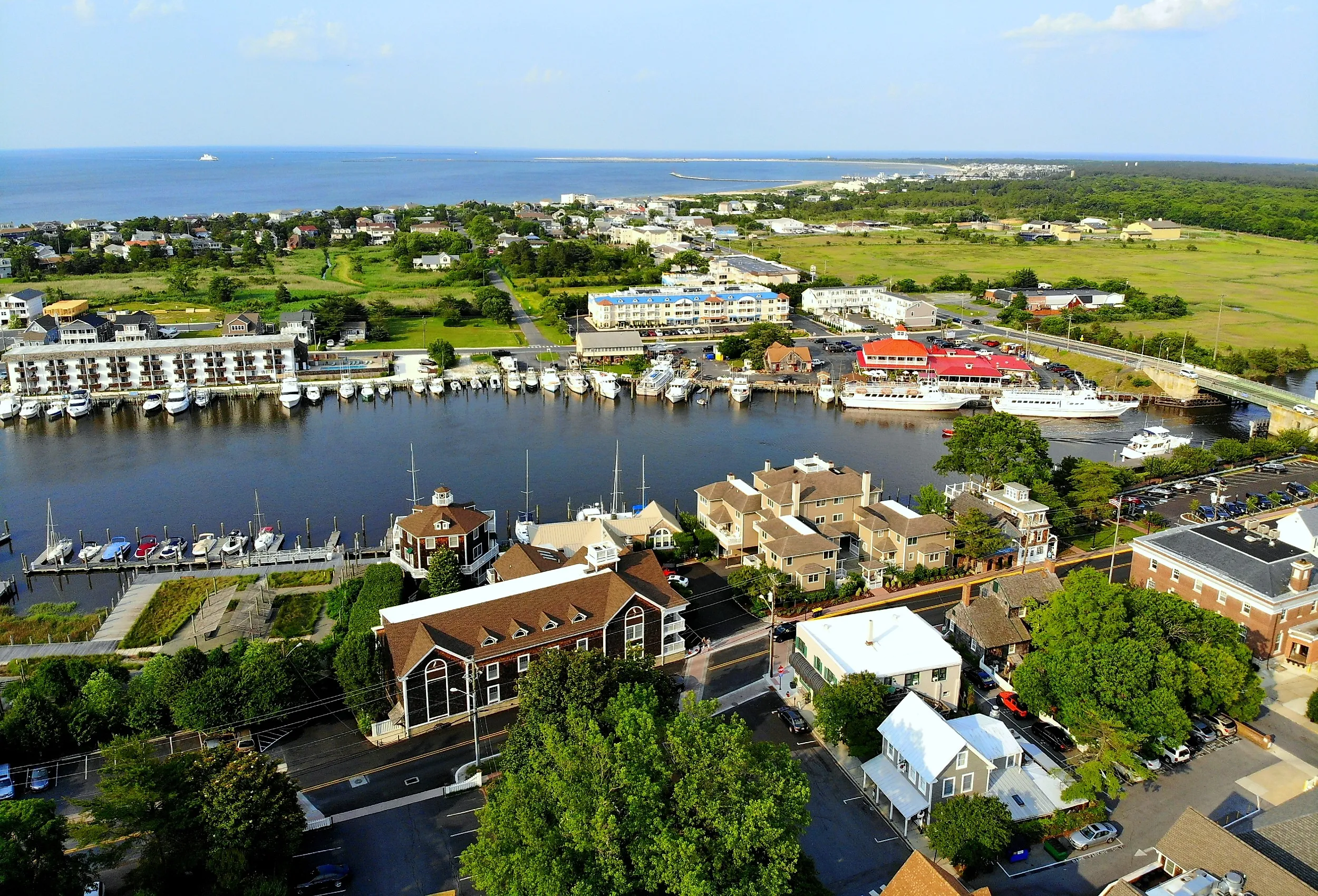
Lewes is Delaware's northernmost coastal beach town, in Sussex County. The Dutch founded Zwaanendael here in 1631, making it the first European settlement in what became Delaware. William Penn renamed the town Lewes in the 1680s and gave the county the name Sussex, both drawn from England. Today the waterfront stays noticeably quieter than the boardwalk beaches to the south.
The Zwaanendael Museum covers the town's Dutch heritage, maritime history, and agricultural past. The building is modeled on the city hall in Hoorn, Netherlands, with red and white shutters and a stepped gable facade. Cape Henlopen State Park is a major attraction, covering more than 5,000 acres with six miles of coastline, dunes, marshes, and a campground. Within the park, the Beach Plum Island Nature Preserve is one of the more undeveloped public ocean beaches in the state and a stopover for migrating shorebirds and horseshoe crabs.
Fenwick Island

Fenwick Island, also in Sussex County, is the southernmost beach town in Delaware, right at the Maryland line. Thomas Fenwick received the land grant for the area in 1692, though the town itself was not incorporated until 1953. Despite the name, Fenwick Island is not a true island today; it is a barrier spit that reads as a quiet counterpart to the more commercial Ocean City resorts immediately south.
The Fenwick Island Lighthouse was built in 1858 to mark the Transpeninsular Line dividing Delaware and Maryland. Visitors cannot climb it, but the museum and gift shop on the property are open in season. Fenwick Island State Park covers 344 acres and includes a three-mile stretch of beach and a preserved World War II observation tower once used to spot enemy ships off the coast. The DiscoverSea Shipwreck Museum, open May through December, rotates exhibits of artifacts pulled from wrecks off the mid-Atlantic coast.
Delaware Towns That Tell a Story
Delaware covers a lot of ground for a state this size. Arden's tree-lined lanes, Odessa's 18th-century brickwork, Selbyville's arts pavilion, and Lewes's Dutch heritage all sit within a couple of hours of each other. The pace through most of these towns is slower than in the cities on either side of the state.