11 Most Hospitable Towns In North Carolina
North Carolina's mix of towns, suburbs, and small communities fills weekends with festivals, farmers markets, and outdoor concerts. Holly Springs runs SpringsFest in spring and HollyFest in the fall. Cary draws crowds to outdoor shows at Koka Booth Amphitheatre. Chapel Hill's Franklin Street keeps college-town energy year-round. Downtown Mooresville anchors the NASCAR country around Lake Norman. These 11 towns bring a mix of railroad history, mill-town roots, and lakeside weekends.
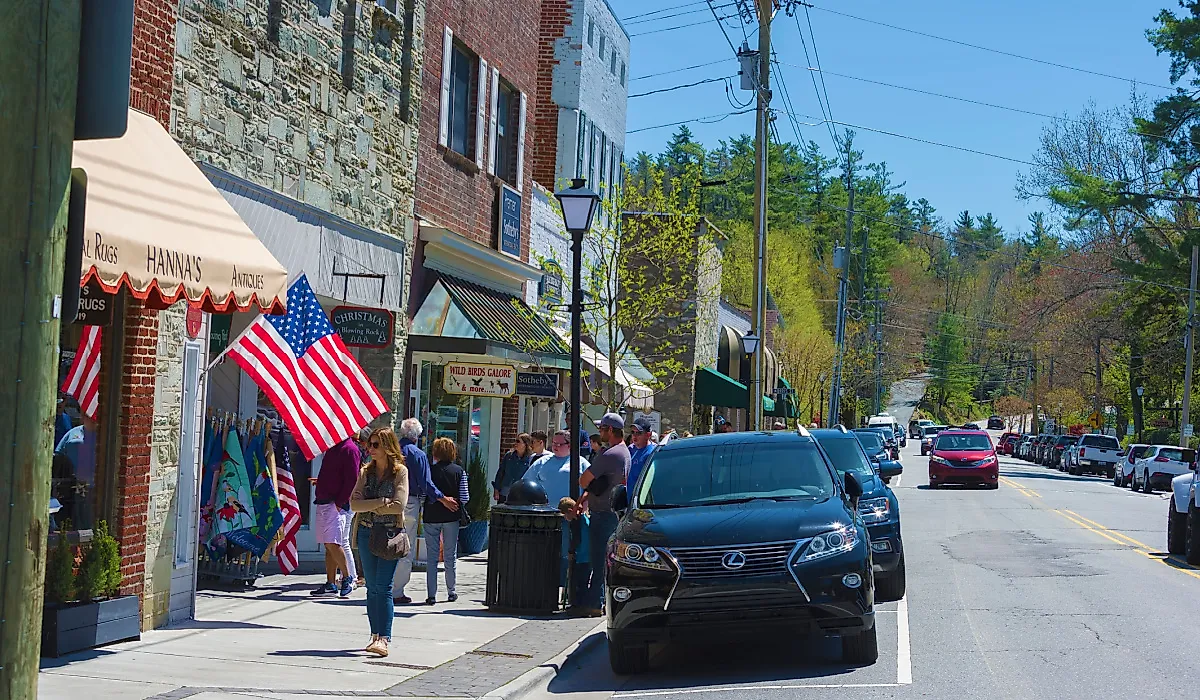
Blowing Rock

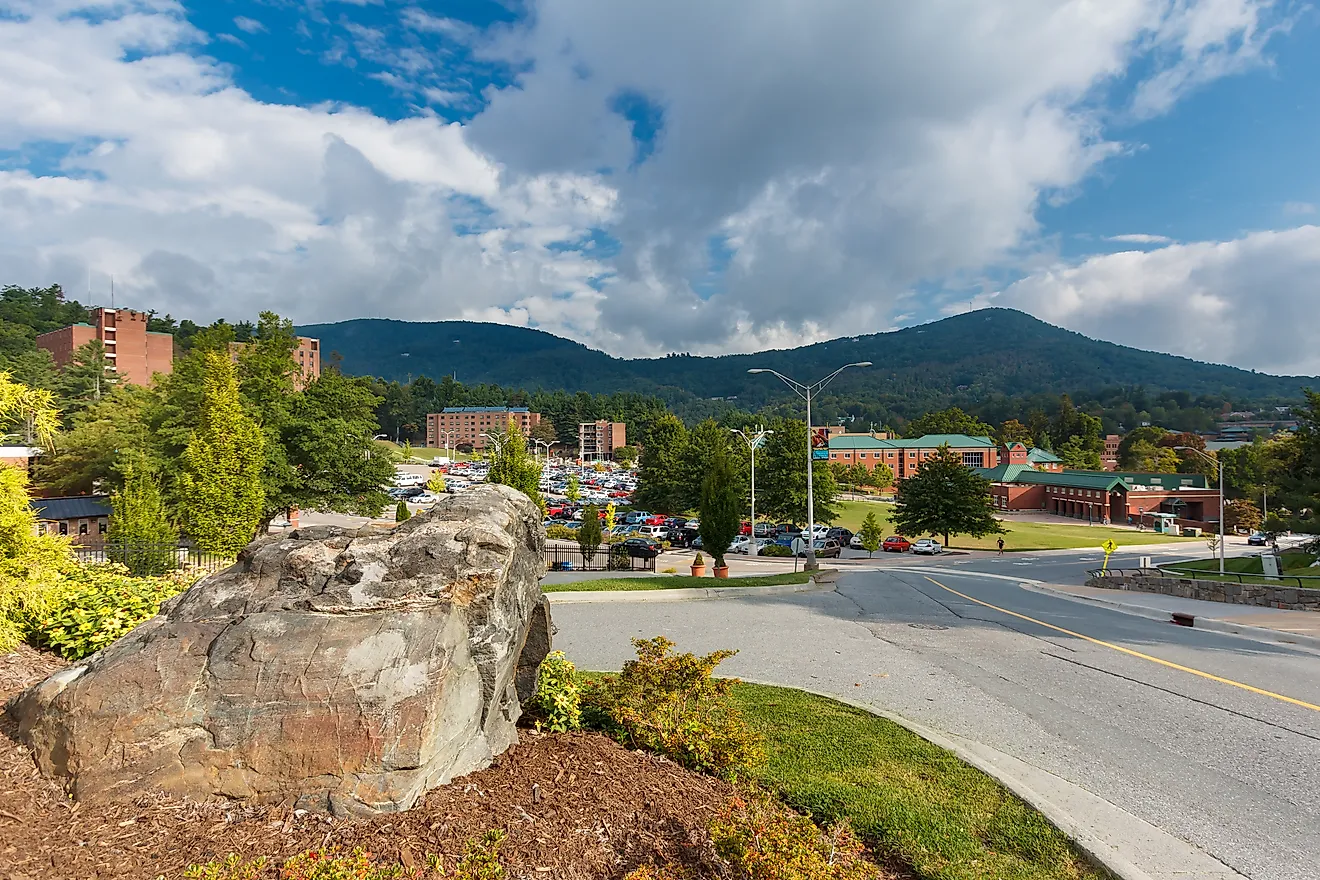
Blowing Rock, named for the cliff whose updraft can push light objects back over the rim, became a mountain retreat in the late 1800s. The area has ties to both Cherokee and Catawba history, including a local legend about a Cherokee warrior who leaped from the cliff, a praying Catawba maiden, and a wind that carried him back. The Blue Ridge Parkway runs near the town, and Moses H. Cone Memorial Park preserves a turn-of-the-century estate with a mansion and more than 25 miles of carriage trails. The Blowing Rock Art & History Museum covers regional history and Appalachian art.
Cary

Cary grew out of an earlier settlement called Bradford's Ordinary from the 1750s. Allison Francis "Frank" Page laid out the town and named it after Samuel Fenton Cary, a prominent Ohio Prohibition advocate. Cary was incorporated in 1871, and the Seaboard and North Carolina railroad junction that followed drove much of its early growth. Today it is a center for technology and research close to Raleigh. Fred G. Bond Metro Park covers 310 acres of trails and a lake. Koka Booth Amphitheatre runs outdoor concerts and festivals, and Downtown Cary Park is the newer green space that hosts community events. The Page-Walker Arts & History Center, originally a railroad hotel, runs exhibits and programs on Cary's past.
Apex

Apex was laid out as a railroad town when its station was chartered in the 1850s, though trains did not start running through until about 1869. The name refers both to the stop's role as the highest point along a section of the Chatham Railroad and to the watershed divide at Salem Street: rainfall on one side drains into the Neuse River, the other side toward the Cape Fear. Historic Downtown Apex keeps much of its 19th-century streetscape, with local shops and restaurants. Jordan Lake is a short drive out for boating and hiking, the Halle Cultural Arts Center stages performances in town, and Apex Nature Park has trails and ballfields.
Huntersville

Huntersville was first settled by Scotch-Irish and German immigrants in the mid-1700s. Originally called Craighead, the community later took the name of Robert Boston Hunter, a local landowner and cotton farmer. The Huntersville Cotton Mill, founded in 1873, kept the place running for decades. Today the Latta Nature Preserve covers more than 1,400 acres of woods, meadows, and lakefront for hiking and kayaking, and the Carolina Raptor Center rehabilitates injured birds of prey on-site. Birkdale Village is the main shopping and dining district. Racing fans can visit the Joe Gibbs Racing Headquarters lobby and viewing window on weekdays.
Chapel Hill

Chapel Hill grew up around the University of North Carolina, which opened to students in 1795 and is widely recognized as the first public university in the United States to open and graduate students. The town's name comes from New Hope Chapel, which once stood on the hill where The Carolina Inn sits today. The street grid was laid out to serve the university, and that relationship still shapes the place. Franklin Street is the commercial and cultural spine. The North Carolina Botanical Garden focuses on the conservation of native plants, and the Morehead Planetarium & Science Center, one of the oldest planetariums in the country, runs educational programs and shows.
Wake Forest

Wake Forest traces back to 1832, when the North Carolina Baptist Convention bought Dr. Calvin Jones's 615-acre plantation for $2,000 to start a school for training ministers. That institution eventually became Wake Forest University, which moved to Winston-Salem in 1956 but lent the town its name. Downtown Wake Forest keeps a walkable historic district. Falls Lake State Recreation Area is a short drive for hiking and swimming, and the Wake Forest Historical Museum covers the town's early years. E. Carroll Joyner Park is a popular open-field destination with trails and restored outbuildings.
Mooresville

Mooresville grew in the 1850s after farmer John Franklin Moore helped bring a railroad depot to the area. The town incorporated in 1873 and later picked up the nickname "Race City USA" for its density of NASCAR teams and shops. Lazy 5 Ranch, just outside town, is a drive-through park with more than 700 exotic animals. Lake Norman is the largest man-made lake in North Carolina and sits on Mooresville's western flank. The Memory Lane Museum houses classic cars and racing memorabilia, and Downtown Mooresville has antique shops, breweries, and restaurants within a few blocks.
Holly Springs

Holly Springs started as a small crossroads where travelers stopped at natural springs ringed by holly trees. The town expanded in the 1800s thanks to its proximity to Raleigh. Today Carolina Brewing Company and Bombshell Beer Company, one of the first female-owned breweries in the state, pull beer-focused visitors to town. Bass Lake Park has a stocked 54-acre lake for fishing and a walking path. The Holly Springs Cultural Center stages theater, art shows, and the Community Arts Festival each year. The town's calendar runs full with SpringsFest, an International Food Festival in late spring, HollyFest in the fall, and the Happy Holly Days Christmas parade.
Garner

Garner took shape in the 1850s as the North Carolina Railroad pushed through the area. The railroad itself owes its existence to a famous 1849 tie-breaking vote in the state Senate by Speaker Calvin Graves, which authorized the line between Goldsboro and Charlotte. Garner grew around its new station and later developed into a suburb of Raleigh. Lake Benson Park has walking trails, open fields, picnic areas, and lake views. White Deer Park Nature Center covers local wildlife and conservation, and the Garner Performing Arts Center runs live theater and concerts out of a historic former school building. Historic Downtown Garner keeps its small-town scale along Main Street.
Cornelius

Cornelius sits on the eastern shore of Lake Norman, north of Charlotte. The Catawba people lived and fished here before European settlement. By the mid-1800s the area was a railroad and cotton hub, and the town was named for Joseph Benjamin Cornelius, a cotton farmer and merchant who backed the local rail stop. Today Jetton Park has scenic trails and lake views, and Ramsey Creek Park includes one of the few public swimming beaches on Lake Norman. The Cain Center for the Arts runs exhibits and performances downtown, alongside craft breweries like Lost Worlds Brewing, Ass Clown Brewing Company, and Eleven Lakes Brewing.
Morrisville

Morrisville calls itself the "Heart of the Triangle" for its position between Raleigh, Durham, and Chapel Hill. It was founded around 1852 as a railroad town and has grown into a fast-expanding suburb, with a population over 30,000 by recent Census Bureau estimates. The Indian Creek Greenway & Trailhead is a popular walk and bike route, and RDU Observation Park, right by the airport, is set up for watching takeoffs and landings. Triangle Rock Club offers indoor rock climbing, and Morrisville Community Park has a playground, trails, and picnic areas.
Weekends Across the State
North Carolina covers a lot of ground between the Blue Ridge and the Atlantic, and this list reflects that range: college-town hubs, fast-growing Triangle suburbs, race-shop culture around Lake Norman, and mountain-retreat roots up in Blowing Rock. Many of these communities are located within short driving distances of one another.