9 Picture-Perfect Main Streets In Utah
Park City keeps a working chairlift at the bottom of its Main Street. Ride it and you leave downtown for the ski runs without ever moving your car. That kind of detail is the reward for slowing down in Utah. The state sells itself on red rock and powder, and the small towns threaded between the parks get passed at highway speed. Each of the nine towns here, all home to fewer than 50,000 people, built a downtown worth the stop on its own. Some trade on a mining past. Others trade on pioneer brick or a century of movie crews. The parks blur together after a while. These streets do not.
Brigham City

A glowing arch has stretched across Main Street in Brigham City since 1928, its opalite-glass letters reading "Gateway to the World's Greatest Wild Bird Refuge." The same wide street runs through peach orchard country toward two landmarks that bracket it. The white twin spires of the Brigham City Utah Temple rise at one end. The Neo-Gothic Box Elder Tabernacle, built in the 1870s and rebuilt after an 1890s fire, stands at the other.
Idle Isle has hand-dipped its chocolates on Main Street since 1921, still working from the founding family's recipes, including a marshmallow-and-chocolate piece called the Melba. A block off the main drag, the Brigham City Museum of Art and History holds more than 12,000 objects and charges nothing to walk in. Come the weekend after Labor Day and the whole street gives itself over to Peach Days, a harvest celebration the town has run every year since 1904. Its car show is the largest free show of its kind in the West, drawing more than a thousand cars.
Park City

The Great Fire of 1898 leveled Park City's business district, and most of what lines Main Street today went up in the rebuild that followed. The stone frontages run uphill between the slopes of Park City Mountain and Deer Valley, a former silver camp that turned its ore money into one of the most recognizable downtowns in the West. Around 8,400 people live here. Through ski season the street holds many times that.
The Park City Museum occupies the old City Hall on Main Street, where the basement still holds the original territorial jail cells. A few doors down, the Egyptian Theatre has staged plays and concerts since 1926. High West pours whiskey and bourbon out of Utah's first licensed distillery since Prohibition, founded by David and Jane Perkins. When the snow comes, the Town Lift carries skiers straight off Main Street to the mountain. There are not many places in the country where you can board a chairlift downtown and step off it on a ski run.
Helper

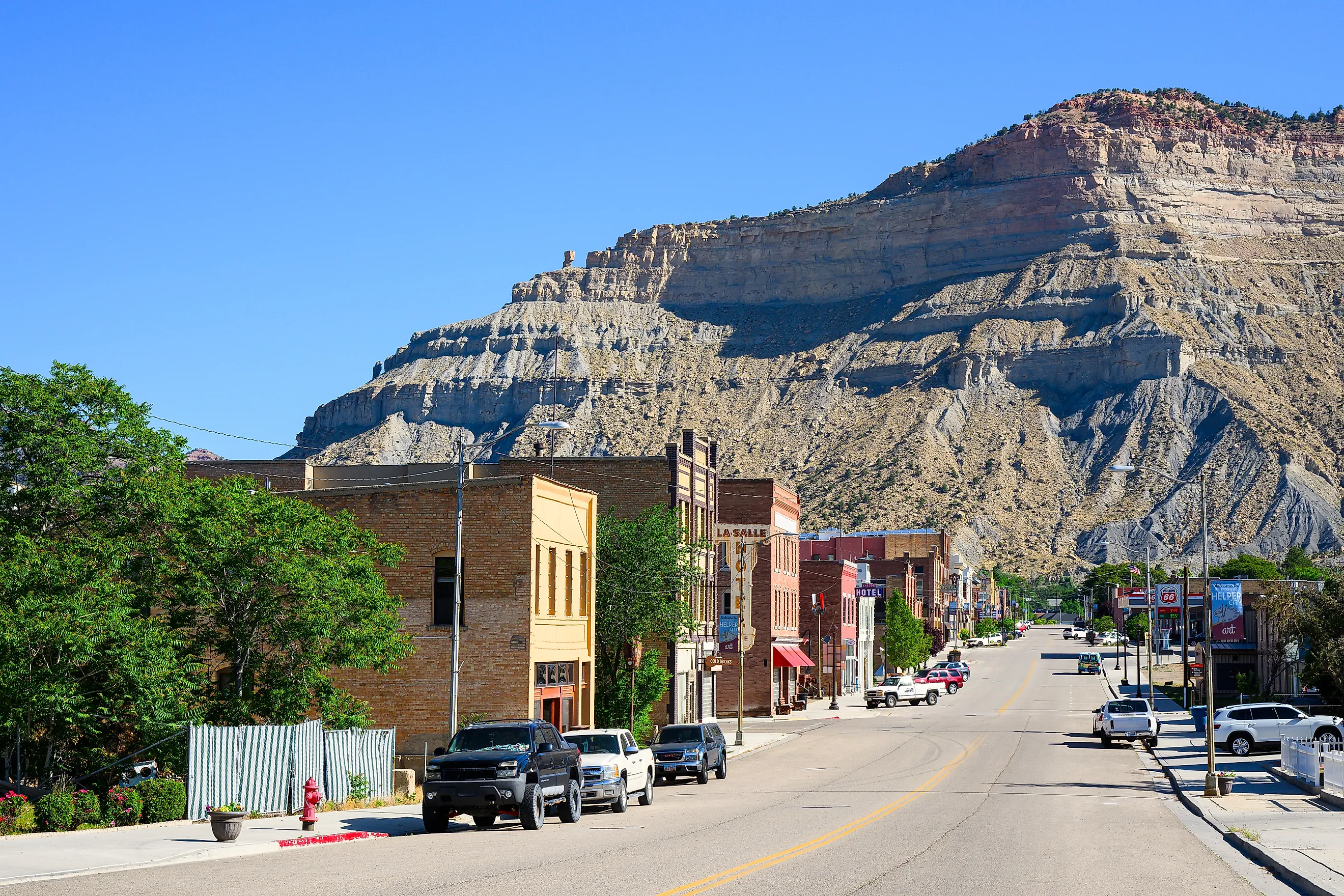
An 18-foot fiberglass coal miner named Big John stands outside the library on Helper's Main Street, installed in 1964 when the town needed a reason for travelers to pull off the highway. Three hours southeast of Park City, Helper traded coal for silver and shuttered saloons for studios, and the gamble worked. Brick storefronts from the railroad era now hold galleries pressed up against the canyon walls. The Western Mining and Railroad Museum keeps the rougher history close, with rooms of coal-camp artifacts and Dorothea Lange photographs. On the first Friday of every month the galleries stay open late for an art walk that has become the engine of the town's revival. Helper is also a certified Dark Sky Community, so the street that glows with gallery light gives way after closing to some of the clearest night skies in the state.
Spring City

The whole of Spring City sits on the National Register of Historic Places, town and historic district drawn on nearly the same line. When the main highway bypassed it in 1957, the community of about 950 stopped changing, and block after block of oolite limestone and red-brick homes built by Mormon settlers stayed put beneath the Wasatch Plateau. Main Street has no traffic light and no chain store. At Horseshoe Mountain Pottery, potter Joseph Bennion has fired stoneware since 1980 and still runs the place on the honor system, the door open and a jar left out for payment. Das Cafe plates German food out of a brick building from 1915, which is roughly the point of Spring City: the past here is not staged, it is just still in use.
Panguitch

Early settlers in Panguitch were sometimes paid for their labor in brick, which is why one warm shade of deep red runs through the homes, churches, and storefronts along Main Street. The town of about 1,725 holds one of the largest rural historic districts in Utah, with 379 contributing buildings, most of them raised with brick fired locally between 1915 and 1940. Locals will tell you the brick story before you ask.
This is still a working downtown. The Gem Theatre has shown movies and scooped ice cream out of a 1909 storefront for generations. The 1918 Panguitch Carnegie Library is one of the few original Carnegie buildings left in Utah, and one of the smallest. Each June the street fills for the Quilt Walk Festival, which honors the winter the first settlers crossed deep snow on quilts to fetch flour. Bryce Canyon and its hoodoos sit 24 miles east, but the town earns the stop before you ever reach the park gate.
Cedar City

A theater professor named Fred Adams hatched the Cedar City idea in a laundromat in 1961: give the tourists driving past to the parks a reason to stay the night. The Utah Shakespeare Festival opened its first season in 1962 and now draws crowds to a Tony Award-winning company every summer. The Main Street that feeds it kept its early 1900s storefronts and a restored rail depot, back from the days when passengers transferred here to open-top buses bound for the national parks. The depot now holds a restaurant and an antique shop. The Frontier Homestead State Park Museum lays out the iron industry that gave the town its start, stagecoaches and all. Red bluffs ring the valley and Cedar Breaks National Monument climbs past 10,000 feet half an hour east, but the festival is what brings people back to Main Street year after year.
Springdale

Sandstone walls climb thousands of feet directly behind the storefronts of Springdale, which gives a town of about 500 people the most dramatic backdrop of any Main Street in Utah. The single drag runs straight into the mouth of Zion Canyon. Springdale leans all the way into the setting with a free shuttle, dark-sky lighting rules, and cottonwoods that turn gold along the Virgin River each fall.
Zion Park Boulevard is the spine, lined with cafes, groceries, and lodges instead of chain signage. The south entrance to Zion National Park sits at the end of the street, close enough that visitors leave the car in town and ride the shuttle in. The LaFave and DeZion galleries turn the canyon walls into work you can carry home, and the O.C. Tanner Amphitheater stages music against the cliffs through the warm months. Most tables on the boulevard face straight up at the rock, so even lunch comes with the view.
Kanab

More than 200 Hollywood westerns and TV shows have used the Navajo sandstone cliffs around Kanab as a backdrop, which earned this desert town of about 5,000 the nickname "Little Hollywood." Center Street carries that history in plain sight, with sidewalk plaques honoring the stars and the Parry Lodge sign still glowing where they bunked from the 1930s on. The Little Hollywood Movie Museum keeps an original set standing, including pieces from "The Outlaw Josey Wales," and fires up a chuckwagon cookout in the warmer months. A few doors down, the Kanab Heritage House Museum fills an 1894 Victorian with a turret and gingerbread trim, open for tours and the occasional wedding.
Moab

After a string of quiet desert towns, Moab runs at a different speed. Its Main Street works as one long outfitter for the canyon country around it, gear shops and cafes filling early 1900s blocks with sandstone cliffs on one side and the La Sal Mountains on the other. The street that once served uranium miners and film crews now sends jeeps, rafts, and mountain bikes into the desert every morning.
The Moab Museum lays out the rest, the dinosaur tracks and the uranium boom that built much of the modern town. The Moab Rock Shop has sold fossils and gems off Main Street since 1960. Arches National Park is about five minutes north, close enough that its stone spans feel like part of downtown, and the Colorado River runs past the edge of town through rafting season. By the time the cottonwoods turn gold, Moab has done what every town on this list does its own way: made the street itself the reason to stop.
The Streets That Outlasted the Reason
Red brick fired a century ago in Panguitch. A coal miner cast 18 feet tall in Helper. Sandstone rising straight off the sidewalk in Springdale. The thread running through these nine towns is that each downtown has outlived the thing that built it. The silver played out, the coal stopped, the studios moved on, and the streets kept their shape and found new work. Park a car, walk a block, and the detail that holds a town together tends to show itself within the first few storefronts.