9 Off-The-Grid Louisiana Towns To Visit In 2026
A 1917 cash register still rings up sales at the oldest general store in Louisiana. That store sits in Natchitoches, the oldest permanent settlement in the whole Louisiana Purchase territory. Down in Breaux Bridge the Saturday Zydeco Breakfast fills a dance floor before most people finish their first coffee. St. Martinville keeps a French dialect alive that you will not hear anywhere else. These nine towns trade in cooking and music and deep history rather than billboards. Each one rewards a slow weekend and a healthy appetite.
Natchitoches

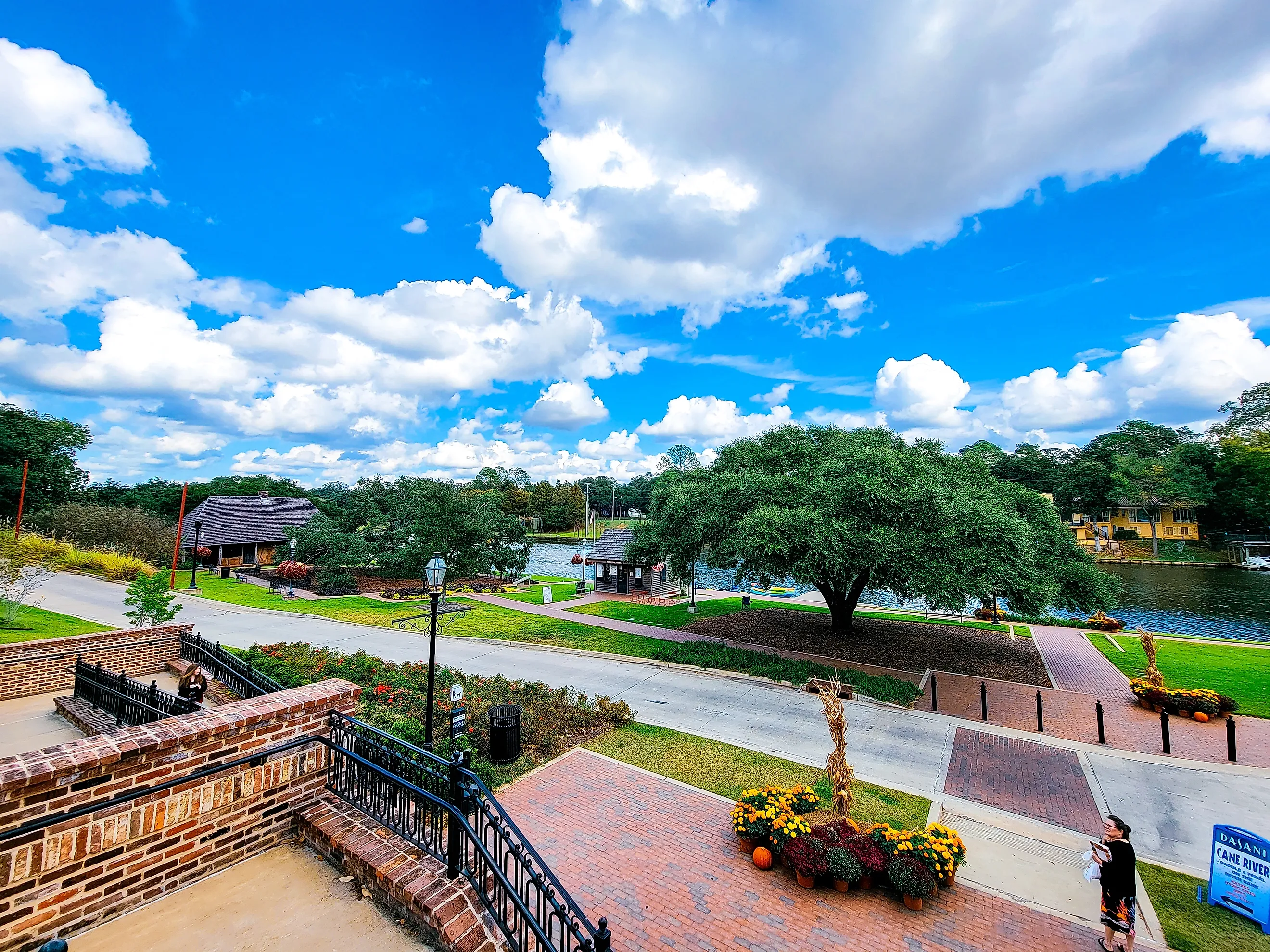
Natchitoches is the oldest permanent settlement in the Louisiana Purchase territory and is home to some of the state's most significant history. At its core lies a 33-block National Historic Landmark District, where visitors can take in French colonial architecture en route to landmarks like Kaffie-Frederick General Mercantile, better known as the oldest general store in Louisiana, equipped with an 1892 freight elevator and a 1917 cash register still able to pull daily duty.
The district fronts the 34-mile-long Cane River Lake, where travelers can trace centuries of history at sites like Melrose Plantation, credited with the birth of Cane River Creole culture and home to renowned African American folk artist Clementine Hunter. But to understand how Natchitoches took shape, make sure to visit Fort St. Jean Baptiste State Historic Site, a full-scale replica of the 1716 military outpost built to deter Spanish forces from advancing across the border of French Louisiana.
Abita Springs

The Abita Springs community takes its name from the area's mineral-rich waters, famous in Choctaw legend for the tale of a dying princess who was brought to drink from a natural spring flowing from a cypress stump and fully recovered. There are plenty of attractions packed into this small city, such as the quirky folk-art Abita Mystery House, built by artist John Preble inside a vintage gas station, and Insta-gator Ranch, a working alligator ranch where visitors can hold baby gators and, in season, help hatch the eggs.
The town also gave its name to Abita Brewery, which started as a small Abita Springs operation and now ranks among the largest craft breweries in the Southeast. If you stay overnight at the Abita Springs Hotel, bicycles come with the room, handy for the 31-mile Tammany Trace, a former rail line now heavily used by cyclists, runners, and walkers through the Northshore's pine forests.
St. Francisville

St. Francisville packs protected historic properties and striking natural terrain into one stretch of road just 35 minutes north of Baton Rouge. Visitors can tour The Myrtles, a circa 1796 antebellum plantation, to hear tales of past owners and enslaved occupants who left behind one of America's most haunted homes, or Rosedown Plantation, which features 28 acres of formal pleasure gardens that were among the few privately maintained throughout the United States in the 19th century.
The Audubon State Historic Site in St. Francisville preserves the Oakley House, where John James Audubon began or completed at least 32 of his famous Birds of America illustrations, while the 6,500-acre Tunica Hills Wildlife Management Area offers hills, bluffs, ravines, waterways, and trails to hike or bike. Audubon's inspiration is easy to find, as the area's unique elevation and vegetation attract at least 100 bird species.
St. Martinville

The city of St. Martinville, dubbed the "Cradle of Cajun Culture," is another must-see for travelers tracing the roots of early Louisiana history. The people here include descendants of Joseph "Beausoleil" Broussard, an Acadian hero from the 1700s, as well as the Bienvenu and Duchamp families, who were part of an elite class of French royalists fleeing the French Revolution. Senegalese lineage also shapes local culture, and a distinct French dialect is still spoken throughout the area.
Visitors can start along the bayou at Evangeline Oak Park, where a massive, ancient live oak stands as a reminder of the tragedy of the Acadian exile from Nova Scotia in 1755, immortalized in Henry Wadsworth Longfellow's 1847 poem, "Evangeline: A Tale of Acadie." Meanwhile, the St. Martinville Cultural Heritage Center showcases both the African American Museum, which traces the rise and fall of slavery, and the Museum of the Acadian Memorial, which examines the Acadian community that settled in Louisiana.
Not far away, you can also visit Saint Martin De Tours Church, one of the oldest Catholic churches in America, founded over 260 years ago.
Opelousas

French coureurs de bois ("runners of the woods") traded with the indigenous Opelousas tribe here in the early 1700s, and around 1720, the French established Le Poste des Opelousas, a trading outpost and secure stop for colonists traveling between Natchitoches and New Orleans. In 1763, French soldier Louis Pellerin received a Spanish land grant at the post and soon after mapped out the town of Opelousas.
Louisiana's third-oldest city is also known as the "Spice Capital," most notably as home to Tony Chachere and his famous Original Creole Seasoning, which is sold alongside an array of Louisiana-inspired products at the Tony Chachere General Store. Popular attractions within Opelousas' cultural gumbo include Le Vieux Village, a collection of restored historic structures from Opelousas and surrounding areas of St. Landry Parish, and the Louisiana Orphan Train Museum, which preserves the stories of roughly 2,000 young train riders who arrived in Louisiana between 1873 and 1929 in a movement that began the modern foster care system.
Ponchatoula

The founding of Ponchatoula was brought about by the construction of the New Orleans, Jackson, and Great Northern Railroad in the early 1850s, after the company hired surveyor James Clark to chart the projected route and determine depot sites. Today, the oldest incorporated city in Tangipahoa Parish is known as both the "Strawberry Capital of the World," hosting an annual three-day strawberry festival every spring, and "America's Antique City," packed with antiques and hand-crafted items at places like the Ponchatoula Country Market.
The city is also recognized for celebrating the arts through spaces such as Sunshine Studio, Mandy Mae Fine Art, and the Twin Steeples Creative Arts Center. Even its name reflects the landscape, with Ponchatoula translating to "hanging hair" in the Choctaw language, a nod to the Spanish moss draping the region's massive cypress and oak trees.
Thibodaux

This Louisiana town was originally incorporated in 1830 as Thibodauxville, in honor of Henry S. Thibodaux, and the town's name soon changed to Thibodeaux in 1838. Oddly enough, it wasn't until 1918 that the Thibodaux spelling used today was officially standardized. The area's cultural landmarks include the National Park Service's Wetlands Acadian Cultural Center and Laurel Valley Village, the nation's largest intact historic sugarcane plantation.
Take time in Thibodaux to also marvel at the Renaissance-Romanesque design of St. Joseph Co-Cathedral or tour the Edward Douglass White Historic Site, where you'll find the 19th-century home of a former U.S. Supreme Court chief justice. Families tend to gravitate to the hands-on Bayou Country Children's Museum, where the regional industrial heritage shows up in shrimp boat and sugarcane harvester exhibits. Kids can even toss beads from a Mardi Gras float on the museum floor.
Grand Isle

This low-lying barrier island sits at the mouth of Barataria Bay, where the bay meets the Gulf of Mexico in southeastern Louisiana, home to a seaside community built around fishing, boating, and camping. On the easternmost end, Louisiana maintains a mile of beachfront at Grand Isle State Park, where you're able to look out at Grand Terre Island, once headquarters of French pirate Jean Lafitte. You won't be able to miss the park's 900-foot-long public fishing pier either, set over waters that are home to more than 280 fish species.
Beyond the state park, nature lovers can also head to the Lafitte Woods Nature Preserve, an ancient live oak-hackberry forest that acts as a crucial rest stop for migrating birds crossing the Gulf, or Elmer's Island Wildlife Refuge, which features saltwater marshes, coastal dunes, and beaches, making it a popular spot for surf and bank fishing. The island also hosts the Grand Isle Tarpon Rodeo, a fixture of the Louisiana coast and the oldest fishing tournament in the United States.
Breaux Bridge

Before Breaux Bridge was ever a town, it was simply a footbridge built by pioneer Firmin Breaux in 1799 that travelers relied on to cross Bayou Teche. His widowed daughter-in-law, Scholastique Picou Breaux, officially drew up plans for the town in 1829, which she called Plan de la Ville du Pont des Breaux ("Plan for the City of the Bridge of the Breauxs"), and the nickname stuck. Now, a life-size bronze monument dedicated to Scholastique is displayed at Veterans Park.
Upon arrival at the Breaux Bridge Visitor Center, pause to revel in a scenic view of Bayou Teche and the steel bridge built in 1950, famous for the large crawfish painted on its overhead structure to celebrate the town's legacy as the "Crawfish Capital of the World." The Louisiana State Legislature bestowed this title in 1959, which sparked the town's world-famous annual spring crawfish festival.
To start a Breaux Bridge weekend right, head to Buck & Johnny's on a Saturday morning for the Zydeco Breakfast, where the dance floor stays crowded and the kitchen turns out boudin-stuffed omelets and crawfish etouffee grits.
Louisiana Backroads, Bayous, and Coastal Detours
What ties these nine towns together is not a shared look but a shared habit of holding onto things. Natchitoches keeps its 1716 fort and its 1892 freight elevator. St. Martinville keeps a French dialect and the church the Acadians built in 1765. Grand Isle keeps a fishing tournament that has run since 1928. The histories layer indigenous trade routes, French and Spanish outposts, and waves of immigrant settlement, and each town tells that story through a single working store, festival, or church rather than a museum placard. Visit with an open mind and room for seconds.