9 Loveliest Small Towns to Visit in Florida This Summer
Mount Dora rises on a low hill above a lake in central Florida, its old downtown shaded by live oaks. It is one of the prettiest small towns in the state, and far from the only one. On the Gulf Coast, Dunedin offers the same appeal, with a walkable downtown, a row of breweries, and a Scottish streak from its founders. Places like them are scattered around Florida, on quiet barrier islands, spring-fed rivers, and old fishing harbors. These nine are among the loveliest, and summer is the season to catch them, when the crowds thin out and the water warms up.
Sanibel Island

Sanibel Island lies off southwest Florida, turned on an unusual east-west axis that catches shells as they wash in from the Gulf of Mexico. That geography has made it one of the best shelling beaches in the country, and beachcombers still comb Bowman's Beach and the Lighthouse Beach shore for them. More than half the island is conservation land, most of it in the J.N. "Ding" Darling National Wildlife Refuge, where a wildlife drive and boardwalk trails pass roseate spoonbills, pelicans, and alligators.

The Sanibel Lighthouse, an iron tower first lit in 1884, still stands at the island's east end, though Hurricane Ian took its keeper's cottages in 2022. Ian and the 2024 storms hit Sanibel hard, but the causeway, beaches, and refuge have reopened, and the shelling is as good as ever. The island offers guided shelling walks through the summer, when warm Gulf water and lighter crowds make the beaches easy to wander. Sanibel rewards a slow pace, on foot or along its 25 miles of bike paths.
Mount Dora

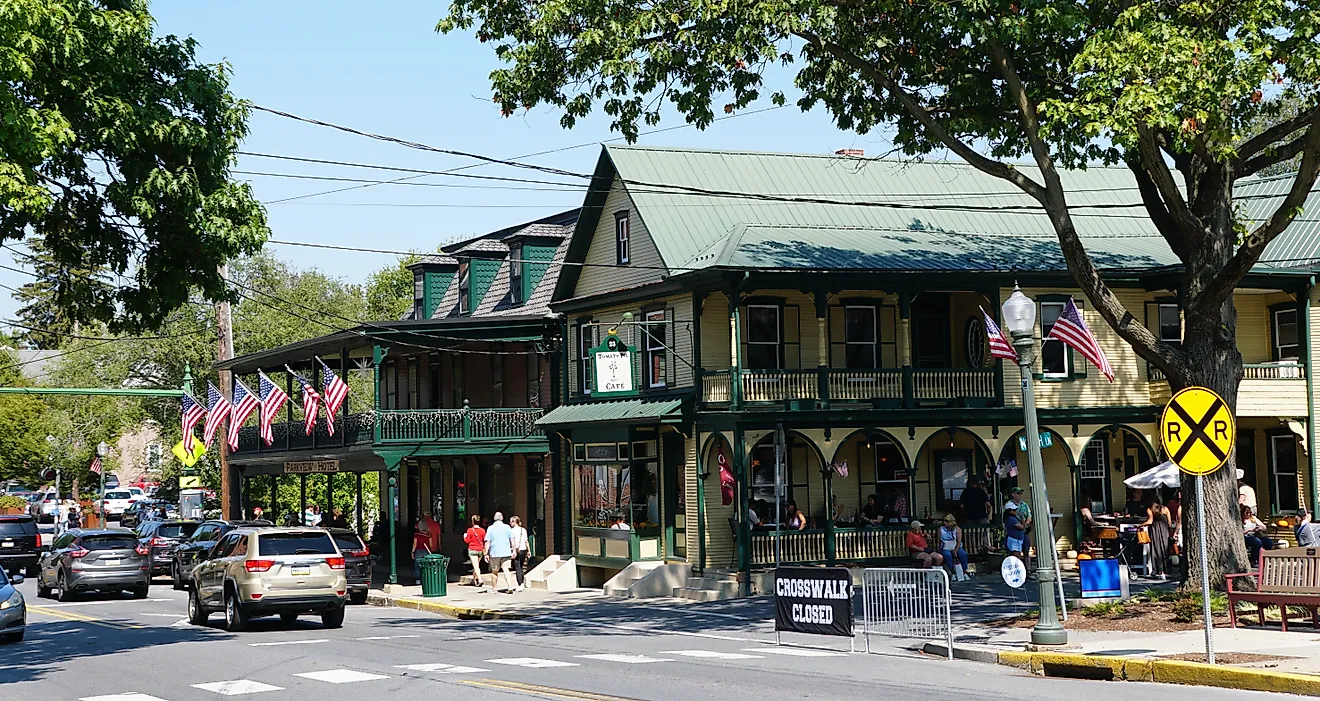
Mount Dora rises on a gentle hill above Lake Dora, one of the few Florida towns with any elevation to speak of. Settled in the late 1800s, it still has its old downtown, where oak-shaded streets, antique shops, and a lakeside park give it the feel of a New England village transplanted south. The lake is central to the town, with boat tours, a small lighthouse, and sunset views over the water.

The Mount Dora History Museum occupies the town's original jailhouse and lays out the story of its early settlers. Nearby, the Donnelly House, a Queen Anne mansion from 1893, shows off the ornate woodwork and turrets of the style. On summer Sundays, the Mount Dora Village Market brings produce and crafts to the streets, an easy stop on a warm morning.
Apalachicola

Apalachicola lies in the Florida Panhandle where its namesake river meets the Gulf, a working seafood town long known for its oysters. In the early 1800s it was one of the Gulf's busier cotton ports, and the brick warehouses and 19th-century storefronts from that era still stand downtown. The town's other claim to fame is Dr. John Gorrie, who devised an ice machine here in the 1840s as he treated fever patients, an early step toward refrigeration and air conditioning.

The Apalachicola National Estuarine Research Reserve protects one of the most productive estuaries in the northern hemisphere, and its visitor center explains the bay's ecology. The Orman House Historic State Park preserves an 1838 cotton merchant's home above the river, furnished to the period and set in gardens. In summer, the reserve offers programs on sea turtle nesting, timed to the season when loggerheads come ashore to lay their eggs.
Dunedin

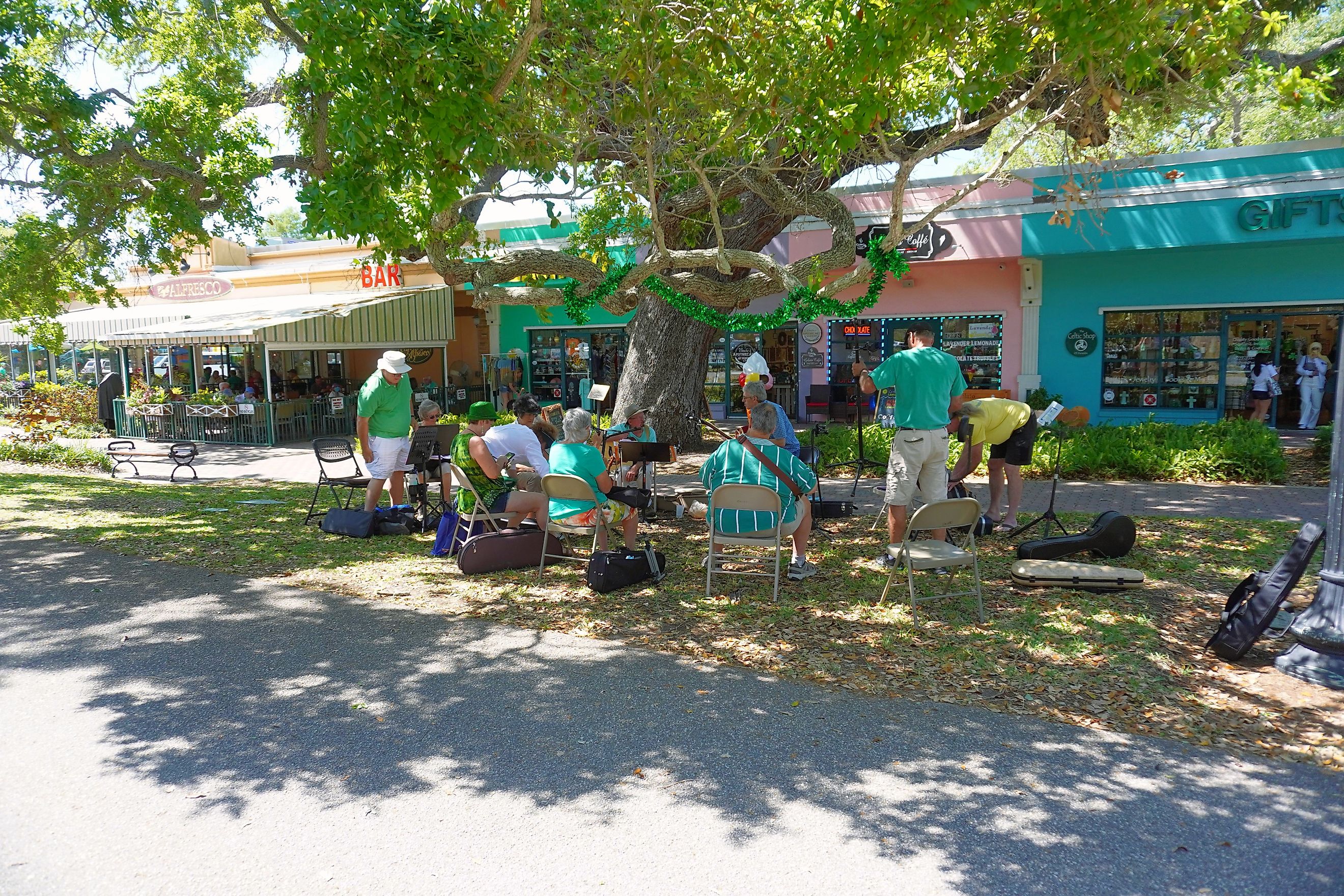
Dunedin, on Florida's Gulf Coast north of Clearwater, was settled by Scottish immigrants in the 1800s and still plays up that heritage with Highland games and a pipe band. Its compact downtown is one of the most walkable on the coast, full of breweries, galleries, and restaurants, with the Pinellas Trail passing straight through it. The waterfront looks out toward the barrier islands, and the marina and parks make it an easy place to spend a day outdoors.

Honeymoon Island State Park, just across the causeway, has some of the area's best beaches, along with nature trails and an osprey-nesting area that make it a favorite for bird-watchers. Back in town, the Dunedin Fine Art Center shows rotating exhibitions and offers classes and a children's museum. A wearable-art show lands at the center in late summer, known for designs that push past ordinary fashion.
Cedar Key

Cedar Key is a cluster of islands at the end of a long causeway on Florida's Nature Coast, a quiet fishing and clamming town with deep 19th-century roots. Cedar mills here once supplied the pencil industry, and the town's later isolation helped preserve its old wooden storefronts and back streets, a rare piece of old Florida. Hurricane Helene battered the waterfront in 2024, and recovery is ongoing, but the downtown, its museums, and the shops and seafood restaurants are open again.

The Cedar Key Museum State Park gathers tools, photographs, and artifacts from the town's mill-and-port days on the grounds of an old homestead. A short boat ride away, Atsena Otie Key, the original townsite, has ruins and trails among the pines and shell mounds. Back on the main island, the Island Hotel, built in 1859 as a general store and the oldest building in town, still takes guests.
Fernandina Beach

Fernandina Beach occupies the north end of Amelia Island, on the Atlantic Ocean at Florida's northeastern corner. The town was platted in 1811 as the last Spanish town in the Western Hemisphere, and its 50-block historic district still shows the Victorian storefronts and homes of its late-1800s heyday. Fernandina calls itself the birthplace of the modern shrimping industry, and the boats still work out of its downtown harbor.

Fort Clinch State Park, on the island's northern tip, preserves a brick fort begun in 1847 and fought over by both sides during the Civil War, with monthly reenactments that put costumed soldiers back on its ramparts. The Amelia Island Museum of History, in the old Nassau County jail, walks visitors through the island's long past under a string of different flags. Both are a few minutes from the downtown waterfront.
Crystal River

Crystal River, on Florida's Nature Coast, centers on a group of spring-fed waterways that are clear and about 72 degrees year-round. The springs are best known as a winter refuge for the West Indian manatee, which crowds into the warm water when the Gulf turns cold, though a few linger through the year. The area also has a long human history, with pre-Columbian burial and temple mounds preserved just outside town.

Three Sisters Springs, reachable by boat or a boardwalk in season, is the clearest of the local springs and the heart of the manatee-viewing area. In summer, with the manatees mostly dispersed into the Gulf, the springs and rivers turn into a swimming and snorkeling spot, the cool water a relief in the Florida heat. The Crystal River Archaeological State Park protects six mounds raised by Native people over roughly 1,600 years of use.
Anna Maria Island

Anna Maria Island is a slender barrier island off Florida's Gulf Coast, edged with white sand and shallow turquoise water. The island is deliberately low-key, with no building taller than three stories and a string of old beach cottages along its quiet streets. Summer is the rainy season here, but the showers usually pass in an afternoon, and the beaches are far less crowded than in winter.

The Anna Maria Island Historical Museum, on Pine Avenue, gathers photographs and relics of the island's settlers in a small complex that includes the old city jail. At the island's northern tip, Bean Point looks out over the mouth of Tampa Bay, a stretch of dune and sand named for the 1890s homesteader who first settled the island. It is one of the quieter beaches on Anna Maria, better for a long walk than a crowd.
New Smyrna Beach

New Smyrna Beach lies on Florida's central Atlantic coast, founded in 1768 when Dr. Andrew Turnbull landed about 1,500 Mediterranean colonists to grow indigo and sugar. The colony collapsed within a decade, but its Greek, Italian, and Minorcan roots still show in the area, and the old streets carry that layered history. Today the town is known for its arts scene and, above all, for surfing the sandbars off its long beach.

Just north of town, the Ponce de Leon Inlet Lighthouse is the tallest in Florida at 175 feet, with a climb of more than 200 steps to a wide view of the coast. The New Smyrna Sugar Mill Ruins, the coquina remains of an 1830s sugar plantation burned in the Seminole Wars, stand in a shaded park in town. A surf film festival brings boards and filmmakers to New Smyrna each summer, a nod to the beach town's long surf culture.
Florida Past the Crowds
These towns share a scale and a pace the big Florida resorts gave up long ago. Sanibel measures its mornings in shells, Apalachicola in oyster boats, and Cedar Key in the slow work of rebuilding after a hard storm. Summer thins their crowds and warms their water, which is when the springs at Crystal River and the shaded streets of Fernandina feel most like themselves. None of them is a secret, but each is a version of Florida that is getting harder to find.