11 Off-The-Beaten-Path Towns In The Pacific Northwest
The Pacific Northwest's beaten path is easy to map: Interstate 5, the Gorge waterfalls, and whichever trailhead filled its parking lot by 9 am. The reward for leaving it is a different region entirely. Out past the last freeway exit, there is a town you cannot drive to at all, a village that ships its name-brand oysters the way it did when San Francisco paid Gold Rush prices, and an Idaho mining town that declared itself the Center of the Universe and dared anyone to prove otherwise. Reaching the 11 towns below takes a ferry, a mountain pass, or a committed detour off a highway most people only pass through from Seattle or Portland. Every one of them repays the mileage.
Stehekin, Washington

Stehekin is the Pacific Northwest's final word on off the beaten path, because there is no path: no road reaches this community of about 75 people at the head of Lake Chelan. Visitors arrive by the Lady of the Lake ferry, a roughly 50-mile cruise up one of the deepest lakes in the US, by floatplane, or on foot over the passes of the North Cascades. The reward at the dock is a valley of orchards, waterfalls, and trailheads running straight into North Cascades National Park, with a pace of life set by the boat schedule.

The valley's greatest hits fit a day: Rainbow Falls thunders 312 feet just up the road, rental bikes cover the few miles of pavement, and the Stehekin Pastry Company has achieved genuine backcountry fame, feeding cinnamon rolls to hikers who walked days of the Pacific Crest Trail to earn them. Cell service is a rumor here, which is either a warning or the entire point.
Wallace, Idaho

Wallace, deep in Idaho's Silver Valley, is the town that refused to be ordinary. Its entire downtown is on the National Register of Historic Places, a status locals wielded to stop the interstate from bulldozing it; I-90 was forced onto an elevated viaduct instead, and when the last stoplight came down in 1991, Wallace gave it a funeral. In 2004, the mayor proclaimed a downtown manhole cover the Center of the Universe, reasoning that no one could disprove it, and the plaque stands as the best photo op in the Idaho panhandle.

The silver is no joke: the surrounding valley has produced over a billion ounces, among the richest silver districts ever mined, and the Sierra Silver Mine Tour takes visitors underground with retired miners narrating. Above ground, the Route of the Hiawatha rail-trail rolls bikes through 10 tunnels and over sky-high trestles nearby, including a 1.66-mile bore straight through the mountains, and the Oasis Bordello Museum preserves a stranger chapter of mining-town history exactly as it was left in 1988.
Gold Beach, Oregon

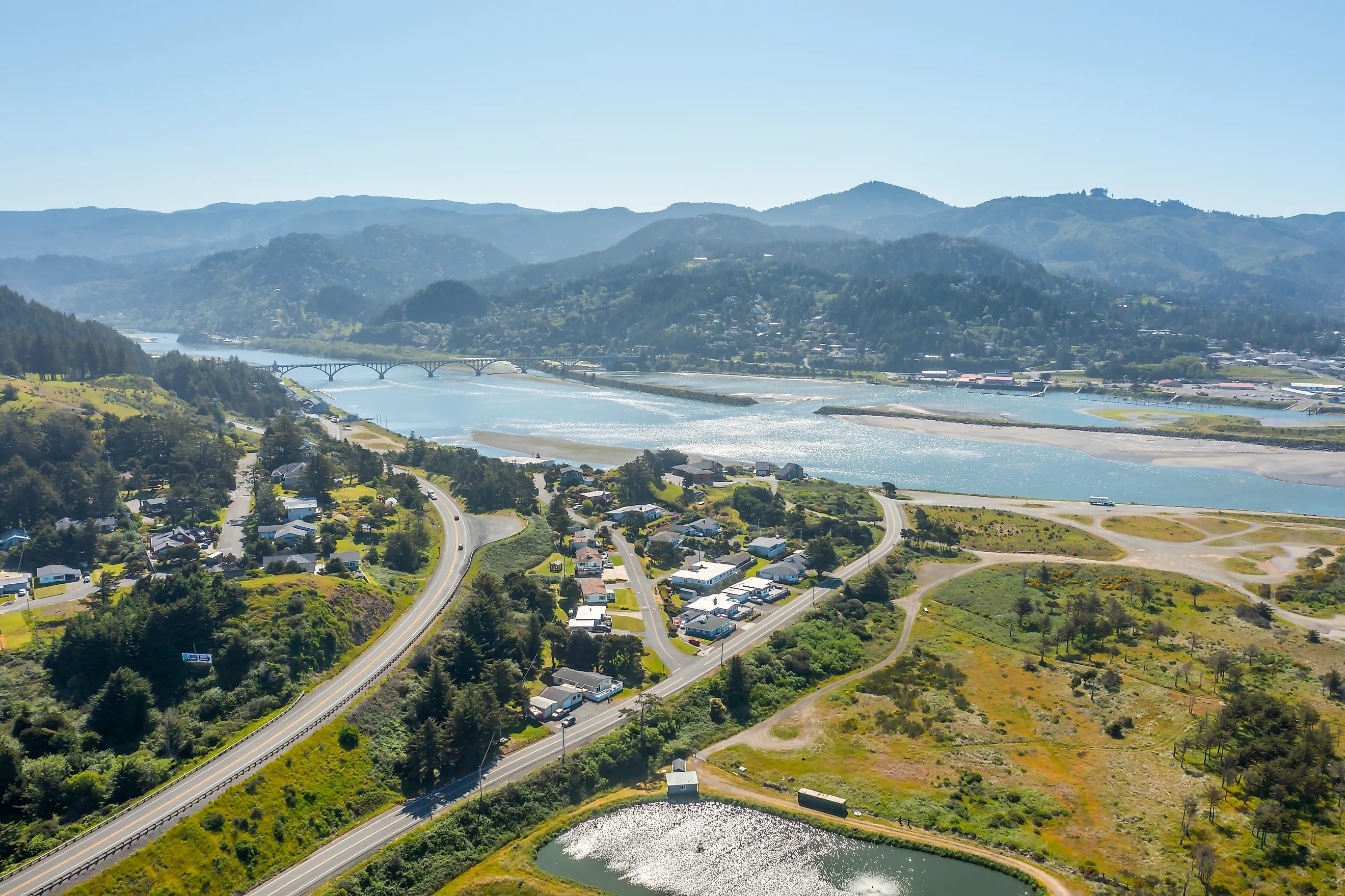
Set along the rugged southern Oregon coast at the mouth of the Rogue River, Gold Beach sits a five-hour drive from Portland, which is precisely why its beaches stay empty. The town's signature ride is the Rogue River mail boat, a service that has carried mail upriver to roadless settlements since 1895 and now jets visitors deep into one of America's original Wild and Scenic rivers. Back at the harbor, the beached hull of the Mary D. Hume, an 1881 steamer that worked for nearly a century, holds down the maritime history.

The coast handles the rest. A trail winds from the visitor center to a wide beach strewn with boulders like the landmark Kissing Rock, Cape Sebastian's trail delivers headland views minutes south on Highway 101, and Otter Point's sandstone formations wait just north across the river. Locals brag about the warm, dry fall that stretches through October, when the summer trickle of visitors thins to almost no one, and cafes like Gold Beach Coffee Books & Art and the Barnacle Bistro keep the stillness well fed.
La Push, Washington

La Push, the oceanfront village of the Quileute Tribe at the literal end of Highway 110, faces some of the wildest shoreline in the lower 48. Sea stacks rise offshore like a drowned mountain range, the Quillayute River delivers salmon, halibut, and steelhead to the marina, and First Beach draws the occasional Twilight pilgrim to a shore far more dramatic than the movies managed. The beaches count upward into solitude: an easy forest trail reaches Second Beach's sea-stack gallery, while Third Beach demands a longer walk and pays in privacy.

Across the river mouth, Rialto Beach piles driftwood logs against the surf on the way to the Hole-in-the-Wall arch, and gray whales pass close on their spring migration. Surfers work the river-mouth waves in wetsuits year-round, eagles patrol the sea stacks, and the Quileute oceanside resort and River's Edge Restaurant handle the warming up afterward. Few places this photogenic remain this quiet.
Twisp, Washington

Twisp is the Methow Valley without the costume. While neighboring Winthrop plays Old West for the crowds, Twisp, at the meeting of the Twisp and Methow Rivers, kept its working-town bones and quietly filled them with artists. TwispWorks, a former Forest Service compound turned campus of studios and makers, anchors a creative scene far out of proportion to a town of under a thousand, and the name itself is said to come from a Native word for the yellowjacket, which suits a town with this much buzz per capita.
The valley does the rest of the work. The Methow Trails network, the largest cross-country ski system in North America, threads right through the area, with the same routes serving bikers and hikers after the melt, and the surrounding Okanogan highlands turn gold in October. Add a farmers market with a cult following and bakeries that sell out by noon, and Twisp earns its place as the valley's best-kept open secret.
Joseph, Oregon

Joseph sits in Oregon's far northeast corner beneath the Wallowas, the "Alps of Oregon," roughly six hours from Portland, which keeps its granite skyline blissfully undershared. The town is named for Chief Joseph, the famed leader of the Nez Perce whose homeland this was, and the Iwetemlaykin State Heritage Site at the edge of town preserves ground sacred to the tribe. Downtown, Main Street doubles as the Joseph Bronze Artwalk, lined with life-sized sculptures cast in the town's own foundries.
Wallowa Lake, the glacial masterpiece Joseph crowns, runs south to a state park with camping, trails, and the Wallowa Lake Tramway, which hauls riders to the 8,150-foot summit of Mount Howard on one of the steepest vertical lifts in North America. Beyond rises the Eagle Cap Wilderness, over 360,000 acres of alpine lakes and bare granite, and the Wallowa County Museum and Embers Brewhouse cover history and recovery in that order.
Langley, Washington

Langley perches on a bluff over Saratoga Passage at Whidbey Island's quiet southern end, routinely skipped by travelers racing north to Coupeville and Deception Pass, which is exactly how the locals like it. The founding stories are better than fiction: the town was famously platted by a teenaged homesteader, Jacob Anthes, and in 1919 Langley seated one of the first all-woman city councils in the country. The one-square-mile downtown now ranks among Washington's first state-designated Creative Districts.
The arts calendar outguns towns ten times the size, with the Whidbey Island Center for the Arts, a children's theater, and an annual Island Shakespeare Festival, while the Langley Whale Center explains the gray whales that feed just offshore each spring. When one surfaces, tradition demands you ring the whale bell on the bluff above Seawall Park, then celebrate at the Saltwater Fish House & Oyster Bar over Puget Sound's freshest argument for island living.
Manzanita, Oregon

Manzanita hides in plain sight: seven miles of broad sand along the Pacific, one town over from world-famous Cannon Beach, with a fraction of the crowds. The town sits beneath Neahkahnie Mountain, whose roadside viewpoints on Highway 101 serve one of the great panoramas of the Oregon coast and whose slopes carry a centuries-old legend of buried Spanish treasure that beachcombers have never quite stopped believing.
North of town, Oswald West State Park wraps surfers' Short Sand Beach in old-growth rainforest, while Nehalem Bay State Park runs down the sand spit south of town with bike trails and beach camping. The walkable little downtown keeps it simple: boutique shops, seafood cafes, coffee, and a seasonal farmers market, all built for people whose main plan is the beach and the weather shadow of the headlands that keeps it usable.
Port Orford, Oregon

Port Orford is the westernmost incorporated city in the contiguous US, and it operates one of the strangest working harbors anywhere: a dolly dock, where the fishing fleet is hoisted in and out of the ocean by crane every day because the open roadstead offers no sheltered moorage. Watching the boats fly is free entertainment, and the catch lands on local menus hours later. Battle Rock Wayside Park marks the shoreline where the town's turbulent founding played out in 1851, with a beach panorama as consolation.

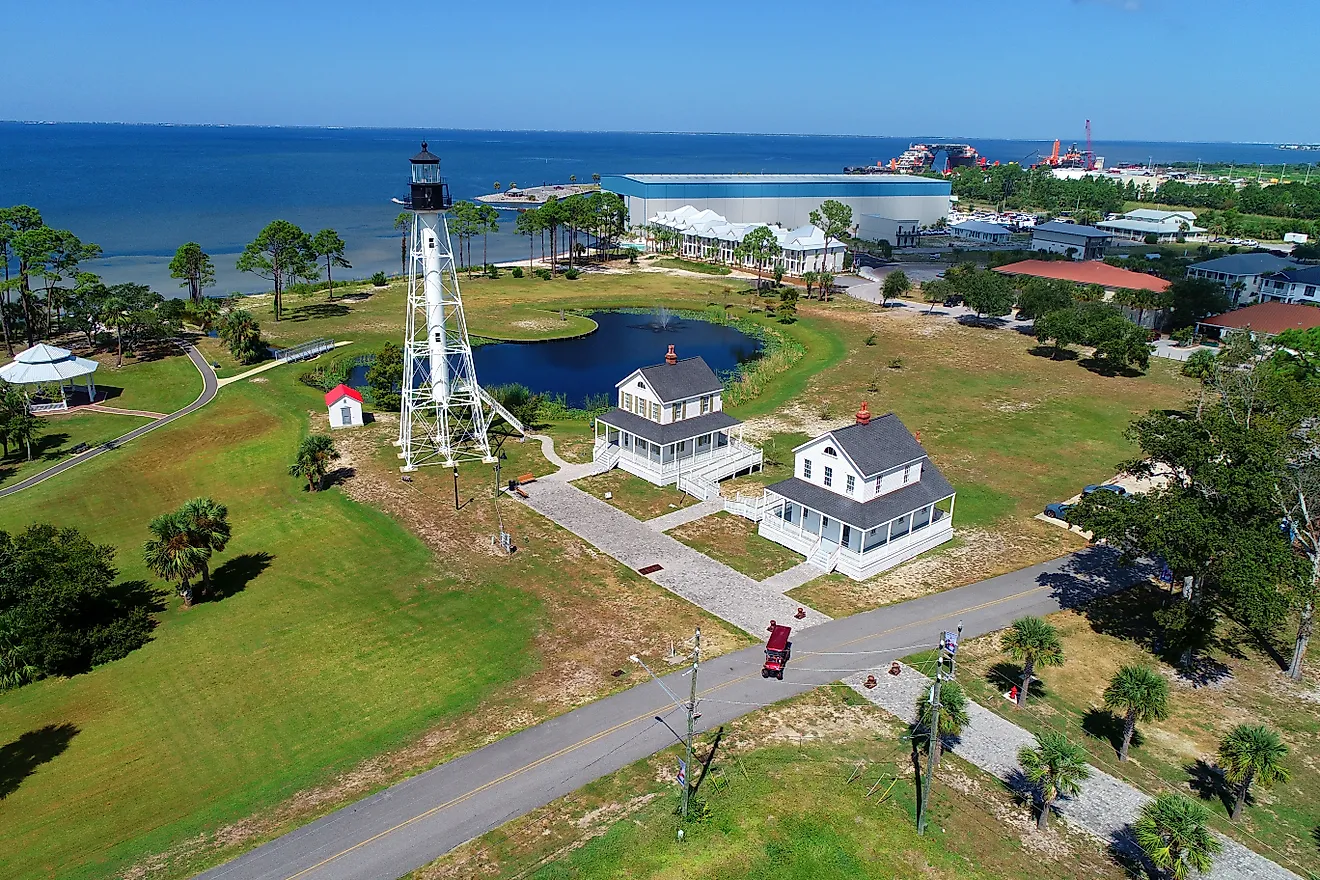
Minutes north, Cape Blanco juts out as Oregon's westernmost point, crowned by an 1870 lighthouse that ranks among the oldest still operating in the state, with a wind-raked state park around it. Humbug Mountain rises straight from the surf to the south, and the galleries and fish-and-chips windows of the little downtown round out a coast town that never got around to becoming a resort.
Yachats, Oregon

Yachats, a village of a few hundred wedged between forested slopes and a basalt shoreline, has earned its billing as the "gem of the Oregon Coast" while somehow staying off most itineraries. The drama is geological: waves detonate against the black rock at Spouting Horn, the 804 Trail traces the surf line past tide pools, and agate hunters work the coves after winter storms. The town itself stays village-scaled, with chowder houses, a brewery, and inns built for storm-watching.

Two miles south waits the showstopper: Cape Perpetua, the highest viewpoint on the Oregon coast reachable by car, 800 feet above the breakers, with old-growth trails fanning out below. At its base, Thor's Well swallows the incoming tide through a collapsed sea cave in an endless, mesmerizing drain, the kind of spectacle that makes photographers miss dinner. Few stretches of US coastline pack this much violence and this much calm into one small town's backyard.
Oysterville, Washington

At the far tip of the Long Beach Peninsula, past the last of the beach towns, Oysterville is a village preserved in brine. Founded in 1854, it boomed shipping Willapa Bay oysters to Gold Rush San Francisco, where a plate of them commanded a silver dollar, and the entire village, with its 1892 church and weathered captains' houses, is now a National Historic District. The boom's end came with a flourish: rivals from South Bend raided the courthouse in 1893 and carried off the county records, stealing the county seat itself.

The oysters never left. Willapa Bay remains among the most productive oyster waters in the nation, and Oysterville Sea Farms still sells them steps from the tide flats. Visitors walk the single lane of historic homes, catch summer music vespers in the old church, and continue to Leadbetter Point's dunes and birdlife at the peninsula's wild end. It is a town that history forgot to modernize, to everyone's lasting benefit.
Earning The Quiet
The Pacific Northwest hands out its best scenery to whoever is willing to work the map, and these 11 towns are the proof across all three of its states. Stehekin asks for a boat, Joseph asks for six hours of windshield, Oysterville asks you to drive until the peninsula runs out, and Wallace merely asks that you accept it as the Center of the Universe. None of it is convenient, which is the entire filter: the ferry schedules and mountain passes do the crowd control, and what waits on the far side is the region as it was before anyone called it a destination.