How Long It Takes Fallen Leaves To Decompose On The Forest Floor
Fallen leaves can break down within months in some forests, yet persist for several years in others. The difference depends on the tree species, temperature, moisture, and organisms living in the soil. In warm, damp conditions, fungi and bacteria can process leaf litter relatively quickly, although a leaf's chemical makeup can determine how easily these fungi and bacteria break it apart. Cold, dry environments and leaves with tougher chemical structures can slow the process. Even small creatures like millipedes and earthworms help speed up the process.
How Long Leaf Decomposition Takes

Fallen leaves can begin decomposing within days of reaching the forest floor, but complete decomposition often takes months to several years. Soft, nutrient-rich leaves may lose much of their mass during the first growing season, while tougher leaves can persist through multiple seasons.
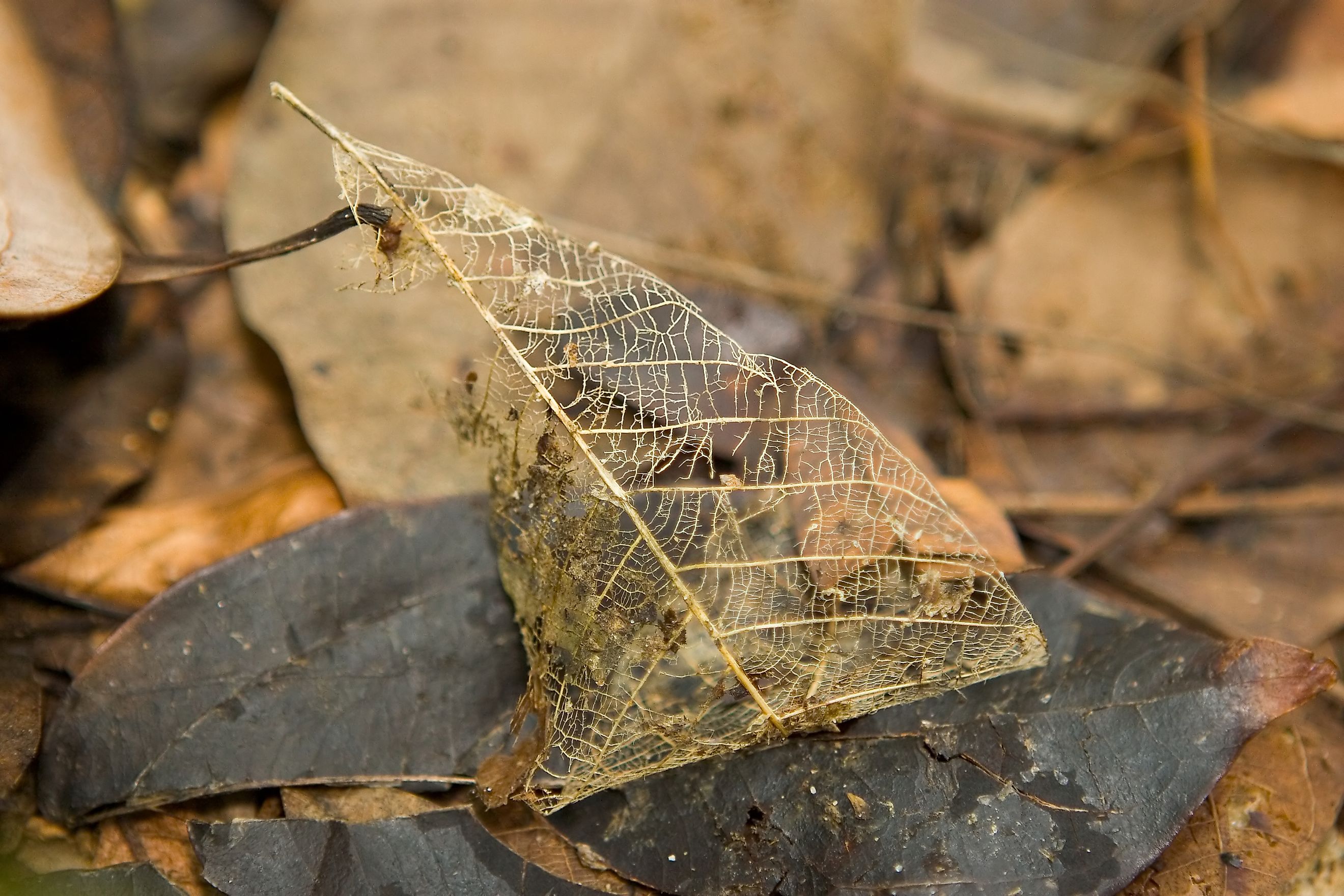
Scientists often measure decomposition by placing dried leaves in mesh bags, weighing them, and returning the bags to the forest at regular intervals. The change in mass shows how quickly the material breaks down under particular conditions. However, losing mass is not the same as disappearing completely. Even after a leaf loses its recognizable shape, its organic matter may continue decomposing in the soil.
Research in southern US forests illustrates this variation. A US Forest Service study examined leaf litter in four forested floodplain communities over 100 weeks. At the end of the study, one community retained 33% of its original leaf litter mass, while another retained just 5%. These results show how differently leaf litter can break down even among forest ecosystems in the same broad region. The findings describe those specific study sites rather than establishing a universal timeline for all fallen leaves.
Why Some Leaves Decompose Faster Than Others

Tree species influence the chemical composition of their leaves, helping explain why two leaves lying side by side can break down at different rates. Thin leaves with accessible nutrients and relatively little resistant material often decompose faster than tough leaves containing more protective compounds.
Leaves contain cellulose, hemicellulose, and lignin. Cellulose and hemicellulose form much of a leaf's structural material, while lignin strengthens plant tissues and helps protect them from decay. Many decomposers can break down cellulose relatively readily, but lignin is more resistant. Leaves with greater amounts of lignin can therefore persist longer under similar environmental conditions.
Nutrient content also influences decomposition. Nitrogen and phosphorus support microbial growth, so leaves containing greater amounts of these nutrients may provide a better resource for decomposers. However, no single chemical characteristic determines the outcome in every forest. Temperature, moisture, and the activity of local organisms also affect the rate.
These differences occur among both deciduous trees and evergreens. Some deciduous leaves become fragile and fragment relatively quickly, whereas leathery evergreen leaves and needles may remain recognizable for longer. The comparison depends on the species, however, and does not mean every broadleaf decomposes faster than every needle.
Temperature and Moisture Control the Pace

Warmth and suitable moisture generally accelerate decomposition by supporting fungi, bacteria, and other organisms. Microbes need favorable conditions to grow and produce enzymes that break down plant material. When temperatures and moisture levels support their activity, leaves often lose mass more quickly.
Water washes soluble compounds from leaves, particularly during the early stages of decomposition, carrying them into the soil or through the forest floor. During prolonged dry spells, however, microbial activity often slows because the leaves and surrounding soil lack sufficient moisture.
Excessive moisture can also delay decomposition. In waterlogged soils, oxygen becomes limited, restricting the activity of many organisms that rely on oxygen to break down organic material. Wetland environments still support specialized decomposer communities, but decomposition follows different patterns from those in well-drained forests.
Seasonal changes create another source of variation. In temperate forests, microbial activity often slows during winter and increases during warmer months. Leaves that fall in autumn may accumulate through winter before decomposing more rapidly in spring and summer. Colder forests have shorter periods of favorable conditions, which can extend the time required for leaves to break down.
How Fungi, Bacteria, and Invertebrates Break Down Leaves

Fungi and bacteria perform much of the chemical work involved in decomposition. Fungi spread through leaf tissues using threadlike structures called hyphae and release enzymes that break down complex compounds. Some fungi can also break down lignin, allowing them to process material that many other organisms cannot readily use.
Bacteria consume accessible organic compounds and contribute to the transformation of dead plant material. As decomposition progresses, the chemical composition of the remaining leaf changes, affecting which organisms can use it. The process is gradual, with different microbes contributing at different stages.
Small invertebrates help by chewing, shredding, and mixing leaves. Springtails, mites, millipedes, earthworms, and insect larvae can break leaves into smaller pieces, increasing the surface area available to microbes. Some feed directly on decaying plant material, while others consume the fungi and bacteria growing on it.
What Happens as Leaves Decompose

Decomposition transfers carbon and nutrients through the forest ecosystem. Some carbon returns to the atmosphere as carbon dioxide when microbes respire, while some becomes part of the soil's organic matter. Nutrients released during decay can become available to plant roots and soil organisms.
The process begins with the loss of soluble compounds and breakdown of accessible plant tissues. As microbes consume leaf material, the leaves weaken, fragment, and lose their original structure. Nitrogen and phosphorus released during decay can become available to plants, although microbes may temporarily absorb and retain these nutrients.
Not all organic matter disappears at the same rate. Some compounds persist in the soil longer than the original leaf, particularly when they become associated with minerals or enter conditions that slow further decay. Consequently, the disappearance of a recognizable leaf does not mark the end of its ecological contribution.
Why Leaf Litter Matters to Forest Health

Fallen leaves do more than provide material for decomposition. The layer covering the forest floor helps retain moisture, moderates temperature fluctuations near the soil surface, and reduces the direct impact of raindrops on exposed soil. These effects can help limit erosion and support conditions favorable to plants and soil organisms.
As leaf litter breaks down, it contributes organic matter that supports soil structure and nutrient retention. The effects vary with soil type and the quality of the material, but the steady supply of fallen leaves helps maintain the biological processes that sustain forest growth.
Leaf litter also provides habitat for small animals. Invertebrates use the layer for food and shelter, and those animals feed birds, amphibians, reptiles, and other wildlife. Removing fallen leaves from the forest floor reduces habitat for small animals and removes an important source of organic material.
The amount of litter on the ground reflects the balance between how much material trees shed and how quickly decomposers process it. A thick layer does not necessarily mean decomposition has stopped. It may simply mean that leaves are falling faster than they can break down, particularly during autumn or in forests with long, cold winters.
Leaf decomposition has no universal timeline. Its pace depends on leaf chemistry, climate, and the organisms that process dead plant material. As leaves break down, they recycle nutrients, contribute organic matter to the soil, and sustain food webs beneath the trees. The layer of leaves underfoot is not simply seasonal debris; it is part of the system that allows a forest to regenerate and sustain its growth. Perhaps the next time you look at the forest floor on a beautiful fall day, you'll be enlightened about this system.