Why Palm Trees Stop At A Certain Latitude
A palm tree can survive surprisingly far from the tropics, but eventually winter wins. Across most of the world, naturally occurring palms disappear as cold-season temperatures fall below what their seedlings can tolerate. That creates a recognizable palm boundary, although it does not follow one exact latitude. Though strongly associated with tropical beaches, rainforests, and even deserts, their real-world distribution stretches further afield.
The Basics of Palm Trees

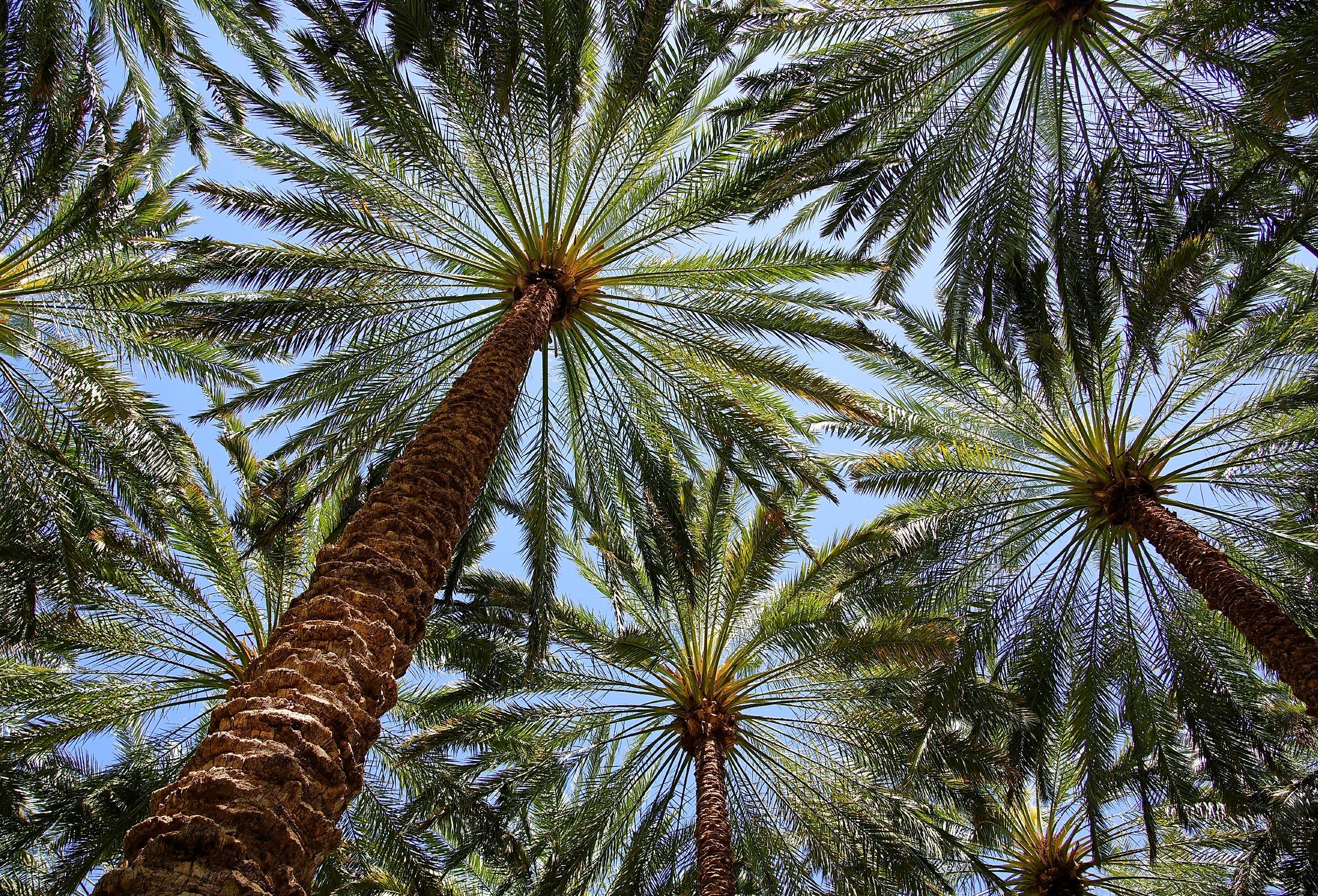
Palm trees include roughly 2,500 plant species across more than 180 genera belonging to the family Arecaceae. A major component of many tropical ecosystems, palms are commonly characterized by trunks or stems topped by a crown of large leaves, or fronds. These leaves are often fan-shaped or feather-shaped and usually grow from a central point at the top of the stem.
Palms take many different forms. Some develop a single tall trunk, while others grow as shrubs, vines, or clusters of multiple stems. The exterior of a palm trunk is also often marked by scars left behind where older fronds once grew, while some species have spines. Palms provide shelter and food in tropical and subtropical ecosystems, but they are also widely used by humans. Their fruits include coconuts, dates, and acai, while other species provide palm oil and construction materials.
Why the Tropics?

Although palms can be found around the world, including many places where people have planted them, most species naturally occur in tropical and subtropical climates. Temperature is particularly important in determining their distribution. Many palms flourish in warm, wet environments, although others are adapted to seasonal climates, dry regions, or relatively cool subtropical conditions. The area between the Tropic of Cancer, at approximately 23.4° N, and the Tropic of Capricorn, at approximately 23.4° S, is known as the tropics. Broadly speaking, this region remains warm because it receives relatively direct sunlight throughout the year.
Earth's rotational axis is tilted relative to its orbit around the Sun. As the planet orbits over the course of a year, the Northern and Southern Hemispheres receive changing amounts of direct sunlight, creating the seasons. Locations farther from the Equator therefore experience much larger seasonal swings in temperature.
Around the Equator, seasonal changes in incoming sunlight are smaller. The tropics are also the part of Earth where the Sun can appear directly overhead at some point during the year. Instead of the familiar four-season cycle found across much of the United States, many tropical regions are more strongly divided into wet and dry seasons.
Beyond The Tropics

Warmth alone does not guarantee that palms will grow, and different species have very different environmental requirements. Still, cold temperatures create one of the strongest limits on their natural distribution. Palms generally have poor tolerance for prolonged freezing conditions, particularly during vulnerable stages such as seedling establishment.
Native palms reach roughly 44° N in parts of Europe, and approximately 44° S in New Zealand, but these are exceptional species growing where local climates remain mild enough. Ocean currents, elevation, prevailing winds, and geography can make two places at the same latitude dramatically different in winter. Cold-hardy palms can also survive well beyond the natural range of most members of the family when planted by people. The windmill palm, for example, tolerates much colder conditions than a coconut palm. Seeing a palm in a temperate city, therefore, does not necessarily mean palms naturally occur there.
Understanding The Boundary

Research suggests that the boundary is better understood through winter temperature than latitude itself. Across the palm family, naturally established populations become uncommon where the average temperature of the coldest month falls below roughly 5°C, or 41°F, although particularly cold-tolerant groups can persist below that level.
Climate change is altering that boundary in some regions. Research in southern Switzerland, for example, has linked warmer winters and longer growing seasons with the spread of windmill palms into areas where they previously struggled to establish. Similar shifts may occur elsewhere, although dispersal, rainfall, habitat, and the requirements of individual species will determine how quickly palms actually move into newly suitable territory.
Palm trees, then, do not stop because they encounter an invisible line on the globe. Their latitude limit is the result of climate, the point where winters become too cold for new generations to reliably survive. While you may find singular examples living outside their typical latitude, you won't find native palms growing much beyond 44° in either direction.