8 Northern United States Small Towns With Unmatched Friendliness
Ask a stranger in Bayfield which of the 21 Apostle Islands is worth the paddle and you may lose an afternoon to the answer. That is the northern United States most people never hear about, the one behind the reputation for cold shoulders. Up here the welcome tends to come from folks who still use the place they live, whether that means a Maine harbor where the same families have fished for generations or a Montana saloon where the band plays to regulars. Half a million bikers pack into one of these towns every August, and it still hands the streets back come September. The eight below run across the top of the country, and each one is glad to show a visitor around.
Camden, Maine

Camden sits where the Camden Hills drop straight into Maine's Penobscot Bay, one of the few stretches of the Atlantic seaboard where the mountains meet the sea. The town spent the 19th century building ships along the Megunticook River, and that working-harbor spirit never left. Windjammers still sail out of the same waterfront, and the people crewing them will happily tell you which island is which. It sits about an hour and a half up the coast from Portland, in the Midcoast region.
The poet Edna St. Vincent Millay climbed Mount Battie in what is now Camden Hills State Park and came down with the opening of her poem "Renascence," inspired by the view of the bay and the town below. A plaque at the summit carries that first stanza, and the hike up is short enough for almost anyone. In the middle of summer, the Camden Shakespeare Festival puts on outdoor shows at the library amphitheater, where locals spread blankets alongside first-time visitors. Down on the water, Peter Ott's serves a lobster roll with a harbor view, and a handful of charter companies run day cruises out into the bay past the Curtis Island light. If you come in early August, the Maine Lobster Festival is a short drive south in Rockland.
Stowe, Vermont

Most people know Stowe for the skiing, but the town at the base of Mount Mansfield is worth the trip in any season. The walkable downtown grew up around the Stowe Community Church, whose tall white steeple has been the landmark you steer by since the 1860s. Locals shop the Stowe Mercantile for Vermont-made food and browse Bear Pond Books, one of the largest independent bookstores in the state. When you need a break, the original Black Cap Coffee & Bakery pours the coffee and bakes the pastry.
The scenery starts almost at the edge of downtown. Moss Glen Falls is a five-minute drive and a short walk from the car, an easy payoff for very little effort. If you want the summit of Mount Mansfield, Vermont's highest peak, you can earn it on the eight-mile climb or take the historic Toll Road or the gondola to the top. The road to Waterbury leads to the Ben & Jerry's factory, the only one open for tours, where the line moves fast and the samples are generous. What makes Stowe feel like Stowe is the mix: a serious mountain town that still runs on neighborly hospitality.
Bayfield, Wisconsin

With around 600 residents, Bayfield is the smallest city in Wisconsin, and it punches far above that number. Set on the shore of Lake Superior, it serves as the gateway to the Apostle Islands National Lakeshore, a chain of 21 islands and 12 miles of lakeshore just north of town. Art galleries, bookstores, and family-owned shops fill the main street, and everyone working in them seems to have a favorite island to point you toward.
On the water, you can lounge at Cornucopia Beach or hike the Meyers Beach Sea Cave Trail for a look at the sandstone caves along the shore. Outfitters in town rent kayaks and run guided trips; experienced paddlers can push out to Balancing Rock off Stockton Island or the lighthouse on Raspberry Island. Come summer, berry season takes over, and the drive known locally as the Fruit Loop winds past roadside stands selling fresh-picked fruit and homemade jam. In the evening, Copper Crow Distillery, the first Native-owned distillery in the country, pours a drink, and the Howl Adventure Center sets out tacos, beer, and live music around a campfire.
Sturgis, South Dakota

For ten days each August, half a million riders roll into Sturgis, on the northern edge of the Black Hills in western South Dakota. The Sturgis Motorcycle Rally started as a nine-rider race in 1938 and grew into the largest gathering of its kind on earth. What holds it together is a town of a few thousand people who know how to make an enormous crowd feel at home, then hand the streets back come September.
The rest of the year, Sturgis wears its frontier past comfortably. Founded in the 1870s and once nicknamed "Scooptown," it grew up beside Fort Meade, the cavalry post that guarded miners and travelers heading into the Black Hills. The Old Fort Meade Museum fills the former commanding officer's quarters and tells the story of the regiments stationed there, including the Buffalo Soldiers of the 25th Infantry and the 7th Cavalry. West of town, the Black Hills National Forest spreads across more than a million acres of pine, and the trail up Black Elk Peak, the highest point in South Dakota, ends at an old stone fire tower with a view into four states. Back downtown, the Sturgis Motorcycle Museum and Hall of Fame keeps the bikes and the rally's story under one roof.
Red Lodge, Montana

Red Lodge began as a coal town, and the brick buildings the miners left behind still line its main street. The most famous of them is the Pollard Hotel, the town's first brick building, dating to 1893. Today the main street holds good eateries like Bogart's and the Cattail Bakery, plus saloons where the live music spills onto the sidewalk. This corner of southern Montana, on the eastern edge of the Custer Gallatin National Forest, keeps the old Western warmth and adds easy access to some of the best country in the Rockies.
On a clear day you can pick out Granite Peak, Montana's tallest mountain, on the western horizon. Reaching the summit takes serious climbing experience, but the Palisades Trail just west of town makes a moderate seven-mile hike through the same forest. For the scenery without the sweat, the Beartooth Highway climbs 68 miles of switchbacks toward Cooke City and the Lamar Valley entrance to Yellowstone, one of the best places in the park to spot wildlife. To dig into the mining days, the Carbon County Historical Museum lays it all out, and the Snow Creek Saloon or the One Legged Magpie will point you toward the evening's music.
Jackson, Wyoming

Jackson straddles the Snake River in the valley between the Teton and Gros Ventre ranges, a modern resort town that never shed its Wild West character. The center of it all is the Town Square, framed by arches built from elk antlers gathered at the nearby National Elk Refuge. Every evening except Sunday through the summer, actors stage the Jackson Hole Town Square Shootout in the square, the longest-running reenactment of its kind in the country, and the crowd that gathers is half local, half visitor.
The outdoors is the main event in this part of Wyoming. Grand Teton National Park begins ten minutes north, a 310,000-acre landscape with more than 250 miles of trails, strong trout fishing, and whitewater on the Snake. In town, the Jackson Hole Historical Society runs summer walking tours, the Million Dollar Cowboy Bar books live country music, and the Jackson Hole Rodeo carries on a tradition more than a century old. For a quieter afternoon, the National Museum of Wildlife Art holds works by Georgia O'Keeffe, John James Audubon, and Pablo Picasso, with the elk refuge spread out below its windows.
Port Townsend, Washington

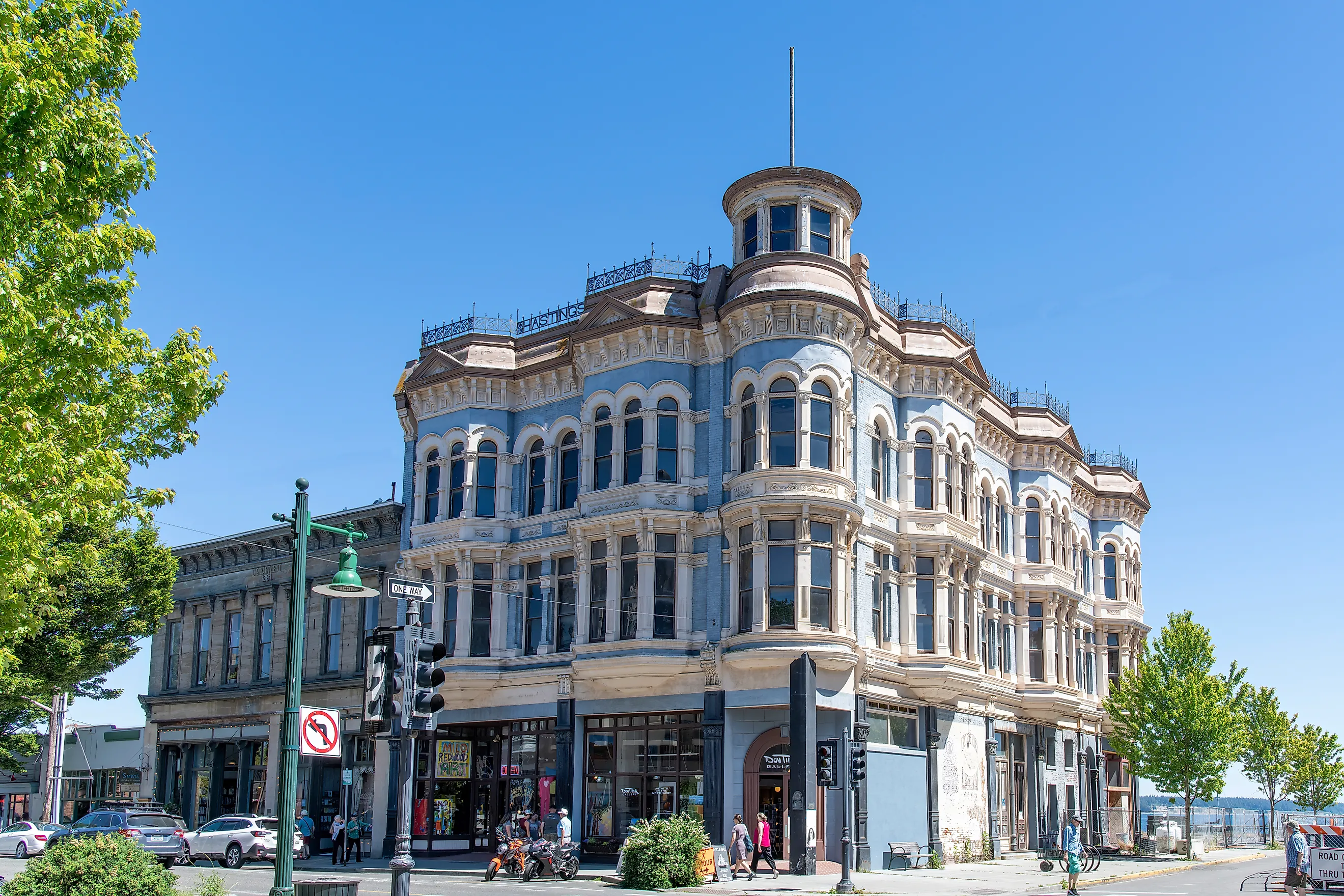
Port Townsend sits on the tip of the Quimper Peninsula, looking out over the Strait of Juan de Fuca in northwest Washington. Sheltered in the rain shadow of the Olympic Mountains, it stays noticeably drier than the rest of the peninsula, which helps explain the crowds that fill its waterfront on a summer afternoon. In the late 1800s this was a major port of entry to the Pacific Northwest, and the boom years left behind more than 300 Victorian buildings, making it one of only three Victorian seaports on the National Register of Historic Places.
That old architecture blends into a lively modern waterfront, where restaurants like the Blue Moose Café serve breakfast with a view of the bay. Vendors set up the Port Townsend Farmers Market on Wednesdays and Saturdays with local food and crafts, and they are as much a draw as the produce. The Jefferson Museum of Art & History covers the town's story, and the preserved 1868 Rothschild House shows how a merchant family lived in the boom. Just north, Fort Worden Historical State Park keeps its early-20th-century gun batteries, and a walk along the shore leads to the Point Wilson Lighthouse at the mouth of Admiralty Inlet.
Astoria, Oregon

The oldest American settlement west of the Rocky Mountains, Astoria was founded in 1811 on the south bank of the Columbia River in the northwest corner of Oregon. It has been a fur-trading post, a logging hub, and a fishing town, and reminders of all three survive among the microbreweries, vintage shops, and galleries that revived the waterfront. The people who run those places tend to be proud of the town's rough working history, and they will tell you about it.
Southwest of town, in the coastal rainforest, a reconstruction of Fort Clatsop marks where Lewis and Clark wintered after reaching the Pacific in 1805. The Astoria Riverwalk follows the old cannery waterfront, with views of the Columbia and the long Astoria-Megler Bridge. At Fort Stevens State Park you can see the remains of a Civil War-era earthen fort and the rusting skeleton of the Peter Iredale, a ship that ran aground in 1906. Film fans can tour the Oregon Film Museum in the old Clatsop County Jail. Finish the day up on Coxcomb Hill at the Astoria Column, built in 1926 by the Great Northern Railway and Vincent Astor, the great-grandson of the town's namesake, where the climb to the top rewards you with a sweeping sunset over the river.
Where the Welcome Comes From
What ties these eight towns together is not the scenery, striking as it is, but the reason the scenery still feels lived-in. Camden and Astoria kept their working harbors. Sturgis and Jackson turned a frontier past into a party the whole town throws every year. Red Lodge and Port Townsend held onto the brick and the Victorian storefronts because people never stopped using them. In each place the friendliness comes from the same root: locals who are proud of somewhere real and would rather share it than keep it to themselves. That is the northern welcome, and it holds up in any season.